
Fichas
Ancient Mesopotamia & Egypt
Fichas del conjunto (32)
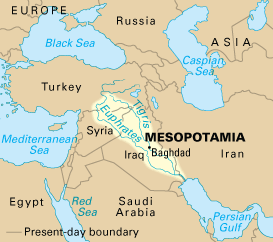
- 1Name means "land between the rivers"; where the 1st civilization began; present day Iraq & SyriaMesopotamia
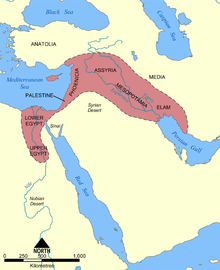
- 2The region in the Middle East which curves, like a quarter-moon shape; known as the Cradle of CivilizationFertile Crescent
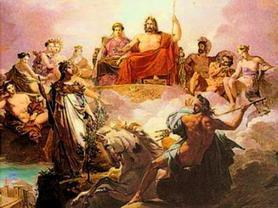
- 3Belief in MANY gods; Ancient Sumerians believed in over 3,000 godsPolytheistic (aka polytheism)
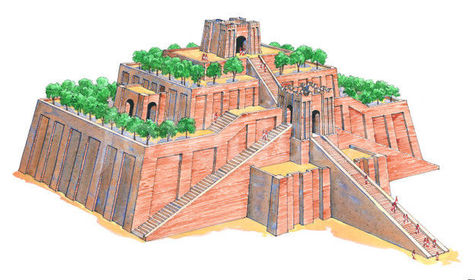
- 4The massive platform that the Sumerians built their religious temples onZiggurat
- 5Means "rule by god"; describes a govt. where the ruler is thought to be a God ex. Ancient EgyptTheocracy
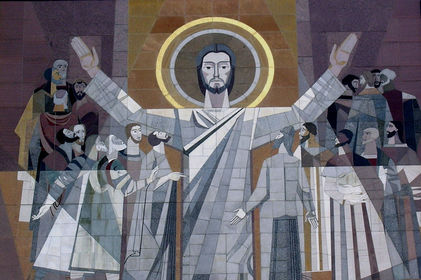
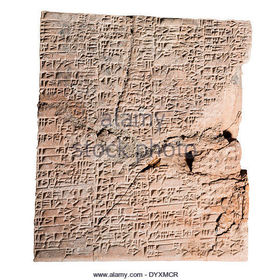
- 61st writing system developed by the Sumerians; "wedge-shape writing"Cuneiform
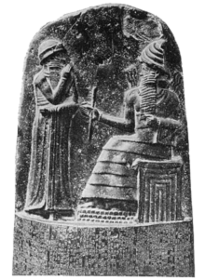
- 71st written laws; given to people by Ancient Babylon by King Hammurabi; very strict laws based on principle of an eye for an eye, a tooth for a toothHammurabi's Law Code (33)
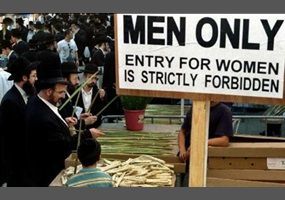
- 8Describes a society dominated by menPatriarchal
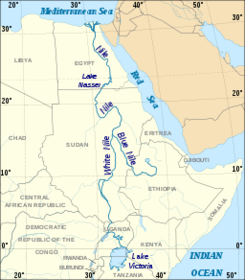
- 9The longest river in the world; Egypt is often called "the gift of the Nile River; Egyptians depended on the Nile for everything.Nile River
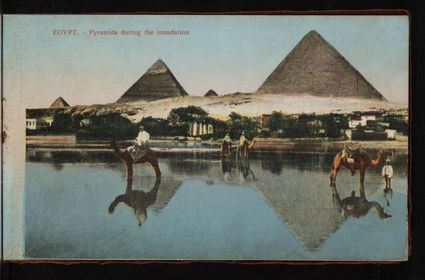
- 10The annual flooding of the Nile River. The flood river left behind rich fertile mud.Inundation
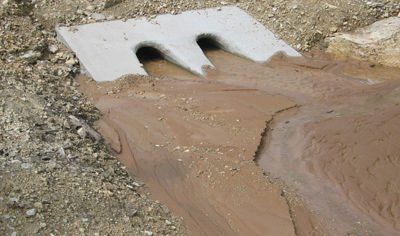
- 11Rich black mud left behind from the flooding of the Nile riverSilt
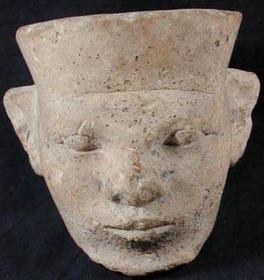
- 12King who united Lower & Upper Egypt around 3100 BCKing Menes (36)
- 13Means "great house of"; a family of rulersDynasty
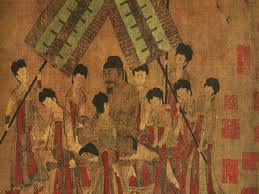
- 14Name for Egyptian KingPharaoh
- 15Ancient Egyptians thought that when someone died Ka, or the life force, left the physical body; The Ka could drink and eat, but was stuck in the tomb in the body of the mummy or the small statues that were left in the tomb"Ka"
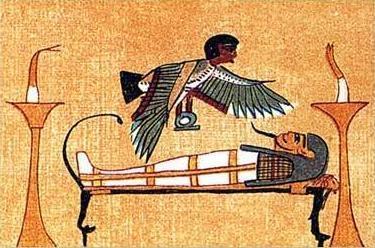
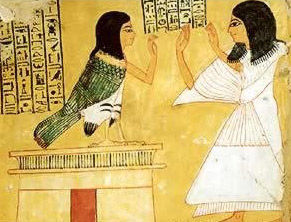
- 16The Ba was the part of the soul that embarked on a journey to follow the gods; the symbol of the Ba is often shown as a bird with a human head and wings"Ba"
- 17It was very important to ancient Egyptian religious beliefs that the human body was preserved. Their method of preserving the body was called mummification. The process lasted up to 70 daysMummification
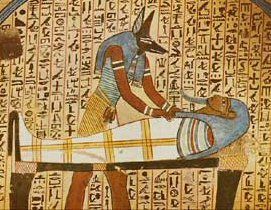
- 18Containers used to hold the internal organs (lungs, stomach, intestines, liver) of the deceased that was going to be mummified; the jars had lids shaped ad the heads of the 4 sons of HorusCanopic Jars
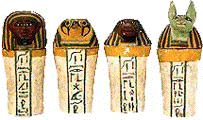
- 19A sarcophagus formed the outer layer of protection for a royal mummy, with several layers of coffins nested within, and was often carved out of alabasterSarcophagus
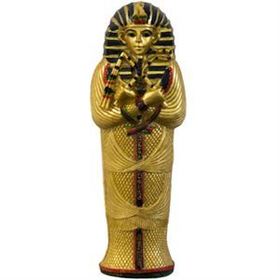
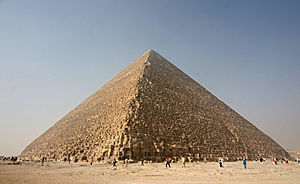
- 20Earned everlasting fame for being the pharaoh responsible for the Great Pyramid at Giza which he built to serve as his tombKing Khufu (aka Cheops (KEE-ops)
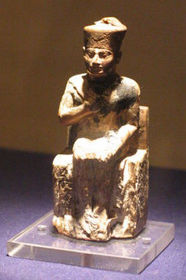
- 21Largest of the 3 pyramids at Giza; built by King Khufu; the only monument of the 7 Wonders of the Ancient World to surviveThe Great Pyramid
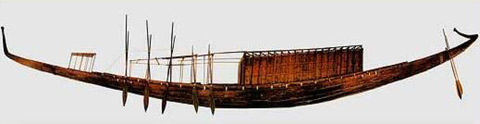
- 22Discovered in 1952 buried under the Great Pyramid; it would be needed to ferry King Khufu's spirit across the sky to be with Ra, the Sun godKing Khufu's boat
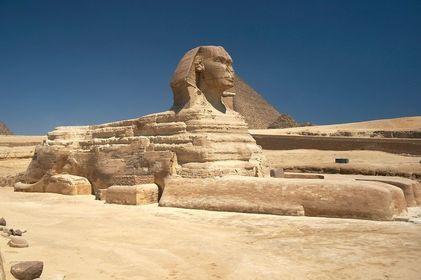
- 23One of the largest and oldest statues in the world. Archeologist believe that it was carved around 2500 BC and that the head is meant to be the likeness of the Pharaoh Khafra.Great Sphinx
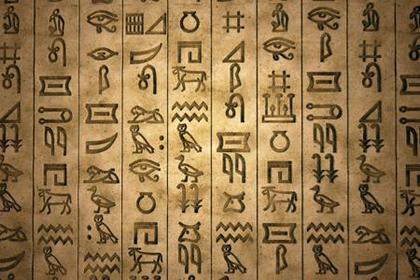
- 24Egyptian picture writingHieroglyphics
- 25A stone with writing on it in two languages (Egyptian and Greek), using three scripts (hieroglyphic, demotic, and Greek).The Rosetta Stone
- 26Invaded Egypt; and ruled for 200 years; introduced the horse drawn chariotHyksos
- 27First great woman ruler in history; she ruled Egypt as king not queen. Sculptures and masks show her with a false beard.Hatshepsut (hat-SHEP-soot)
- 28Rejected the traditional religion in favor of worshiping the Aten, or sun disc, after whom he renamed himself. He closed all the temples to the old gods and obliterated their names from monuments.Akhenaten (aka Amenhotep)
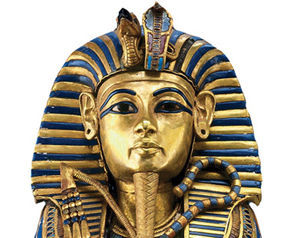
- 2917 year old boy pharaoh whose tomb survived untouched by grave robbers; more than 3,000 artifacts discovered in his tomb.King Tut (Tutankhamen)
- 30Ramses the Great reigned 67 years; fathered over 100 children; defeated the Hittites, the other superpower of ancient times; he declared himself a living god.Ramses II
- 31Reed like plant that grows on the Nile river Ancient Egyptians used to write onPapyrus
- 32The spreading of ideas from one culture to another cultureCulture Diffusion
Información
- Descripción
- Ch. 2 Ancient Mesopotamia & Egypt
- Creado por
- Madison Cain
- Visitas
- 193
- Etiquetas
- Valoración