
Fichas
Basic Surgical Instruments
Fichas del conjunto (59)
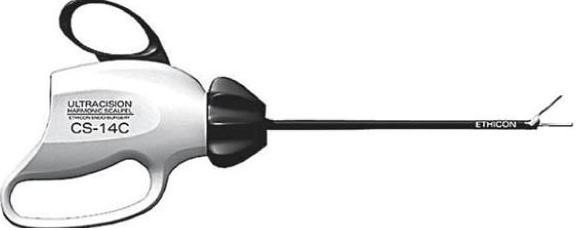
- 1—-Harmonic Scalpel
(Ultrasonic scalpel)
-Accessory
-A grasping instrument that delivers ultrasonic energy between the jaws to coagulate and divide tissue by low-temp cavitation - 2—-Halstead Forceps
(Mosquito, Hartman)
-Clamping & Occluding
-Occluding bleeders in small superficial wounds before cauterization or ligation. Usually used in plastic, pediatric, thyroid, and hand.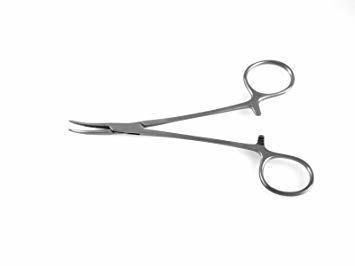
- 3—-Crile Forceps
(Hemostat, snap)
-Clamping & Occluding
-Occluding bleeders, also blunt dissection when separating planes and tissue.
-The most widely used clamp!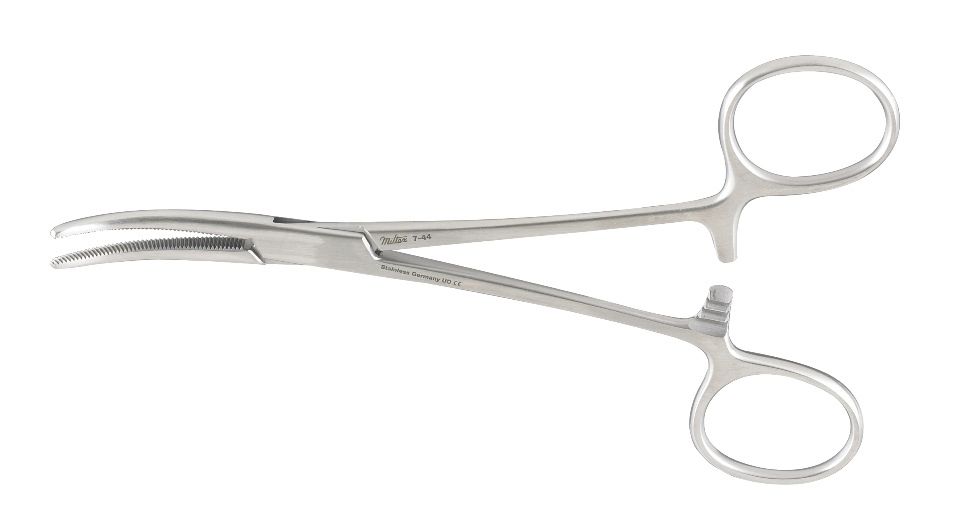
- 4—-Kelly Forceps
(Hemostat, clamp)
-Clamping & Occluding
-Occluding bleeders before cauterization or ligation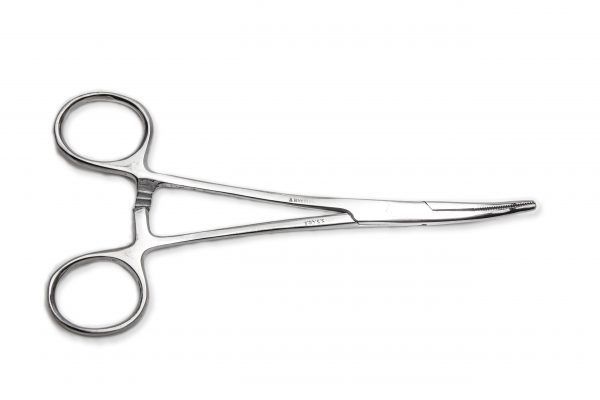
- 5—-Rochester-Pean Forceps
(Pean, Mayo, Kelly-Pean)
-Clamping & Occluding
-Broader and wider than crile
-Occluding larger blood vessels and tissue before ligation, usually in a deeper wound or heavier tissue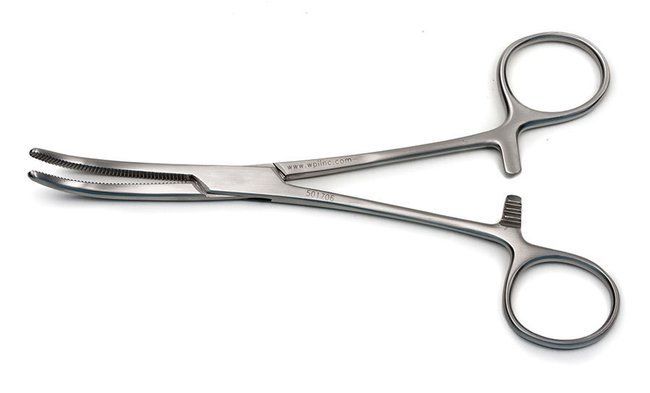
- 6—-Carmalt Forceps
(Carmalt, big curved)
-Clamping & Occluding
-Crosshatch pattern at tips into vertical serrations
-Occluding larger blood vessels usually in a deeper wound or heavier tissue
-Often what the Kittner is loaded onto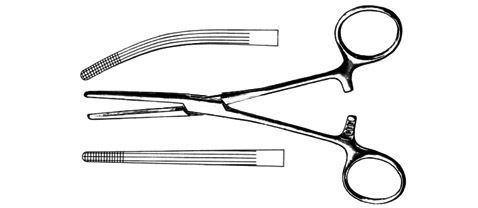
- 7—-Mixter Forceps
(Right Angle, Gemini, Lahey, obtuse/ureter clamp
-Clamping & Occluding
-Clamp, dissect, and occlude tissue. Often used to place a tie or vessel loop under and around a tubular structure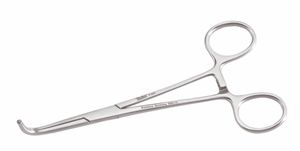
- 8—-Adson Forceps
(Tonsil, Schnidt, fancy clamp, T&A)
-Clamping & Occluding
-Horizontal serrations HALFWAY down jaws, long shanks
-Clamps small vessels in deep wounds or holds tonsil sponges. Can also create a "tie on a passer"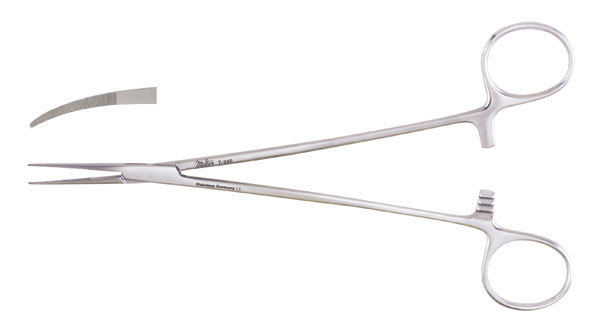
- 9—-Straight Mayo Scissors
(suture scissors)
-Cutting & Dissecting
-used to cut sutures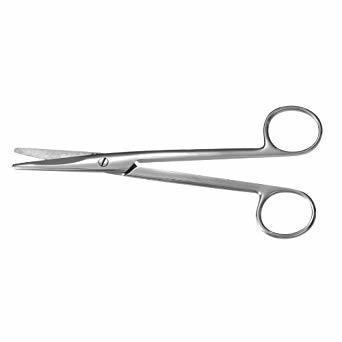
- 10—-Curved Mayo Scissors
(Heavy tissue scissors)
-Cutting & Dissecting
-Dissect heavy fibrous tissue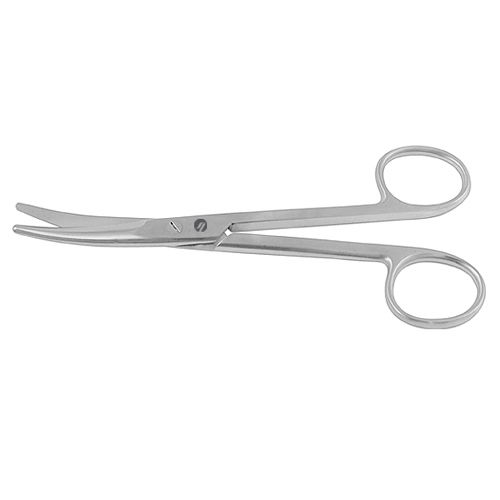
- 11—-Curved Metzenbaum Scissors
(metz, tissue scissors)
-Cutting & Dissecting
-Dissect delicate tissue
-Longer & thinner than Mayo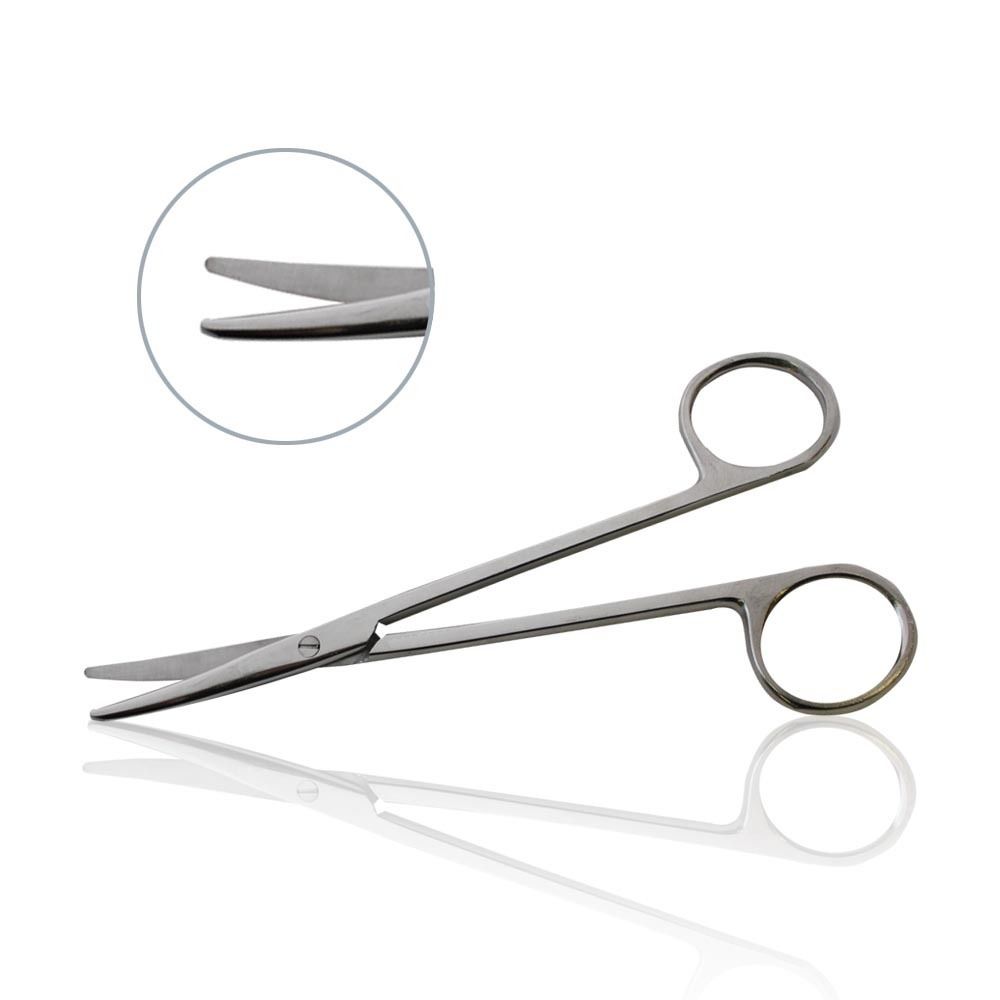
- 12—-Lister Bandage Scissors
(bandage scissors)
-Cutting & Dissecting
-Cuts dressings & drapes, also used in C-sections to open uterus without harming the baby
-Flattened tip allows scissors to get under dressings to cut w/o harming patient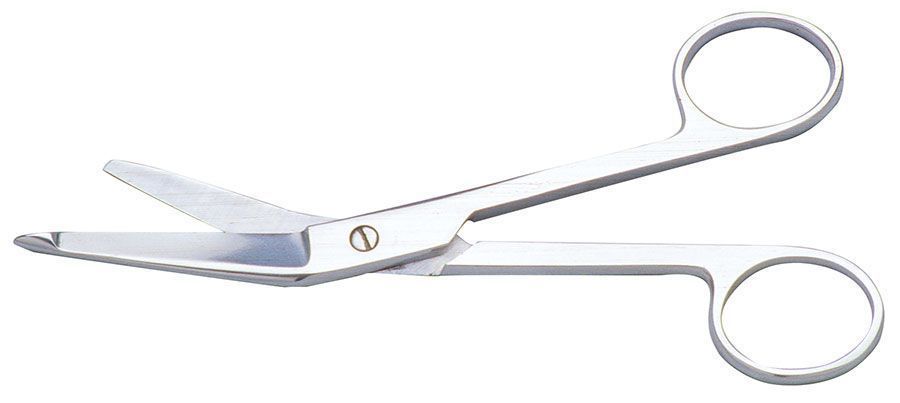
- 13—-Wire Scissors
(wire cutters)
-Cutting & Dissecting
-Cuts small gauge wire and sutures
-Fine serrations on blades, circular notch on inner jaws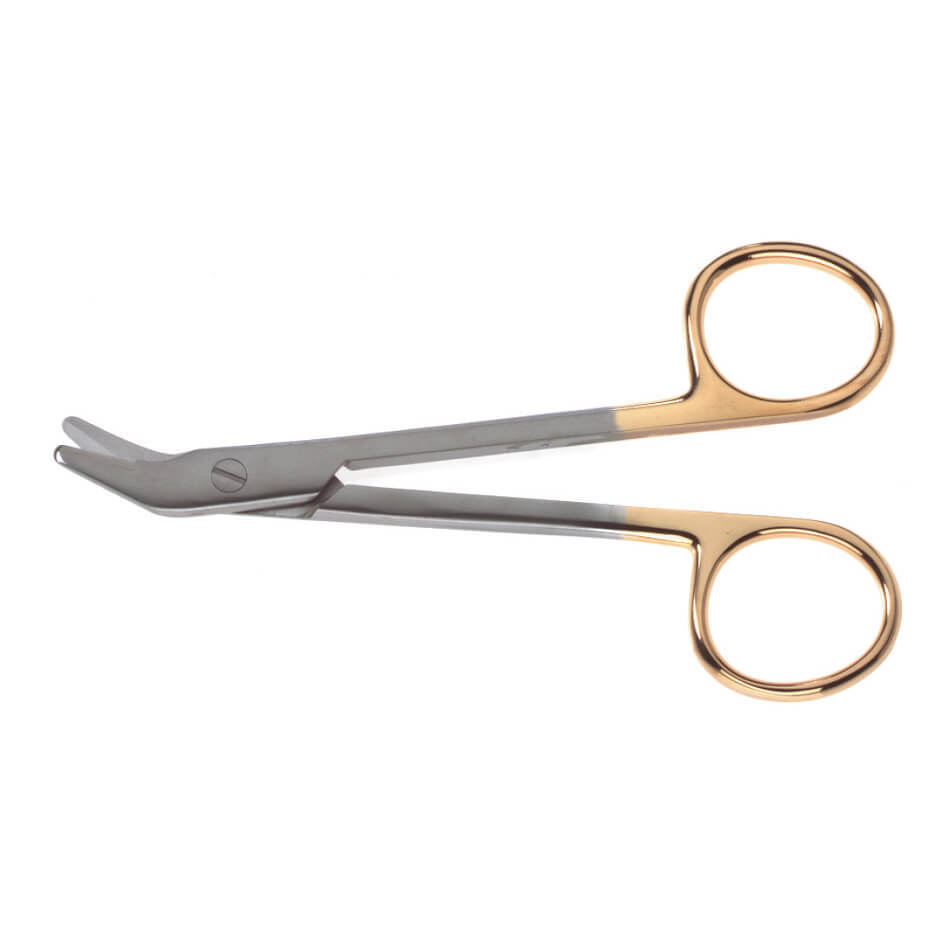
- 14—-No. 3 Knife Handle
(no. 3 scalpel handle, no. 3 handle)
-Cutting & Dissecting
-Holds blades 10, 11, 12, 15
-Makes skin incisions and fine cuts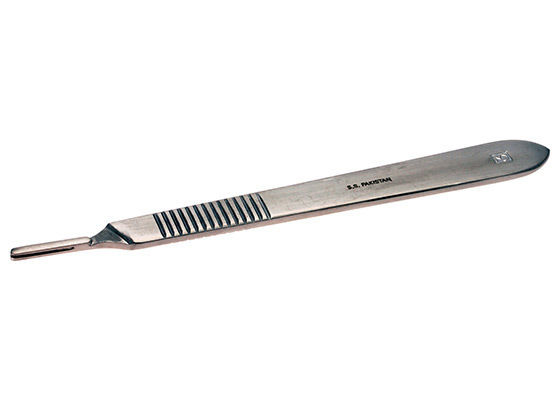
- 15—-No. 3 Long Knife Handle
(Long knife, long handle, long scalpel)
-Cutting & Dissecting
-Holds Blades 10, 11, 12, 15
-Used for precision cutting deep within a wound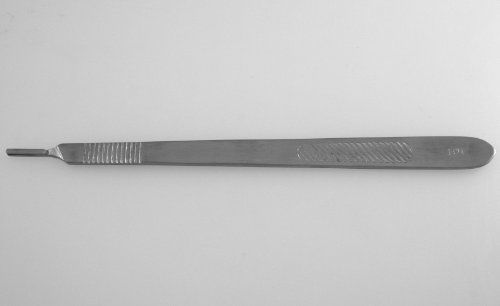
- 16—-No. 7 Knife Handle
(No. 7 scalpel handle, no. 7 handle)
-Cutting & Dissecting
-Holds blades 10, 11, 12, 15
-Used when precision cutting is needed in a confined space or deep wound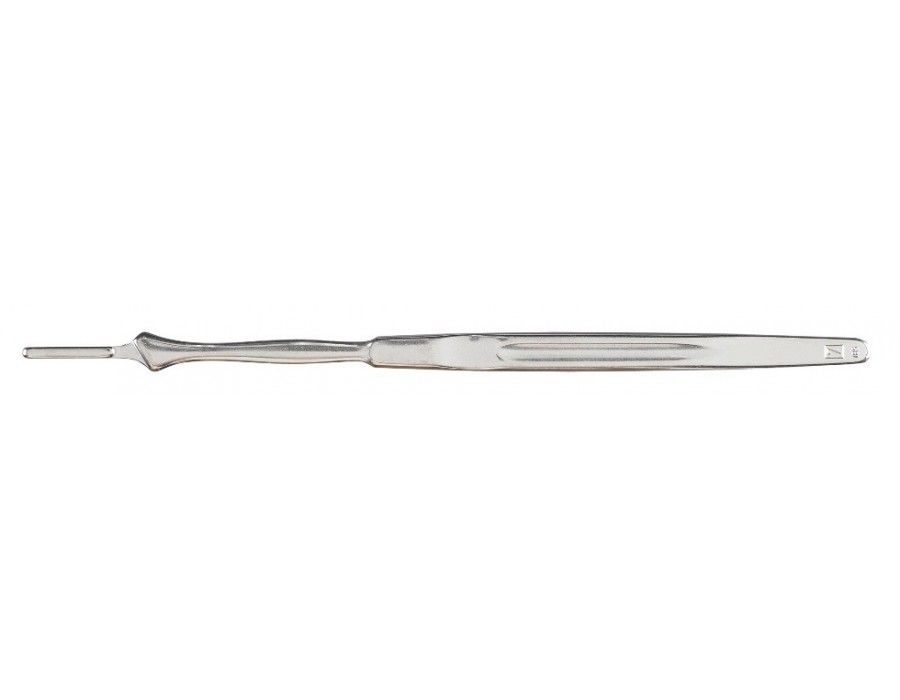
- 17—-No. 10 Blade
-Cutting & Dissecting
-Used for making skin incisions
-Extensive body blade with a curved cutting edge to the tip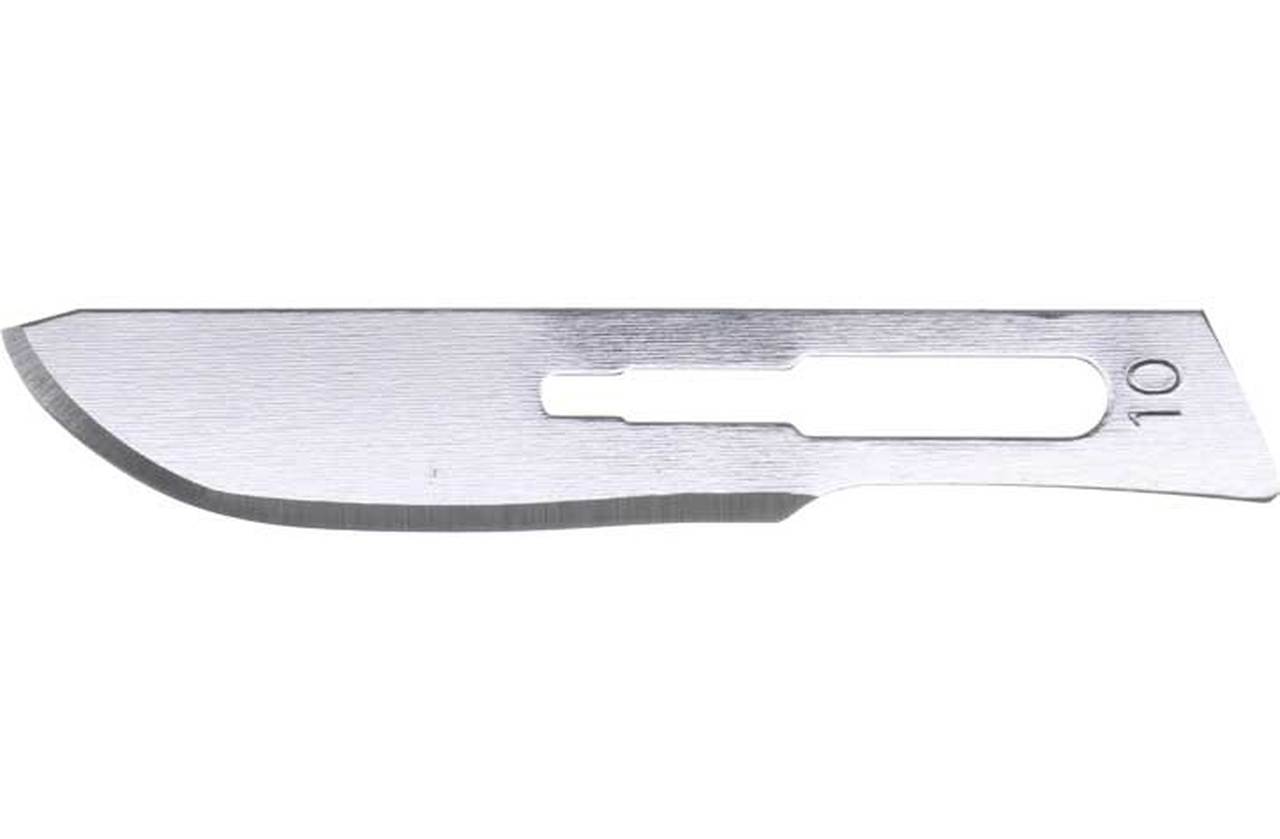
- 18—-No. 11 Blade
-Cutting & Dissecting
-Used for puncturing the skin or to initiate opening of an artery
-Angled cutting edge that ascends to a sharp point
-Commonly loaded onto a no. 7 handle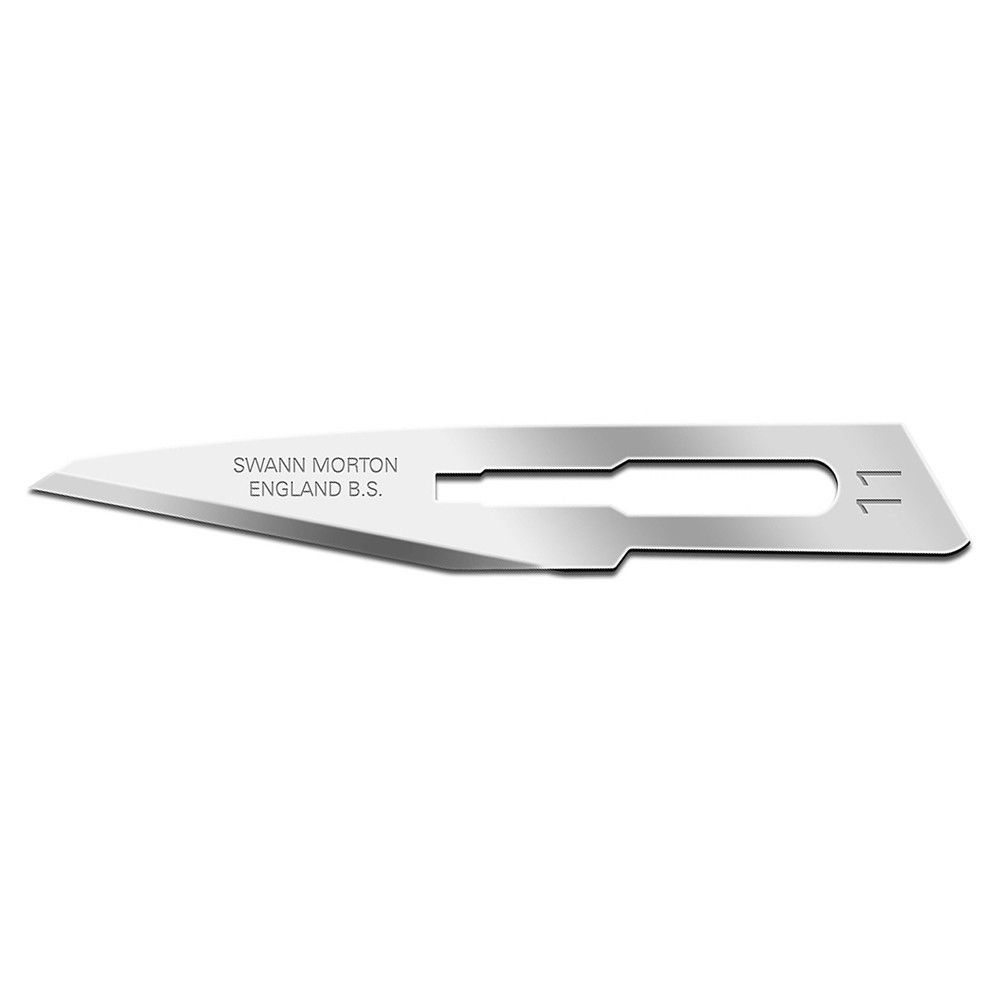
- 19—-No. 12 Blade
(Sickle knife, tonsil blade)
-Cutting & Dissecting
-Used during tonsillectomies, parotid surgeries, septoplasties, and cleft palate. Can also remove calculi from ureters and kidneys
-Crescent shaped blade along inside edge of the curve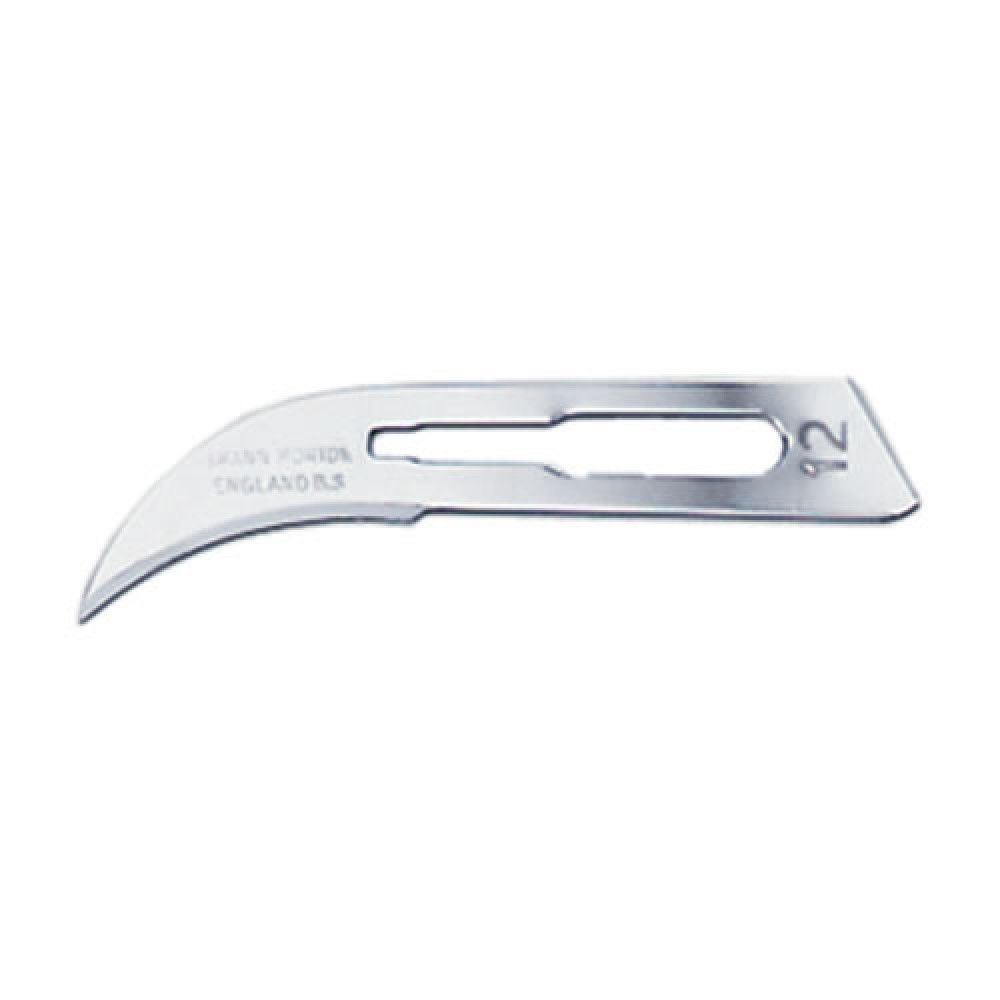
- 20—-No. 15 Blade
-Cutting & Dissecting
-Used to create small & precise incisions
-Commonly used for pediatric & plastic & reconstructive
-Narrow blade with small rounded cutting edge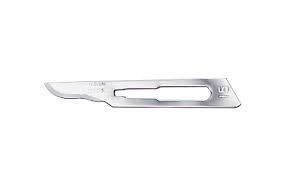
- 21—-No. 4 Knife Handle
(No. 4 scalpel handle, no. 4 handle)
-Cutting & Dissecting
-Used with no. 20 blade to create a larger and deeper incision in heavy tissue areas
-Holds blades 20, 21, 22, 23, 24, 25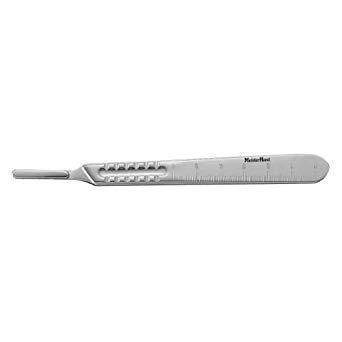
- 22—-No. 20 Blade
-Cutting & Dissecting
-Used w/ no. 4 handle to create large deep incision on heavy tissues and bone
-Broader body blade with curved cutting edge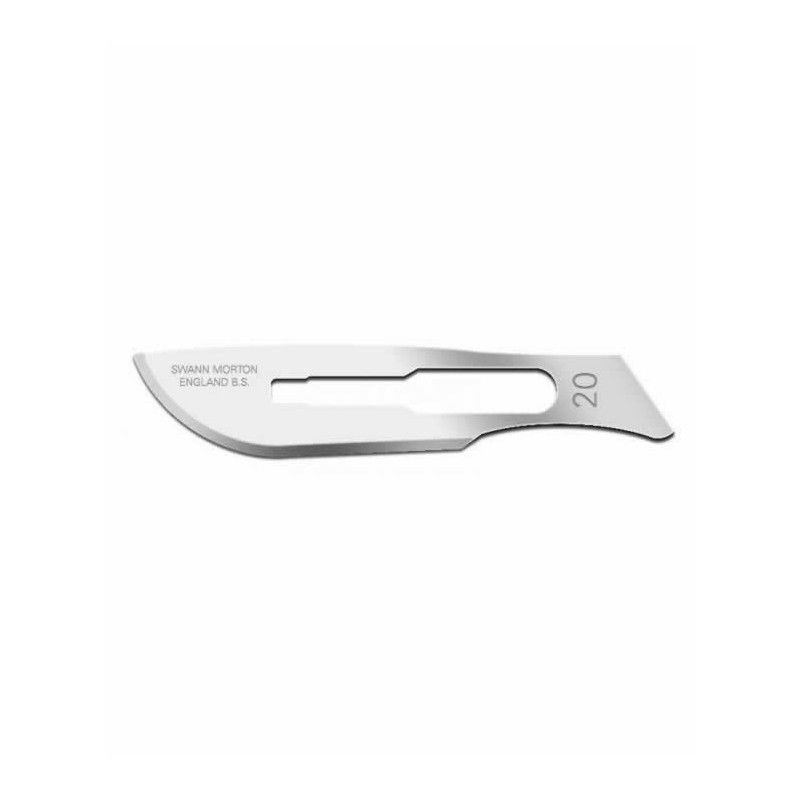
- 23—-Beaver Handle
(Round handle)
-Cutting & Dissecting
-Used for precision cutting in a confined space. The rounded tip has slots to accept a blade.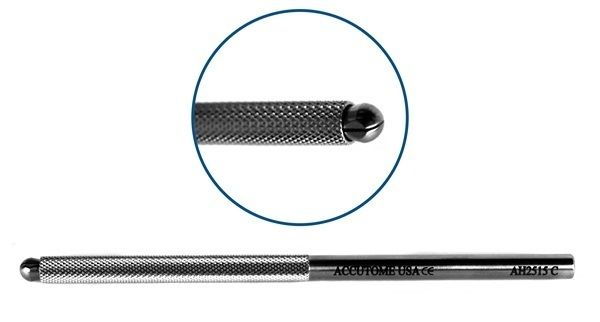
- 24—-Plain Adson Tissue Forceps
(Adson dressing forceps)
-Grasping & Holding
-Used for grasping delicate tissue
-Fine tips with horizontal serrations
(no teeth)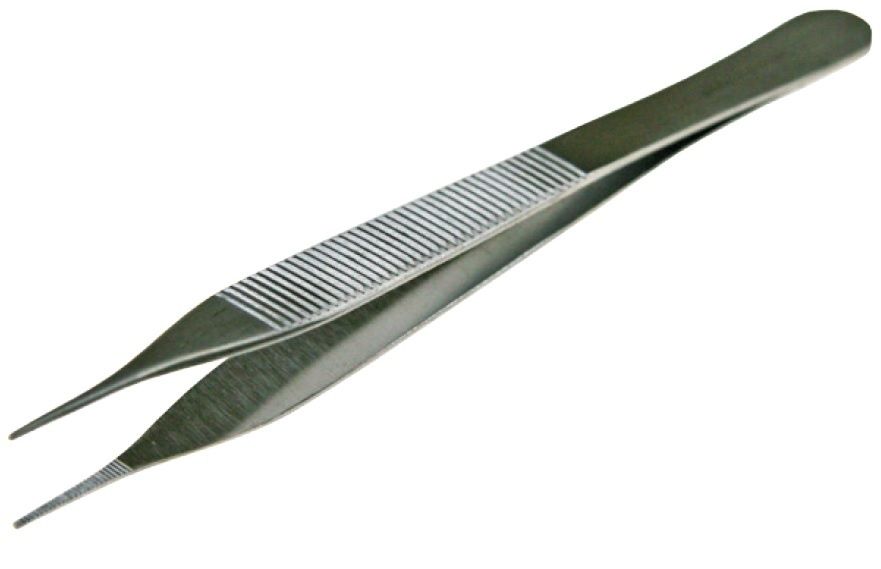
- 25—-Toothed Adson Tissue Forceps
(Adson w/ teeth, rat tooth)
-Grasping & Holding
-Aligns edges of a wound during stapling, grasps superficial tissue to place Steri-Strips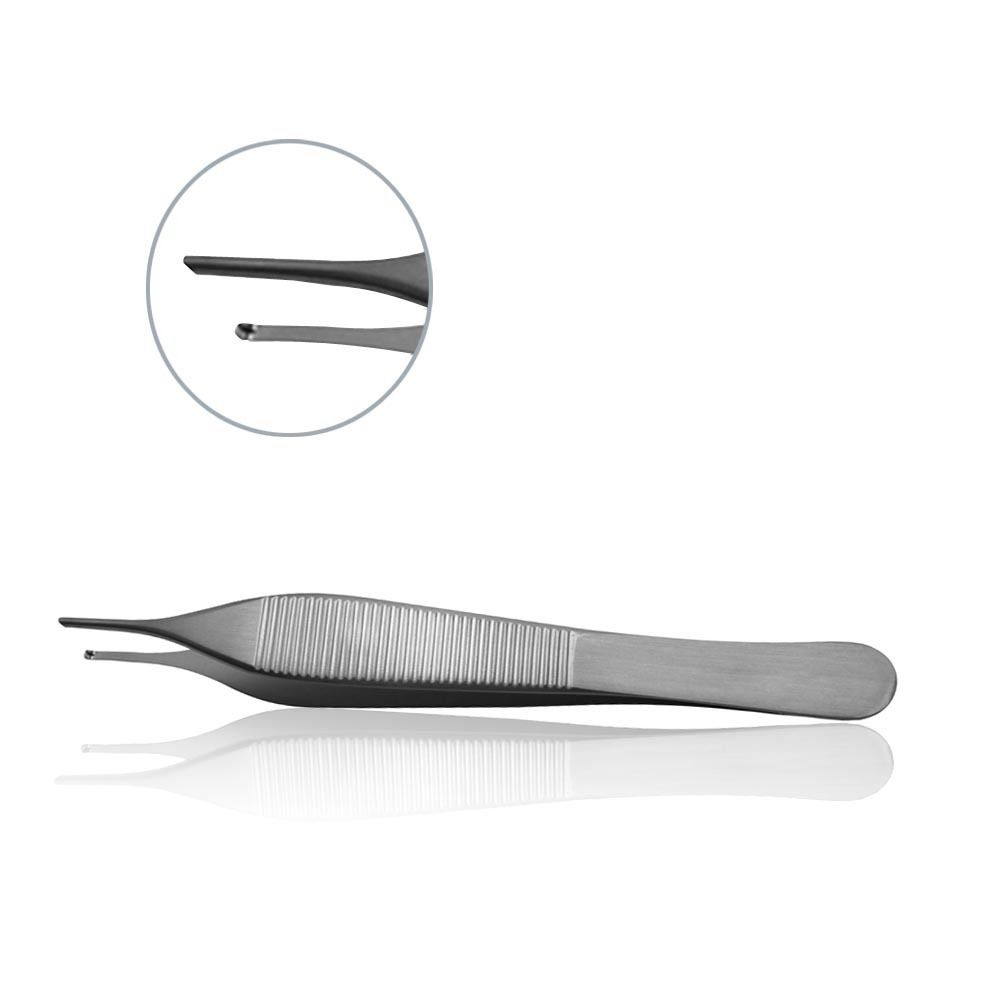
- 26—-Brown-Adson Tissue Forceps
(Brown forceps)
-Grasping & Holding
-Used for grasping superficial delicate tissues
-Each side of tip there is 2 rows of interlocking teeth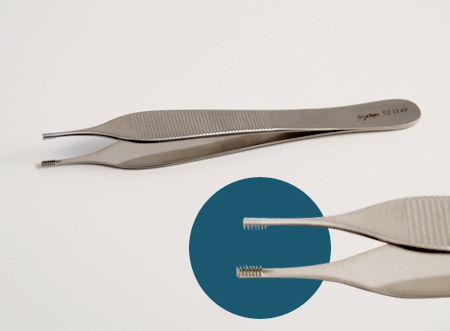
- 27—-Plain Tissue Forceps
(Semken dressing forceps, smooth, tissue forceps without teeth)
-Grasping & Holding
-Used for grasping tissue & dressing application
-Atraumatic, horizontal serrations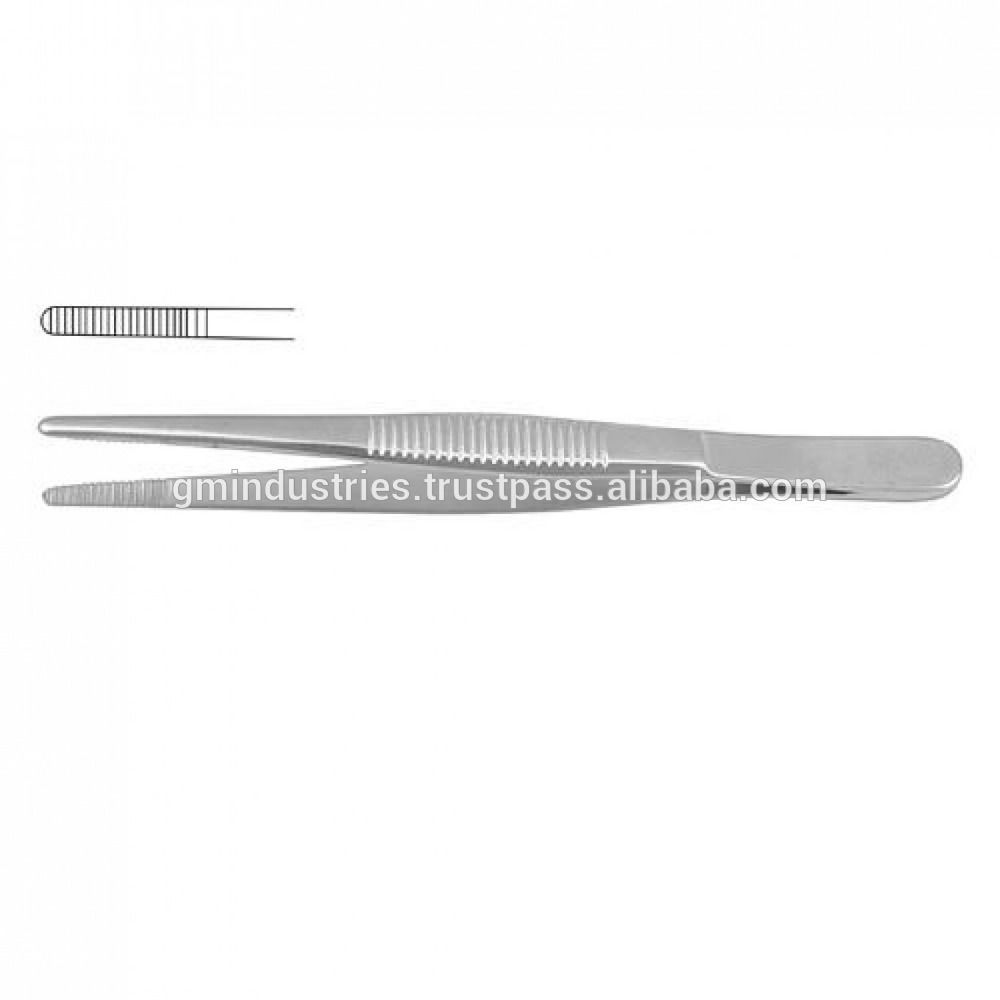
- 28—-Toothed Tissue Forceps
(Semken tissue forceps, rat tooth, tissue forceps with teeth)
-Grasping & Holding
-Used for grasping moderate to heavy tissue & during wound closure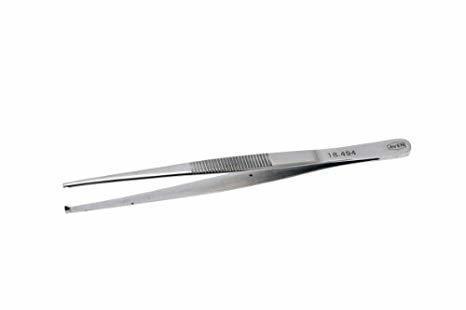
- 29—-Debakey Tissue Forceps
(Debakey's, Debakes)
-Grasping & Holding
-Grasps tissue, common in cardiac, vascular, and GI procedures
-A set of parallel fine serrations runs the length of one jaw and the other has a center row that interlock when closed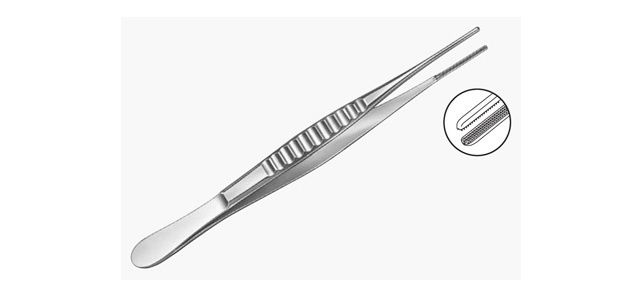
- 30—-Bonney Tissue Forceps
(Victor Bonney, Victors)
-Grasping & Holding
-Grasps heavy tissue, muscle, or bone
-Interlocking teeth, horizontal serrations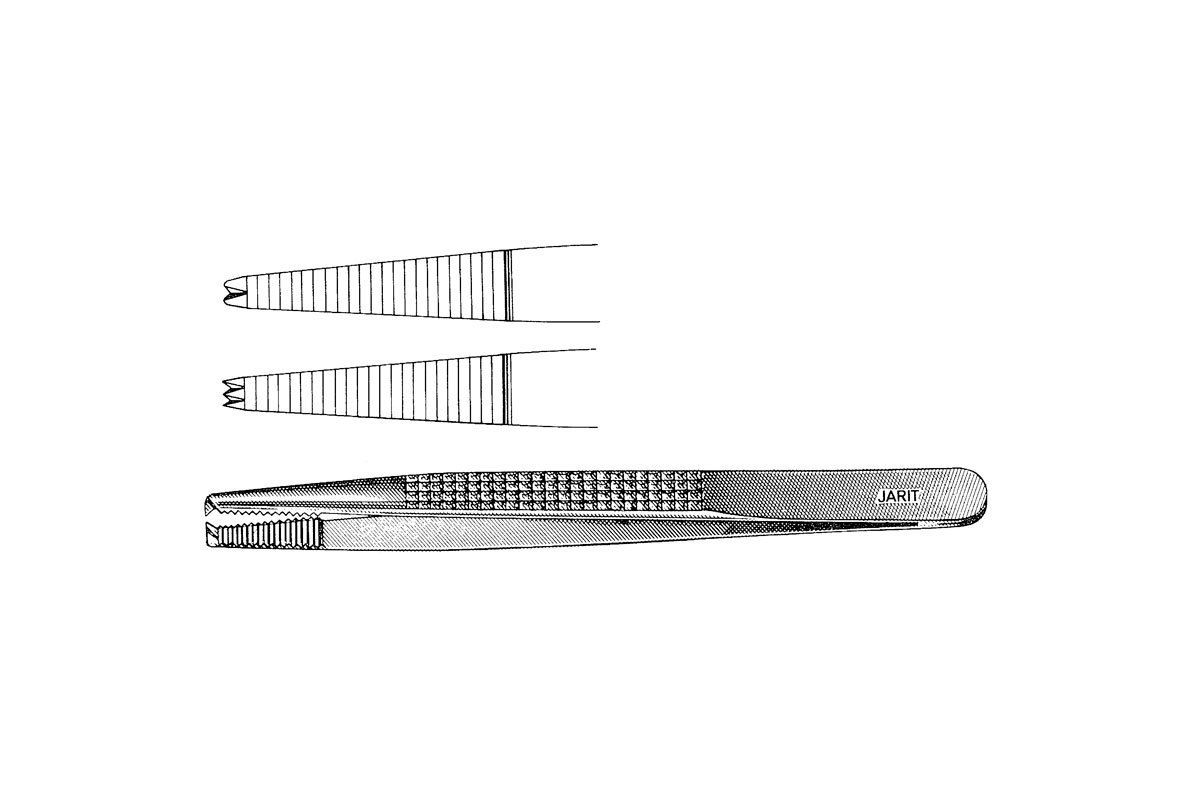
- 31—-Ferris-Smith Tissue Forceps
(Big Ugly's)
-Grasping & Holding
-Grasps heavy tissue, muscle, or bone
-Crisscross pattern serration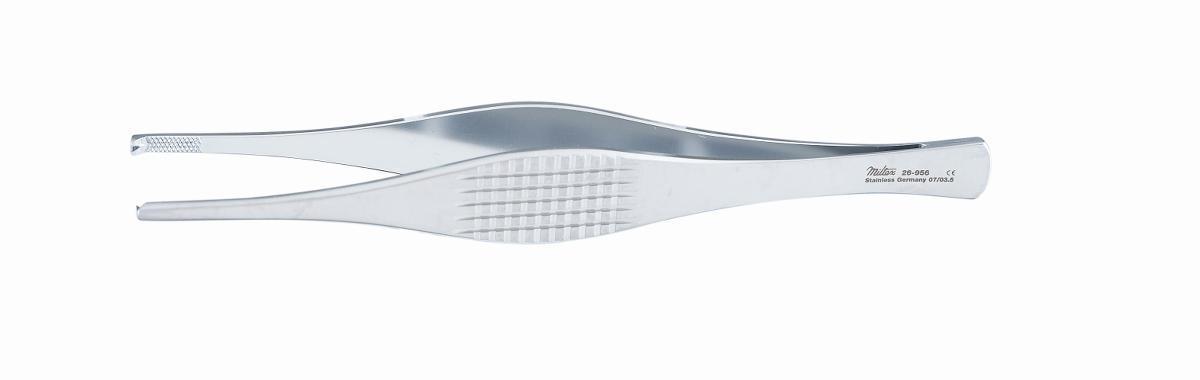
- 32—-Singley Tissue Forceps
(Tuttle thoracic tissue forceps)
-Grasps intestinal tissue, delicate tissues or dressing materials and sponges
-Oval shaped tip with serrated jaws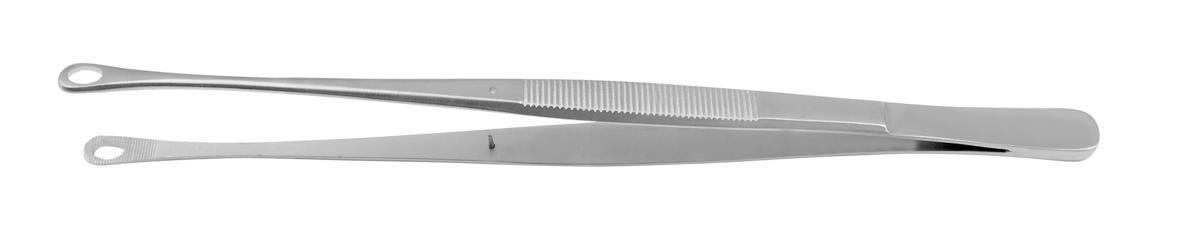
- 33—-Russian Tissue Forceps
(Star forceps, Russian star forceps, Russians)
-Grasping & Holding
-Used for grasping dense tissue and during wound closure
-Rounded tips with starburst pattern serrations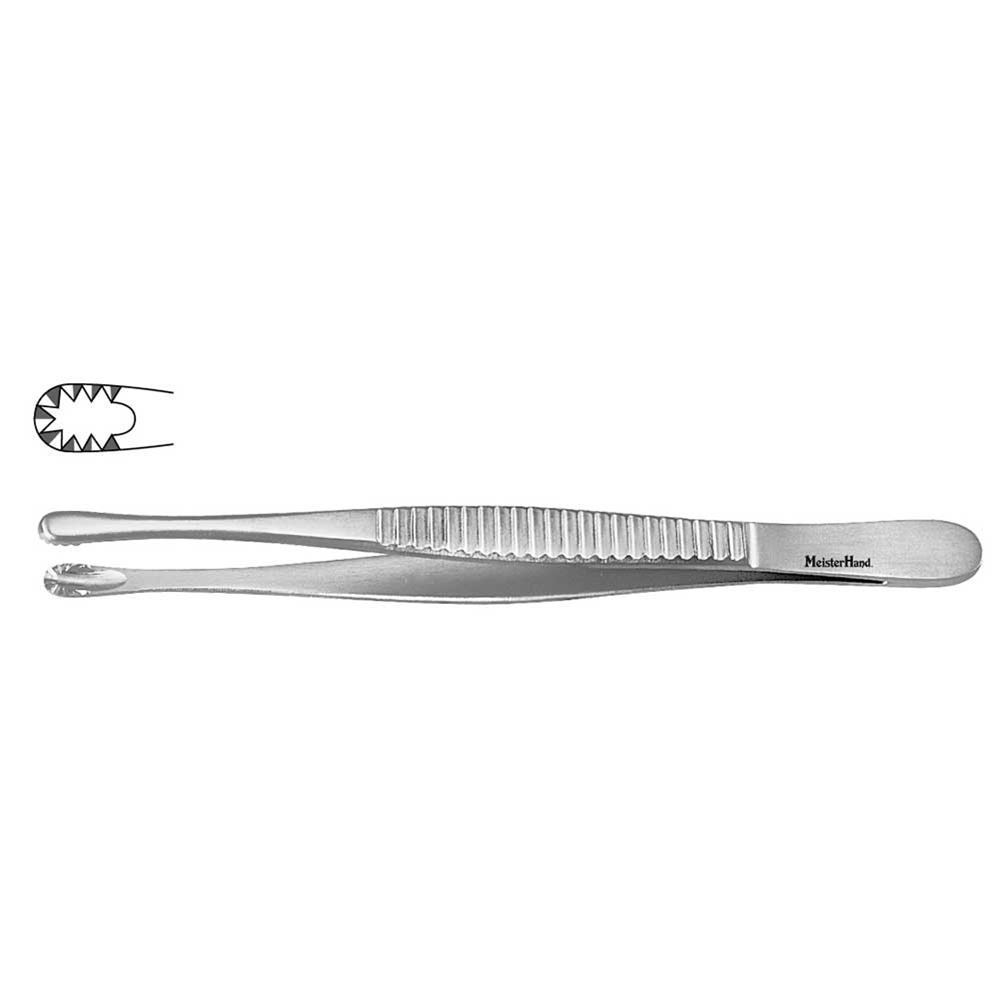
- 34—-Towel Clip (Penetrating)
(Backhaus, Roeder, Jones)
-Grasping & Holding
-Used for holding towels in place when draping, when grasping tough tissue, and during reduction of small bone fractures
-Never use to attach anything to drapes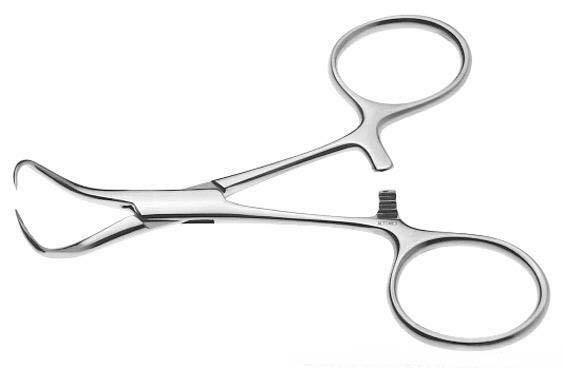
- 35—Non penetrating Towel Clip
(Atraumatic, Lornas, Ednas)
-Grasping & Holding
-Used for attaching Boviea and suction to drapes
- 36—-Forester Sponge Forceps
(Fletcher, sponge stick, ring forceps)
-Grasping & Holding
-Used to create sponge stick, for grasping tissues such as lungs, removing uterine contents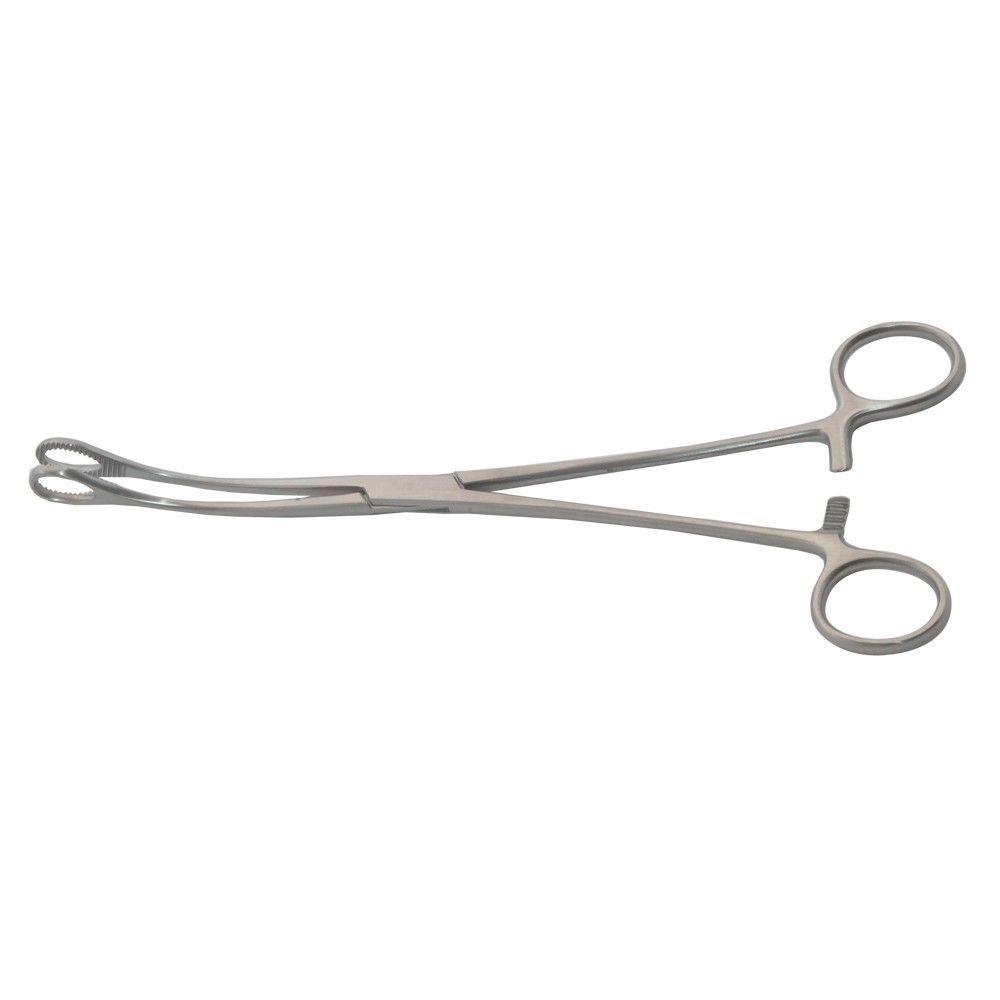
- 37—-Allis Forceps
-Grasping & Holding
-Used for lifting, holding, and retracting slippery dense tissue that is being removed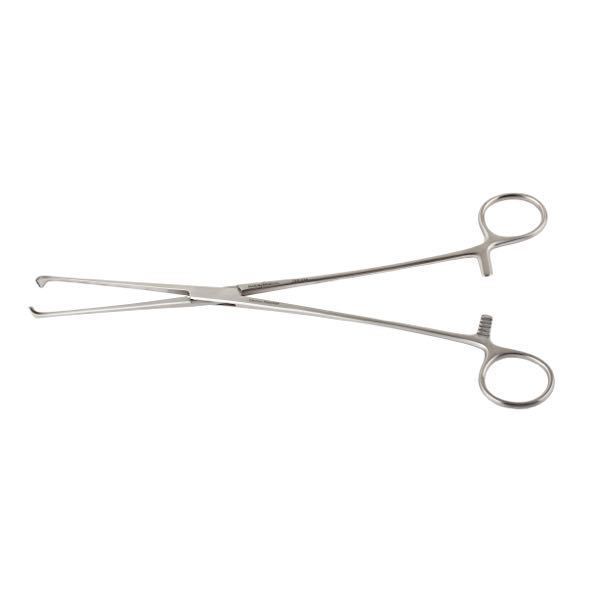
- 38—-Babcock Forceps
-Grasping & Holding
-Used for grasping and encircling delicate structures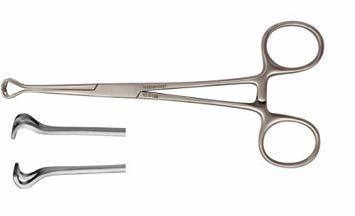
- 39—-Kocher Forceps
(Koch, Ochsner)
-Grasping & Holding
-Grasps tough, fibrous, slipper tissue such as muscle and fascia
-Horizontal serrations with interlocking teeth at the tips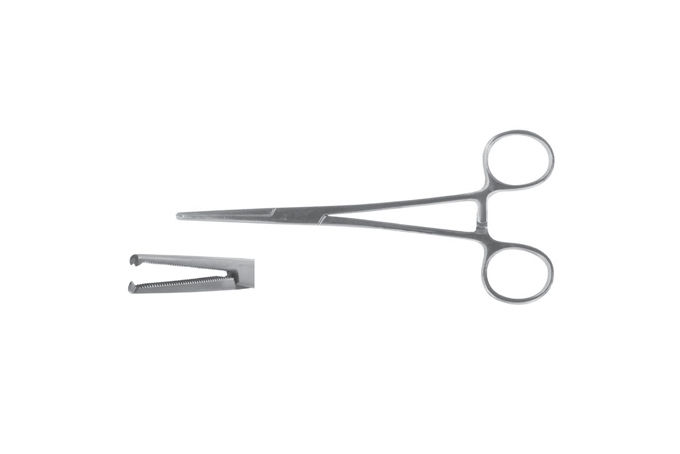
- 40—-Army-Navy Retractor
(Army's, Navy's, U.S. retractor)
-Retracting & Exposing
-Used for retraction of small superficial incisions
-Oval opening in middle, one end is longer than the other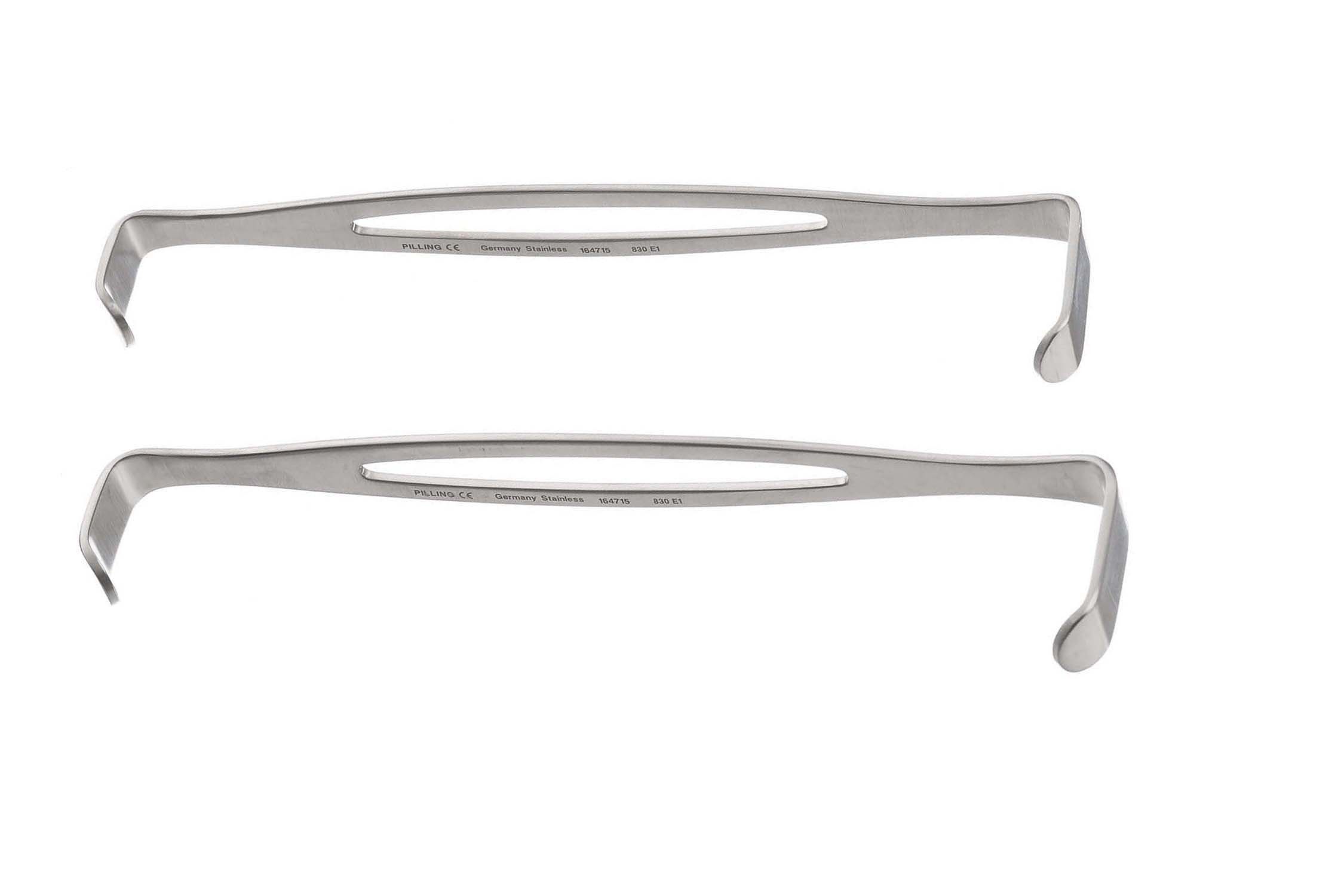
- 41—-Goelet Retractor
(Bolt retractor)
-Retracting & Exposing
-Used for retraction of small superficial incisions
-Smooth cup shaped blades with crescent-shape lip. One end is longer than the other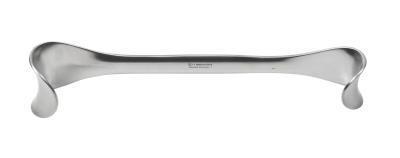
- 42—-Senn Retractor
(Cat Paw)
-Retracting & Exposing
-Used for retraction of skin edges and deeper tissues of small incisions
-One end has 3 claws, the other end is small and laterally bent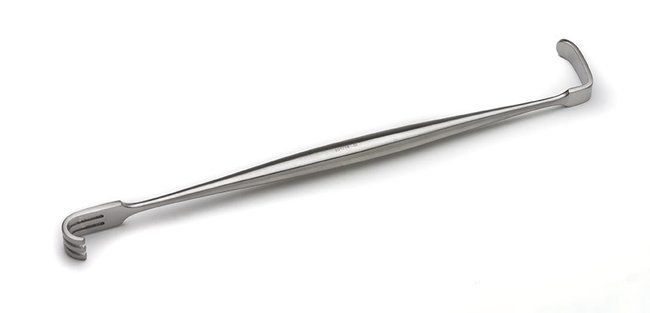
- 43—-Murphy Retractor
(Rake)
-Retracting & Exposing
-Used for superficial retraction of wound edges
-Four claws and handle has teardrop opening with two prongs on either side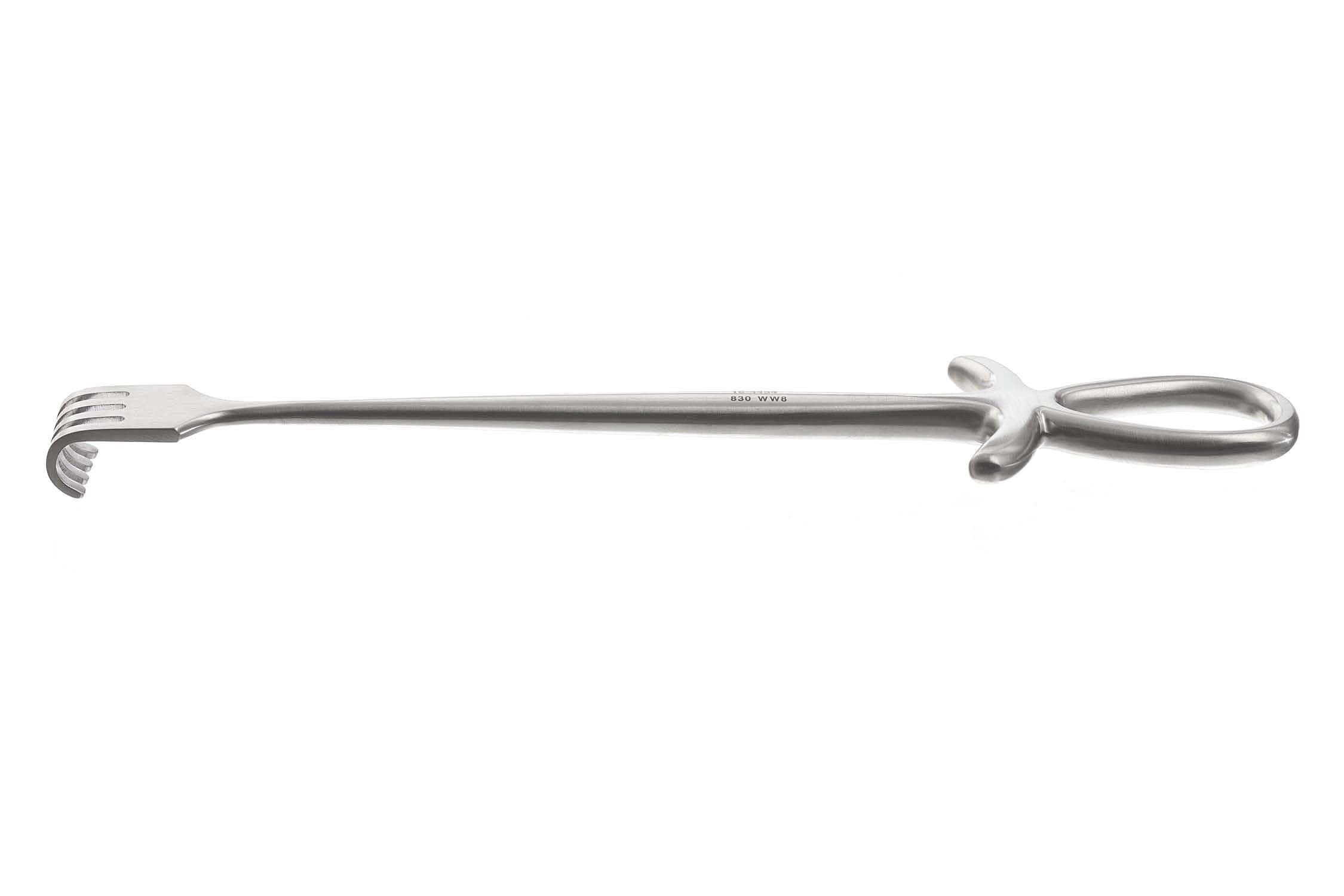
- 44—-Volkman Retractor
(Rake, Israeli)
-Retracting & Exposing
-Used for superficial retraction of wound edges
-Two-six claws, handle has teardrop opening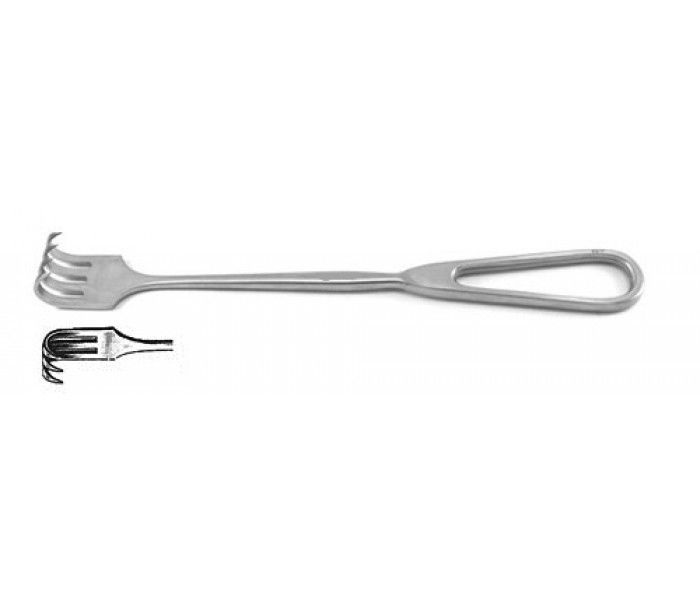
- 45—-Ribbon Retractor
(Malleable)
-Retracting & Exposing
-Used for retraction of organs and intestines
-Can be bent or molded as needed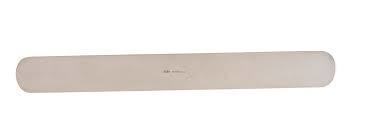
- 46—-Parker Retractor
(Park bench, nested right angle, double round)
-Retracting & Exposing
-Used for retraction and exposure of a small or shallow wound)
-Handheld & double ended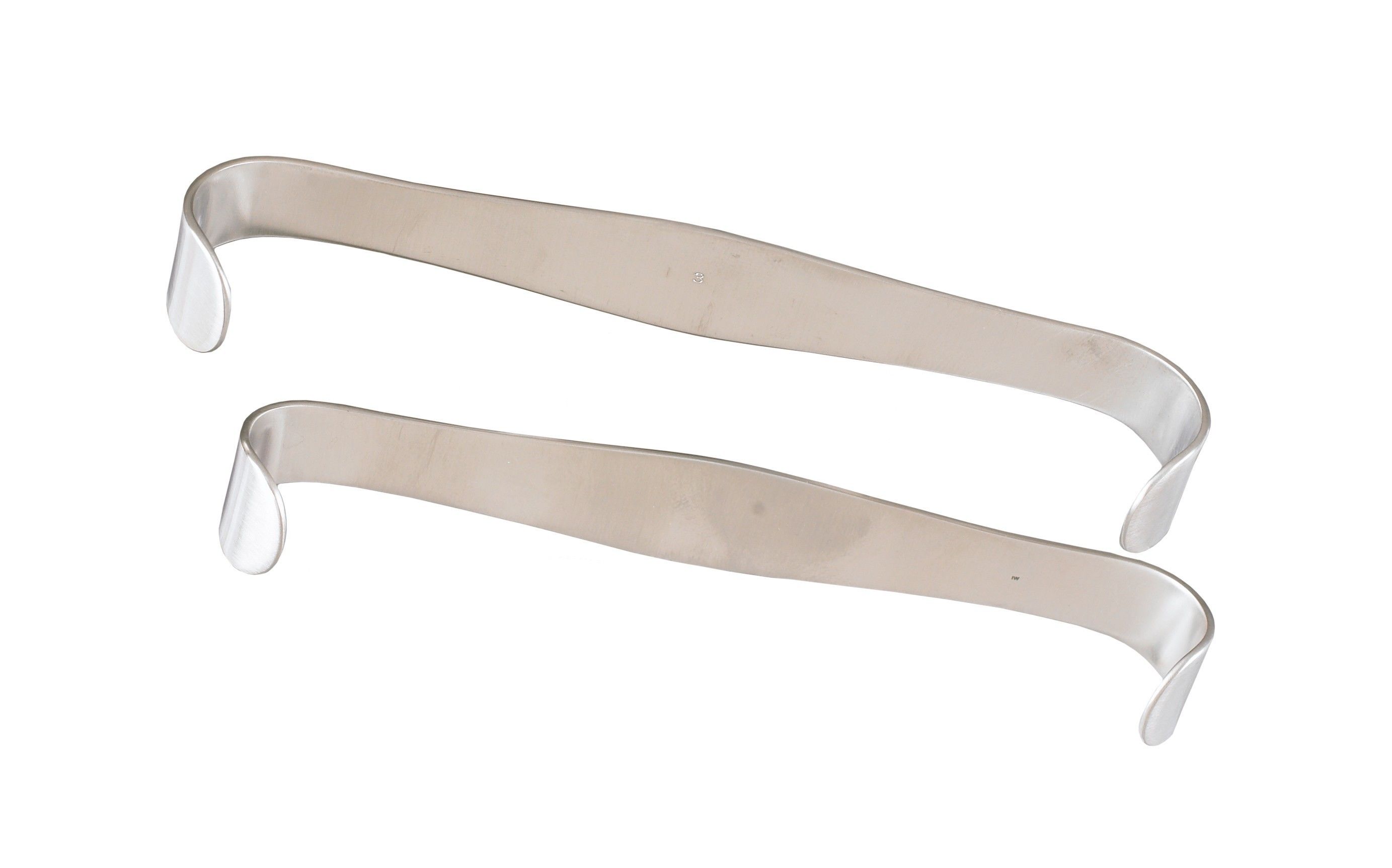
- 47—-Skin Hook
(Joseph hook, Gillies hook)
-Retracting & Exposing
-Used for retraction of skin edges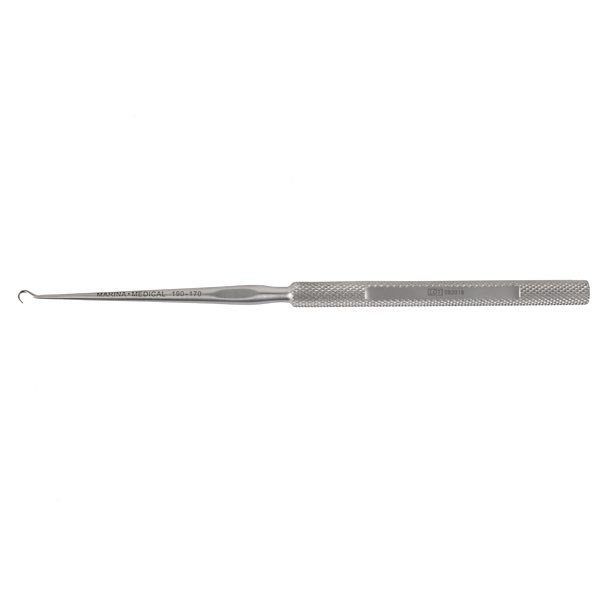
- 48—-Weitlaner Retractor
-Retracting & Exposing
-Used to hold wound edges open
-Self retaining with ratchet release
-Has three outward curved prongs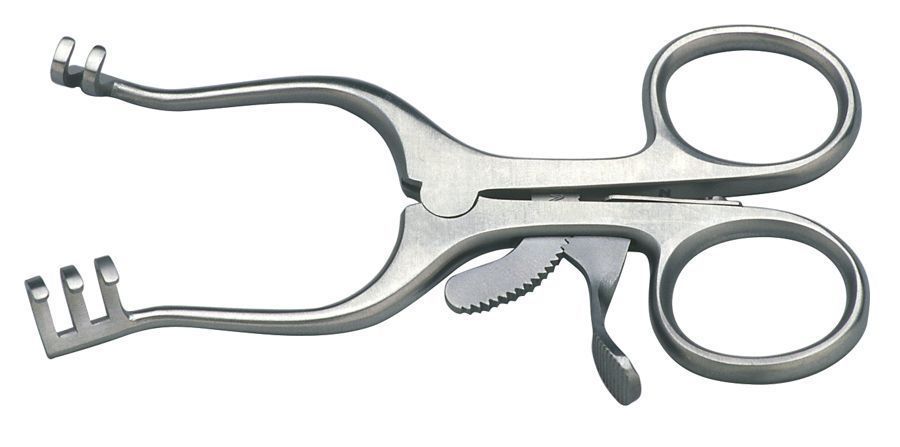
- 49—-Gelpi Retractor
-Retracting & Exposing
-Provides wound exposure ranging from superficial to deep
-Self retaining with ratchet release
-One outward sharp prong on either side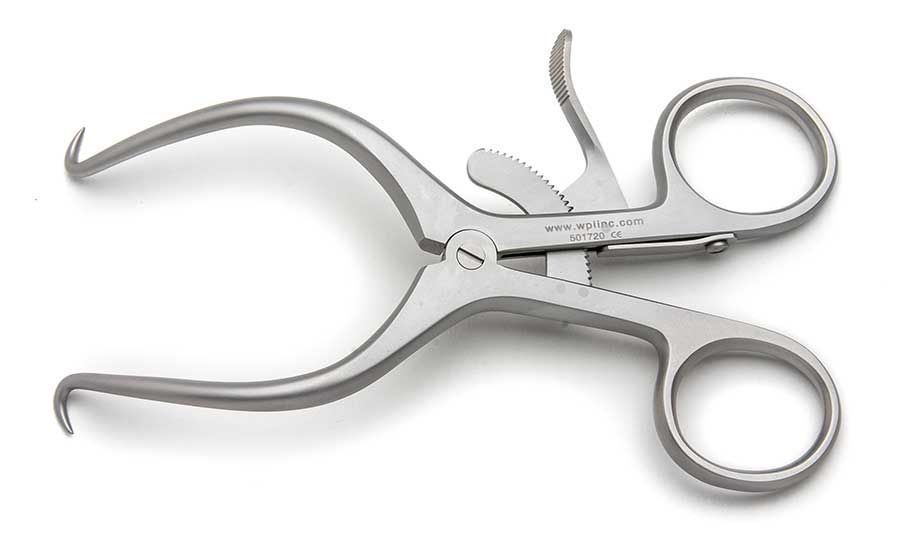
- 50—-Frazier Suction Tip
-Suctioning & Aspirating
-Used for suctioning in confined spaces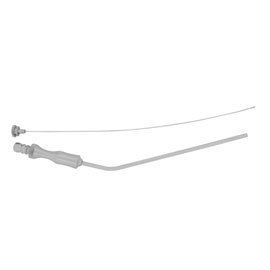
- 51—-Poole Suction Tip
(Abdominal sucker)
-Suctioning & Aspirating
-Used for suctioning large amounts of blood, can be used to suction down shaft of femur during a total hip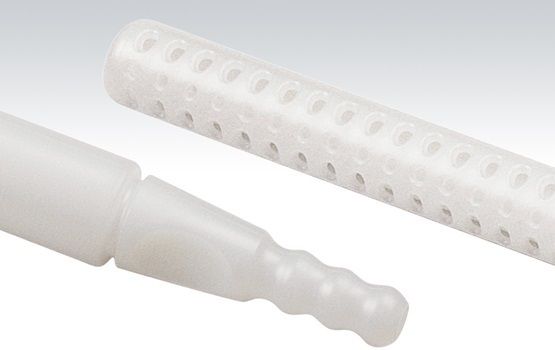
- 52—-Yankauer Suction Tip
(tonsil, oral)
-Suctioning & Aspirating
-Used for suctioning in all types of wounds, allows for suctioning without aspirating damage to surrounding tissue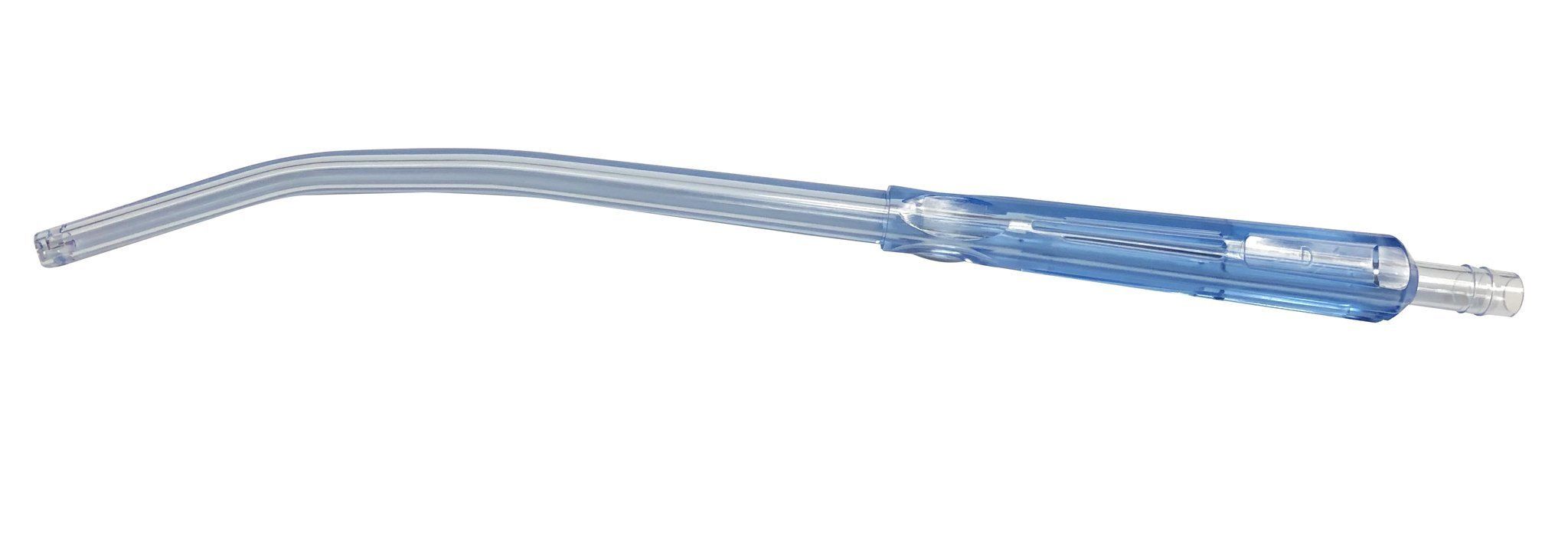
- 53—-Crile-Wood Needle Holder
(fine needle holder, fine needle driver)
-Suturing & Stapling
-Used for holding delicate to intermediate sized needles
-Narrow rounded tip with crisscross pattern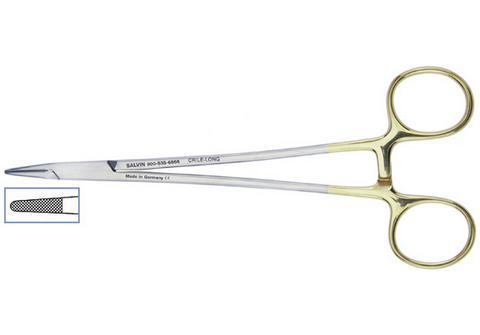
- 54—-Mayo-Hegar Needle Holder
(Heavy needle driver)
-Suturing & Stapling
-Used for holding heavy needles
-Broader jaw with crisscross pattern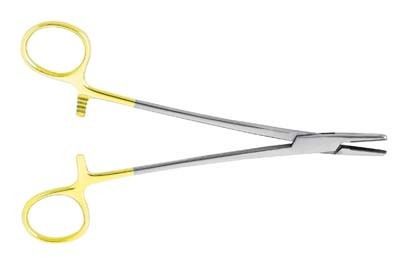
- 55—-Ryder Needle Holder
(Fine needle driver)
-Suturing & Stapling
-Used for holding delicate to intermediate needles, often for vascular procedures
-Fine tapered jaws with carbide insert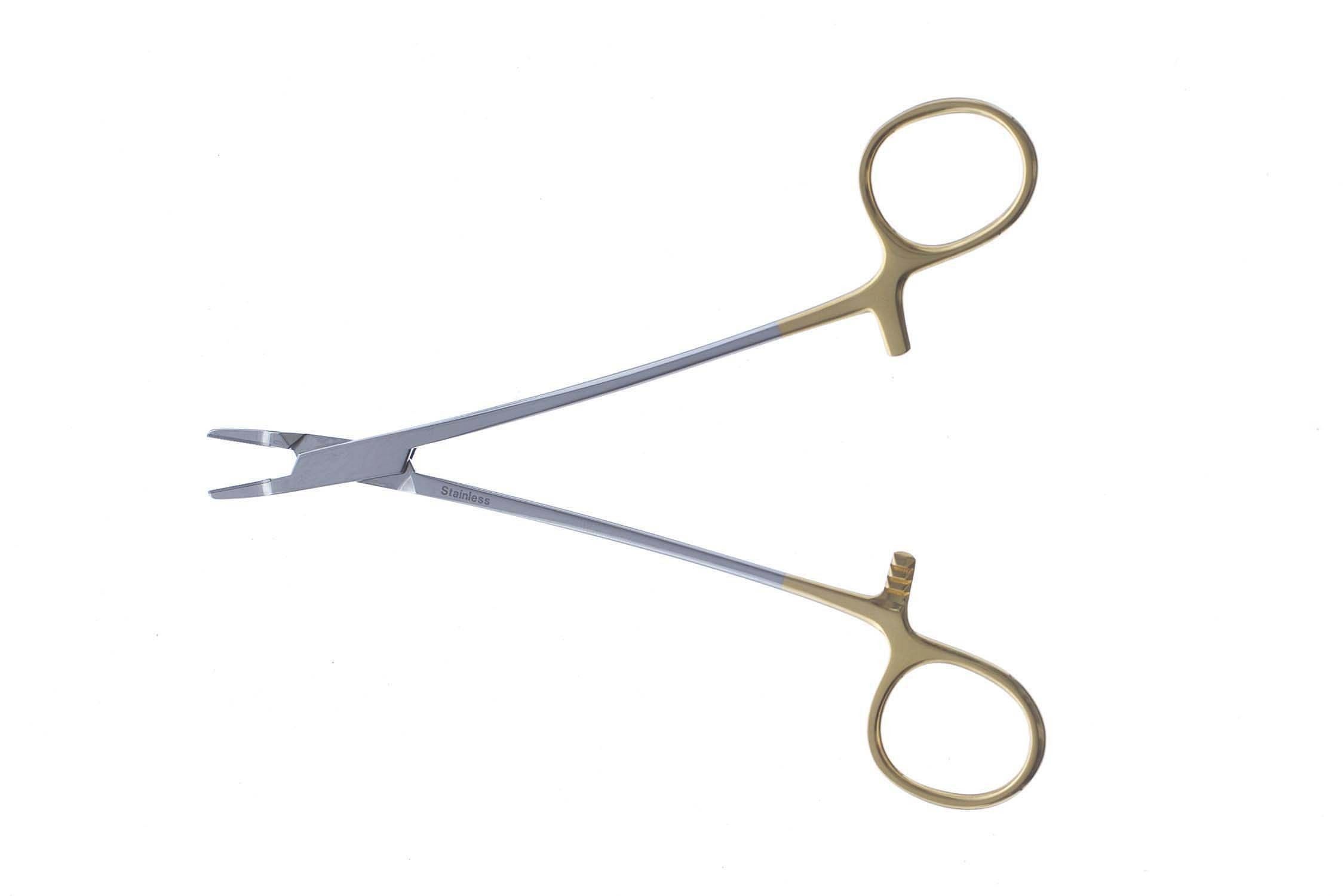
- 56—-Skin Stapler
-Suturing and Stapling
-Used during wound closure for skin approximation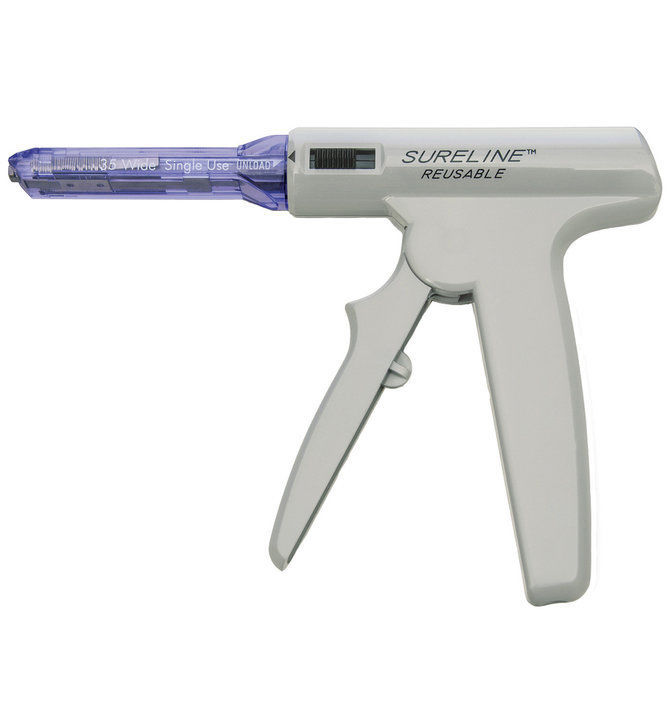
- 57—-Staple Remover
(Staple extractor)
-Suturing & Stapling
-Used to remove skin staples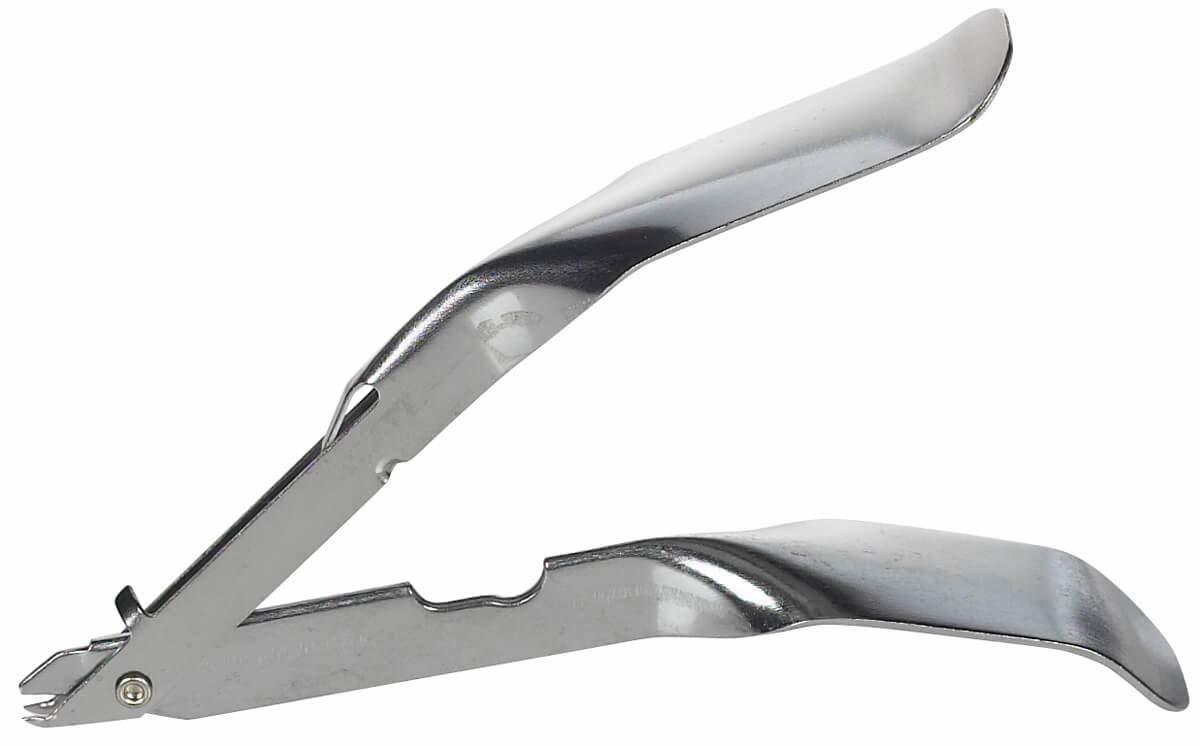
- 58—-Hemoclip Applier
(clip applier, Weck clip, ligaclip)
-Suturing & Stapling
-Used for occluding vessels or other tubular structures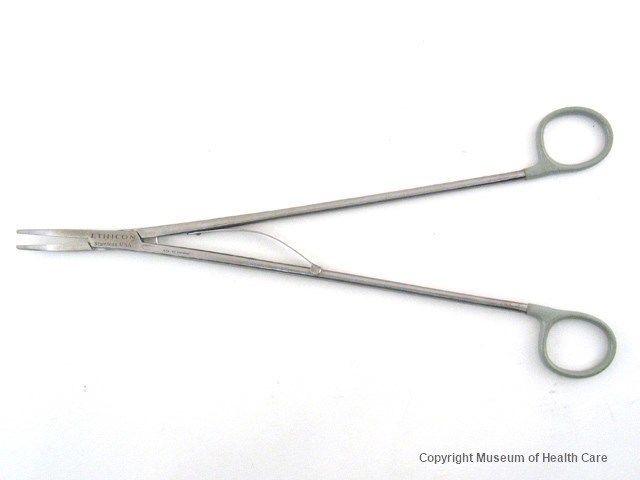
- 59—-Surgiclip Applier
(Hemoclip, ligaclip)
-Suturing & Stapling
-Used for occluding vessels or other tubular structures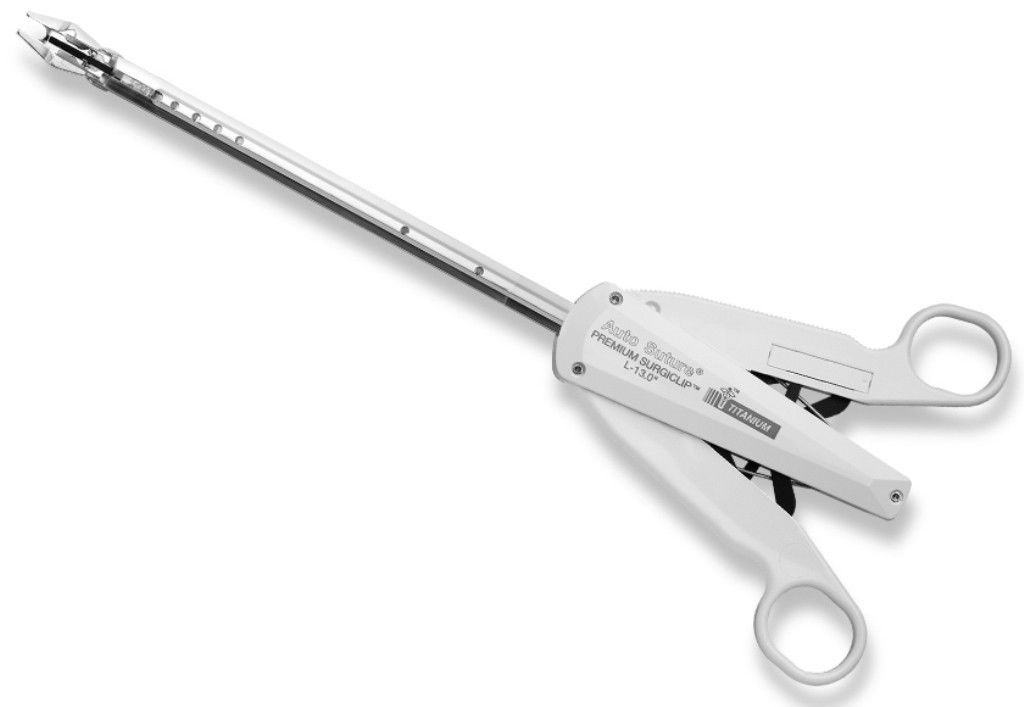
Información
- Descripción
- Basic surgical instruments including formal name, other names, category, and uses.
- Creado por
- Katie Franz
- Visitas
- 473
- Etiquetas
- Valoración