
Fichas
Question Bank 2: Cardiovascular system
Fichas del conjunto (126)
- 1Primary hypertension is the most common type of hypertensive patients: true or false?TRUE
- 2You can also find an underlying disease for secondary hypertension: true or false?True!
- 3Secondary hypertension can be reversed by ________________________treatment of the underlying cause
- 4malignant hypertension is manifested intense spasm of arteries: true or false?true!
- 5What are the impacts of Malignant Hypertension on the eye, brain and kidney?Eye: retinal haemorrhage or exudate
Brain: increases intracranial pressure
Kidneys: haematuria, proteinuria, acute renal failure - 6The clinical manifestations normally appear quite early in patients with hypertension: true or false?False
- 7Low stroke volume can be caused by what types of shock?Hypovolemic
Cardiogenic
Obstructive - 8Shock due to vasodilation can be seen in conditions such as __________________________________septic shock
anaphylactic shock
and neurogenic shock - 9What are the clinical manifestations of non-progressive shock?SNS reflexes - hormonal and renal responses compensate
- 10In patients with progressive shock, blood pressure can be maintained: true or falseFalse
- 11In patients with irreversible shock, tachycardia may lead to cardiac arrest: true or falseTrue!
- 12Urine output is normally reduced in patients with shock: true or false?True!
- 13Stenosis is the condition where the ________________________heart valve with not open fully (it is harder to force blood through)
- 14Regurgitation is the condition that the _______________________________Heart valve will not close fully (it leaks when it should close)
- 15What are the complications that may results from mitral (bicuspid) valve stenosis?Palpations
Chest pain
Weakness
Fatigue
AF - 16The heart murmour occurs after S2, is a typical characteristic of _____________________aortic regurgitation
- 17This condition in the heart valve is commonly caused by ________________Rheumatic fever
- 18Aortic valve stenosis can lead to a decrease in systolic pressures, and in the long-term angina, syncope, dyspnoea: true or false?True!
- 19Aortic valve regurgitation can lead to: a. Systemic oedema b. Pulmonary oedema c. Angina d. Atrial fibrillationb. Pulmonary oedema
- 20An "artificial pacemaker" is commonly used in patients with tachycardia or bradycardia?Bradycardia
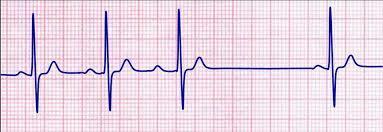
- 21This is a __________ blockSino-Atrial
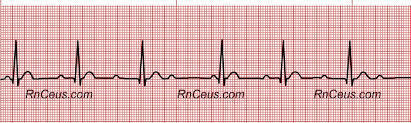
- 22This is an ____________ blockAtrioventricular block
- 23Atherosclerosis is a progressive disease characterised by __________ of arteries caused by formation of ______ that hardens with time, leading to narrowing of the blood vessel producing a _______ in blood flownarrowing
plaque
decrease - 24In the atherosclerotic necrotic core, the accumulation of cholesterol crystals in the macrophages form the _____ cellsFoam cells
- 25Angina is chest pain due to ___________ due to _____________________ishaemia due to cells deprived of O2/lack of O2 in heart tissues
- 26Heart attack is when __________ myocardial damage leads to _________irreversible myocardial damage leads to cell death (necrosis)
- 27Conduction defects are problems in _____ that carry _____________ to the heartfibres that carry electrical signals to the heart
- 28Heart failure is the _______________________________________inability of the heart to supply sufficient blood flow to meet the needs of the body
- 29What are factors that can lead to ischaemic injury?Atherosclerosis
Vasospasm
Thrombosis
Cold - 30Stable plaques can easily rupture or burst, leading to blood clotting inside the artery: true or false?False
- 31Stable plaques partially block vessels: true or false?True!
- 32Stable angina is due to _______an increased demand of oxygen
- 33Unstable angina can occur at _____ with sudden onset of painrest
- 34Silent myocardial ischaemia is a type of myocardial ischaemia ________without pain
- 35Variant/Prinzmetal angina is due to ______________________vasospasm rather than directly by atherosclerosis
(cause of spasm is unknown) - 36Ischaemia is a restriction on blood supply to tissues, causing a shortage of ______ and ______ needed for cellular metabolismoxygen and glucose
- 37Infarction is ________ due to _____________________cell death due to long starvation of oxygen
- 38What's the typical pain pattern in a patient with MI? What's the typical ECG shape for such a patient?Dull chest pain, radiating up neck and left arm
S-T elevation - 39What tests would provide biochemical evidence of myocardial necrosis?Troponin
Creatinine kinase myocardial band (CK-MB) - 40Dilated cardioMYOPATHY is a condition in which the heart becomes _________________ without any obvious cause and hence cannot ___________________weakened and enlarged
pump blood efficiently - 41What are the possible causes (CVS disorders) of dilated cardiomyopathies?Coronary heart disease
Heart attack
Hypertension - 42Hypertrophic cardiomyopathy is a __________________genetic disorder that involves excessive ventricular growth or hypertrophy
- 43RESTRICTIVE cardiomyopathy is due to abnormally _____ walls and ventricles lack the ________________ as they fill with bloodrigid
flexibility to expand - 44Heart failure denotes ______________________________the failure of the heart to pump enough blood to meet the metabolic needs of the body
- 45Heart failure is classified into 4 classes bases on level of patient activity: What is Class I heart failure?Patient with heart disease but with no limitations in physical activity
- 46Heart failure is classified into 4 classes bases on level of patient activity: What is Class II?Patient with heart disease but with slight limitations in physical activity.
Ordinary physical activity results in fatigue, dyspnea, palpitations or angina - 47Heart failure is classified into 4 classes bases on level of patient activity: What is Class III?Marked limitations of physical activity.
At rest is fine
Less than ordinary physical activity results in fatigue, dyspnea, palpitations or angina - 48Heart failure is classified into 4 classes bases on level of patient activity: What is Class IV?Inability to carry on physical activity without discomfort.
Angina may be present at rest.
On physical activity discomfort increases. - 49In patients with Class I Heart failure, the physical activities are limited: True or false?False
- 50Usually the LEFT heart failure can cause pulmonary oedema: true or false?TRUE
- 51Usually the RIGHT heart failure can cause systemic oedema: True or false?TRUE!
- 52Productive cough with pink frothy sputum is usually observed in patients with left or right heart failureLEFT
- 53Low output heart failure is caused by disorders that impair pumping ability of the heart and characterised by _______ skincold, clammy and sometimes cyanotic
- 54High output failure is __________, with function of the heart supernormal but _______________________________uncommon
inadequate owing to excessive metabolic needs - 55Urine output is normally _________ due to low cardiac output in patients with HF. This is normally due to ___________ ADH release from the posterior pituitarydecreased
increased - 56Right heart failure usually occurs as a result of left heart failure: true or false?True!
- 57Left heart failure is:the inability of heart to pump oxygenated blood into arterial circulation leading to decrease in peripheral blood flow and accumulation of blood in pulmonary circulation
leads to pulmonary oedema - 58Right side heart failure is:the inability of heart to pump blood through the pulmonary circulation with enlargement of the systemic and hepatic venous systems
leads to systemic oedema - 593 manifestations of left heart failure:Pulmonary fluid overload
Cyanosis
Activity intolerance - 604 manifestations of right heart failure:Fatigue
^ peripheral venous pressure
Peripheral oedema
Enlarged liver - 61What are the mechanisms of organic nitrates?Causes vasodilation of veins and arteries
Reduces cardiac O2 consumption secondary to reduced cardiac preload (venous) and afterload (arteriole)
Reduces coronary artery spasm
Redistribution of coronary blood flow towards ischaemic areas via COLLATERALS - 62What are common side effects of organic nitrates?TOLERANCE
Postural hypotension
Headache
Methaemoglobinaemia (rare) - 63Aspirin inhibits _____ irreversibly and blocks conversion of ____________ to ______________COX-1
arachidonic acid (AA) to thromboxane A2 - 64Clopidogrel blocks ____________ thus preventing ________________ and conformational change in __________________ADP receptors on platelets
platelet activation
GpIIb/IIa receptors - 65Tirofiban blocks receptor for _____________ which forms bridges between plateletsfibrinogen
- 66Heparin inhibits _____________ to prevent activation of ________IIa (thrombin), IXa, Xa, XIa, XIIa and Xa
thrombin - 67Fibrinolytic drugs (e.g. Streptokinase) converts __________ to _______ which breaks fibrin threads, which is associated with the risk of bleedingplasminogen to PLASMIN
- 68___________ are the first-line therapy option for patients with stable angina. If it is ineffective, it can be combined with __________ or ___________Organic nitrates
beta-adrenoceptor blockers or Ca2+ channel blockers - 69Please describe the mechanisms of the treatment options for patients with acute coronary syndromes (MI)Oxygen: restores O2 levels
Reduce O2 demands: nitrates
Opioids: decrease sympathetic drive
Anti-platelets, antithrombin & thrombyltics: prevention of thrombus formation
Beta-blockers or ACE inhibitors: reduce cardiac and metabolic needs - 70Percutaneous coronary intervention is performed within _________ upon patient presentation90 minutes
- 71Which is the most commonly prescribed 'first line' therapy in younger (under 55y/o) patients with hypertension?ACE inhibitors
- 72A stepped approach, in which new medication is added to current therapy until the target blood pressure is achieved, has the advantage of ____________minimising adverse effects while increasing patient compliance
- 73Describe the RAAS pathwayRenin (Kidneys) -> causes Angiotensinogen (released by liver) to convert to Angiotensin I -> which is converted to Angiotensin II by ACE (released by lungs) which increases: Sympathetic activity, Aldosterone secretion --> increased tubular Na, Cl reabsorption and K excretion, H2O retention, vasoconstriction
- 74Which one of the following effect CANNOT be attributed to angiotensin II? a. vasodilation b. salt retension c. stimulation of aldosterone release from the adrenal glands d. hypertrophy e. hyerplasiaa. vasodilation
would actually cause vasoconstriction - 75Release of renin from the granular cells in the kidney in response to a fall in blood pressure results in?the conversion of angiotensinogen to angiotensin I
- 76What is the safest hypertensive drug to use in pregnancy?Methyldopa - centrally acting agent
- 77What are the adverse effects of Calcium Channel Blockers?Flushing ad ankle oedema (due to vasodilation)
Constipation (due to effects on GIT nerves and smooth muscle) - 78ACE is present in the lungs: true or falseTRUE
- 79ACE is inhibited by captopril: true or false?TRUE
- 80ACE is inhibited by losartan: true or falseFALSE
- 81ACE converts angiotensin I to angiotensin II: true or false?TRUE
- 82ACE degrades bradykinin: true or false?TRUE
- 83What would be the recommended treatment for a patient with BP of 185/115, low CV risk (<10%) and no evidence of end organ damage?Start an antihypertensive immediately
- 84Can all the following induce/aggravate hypertension? pseudoephedrine, MOA's, excessive salt intake, nifedipine, cocaineYES
- 85An elderly pt (70y/o) was given a thiazide diuretic for the treatment of hypertension. After 6 weeks, the doctor decided a second drug was required to reduce her BP to a target level. Which drug would be the most likely to be used if there were no other complications?ACE Inhibitors
- 86Activation of the RAAS in heart failure can be reduced by which of the following drugs? a. ACE inhibitors b. angiotensin receptor blockers c. aspirin d. diuretics e. both A or Be. both A and B
- 87Digoxin inhibits the Na/K ATPase pump: true or falseTRUE
- 88Digoxin increases the force of contraction of the heart: true or false?TRUE
- 89Digoxin is a cardiac glycoside: true or falseTRUE
- 90Digoxin increases intracellular calcium levelsTRUE
- 91Digoxin decreases cardiac output: true or false?FALSE
It increases cardiac output - 92Which class of drugs is used in the treatment of angina and promotes redistribution of coronary blood flow towards ischaemic areas via collaterals?Organic Nitrates
- 93What is stable angina?Stable angina is caused by stable plaques
i. Thick fibrous caps
ii. Partially block vessels
iii. Do not tend to form clots or emboli
iv. Myocardial ischemia occurs during periods of increased metabolic demand
v. Pain when heart’s oxygen demand increased e.g. exercise - 94What is unstable angina?Caused by unstable plaques
i. Thin fibrous caps
ii. Plaque can rupture and cause a clot to form
iii. May completely block artery
iv. Clot may break free and become an embolus
v. Myocardial Ischemia ranging between stable angina to myocardial infarction
vi. Can occur at rest with sudden onset of pain - 95What is the Coronary Steal phenomenon?Blood is "stolen" from one region of the coronary tree by another and may aggravate ischaemia
- 96Which drug produces the coronary steal phenomenon and thus can aggravate ischaemia?Dipyidamole
- 97Why are anti platelets important?Anti platelet drugs prevent the formation of platelets at a variety steps in the coagulation process. Platelets adhere to diseased/damage areas of the vessel, therefore by preventing the formation, there is less chance of a clot forming
- 98Which clotting factors are inhibited by unfractionated heparin?Inhibits IIa (thrombin), IXa, Xa, XIa and XIIa
- 99Which clotting factors are inhibited by low-molecular weight heparin?Inhibits Xa
- 100What clotting factors are inhibited by Warfarin?Inhibits II (prothrombin), VII, IX, X
- 101Which vitamin cofactor is required by clotting factors?Vitamin K cofactor
- 102What is the advantage of rTPA over streptokinase?rTPA is not antigenic, therefore can be given to pt's who have antibodies to streptokinase
- 103Differentiate antiplatelets, anticoagulants and fibrinolytic'sAntiplatelets: stop platelet formation
Anticoagulants: prevent new thrombin
Fibronolytics: dissolve existing thrombin - 104What are the goals in the treatment of stable angina?Relieve or prevent pain
Slow progression of atherosclerosis
Improve prognosis - decrease the risk of MI or death - 105What are the aims of treating acute coronary syndrome?Preventing irreversible ischaemic damage
restore O2
Decrease O2 demand and increase delivery
Pain management
Prevent thrombus formation
Reduction in cardiac work and metabolic needs of the heart - 106What are the available reperfussion strategies?Preferred:
Percutaneous coronary intervention (PCI, angioplasty with or without stunting) - within 90mins of pt presentation
Fibrinolysis - when there are major delays to PCI - 107Tolerance develops with long-acting nitrates: true or false?True
- 108Organic nitrates increase cyclic AMP: true or false?True!
- 109The anti platelet effect of aspirin is reversible: true or false?True!
- 110Heparin requires antithrombin III to inhibit clotting factors: true or false?True!
- 111Anti platelets prevent platelet adhesion, activation and aggregation: true or false?True!
- 112Warfarin blocks the extrinsic pathway of coagulation: true or false?False, it blocks both
- 113Warfarin had an early onset of action and therefore does not require an overlap with IV heparin: true or false?False - slow onset of action but long duration
- 114Fibrinolytic drugs inhibit conversion of plasminogen to plasmin: true or false?False:
It converts plasminogen to PLASMIN which breaks fibrin threads - 115Organic Nitrates: Example Action Side EffectsGlyceryl trinitrate (GTN), Isosorbide dinitrate, Isosorbide mononitrate
Action: vasodilation - redistribution of coronary bloodd flow towards ischaemic areas via collaterals
Side effects: tolerance, postural hypotension, headache, methaemoglobinaemia (rare) - 116Calcium channel blockers Diltiazem, verapamil Action Side effectsAction: block :-type voltage-gated calcium channels
Side effects: flushing, headache and ankle oedema due to vasodilation - 117Beta-adrenoceptor antagonists (bete-blockers) atenolol, metoprolol Action Side effectAction: unknown but increased HR, contractility and renin release
Side effects: cold hands and feet, tiredness and muscle fatigue, mask sympathetic response to hypoglycaemia, bad dreams - 118ACE inhibitors "pril's" Action Side effectsAction: competitively inhibits the actions of angiotensin converting enzyme (ACE) in the RAAS system
Side effects: dry cough, accumulation of bradykinin, first dose hypotension, fast disturbance (metallic), angioneurmtic oedema, neutropaenia - 119Antiplatelet drugs: Aspirin Action Side EffectsAction: Inhibits COX-1 irreversibly to prevent conversion of arachidonic acid (AA) to thromboxane A2
Side effects: - 120Anti platelet drugs: Clopidogrel Action:Irreversibly blocks ADP receptors on platelets, thus preventing platelet activation and conformational change in GpIIb/IIIa receptors
- 121Antiplatelet drugs: Tirofiban ActionsAction: blocks receptor for fibrinogen which forms bridges between platelets
- 122Antithrombin drugs: Unfractionated heparinAction: relies on antithimbin III to inhibit IIa (thrombin), IXa, Xa, XIa, XIIa
Side effects: haemorrhage, thrombosis, osteoporosis, hyoldosteronism, hyperkalaemia, hypersensitivity - 123Antithrombin drugs: Low-molecular weight heparins e.g. enoxaparin (Clexane) ActionAction: requires antithrombin III, inhibits Xa longer half-life, longer acting
Side effects: haemorrhage, thrombosis, osteoporosis, hyoldosteronism, hyperkalaemia, hypersensitivity - 124Antithrombin drugs: Warfarin ActionAction: inhibits II (prothrombin), Vii, IX, X, vitamin K dependent, slow onset, long lasting
- 125Fibrinolytic drugs (thrombolytics) Streptokinase Dissolve existing thrombiAction: converts plasminogen to plasmin with breaks fibrin threads, this action can be blocked by antibodies that develop > 4 days after initial dose, can't be given repeatedly
Side effect: allergic reaction if pt has antibodies, risk of bleeding - 126Fibrinolytic drugs (thrombolytics) Recombinan tissue plasminogen activators (tPAs) (all plane's e.g. altePLASE)Action: activated thrombus-bound plasminogen preferentially
Non antigenic: can be given to pt's with abs to streptokinase
Side effects: risk of bleeding
Información
- Descripción
- Pathophysiology and Pharmacology 1 2015 Fichas sobre Question Bank 2: Cardiovascular system, creado por b.graham el 07/06/2015.
- Creado por
- b.graham
- Visitas
- 103
- Etiquetas
- Valoración