
Fichas
Introduction of Immunology
Fichas del conjunto (19)
- 1What is immune system?Network of cells, tissues, organs in body that work together in protecting from infection
- 2Divided into two typesInnate Immune Response
(1st & 2nd Line Defense)
Adaptive Immune Response
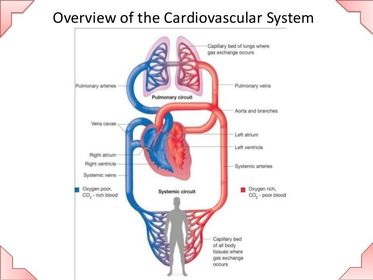
(3rd Line Defense) - 3Components in immune system1. Cardiovascular system
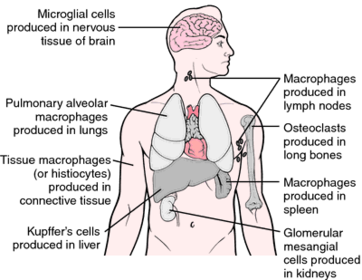
2. Reticuloendothelial system (MPS)
3. Lymphatic system - 4Cardiovascular System
- 5Reticuloendothelial System
- 6Lymphatic System
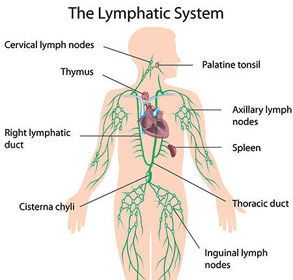
- 7Function of Organs in Lymphatic SystemPrimary - where lymphocytes are formed and mature (Bone marrow, thymus)
Secondary - arranged as a series of filters monitoring the contents of the extracellular fluids
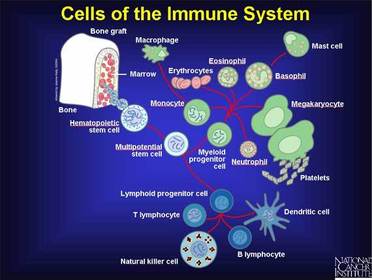
- where lymphocytes are activated. - 8Cells of the immune system
- 9What is Innate Immune Response?- Non-specific
- Immune components are preformed
- Response magnitude similar between first & second infection
- No memory stored - 10First Line of Defense (Physical Barriers)
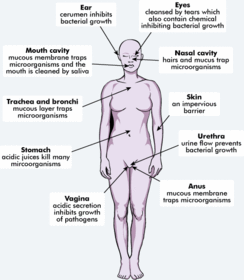
- 11Second Line of Defense (Physiological Barriers)1. Fever (induced by pyrogens)
2. Inflammation
3. Phagocytosis
4. Antimicrobial proteins - 12What is benefit of fever?- Reduced iron availability
- Inhibit microbial multiplication
- Stimulate immune response - 13How does inflammation works?
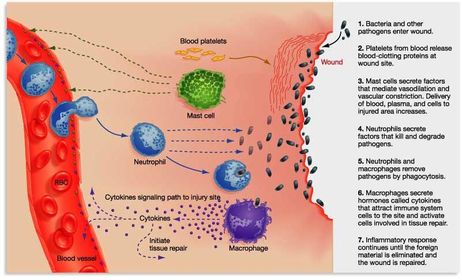
- 14Phases of Phagocytosis
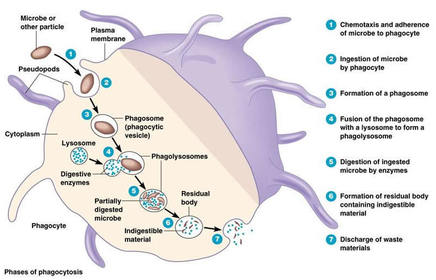
- 15Antimicrobial proteins divided into 4 main types:1. Complement system
2. Interferons
3. Iron-binding system
4. Antimicrobial peptides - 16Complement system: Overview
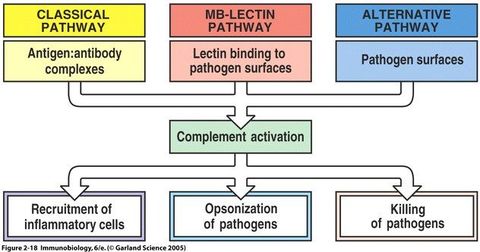
- 17Mode of action of interferons (IFN-α IFN-β IFN-γ)
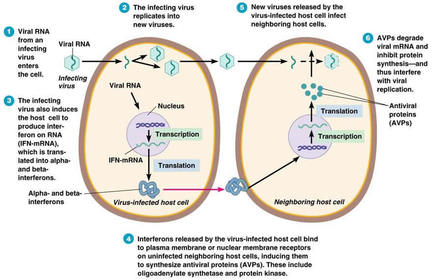
- 18Why iron-binding system? (Haemoglobin, Lactoferrin, Transferrin)- Able to inhibit enzyme activites of pathogens
- Most of them require iron
- They can overcome with siderophore - 19Antimicrobial peptides
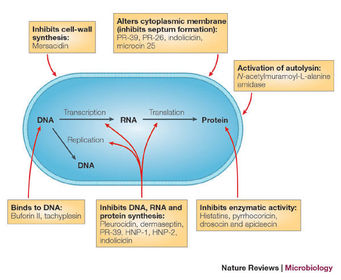
Información
- Descripción
- An introduction for innate immune response
- Creado por
- Anuarruddin Azmilumur
- Visitas
- 43
- Etiquetas
- Valoración