
Fichas
Shoulder Girdle Procedure
Fichas del conjunto (70)
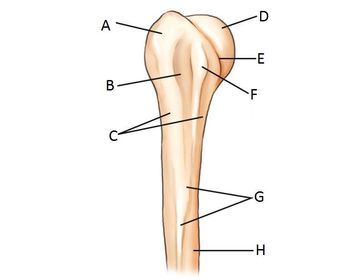
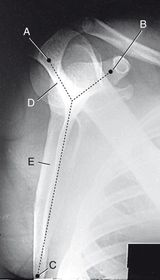
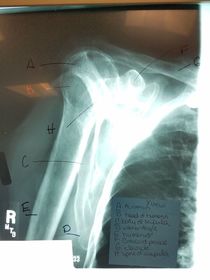
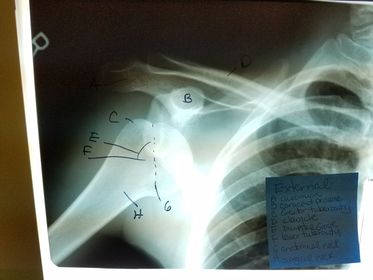
- 1—A. greater tubercle (tuberosity)
B. intertubercular groove (bicipital)
C. surgical neck
D. head
E. anatomic neck
F. lesser tubercle (tuberosity)
G. deltoid tuberosity
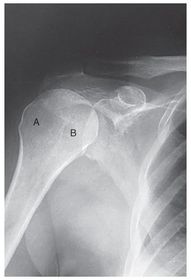
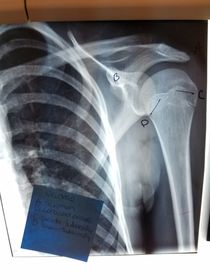
H. humeral body (shaft) - 2—A. humeral head
B. greater tubercle
C. intertubercular groove (bicipital)
D. lesser tubercle
E. anatomic neck
F. surgical neck
G. humeral body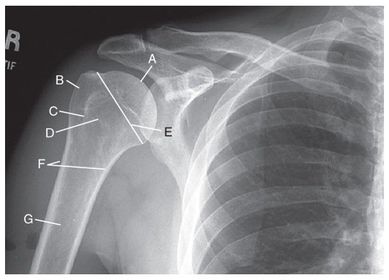
- 3—A. acromion
B. acromioclavicular joint (AC)
C. acromial extremity
D. clavicular body
E. sternal extremity
F. sternoclavicular joint (SC)
G. jugular notch
H. manubrium of sternum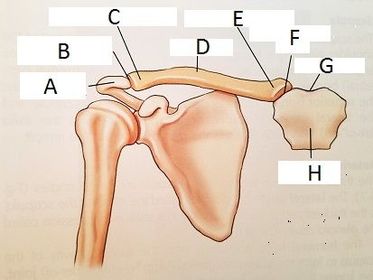
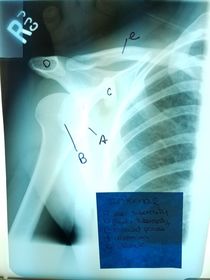
- 4—A. sternoclavicular joint (SC)
B. sternal extremity
C. body
D. acromial extremity
E. acromioclavicular joint (AC)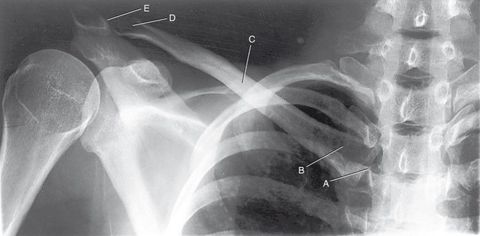
- 5—A. axilla
B. lateral (axillary) border
C. scapulohumeral joint (glenohumeral)
D. superior border
E. medial border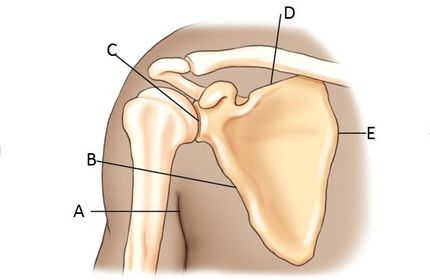
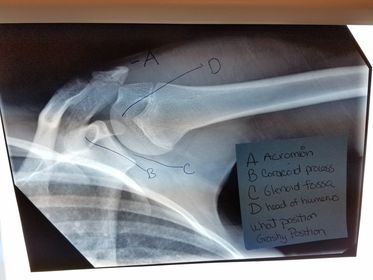
- 6—A. acromion
B. coracoid process
C. scapular notch
D. superior angle
E. body (blade, wing, ala...)
F. inferior angle
G. costal surface (anterior) subscapular fossa
H. neck
I. lateral angle
J. glenoid cavity (fossa)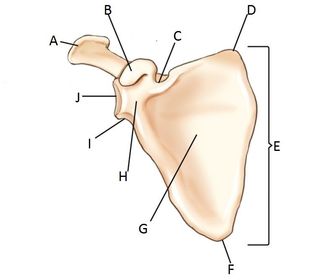
- 7—A. supraspinous fossa
B. crest of spine
C. acromion
D. dorsal surface (posterior)
E. infraspinous process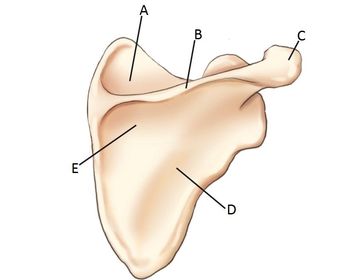
- 8—A. coracoid process
B. glenoid cavity (fossa)
C. body
D. inferior angle
E. ventral (costal) surface
F. lateral (axillary) border
G. dorsal surface
H. spine of scapula
I. acromion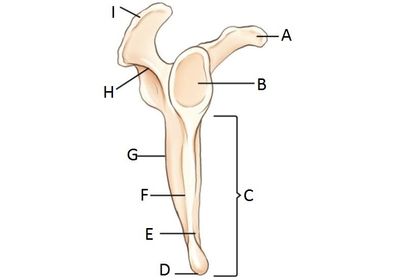
- 9—A. acromion
B. neck of scapula
C. scapular notch
D. superior angle
E. medial (vertebral) border
F. inferior angle
G. lateral (axillary) border
H. glenoid cavity OR scapulohumeral joint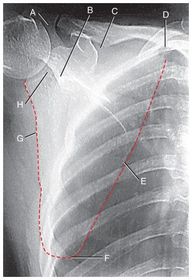
- 10—A. acromion
B. coracoid process
C. inferior angle
D. spine of scapula
E. body of scapula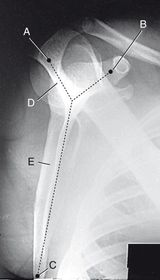
- 11—A. coracoid process
B. glenoid cavity OR scapulohumeral joint
C. spine of the scapula
D. acromion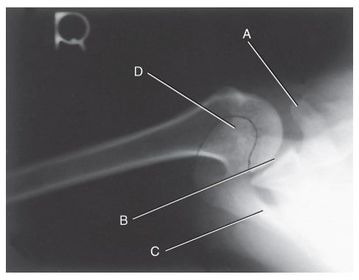
- 12—A. sternoclavicular joint (SC)
B. acromioclavicular joint (AC)
C. scapulohumeral joint (glenoid cavity)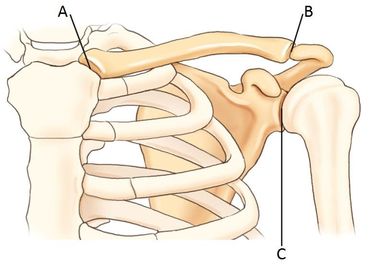
- 13Which type of joint is the glenoid cavity?spheroidal
ball and socket - 14Which type of joints are the sternoclavicular and acromioclavicular joints?plane
gliding - 15AC Dislocationthe distal clavicle is displaced superiorly
- 16AC Joint Separationtrauma to the upper shoulder region that causes a partial or complete tear of the AC ligament
- 17An injury of the anteroinferior aspect of the glenoid labrum is called a _____ _____ .Bankart Lesion
- 18A compression Fx of the articular surface of the posterolateral aspect of the humeral head is called ___-___ ____ ; it's usually associated with dislocations of the humeral headHill-Sachs Defect
- 19Idiopathic Chronic Adhesive Capsulitis "frozen shoulder"disability of the shoulder joint caused by chronic inflammation in and around the joint
- 20Impingement Syndromeimpingement of the greater tuberosity and soft tissues during abduction of the arm
- 21Rotator Cuff Injuriesrefer to injury to the rotator cuff muscles:
teres minor
supraspinatus
infraspinatus
subscapularis - 22Shoulder Dislocationtraumatic removal of the humeral head from the glenoid cavity
- 23Tendonitisinflammatory condition of the tendon that usually results from a strain
- 24External Rotation shows:-epicondyles parallel to IR
greater tubercle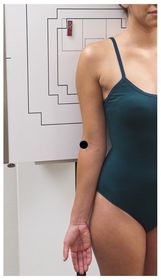
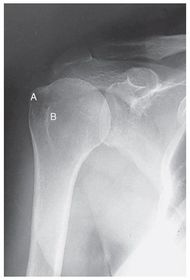
- 25Internal Rotation shows:- epicondyles perpendicular to IR
lesser tubercle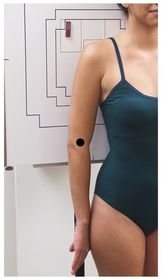
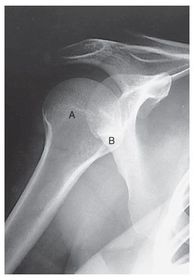
- 26Neutral Rotation shows:- epicondyles 45 degrees angled to IR
- palm of hand facing inward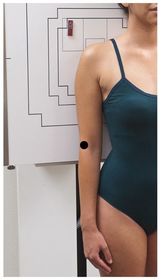
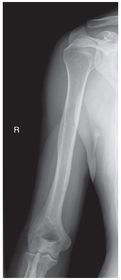
- 27What are the routine exams for a HUMERUS (trauma and nontrauma)AP
Lateral - 28AP Humerus *routine40 SID
70-85 kVp
14x17 IR grid
CR @ midhumerus
must see entire humerus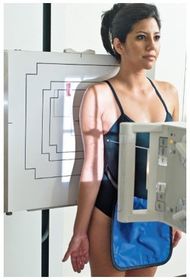
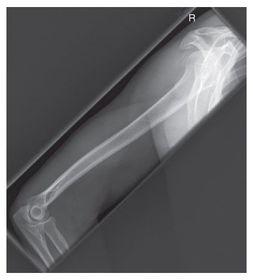
- 29Rotational Lateral Humerus *routine lateromedial or mediolateral projections40 SID
70-85 kVp
14x17 IR grid
CR @ midhumerus
LATEROMEDIAL- body obliqued with affected side against bucky, internally rotate arm so epicondyles are perpendicular to IR
MEDIOLATERAL- oblique pt. 20-30 degrees from PA, keep elbow flexed 90 degrees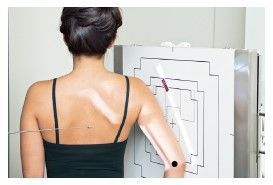
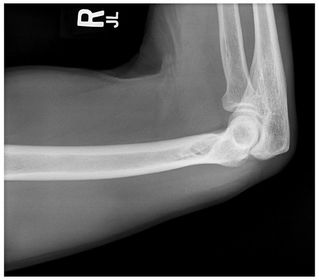
- 30Horizontal Beam Lateral Humerus *routine OR trauma lateromedial projection40 SID
65-85 kVp
10x12 IR nongrid
CR @ midpoint of distal 2/3 of humerus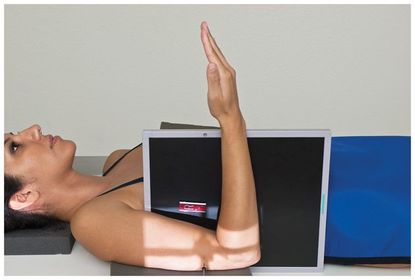
- 31Why would you perform a transthoracic lateral projection of the humerus?when there's trauma to the humerus and you cannot rotate the arm
- 32Transthoracic Lateral Humerus *trauma only40 SID
70-85 kVp
14x17 IR grid
CR @ mid-diaphysis through the thorax
expose during orthostatic respiration (gentle, short, shallow breaths)
*if pt. in too much pain to drop shoulder and elevate the opposite shoulder over the head, angle CR 10-15 degrees cephalad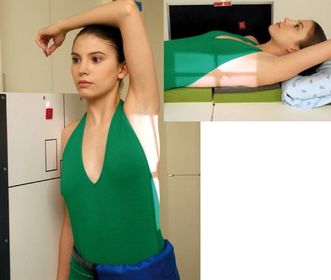
- 33What are the routine exams for the SHOULDER (nontrauma)?AP external rotation
AP internal rotation
Grashey
Y-View
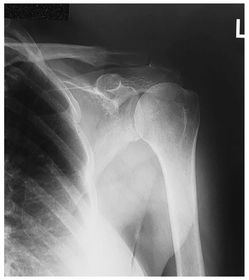
Axial - 34AP External Rotation Shoulder (proximal humerus) *nontrauma40 SID
70-85 kVp
10x12 IR grid
CR @ 1 in inferior to coracoid process
expose on expiration
*pt palm of hand supinated
*epicondyles parallel to IR
*greater tubercle in profile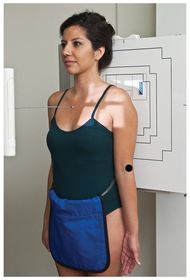
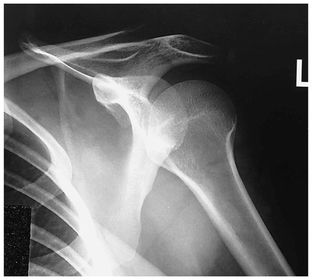
- 35AP Internal Rotation Shoulder (proximal humerus) *nontrauma40 SID
70-85 kVp
10x12 IR grid
CR @ 1 in inferior to coracoid process
*pt palm of hand pronated
*epicondyles perpendicular to IR
*Lesser tuberosity in profile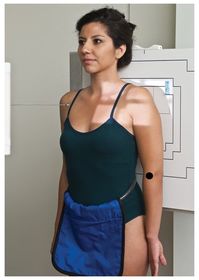
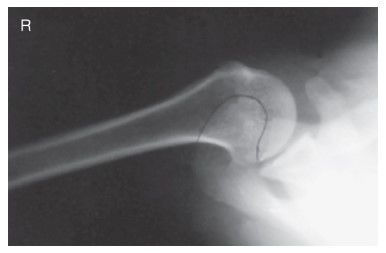
- 36Inferosuperior Axial Shoulder *nontrauma *SPECIAL* "Lawrence Method"40 SID
70-80 kVp
10x12 IR grid
CR directed medially 25-30 degrees cephalad, centered horizontally into axilla and humeral head.
*keep arm flexed @ 90 degrees, if less than, decrease CR angle to 15-20 degrees
*palm up
*lesser tuberosity in profile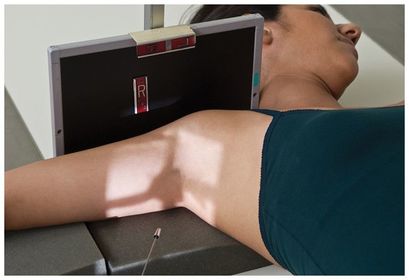
- 37What are the routine exams for a SHOULDER (trauma series)AP neutral rotation
Transthoracic lateral (lawrence)
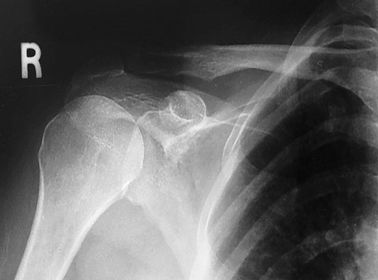
Scapular Y lateral - 38AP Neutral Rotation Shoulder *trauma40 SID
70-85 kVp
10x12 IR grid
CR @ midscapulohumeral joint - 3/4 in. inferior and slightly lateral to corocoid process
*expose on expiration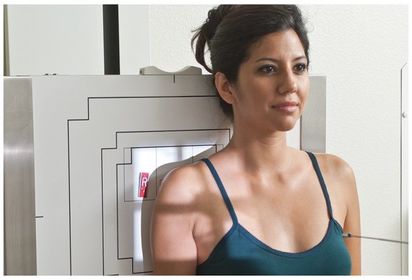
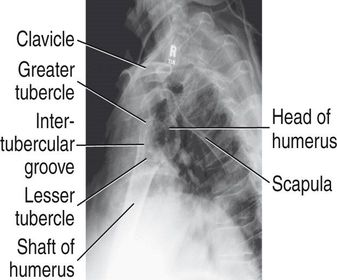
- 39Transthoracic Lateral Shoulder *trauma40 SID
70-85 kVp
10x12 IR grid
CR directed through thorax to the level of the affected surgical neck
*expose during orthostatic breathing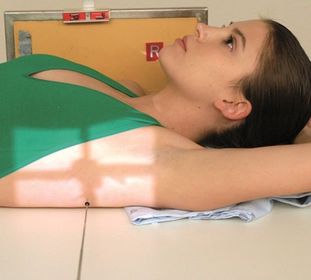
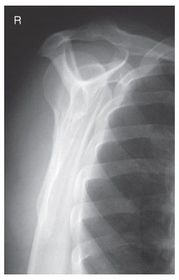
- 40Scapular Y Lateral Shoulder *trauma40 SID
70-85 kVp
10x12 IR grid
CR perpendicular to IR, directed @ scapulohumeral joint
Expose on suspended breath
*pt obliqued 45-60 degrees, and abduct arm slightly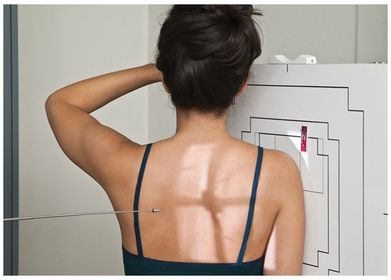
- 41What are some special projections of the shoulder that can be used for non trauma patients?-Tangential Bicipital Groove Shoulder
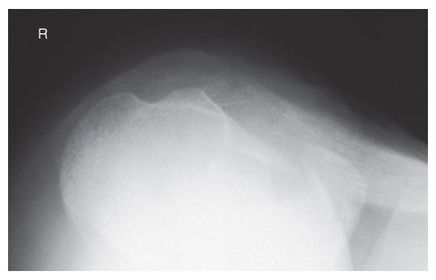
-Grashey Method - 42Intertubercular (Bicipital) Groove Shoulder *nontrauma *SPECIAL40 SID
55-75 kVp
8x10 IR nongrid
CR perpendicular to IR, directed to groove area at midanterior margin of humeral head
*expose on suspended breath
*pt can be erect or supine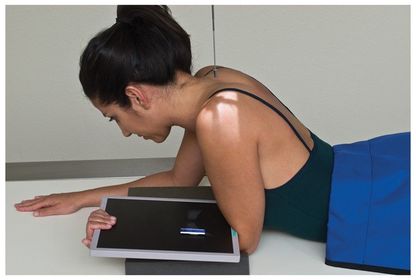
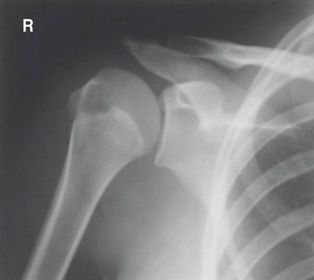
- 43Glenoid Cavity Posterior Oblique Shoulder *nontrauma "Grashey Method" *SPECIAL40 SID
70-85 kVp
10x12 IR grid
CR perpendicular to IR, centered to scaphohumeral joint - 2 in inferior and medial from the superolateral border of shoulder
*expose on suspended breath
*pt obliqued 35-45 degrees toward the affected side - opens up glenoid cavity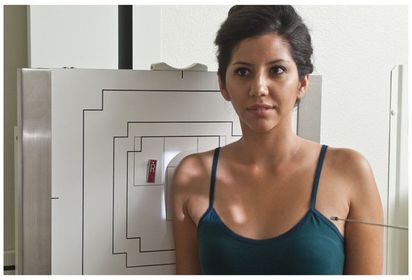
- 44Which projections of the shoulder require you to expose on orthostatic respiration?Any transthoracic projection
- 45What are the routine exams for the CLAVICLE?AP
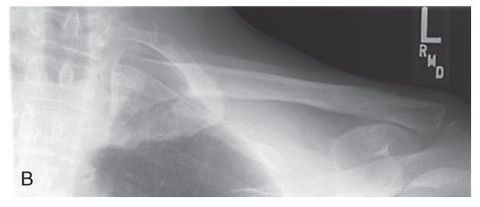
AP Axial - 46AP Axial Clavicle40 SID
65-85 kVp
10x12 IR grid
CR angled 15-30 degrees cephalad to midclavicle
*expose during suspended breathing
*asthenic pts require 10-15 degrees more angle than hypersthenic pts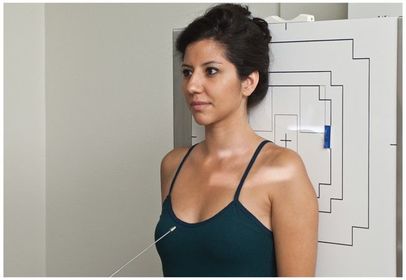
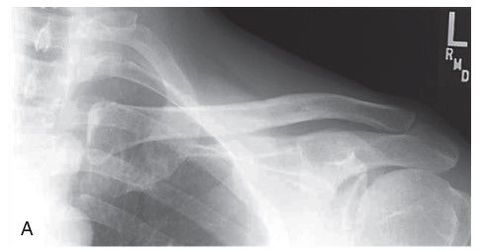
- 47AP Clavicle40 SID
65-85 kVp
10x12 IR grid
CR perpendicular to IR, centered at midclavicle
*must have both AC and SC joints on image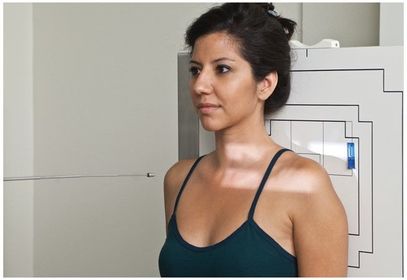
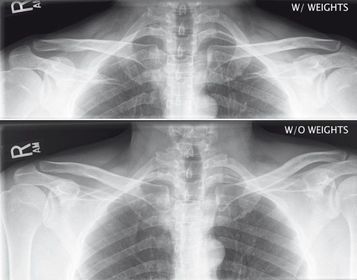
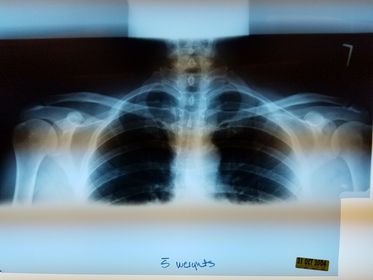
- 48AP AC and SC Joints weight bearing and non weight bearing72 SID
65-80 kVp
14x17 IR crosswise
CR @ manubrium
expose during suspended respiration
*take first exposure without weights
*8-10lb weights should be attached to wrists so the arms and clavicles will be relaxed for the 2nd projection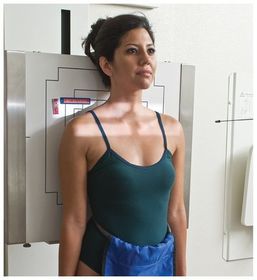
- 49What are the routine exams of the SCAPULA?AP
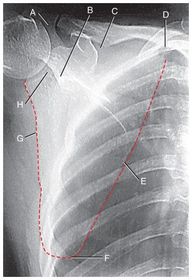
Lateral - 50AP Scapula Erect40 SID
70-85 kVp
10x12 IR grid
minimum of 3 sec exposure time with optional breathing technique (3-4) seconds preferred
CR perpendicular to midscapula, 2 in inferior to coracoid process, or to level of axilla and 2 in medial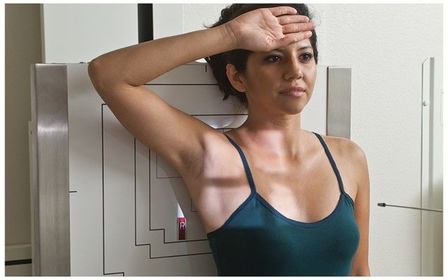
- 5145 degree LAO Scapula40 SID
75-85 kVp
no AEC - manual only
10x12 IR grid
CR @ midvertebral border of scapula
*this view best demonstrates the body of the scapula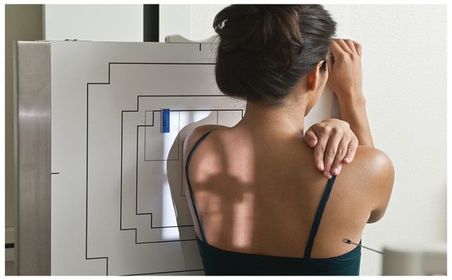
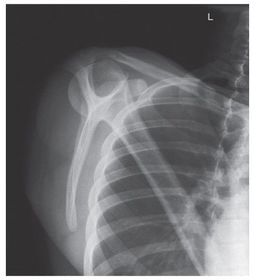
- 5260 degree LAO Scapula40 SID
70-85 kVp
no AEC - manual only
10x12 IR grid
CR @ midvertebral border of scapula
*best demonstrates the acromion and coracoid processes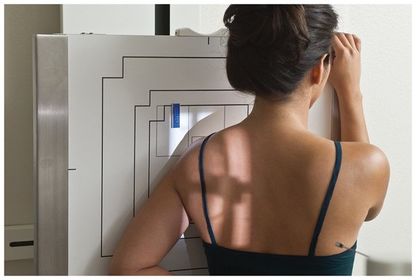
- 53Which projection/position is this?PA Lateral Humerus
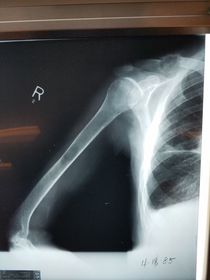
- 54Which projection/position is this?AP External Humerus
________________________
Epicondyles are parallel to IR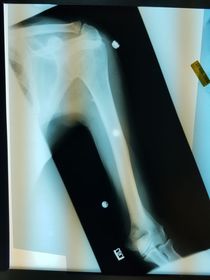
- 55Which projections/positions are these? (top->bottom)TOP: Scapular Y-View
_________________________
BOTTOM: AP External Rotation (greater tubercle in profile)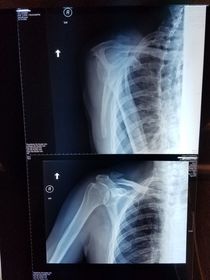
- 56Which projection/position is this?Transthoracic Shoulder
___________________
ribs are blurred out from orthostatic breathing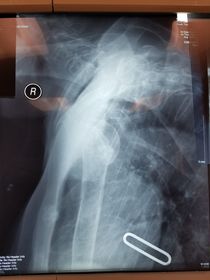
- 57—Bilateral AC Joints w/ weights
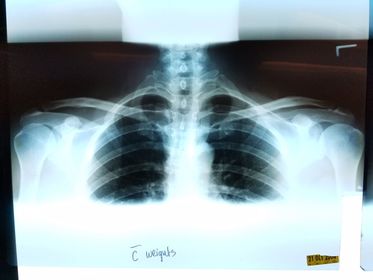
- 58which projection/position are these?TOP: AP Clavicle
__________________
BOTTOM: AP Axial Clavicle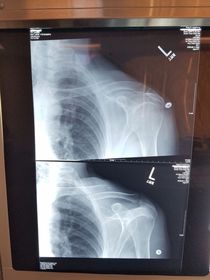
- 59Projection/position?Lateral Humerus
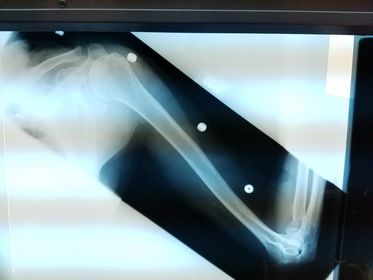
- 60—
- 61—
- 62—
- 63On the inferosuperior axillary x-ray, what anatomical feature is in profile?LESSER TUBEROSITY
- 64When the proximal humerus is in anatomical position, which anatomical landmark is most lateral?GREATER TUBEROSITY
- 65For an inferosuperior axillary projection, where does the CR exit the body?AC Joint
- 66Where is the CR centered for a transthoracic humerus?at the level of the surgical neck through the thorax
- 67For an AP internal rotation projection of the shoulder, the proximal humerus is in _____ positionLATERAL
- 68For an AP scapula projection, the arm should be abducted at least ___ degrees90
- 69The shoulders are aligned in the same transverse plane using a 14x17 IR for which projection?AC joints
- 70A 10x12 IR is placed crosswise above the shoulders for which projection?AP clavicle
Información
- Descripción
- ARRT Radiologic Procedures I Fichas sobre Shoulder Girdle Procedure, creado por RadTech Fairy el 01/11/2016.
- Creado por
- RadTech Fairy
- Visitas
- 620
- Valoración