
Mapa mental
Buddhist Practices
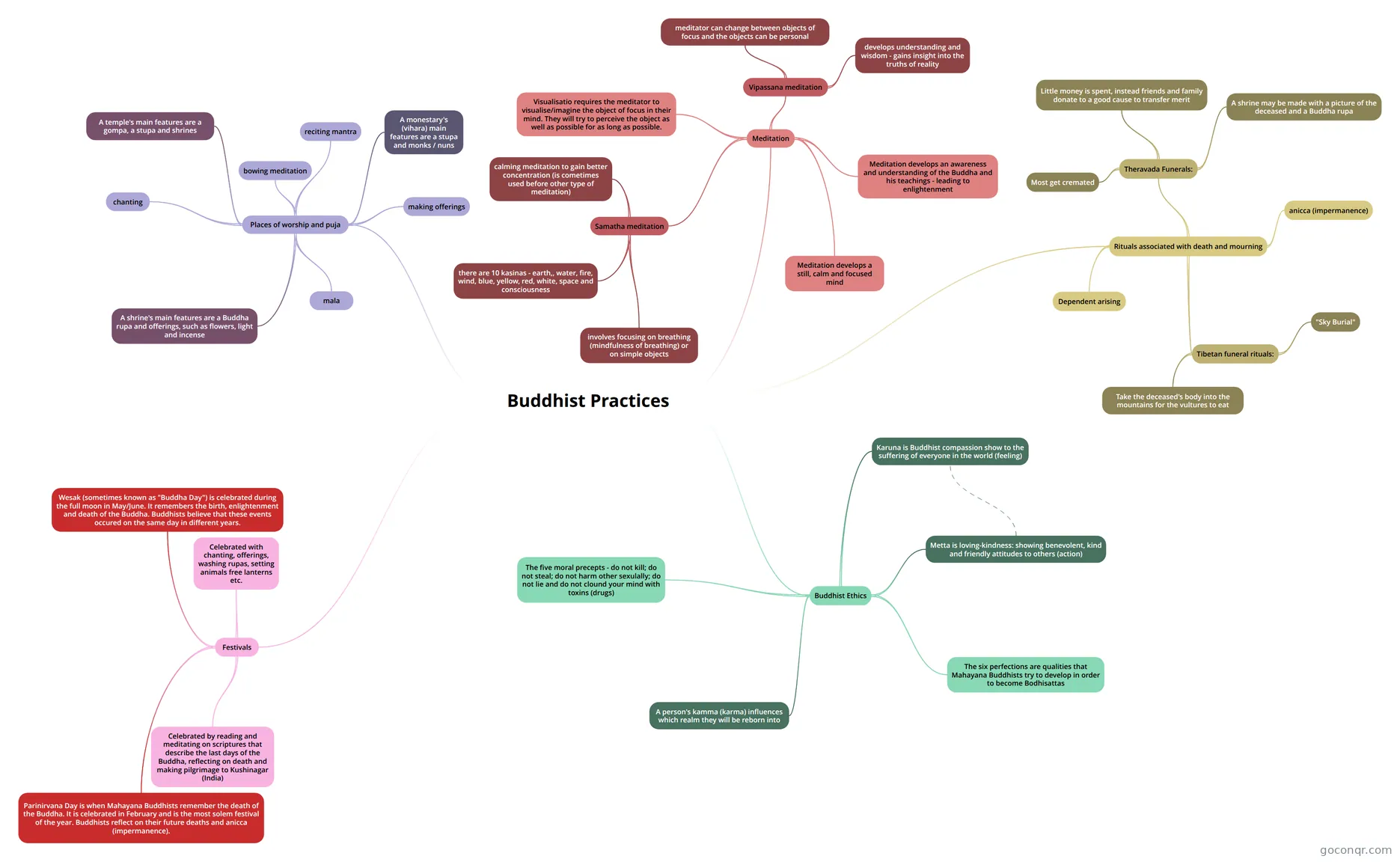
Mind map: Buddhist practices
Contenido del mapa
Buddhist Practices
Places of worship and puja
- A temple's main features are a gompa, a stupa and shrines
- A monestary's (vihara) main features are a stupa and monks / nuns
- A shrine's main features are a Buddha rupa and offerings, such as flowers, light and incense
- bowing meditation
- making offerings
- mala
- chanting
- reciting mantra
Festivals
- Wesak (sometimes known as "Buddha Day") is celebrated during the full moon in May/June. It remembers the birth, enlightenment and death of the Buddha. Buddhists believe that these events occured on the same day in different years.
- Parinirvana Day is when Mahayana Buddhists remember the death of the Buddha. It is celebrated in February and is the most solem festival of the year. Buddhists reflect on their future deaths and anicca (impermanence).
- Celebrated with chanting, offerings, washing rupas, setting animals free lanterns etc.
- Celebrated by reading and meditating on scriptures that describe the last days of the Buddha, reflecting on death and making pilgrimage to Kushinagar (India)
Rituals associated with death and mourning
- Theravada Funerals:
- Little money is spent, instead friends and family donate to a good cause to transfer merit
- A shrine may be made with a picture of the deceased and a Buddha rupa
- Most get cremated
- Tibetan funeral rituals:
- "Sky Burial"
- Take the deceased's body into the mountains for the vultures to eat
- anicca (impermanence)
- Dependent arising
- Theravada Funerals:
Meditation
- Meditation develops a still, calm and focused mind
- Meditation develops an awareness and understanding of the Buddha and his teachings - leading to enlightenment
- Visualisatio requires the meditator to visualise/imagine the object of focus in their mind. They will try to perceive the object as well as possible for as long as possible.
- Vipassana meditation
- develops understanding and wisdom - gains insight into the truths of reality
- meditator can change between objects of focus and the objects can be personal
- Samatha meditation
- calming meditation to gain better concentration (is cometimes used before other type of meditation)
- involves focusing on breathing (mindfulness of breathing) or on simple objects
- there are 10 kasinas - earth,, water, fire, wind, blue, yellow, red, white, space and consciousness
Buddhist Ethics
- A person's kamma (karma) influences which realm they will be reborn into
- Karuna is Buddhist compassion show to the suffering of everyone in the world (feeling)
- Metta is loving-kindness: showing benevolent, kind and friendly attitudes to others (action)
- The five moral precepts - do not kill; do not steal; do not harm other sexulally; do not lie and do not clound your mind with toxins (drugs)
- The six perfections are qualities that Mahayana Buddhists try to develop in order to become Bodhisattas
Información
- Descripción
- GCSE (Religion, philosophy and ethics) Humanities Mapa Mental sobre Buddhist Practices, creado por Carmen Watson el 19/02/2018.
- Creado por
- Carmen Watson
- Visitas
- 11
- Valoración