
Mapa mental
Microbes
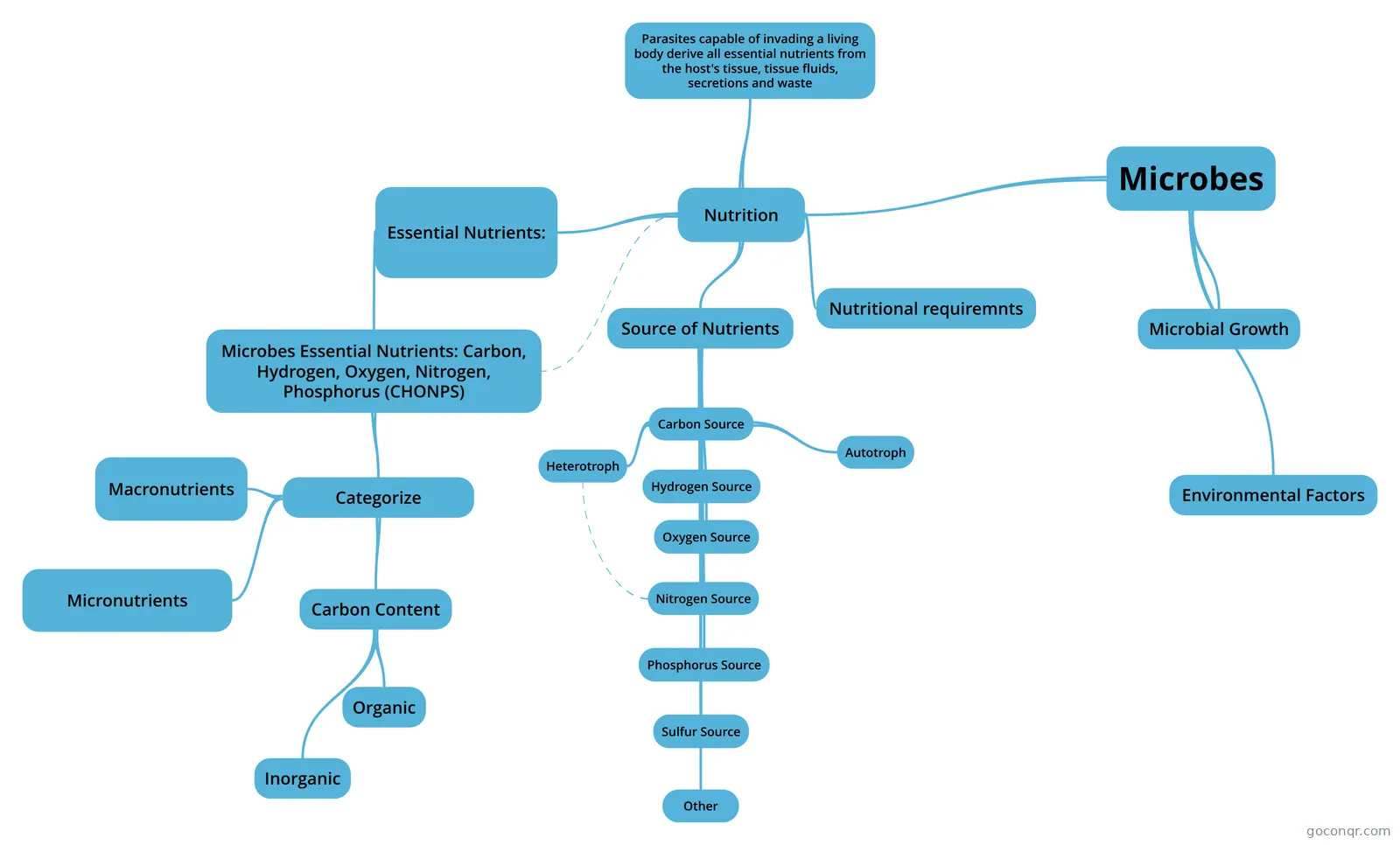
Mind map: Microbes
Contenido del mapa
Microbes
Nutrition
- a process by which chemical substances called nutrients are acquired from the environment and use in cellular activity such as metabolism and growth
- Essential Nutrients:
- elemental or molecular substance that must be provided to an organism
- Microbes Essential Nutrients: Carbon, Hydrogen, Oxygen, Nitrogen, Phosphorus (CHONPS)
- Categorize
- what if I type something here
- Macronutrients
- - required large quantities, -play a principal role in cell structure and metabolism (eg. carbon, hydrogen, oxygen)
- Micronutrients
- - trace elements (eg. manganese, zinc, nickle) - required in smaller amounts - involved in enzyme function and maintaining of protein structure
- Carbon Content
- Organic
- - contain carbon and hydrogen atoms and a are a product of living things (eg. methane, large polym. carbohydrates, lipids, nuclaic acid
- Inorganic
- - atoms of molecules that contain a combination of atoms other than carbon and hydrogen - natural resevoirs of inorganic; mineral deposits, bodies of water, atmosphere -eg. metals and their salts (magnesium, sulfate, ferric nitrate, sodium phosphate) gasses (oxyten, carbon dioxide) and water
- Organic
- Categorize
- Nutritional requiremnts
- -cell composition -water (70%) -proteins next most prevelant - Dry cell weight organic components (97%) - Dry cell weignt (96%) composed of CHONPS - Chemical elements needed come in compounds not pure elements
- Source of Nutrients
- Carbon Source
- Heterotroph
- Organism that must obtain carbon in organic form
- Autotroph
- organism that uses inorganic carbon dioxide as its carbon source -not dependant on living things
- Heterotroph
- Nitrogen Source
- - gas (N2) 79% of atmosphere - indespensible to the structure of proteins, DNA, RNA, ATP - Primary for heterotrophs, but first must degrad to building blocks (proteins into amino acids, nuclaic acids into nucleotides) - some bacteria and algea utilize inorganic (NO3-, NO2-, NH3)
- Oxygen Source
- Free gaseous oxygen makes up 20% of atmosphere
- Hydrogen Source
- - Water, salts, naturally occuring gases - Performs: 1. maintaining pH 2. forming H bonds between molecules 3. source of free energy in oxidation reducing reactions of respiration
- Phosphorus Source
- - Phospate (PO4 5-) derived form phostphoric acid (H3PO4) rocks, oceanic mineral deposits - phosphate key component of nuclaic acid; essential to genetics in cells and viruses
- Sulfur Source
- - mineral form; rocks and sediments - essential for some vitamins (B1) and amino acid, methonine and cytecine (helps determine shape and structure stability of proteins by forming unique disulfide bonds)
- Other
- - mineral ions: potassium for protein synthesis and membrane function - sodium for cell transport - calcium - stabalize cell wall and endospores of bacteria - magnesium - chlorophy and stable membrane and ribosomes - iron - cytocome proteins for cell respiration - zinc - regulatory celements for eukaryotic genetics -needed in small amount for some microbes: copper, cobalt, nickle, manganese, silicone, iodine, baron
- Carbon Source
- Parasites capable of invading a living body derive all essential nutrients from the host's tissue, tissue fluids, secretions and waste
Environmental Factors
Microbial Growth