
Mapa mental
biological membranes- fluid and the fluid mosaic module
Contenido del mapa
biological membranes- fluid and the fluid mosaic module
nature of phospholids
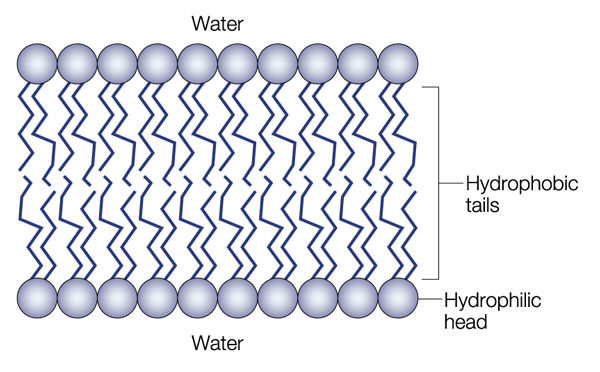
- head is hydrophillic (attracts water) either side of membrane.
- tails are hyrdophobic
layers and bilayers
- if phospholids are surrounded by water they form a phospholid bilayer
- molecules can move freely in this state
- heads cant move through hydrophobic region= stability
- cant perform all function examples
- plasma membrane in growing shoot= receptors that allow them to detect molecules to regulate growth
- muscle cell membrane= contain a number of channels for quick uptake in glucose to provide energy for muscle contraction
- if phospholids are surrounded by water they form a phospholid bilayer
fluid mosaic module
- feature; bilayer of phospholid molecules, protein molecules and extrinsic molecules
- phosphlid molecuw with a carbohydrate attached= glycolipid
- protein molecule with a carbohydrate attached= glycoprotein
- give stability. bind hydrophobic tails together in order to fit more in= cholesterol
- allows the movement of too large to pass through the phospholid bilayer= carrier proteins. endocytosis= mass movement of substances through membrane
- capable of carrying a specific molecule through membrane= channel proteins. for polar substances
membranes and temperature
- increasing temperature= more kinetic energy molecules move faster
- movement makes membranes leaky- lets molecules in and out easily
- increasing temperature= more kinetic energy molecules move faster
Imágenes y archivos del mapa
Información
- Descripción
- a level n Mapa Mental sobre biological membranes- fluid and the fluid mosaic module, creado por Jacqueline Debor el 30/10/2014.
- Creado por
- Jacqueline Debor
- Visitas
- 10
- Valoración