Mapa mental
Contemporary organisations and their principal environments (1)

Contenido del mapa
Contemporary organisations and their principal environments (1)
The organisation
- Inputs (environment)
- Outputs
- Structure
- Overall strategy
- HR strategy/practice
Organisation Theory
- Positivst/modernist
- Symbolic interpretivist
- Postmodernist
Structure
- Bureaucratic
- Divisionalisied
- Matrix
- Managers attempt to adjust the formal structure to ensure efficiency and performance
- Mechanistic vs Organic
- Trend: Tall centralised organisations changing to flatter, decentralised
- Influences on structure - type of work, technology, culture and management style
Organisation Change
- Triggers - external/internal
- Planned Change
- Lewin/Schein
- Unfreezing; Movement; Refreezing
- Force Field Analysis (Lewin)
- Bullock & Batten (1985)
- Exploration, planning, action, implementation
- Lewin/Schein
- Emergent Change
- Best model to use depends on the circumstances
- Open systems approach to change
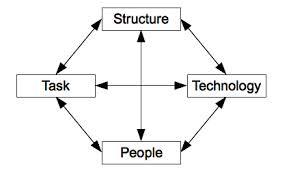
- Leavitt's Diamond
- Managing change: Kotter
Organisational Culture
- Schien
- Level 1: Artefacts - visible features e.g. decor. Consist of objects, narratives and activities
- Level 2: Values - norms, beliefs
- Level 3: Basic assumptions. Guide behaviour without being expressed. Most influential level.
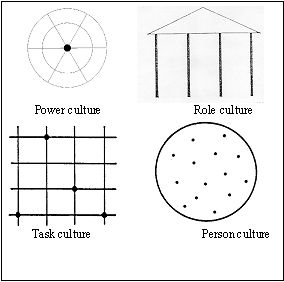
- Handy (1985): 4 organisational cultures
- Studies
- Peters and Waterman (1992)
- Schien
Structure <--> culture
Contemporary Organisation Forms
- Nowadays organisations have to adapt rapidly to change
- Change = reorganisation
- The network organisation (n-form)
- Virtual organisations
- Post-bureaucratic: people act on values not rules, responsibility is assigned on competence not hierarchy, and there are open boundaries to people
- Strategic Alliances
- Parternships
- Joint Ventures
- Outsourcing
- Atkinsons (1984) flexible firm
- As structures/forms become more fluid/flexible, so do employment forms
- Nowadays organisations have to adapt rapidly to change
Organisations and people management
- Every HR practice is influenced by organisation structure, form, and culture.
- Contingency Theory
- Scientific Management (Taylor, 1911)
- Human Relations (Mayo/Hawthorne)
- Social components - structural issues, rules and systems, co-ordinating mechanisms, and networking
- Connections between structure, form, culture and HR are multiple and multidimensional