
Mapa mental
Behaviourism
Contenido del mapa
Behaviourism
Logical Behaviourism
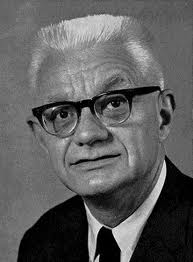
- Carl Gustav Hempel
- "Hard" Behaviourism
- Reduction of Psychology to 'hard science'
- Thought 100% expression of behaviour
- "Hard" Behaviourism
- Gilbert Ryle
- "Soft" Behaviourist
- statements containing mental terms can be translated, without loss of meaning, into statements about what the individual will do in various circumstances
- Not nearly as hardline behaviourist as Hempel or Wittgenstein
- Actually argued that one cannot liken mind to a kind of substance, because the mind can only be described as 'what it is like to be me;
- "Soft" Behaviourist
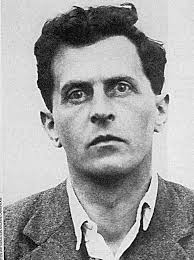
- Wittgenstein
- Wittgenstein's beetle: everyone has a small box in which they keep a beetle, but no one is allowed to look in anyone else's box but their own. Over time communities come to use the term 'beetle' for the contents of everyone's boxes, despite having no proof whwhatsoever that all beetles are identical.
- Believed that main problem with Descartes' dualism, was that it misused philosophical language rather than it actually being wrong.
- "Hard" Behaviourist
- Less extreme than Hempel
- Carl Gustav Hempel
Psychological Behaviourism
- Shows links between philosophy of mind and psychology
- "Psychological behaviourism purports to explain human as well as animal behaviour in terms of external stimuli, responses, learning histories and reinforcements" Stanford encyclopaedia of philosophy
- Basically all behaviours are merely reactions to external stimuli, evokes references to Chinese room thought experiment
Shares many similarities with emergentism, in that it bases itself around the idea that the mind can be found in the physical world rather than being a separate transcendent entity
Takes a functional view of behaviour
Contrasts itself with Descartes' dualism by reducing mental states/properties to physical ones, ie behaviours
- Basically idea that, as it is impossible for one to have direct access to someone's mind, one can only discern someone's mental state through observing their behaviour, therefore it apparently seems more logical to conclude that behaviours are more than just indicators of mental states
Problems with behaviourism
- If an experience is very private, and one is able to hide them, than how can it be explained with behaviourism?
- Example of Spartans, trained not to react to even unimaginable pain. How can one claim that they are not under incredible pain just because they show no signs of it regardless of the situation they are in?
- Must be other factors involved at the very least; so many different possible response to one specific stimuli make it very hard to conceive of the it all down to behaviour
- Example: One can be put in lab condtions and given exactly the same external stimuli and react in so many different ways
- If behaviourism were to be a valid theory, then it would surely be possible through enough mere observation to eventually be able to predict any animal or human's every move. However, both humans and animals react in so many different ways, even to identical stimuli that we find this absolutely and completely impossible The fact that we are unable to do this lends little to the theory as a whole.
- If an experience is very private, and one is able to hide them, than how can it be explained with behaviourism?
Imágenes y archivos del mapa
Información
- Descripción
- Mapa Mental sobre Behaviourism, creado por hemingtontom el 15/11/2013.
- Creado por
- hemingtontom
- Visitas
- 161
- Valoración