
Mapa mental
DEPRESSION
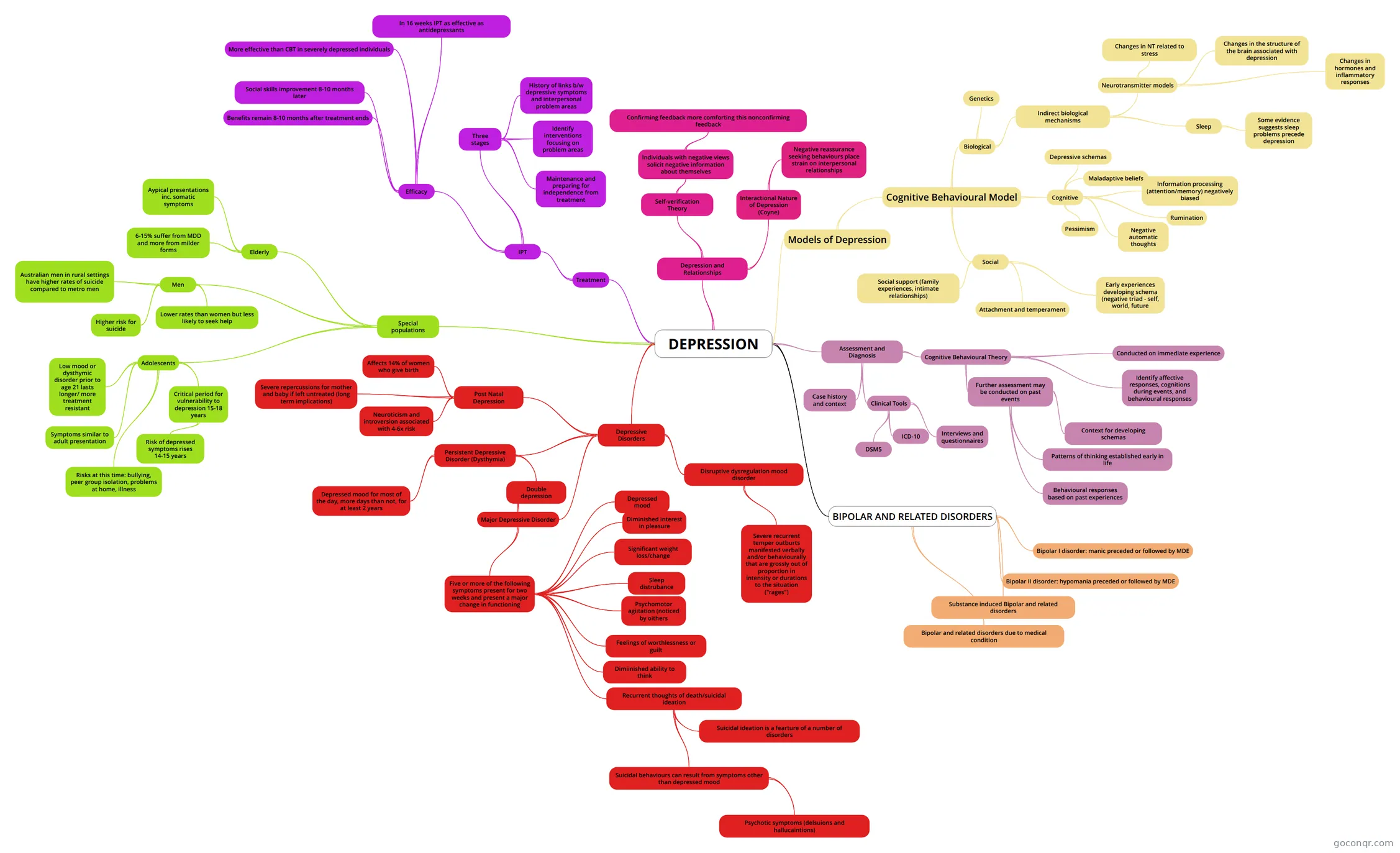
Mind map: depression
Contenido del mapa
DEPRESSION
Models of Depression
- Cognitive Behavioural Model
- Biological
- Genetics
- Indirect biological mechanisms
- Neurotransmitter models
- Changes in NT related to stress
- Changes in the structure of the brain associated with depression
- Changes in hormones and inflammatory responses
- Sleep
- Some evidence suggests sleep problems precede depression
- Neurotransmitter models
- Cognitive
- Depressive schemas
- Maladaptive beliefs
- Information processing (attention/memory) negatively biased
- Rumination
- Negative automatic thoughts
- Pessimism
- Social
- Early experiences developing schema (negative triad - self, world, future
- Attachment and temperament
- Social support (family experiences, intimate relationships)
- Biological
- Cognitive Behavioural Model
Assessment and Diagnosis
- Cognitive Behavioural Theory
- Conducted on immediate experience
- Identify affective responses, cognitions during events, and behavioural responses
- Further assessment may be conducted on past events
- Context for developing schemas
- Patterns of thinking established early in life
- Behavioural responses based on past experiences
- Clinical Tools
- DSM5
- Interviews and questionnaires
- ICD-10
- Case history and context
- Cognitive Behavioural Theory
BIPOLAR AND RELATED DISORDERS
- Bipolar I disorder: manic preceded or followed by MDE
- Bipolar II disorder: hypomania preceded or followed by MDE
- Substance induced Bipolar and related disorders
- Bipolar and related disorders due to medical condition
Depressive Disorders
- Disruptive dysregulation mood disorder
- Severe recurrent temper outburts manifested verbally and/or behaviourally that are grossly out of proportion in intensity or durations to the situation ("rages")
- Major Depressive Disorder
- Five or more of the following symptoms present for two weeks and present a major change in functioning
- Depressed mood
- Diminished interest in pleasure
- Significant weight loss/change
- Sleep distrubance
- Psychomotor agiitation (noticed by oithers
- Feelings of worthlessness or guilt
- Dimiinished ability to think
- Recurrent thoughts of death/suicidal ideation
- Suicidal ideation is a fearture of a number of disorders
- Suicidal behaviours can result from symptoms other than depressed mood
- Psychotic symptoms (delsuions and hallucaintions)
- Five or more of the following symptoms present for two weeks and present a major change in functioning
- Persistent Depressive Disorder (Dysthymia)
- Depressed mood for most of the day, more days than not, for at least 2 years
- Double depression
- Post Natal Depression
- Affects 14% of women who give birth
- Neuroticism and introversion associated with 4-6x risk
- Severe repercussions for mother and baby if left untreated (long term implications)
- Disruptive dysregulation mood disorder
Special populations
- Adolescents
- Critical period for vulnerability to depression 15-18 years
- Risk of depressed symptoms rises 14-15 years
- Low mood or dysthymic disorder prior to age 21 lasts longer/ more treatment resistant
- Symptoms similar to adult presentation
- Risks at this time: bullying, peer group isolation, problems at home, illness
- Critical period for vulnerability to depression 15-18 years
- Men
- Lower rates than women but less likely to seek help
- Higher risk for suicide
- Australian men in rural settings have higher rates of suicide compared to metro men
- Elderly
- 6-15% suffer from MDD and more from milder forms
- Aypical presentations inc. somatic symptoms
- Adolescents
Depression and Relationships
- Interactional Nature of Depression (Coyne)
- Negative reassurance seeking behaviours place strain on interpersonal relationships
- Self-verification Theory
- Individuals with negative views solicit negative information about themselves
- Confirming feedback more comforting this nonconfirming feedback
- Individuals with negative views solicit negative information about themselves
- Interactional Nature of Depression (Coyne)
Treatment
- IPT
- Three stages
- History of links b/w depressive symptoms and interpersonal problem areas
- Identify interventions focusing on problem areas
- Maintenance and preparing for independence from treatment
- Efficacy
- In 16 weeks IPT as effective as antidepressants
- More effective than CBT in severely depressed individuals
- Social skills improvement 8-10 months later
- Benefits remain 8-10 months after treatment ends
- Three stages
- IPT