
Mapa mental
ENZYMES
Contenido del mapa
ENZYMES
Globular Protein
Structure
- How an enzyme's structure relates to its function
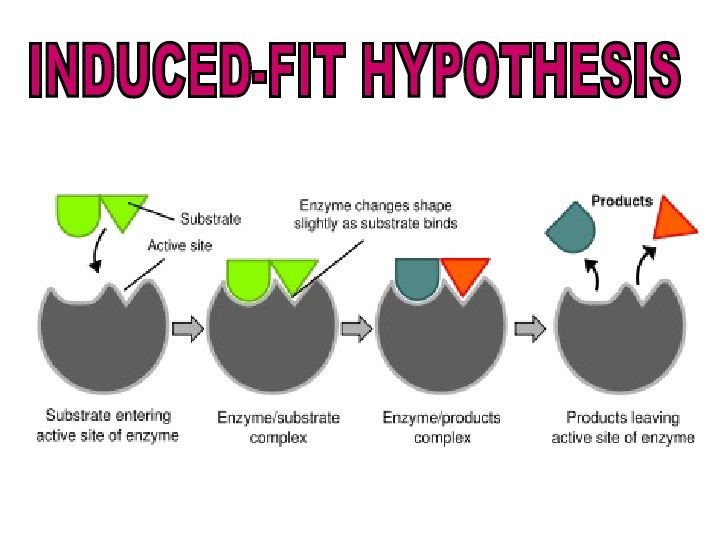
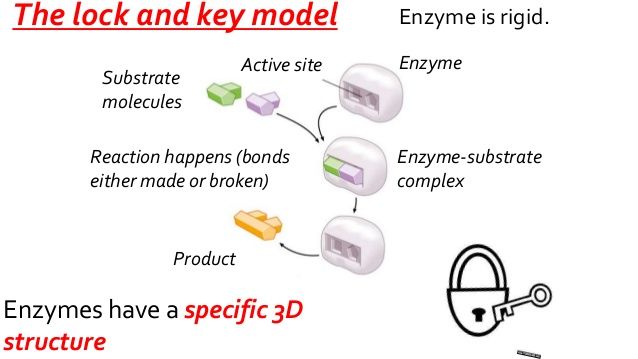
- Specificity - enzyme's shape creates an active site that compliments on substrate
- Efficiency (high turn over numbers) - enzyme's stability means it is unchanged by a reaction and can be used again
- How an enzyme's structure relates to its function
Speed up chemical reactions - BIOLOGICAL CATALYST
- Holds substrates close together at the correct angle
- Donates or receives hydrogen ions from the substrate
- Brings substrates together in the correct sequence for the reaction by changing shape
- Positions charged groups of the substrate on the active site to help the reaction to occur
- Can work intercellularly and extracellularly
How it carries out its function
- Activation energy is the minimum amount of energy needed for a chemical reaction to take place
- This energy is needed to break the bonds in the substrates
- Enzymes lower the activation energy of a reaction by interacting with the substrate
- Reactions take place with less energy and can therefore occur at a lower temperature
- Bonds reform to create the product which is then released from the active site. Energy is released.
- Activation energy is the minimum amount of energy needed for a chemical reaction to take place
Factors affecting enzyme controlled reactions
- Substrate Concentration
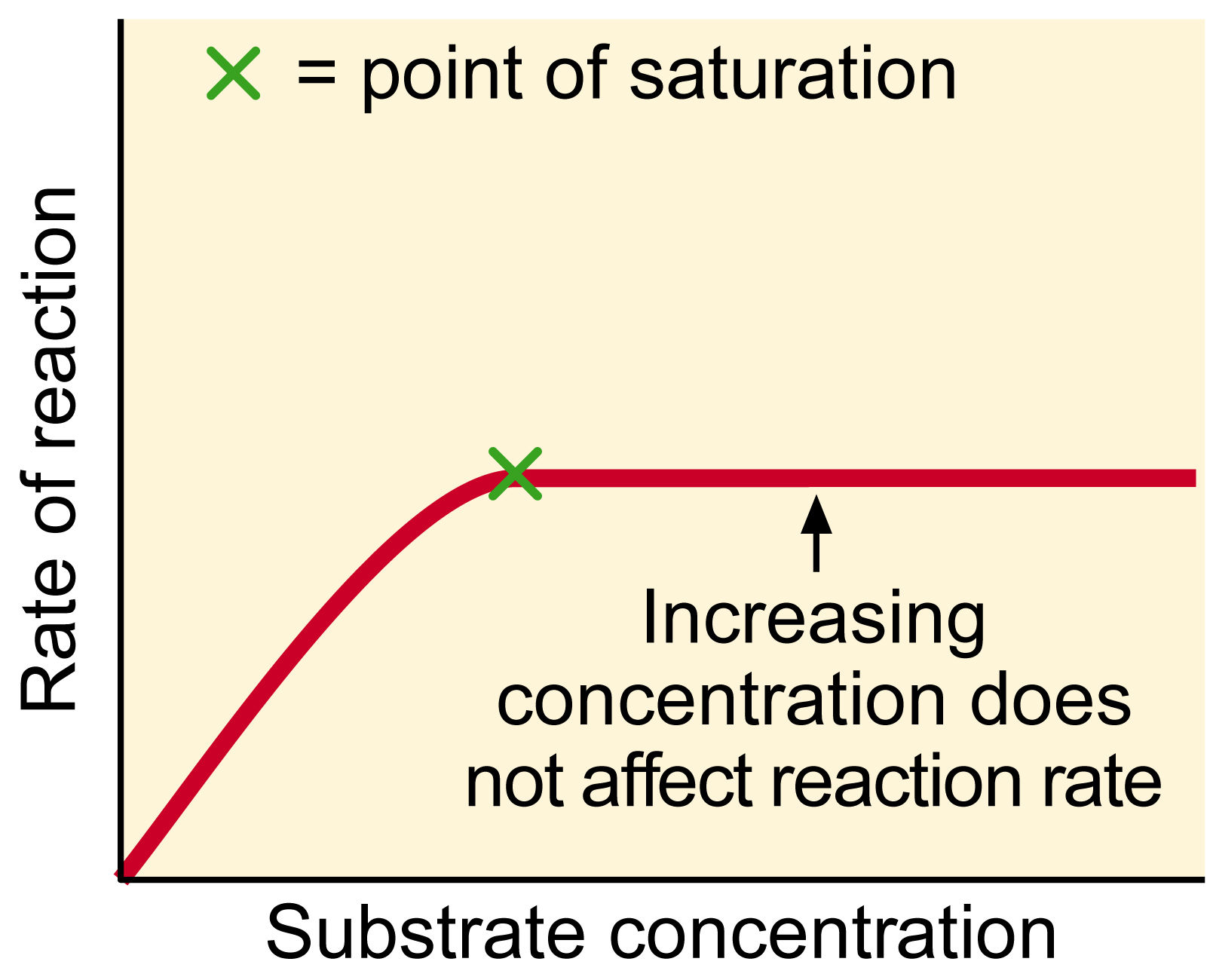
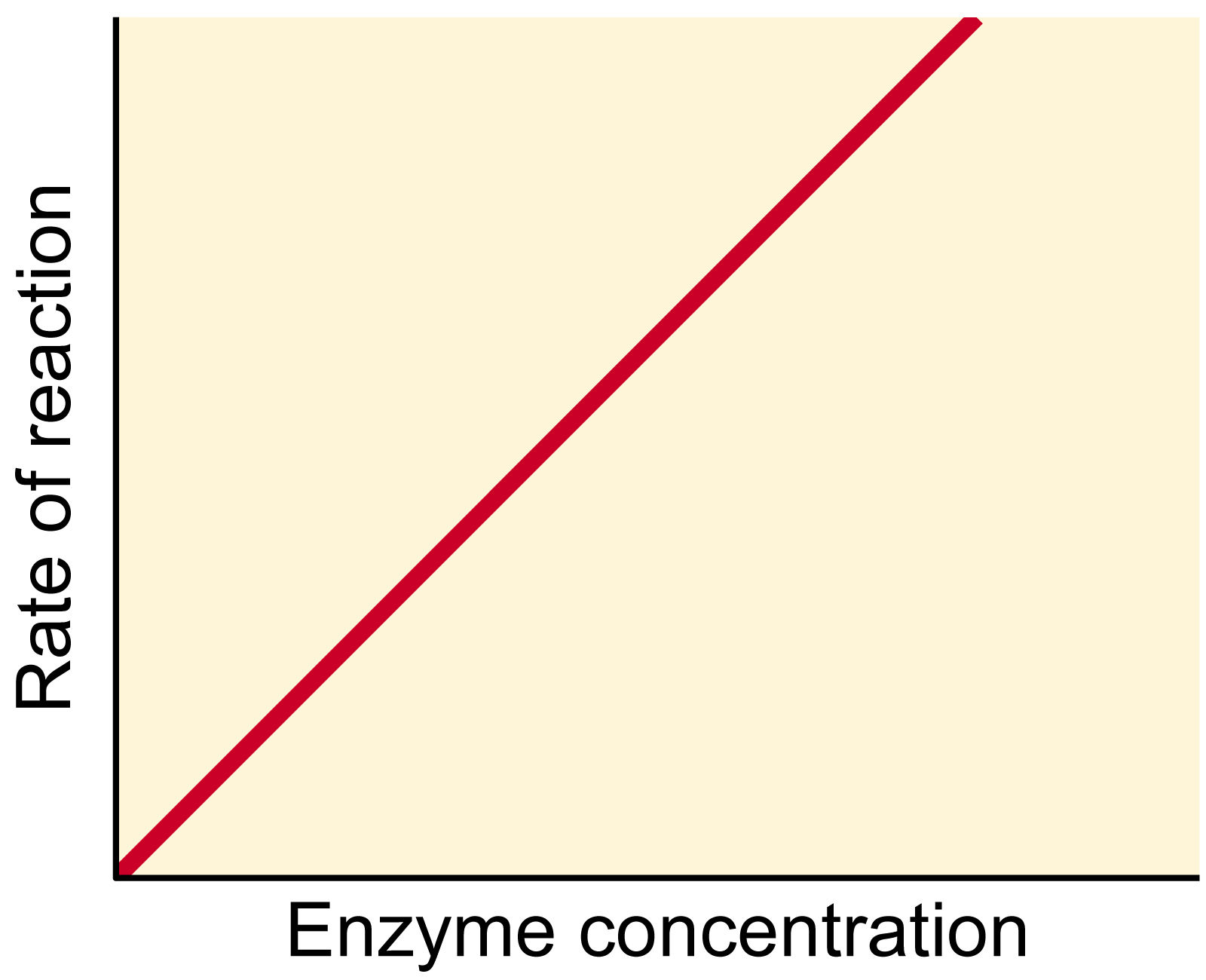
- When concentration of substrate is increased the number of substrate molecules increases. This increase in molecules leads to a higher collision rate therefore a higher rate of reaction. This is also true when the concentration of enzymes increases.
- Rate of reaction increases until its maximum. At this point all active sites are occupied and no more enzyme-substrate complexes can be formed until products are released from active sites.
- When concentration of substrate is increased the number of substrate molecules increases. This increase in molecules leads to a higher collision rate therefore a higher rate of reaction. This is also true when the concentration of enzymes increases.
- Temperature
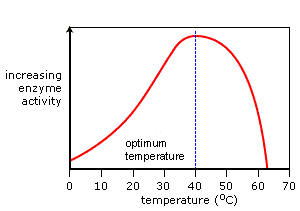
- Increasing the temperature of an environment increase the kinetic energy of the particles. Particles move faster and collide more frequently. This increases successful collisions between substrate and enzyme, increasing the rate of reaction.
- Temperature coefficient (Q10) of a reaction is a measure of how much the rate of a reaction increases with a 10oC rise in temp. For enzyme controlled reactions this is usually taken as two, which means that the rate of reaction doubles with a temperature increase.
- At higher temps, bonds holding protein together vibrate more. When temp increases, vibrations increase until bonds strain and break. Breaking of bonds results in change of shape in precise tertiary structure of protein. Enzyme changes shape and has said to be denatured.
- Optimum temperature is the temp at which the enzyme has the highest rate of activity. Once enzymes have denatured above the optimum temperature, decrease in rate of reaction is rapid. Only needs to be a slight change for the active site to no longer be complementary to a substrate.
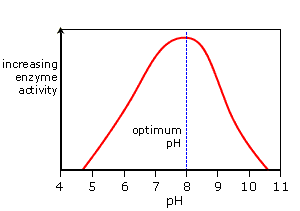
- pH
- Hydrogen bonds and ionic bonds between amino acid R-groups hold proteins in their precise threes-dimensional shape. Bonds are a result of interactions between polar and charged R-groups present on the amino acids forming the primary structure. Change in pH refers to a change in hydrogen ion concentration. More hydrogen ions are present in low pH environments and fewer hydrogen ions are present in high pH environments.
- Hydrogen ions interact with polar and charged R-groups. Changing the concentration of the hydrogen ions changes the degree of this interaction and this also affects how R-groups interact with each other.
- Active site will only be the right shape at the optimum pH. If the pH changes the structure of the enzyme is altered. Once pH returns to the optimum then the protein will resume its normal shape and catalyse the reaction again. This is called renaturation.
- If pH changes more significantly then the reaction is irreversible. Enzyme become denatured.
- Hydrogen bonds and ionic bonds between amino acid R-groups hold proteins in their precise threes-dimensional shape. Bonds are a result of interactions between polar and charged R-groups present on the amino acids forming the primary structure. Change in pH refers to a change in hydrogen ion concentration. More hydrogen ions are present in low pH environments and fewer hydrogen ions are present in high pH environments.
- Enzyme concentration when substrate is unlimited
- Substrate Concentration
Enzyme Inhibitors
- Competitive
- Have a complementary shape to the active site. This prevents substrate from accessing the active site. Therefore no enzyme-substrate complex can be formed
- Non-competitive
- These will bind to the enzyme away from the active site. This affects the shape of the enzyme, which in turn affects the active site shape. So no enzyme-substrate complex can be formed.
- Competitive
Intra and Extracellular Enzymes
- Intracellular
- Enzymes that act within a cell. Catalase is an example and it breaks down hydrogen provide into oxygen and water quickly. This prevents its accumulation and is found in animal and plant tissue.
- Extracellular
- Nutrients are often in the form of polymers so they cannot enter cells directly through the membrane as they are too large. They need to be broken down so enzymes are released to make the lager molecules into smaller molecules by digestion. These are extracellular as the work outside the cell that made them.
- Unicellular and multicellular organisms rely on these enzymes to make use of the polymer for nutrition.
- In multicellular organisms the large molecules still have to be digested so smaller molecules can be absorbed into the blood stream. From there they are transported around the body to be used as substrates in cellular reactions, e.g. amylase and trypsin.
- Unicellular and multicellular organisms rely on these enzymes to make use of the polymer for nutrition.
- Nutrients are often in the form of polymers so they cannot enter cells directly through the membrane as they are too large. They need to be broken down so enzymes are released to make the lager molecules into smaller molecules by digestion. These are extracellular as the work outside the cell that made them.
- Intracellular
Co-factors
- Transfer atoms or groups from one reaction to another activating the enzyme
- Form part of the active site of an enzyme, e.g. iron, calcium, chloride and zinc ions obtained my minerals in the diet
- Some cofactors are used to activate precursor enzymes by changing the shape of the active site. The enzyme once activated is referred to as a holoenzyme
- Other precursor enzymes are activated by other enzymes, which cleave off part of the protein or a change in conditions (known as zymogens)
- Some cofactors are used to activate precursor enzymes by changing the shape of the active site. The enzyme once activated is referred to as a holoenzyme
- Prosthetic Groups
- Similar to cofactors but bind more tightly and form a permanent feature of the protein
- If organic, referred to as a coenzyme which are derived from vitamins, e.g. coenzyme A is derived from vitamin B5
- Similar to cofactors but bind more tightly and form a permanent feature of the protein
Imágenes y archivos del mapa
Información
- Descripción
- A-Level (Chapter 4) Biology Mapa Mental sobre ENZYMES, creado por Siam Kirby el 19/03/2016.
- Creado por
- Siam Kirby
- Visitas
- 0
- Valoración