
Mapa mental
Diabetes
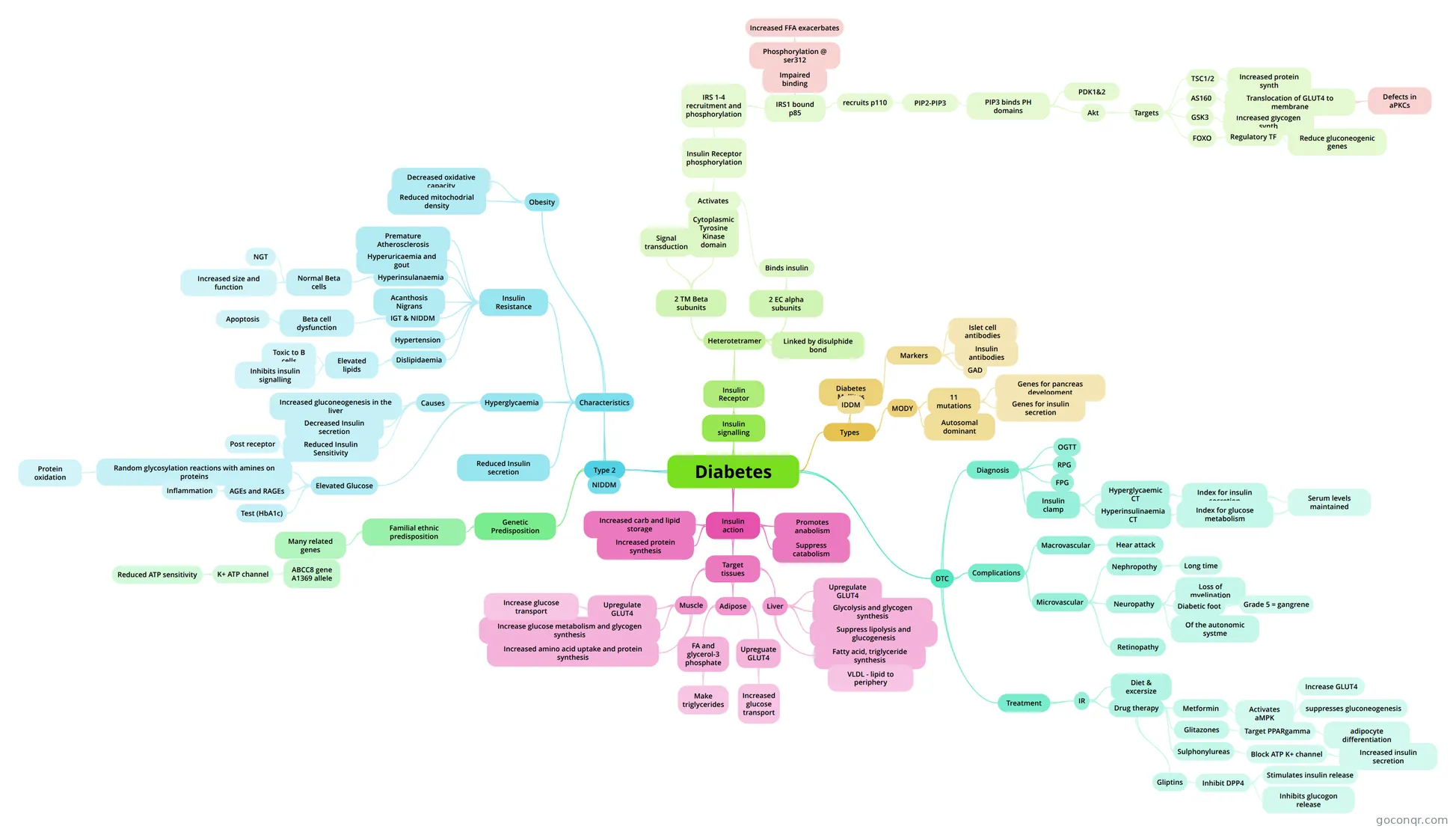
Mind map: Diabetes types and insulin action
Contenido del mapa
Diabetes
Type 2
- Characteristics
- Hyperglycaemia
- Causes
- Increased gluconeogenesis in the liver
- Decreased Insulin secretion
- Reduced Insulin Sensitivity
- Post receptor
- Elevated Glucose
- Random glycosylation reactions with amines on proteins
- Protein oxidation
- Test (HbA1c)
- AGEs and RAGEs
- Inflammation
- Random glycosylation reactions with amines on proteins
- Causes
- Insulin Resistance
- Hyperinsulanaemia
- Normal Beta cells
- Increased size and function
- NGT
- Normal Beta cells
- IGT & NIDDM
- Beta cell dysfunction
- Apoptosis
- Beta cell dysfunction
- Hypertension
- Dislipidaemia
- Elevated lipids
- Toxic to B cells
- Inhibits insulin signalling
- Elevated lipids
- Hyperuricaemia and gout
- Acanthosis Nigrans
- Premature Atherosclerosis
- Hyperinsulanaemia
- Reduced Insulin secretion
- Obesity
- Decreased oxidative capacity
- Reduced mitochodrial density
- Hyperglycaemia
- Genetic Predisposition
- Familial ethnic predisposition
- Many related genes
- ABCC8 gene A1369 allele
- K+ ATP channel
- Reduced ATP sensitivity
- K+ ATP channel
- ABCC8 gene A1369 allele
- Many related genes
- Familial ethnic predisposition
- NIDDM
- Characteristics
Insulin action
- Promotes anabolism
- Increased carb and lipid storage
- Increased protein synthesis
- Suppress catabolism
- Target tissues
- Adipose
- FA and glycerol-3 phosphate
- Make triglycerides
- Upreguate GLUT4
- Increased glucose transport
- FA and glycerol-3 phosphate
- Liver
- Glycolysis and glycogen synthesis
- Suppress lipolysis and glucogenesis
- Fatty acid, triglyceride synthesis
- VLDL - lipid to periphery
- Upregulate GLUT4
- Muscle
- Upregulate GLUT4
- Increase glucose transport
- Increase glucose metabolism and glycogen synthesis
- Increased amino acid uptake and protein synthesis
- Upregulate GLUT4
- Adipose
Insulin signalling
- Insulin Receptor
- Heterotetramer
- 2 EC alpha subunits
- Binds insulin
- Activates
- Insulin Receptor phosphorylation
- IRS 1-4 recruitment and phosphorylation
- IRS1 bound p85
- recruits p110
- PIP2-PIP3
- PIP3 binds PH domains
- PDK1&2
- Akt
- Targets
- GSK3
- Increased glycogen synth
- AS160
- Translocation of GLUT4 to membrane
- Defects in aPKCs
- Translocation of GLUT4 to membrane
- FOXO
- Regulatory TF
- Reduce gluconeogenic genes
- Regulatory TF
- TSC1/2
- Increased protein synth
- GSK3
- Targets
- PIP3 binds PH domains
- PIP2-PIP3
- Impaired binding
- Phosphorylation @ ser312
- Increased FFA exacerbates
- Phosphorylation @ ser312
- recruits p110
- IRS1 bound p85
- IRS 1-4 recruitment and phosphorylation
- Insulin Receptor phosphorylation
- Activates
- Binds insulin
- 2 TM Beta subunits
- Signal transduction
- Cytoplasmic Tyrosine Kinase domain
- Linked by disulphide bond
- 2 EC alpha subunits
- Heterotetramer
- Insulin Receptor
DTC
- Diagnosis
- OGTT
- FPG
- RPG
- Insulin clamp
- Hyperglycaemic CT
- Index for insulin secretion
- Serum levels maintained
- Index for insulin secretion
- Hyperinsulinaemia CT
- Index for glucose metabolism
- Index for glucose metabolism
- Hyperglycaemic CT
- Treatment
- IR
- Diet & excersize
- Drug therapy
- Metformin
- Activates aMPK
- suppresses gluconeogenesis
- Increase GLUT4
- Activates aMPK
- Glitazones
- Target PPARgamma
- adipocyte differentiation
- Target PPARgamma
- Sulphonylureas
- Block ATP K+ channel
- Increased insulin secretion
- Block ATP K+ channel
- Gliptins
- Inhibit DPP4
- Stimulates insulin release
- Inhibits glucogon release
- Inhibit DPP4
- Metformin
- IR
- Complications
- Macrovascular
- Hear attack
- Microvascular
- Nephropothy
- Long time
- Neuropathy
- Loss of myelination
- Diabetic foot
- Grade 5 = gangrene
- Of the autonomic systme
- Retinopathy
- Nephropothy
- Macrovascular
- Diagnosis
Types
- Diabetes Mellitus
- Markers
- Islet cell antibodies
- Insulin antibodies
- GAD
- IDDM
- Markers
- MODY
- Autosomal dominant
- 11 mutations
- Genes for pancreas development
- Genes for insulin secretion
- Diabetes Mellitus
Información
- Descripción
- BOD Mapa Mental sobre Diabetes, creado por Pip Barton el 30/04/2013.
- Creado por
- Pip Barton
- Visitas
- 123
- Etiquetas
- Valoración