
Mapa mental
GCSE AQA Biology 1 Cloning & Genetic Engineering
Contenido del mapa
GCSE AQA Biology 1 Cloning & Genetic Engineering
Cuttings and tissue culture
- Cuttings
- Gardeners take cuttings from good parent plants - plant them to produce genetically identical copies (clones) of parent plant
- Quick & cheap
- Tissue culture
- Plant cells put in growth medium with hormones - grow into new plants (clones)
- Very quick, in little space, grown all year, more expensive
- Cuttings
Embryo transplants
- Farmers can produce cloned offspring from best bull & cow
- 1) Sperm & egg cells taken, artificially fertilised, embryo splits many times (to form clones) before specialisation
- 2) Cloned embryos implanted into surrogate cows, calves produced - genetically identical
- 3) 100s of 'ideal' offspring produced every year from best bull & cow
- 2) Cloned embryos implanted into surrogate cows, calves produced - genetically identical
Adult cell cloning
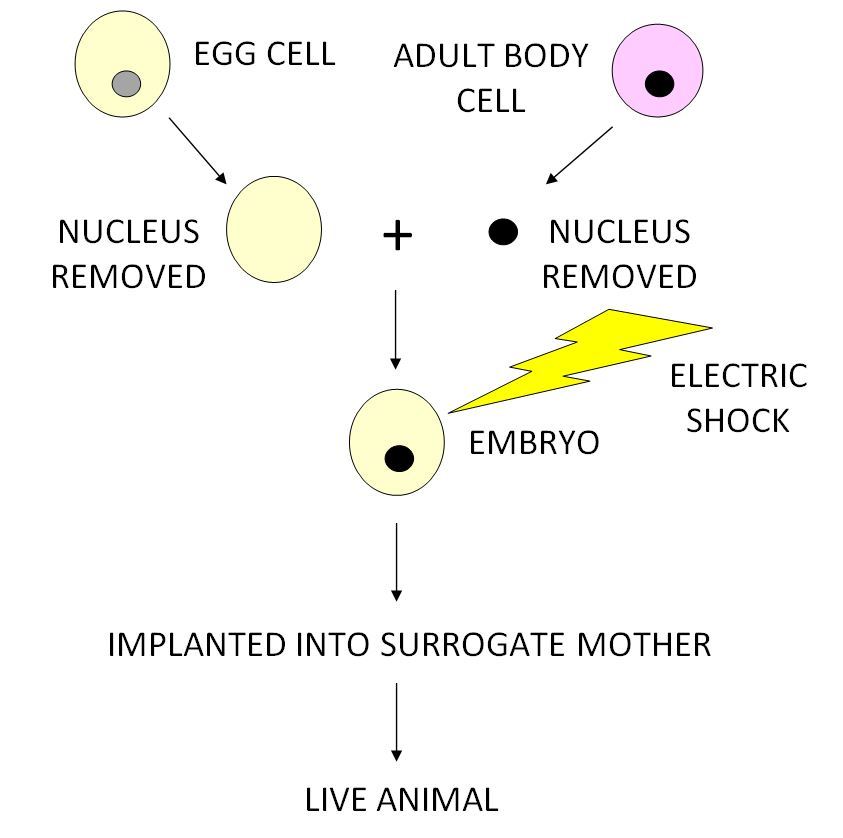
- 1) Unfertilised egg - remove genetic material
- 2) Complete set of chromosomes taken from adult body cell - inserted into 'empty' egg cell
- 3) Egg cell stimulated by electric shock - makes it start dividing
- 4) When embryo is a ball of cells, implanted into adult female to grow clone of or original body cell
- 3) Egg cell stimulated by electric shock - makes it start dividing
- 2) Complete set of chromosomes taken from adult body cell - inserted into 'empty' egg cell
- Technique used to create Dolly - cloned sheep
- 1) Unfertilised egg - remove genetic material
Cloning views
- Bad
- Reduced gene pool
- Fewer different alleles - if new disease appears, could all be wiped out, no resistance
- Cloned animals might not be as healthy
- Dolly had arthrirtis - tends to occur in older sheep
- Humans might be cloned in future
- Success may follow many unsuccessful attempts - children born severely disabled
- Reduced gene pool
- Good
- Could lead to greater understanding
- Of development of embryo, ageing and age-related disorders
- Could preserve endangered species
- Could lead to greater understanding
- Bad
Genetic engineering process
- Useful gene cut from chromosome using enzymes
- Enzymes used to cut another organism's chromosome and then insert useful gene
- Insulin
- 1) Insulin gene cut out of human chromosome by enzymes 2) In DNA of bacteria (plasmid) enzymes used to cut it 3) Human DNA inserted using enzyme 4) Bacteria multiplies many times 5) Insulin harvested and purified 6) Used by diabetics
- Useful gene cut from chromosome using enzymes
Genes transferred to animals & plants
- Genetic engineering process can transfer genes at early stages of development in animals & plants
- GM crops
- Have had genes modified e.g. to make them resistant to viruses, insects or herbicides
- Sheep
- Have been genetically engineered to produce substances (e.g. drugs) in their milk to treat human diseases
- Genetic disorders
- Caused by faulty genes (e.g. cystic fibrosis), scientists trying to treat by replacing them with working genes - gene therapy
Genetic engineering - controversial
- Has potential for solving many problems
- Concerns about long-term effects
- Might create unplanned problems - would get passed onto future generations
- Concerns about long-term effects
- Has potential for solving many problems
GM crops
- Pros
- Increase yield of crop
- People in developed countries can lack nutrients - GM crops can be engineered to contain missing nutrient
- GM crops are being grown elsewhere without problems
- Cons
- Will affect number of weeds & flowers (& insects) - reducing biodiversity
- Not convinced of safety - people worried about allergies
- Herbicide resistant gene could be picked up by weeds - SUPERWEED variety
- Pros
Imágenes y archivos del mapa
Información
- Descripción
- A mind map showing information about cuttings & tissue culture, embryo transplants, adult cell cloning, the views on cloning, the genetic engineering process, genes being transferred to animals & plants and the pros & cons of GM crops.
- Creado por
- Lilac Potato
- Visitas
- 487
- Etiquetas
- Valoración