
Mapa mental
The Roaring Twenties
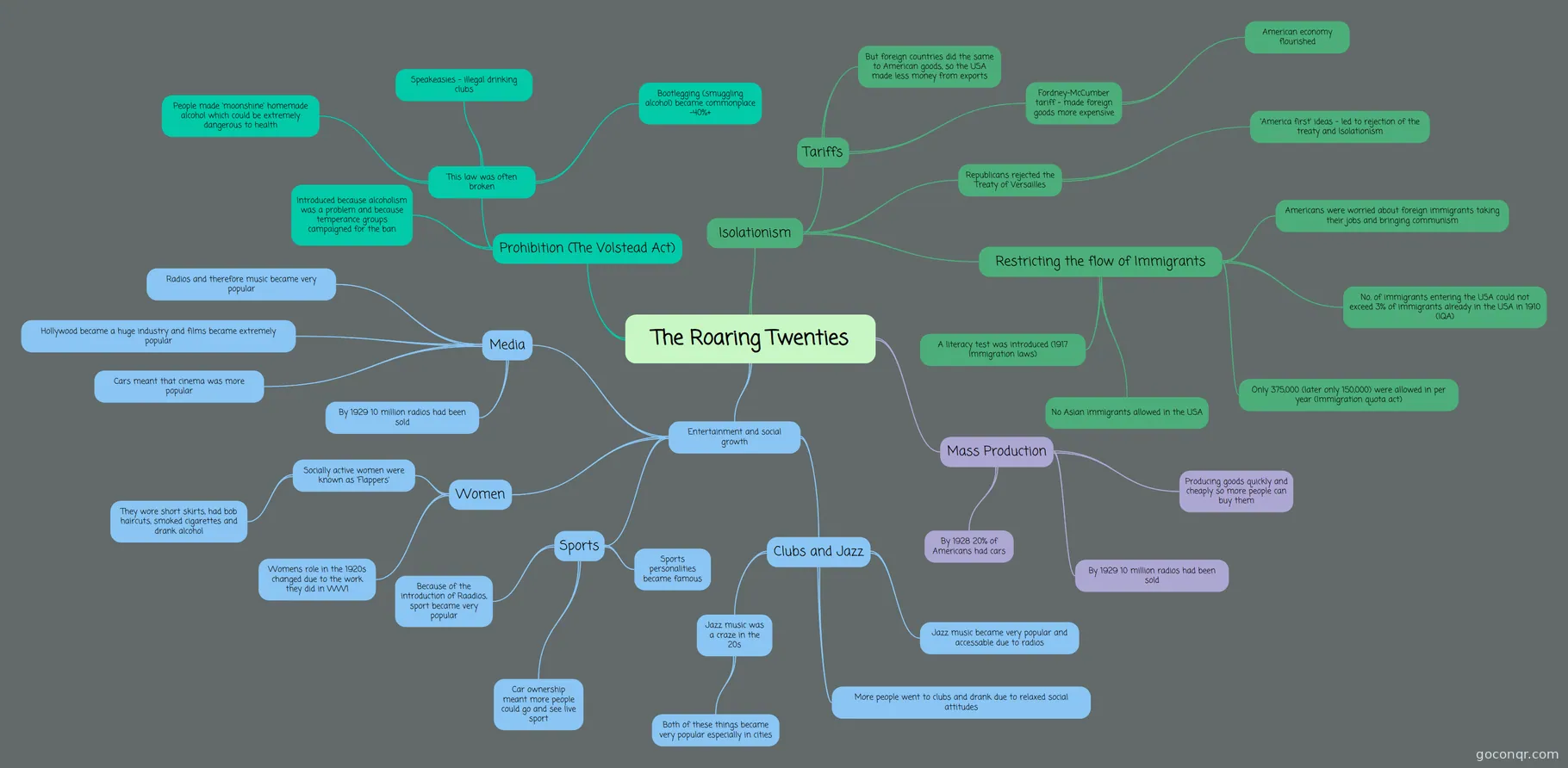
Mind map: The Roaring Twenties
Contenido del mapa
The Roaring Twenties
Isolationism
- Tariffs
- But foreign countries did the same to American goods, so the USA made less money from exports
- Fordney-McCumber tariff - made foreign goods more expensive
- American economy flourished
- Republicans rejected the Treaty of Versailles
- 'America first' ideas - led to rejection of the treaty and Isolationism
- Restricting the flow of Immigrants
- A literacy test was introduced (1917 Immigration laws)
- No Asian immigrants allowed in the USA
- Only 375,000 (later only 150,000) were allowed in per year (Immigration quota act)
- No. of immigrants entering the USA could not exceed 3% of immigrants already in the USA in 1910 (IQA)
- Americans were worried about foreign immigrants taking their jobs and bringing communism
- Tariffs
Mass Production
- By 1928 20% of Americans had cars
- By 1929 10 million radios had been sold
- Producing goods quickly and cheaply so more people can buy them
Entertainment and social growth
- Clubs and Jazz
- Jazz music became very popular and accessable due to radios
- More people went to clubs and drank due to relaxed social attitudes
- Jazz music was a craze in the 20s
- Both of these things became very popular especially in cities
- Sports
- Sports personalities became famous
- Car ownership meant more people could go and see live sport
- Because of the introduction of Raadios, sport became very popular
- Women
- Socially active women were known as 'Flappers'
- They wore short skirts, had bob haircuts, smoked cigarettes and drank alcohol
- Womens role in the 1920s changed due to the work they did in WW1
- Socially active women were known as 'Flappers'
- Media
- Cars meant that cinema was more popular
- Hollywood became a huge industry and films became extremely popular
- Radios and therefore music became very popular
- By 1929 10 million radios had been sold
- Clubs and Jazz
Prohibition (The Volstead Act)
- Introduced because alcoholism was a problem and because temperance groups campaigned for the ban
- This law was often broken
- People made 'moonshine' homemade alcohol which could be extremely dangerous to health
- Speakeasies - illegal drinking clubs
- Bootlegging (smuggling alcohol) became commonplace -40%+
Información
- Descripción
- This is just a revision resource I made for myself on this website, I thought I would share it just in case other people may want it.
- Creado por
- Jordan Clewlow
- Visitas
- 95
- Etiquetas
- Valoración