
Mapa mental
Development Dilemmas
Contenido del mapa
Development Dilemmas
What is development?
- Development is a measurement of how advanced a country is, based upon the standard of living in that country
- Development can be measured using economic or social indicators
- Factors of development
- Economic
- Income
- Industries
- Job security
- Physical wellbeing
- Diet
- Clean water
- Environment
- Mental wellbeing
- Freedom
- Security
- Happiness
- Social
- Education
- Healthcare
- Leisure facilities
- Economic
- Economic indicators
- Gross Domestic Product (GDP)
- The total value of goods and services produced by a country in a year
- Purchasing Power Parity (PPP)
- Adjusts income to take into account the cost of living in that country
- Gross Domestic Product (GDP)
- Political indicators
- How well governed is the country?
- Is there corruption?
- Is there free speech?
- Development is a measurement of how advanced a country is, based upon the standard of living in that country
The development gap
- Social indicators
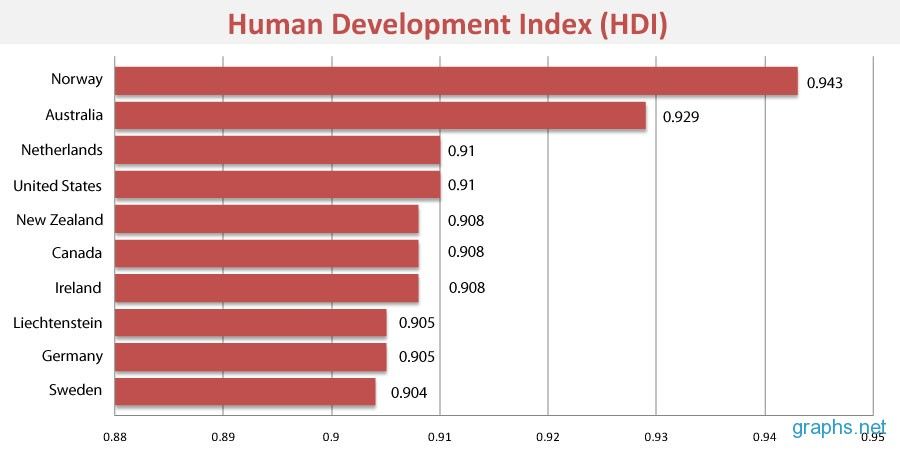
- Human Development Index (HDI)
- A measure produced yearly by the UN
- Combined measure of life expectancy, education and GDP per capita
- High development ≥ 0.8
- Medium development = 0.5 - 0.799
- Low development < 0.5
- Birth rate
- No. of people per doctor
- Gender equality
- Life expectancy
- Literacy rate
- Infant mortality
- Human Development Index (HDI)
- North-South divide - most countries in the northern hemisphere are more developed
- Social indicators
Development in Malawi
- Barriers to development
- HIV/AIDS
- 20% of adults in Malawi have become infected
- Affects people in their 20s and 30s, who are of working age and so economically active
- Those affected become weak and unable to work
- Families cannot afford expensive drugs
- Puts families into poverty
- Landlocked
- They must pay to export goods by train, which is expensive
- Only one, slow, single-track railway line running to the coast
- Exports
- Tobacco
- Sugar
- Tea
- Imports
- Fertiliser
- Fuel
- Manufactured goods
- Trade
- Malawi is only likely to develop if they increase trade, the WTO helps to do this
- If Malawi were to increase the value of their product (e.g. by roasting coffee beans) there would be higher tariffs
- HIV/AIDS
- Barriers to development
Theories of development
- Rostow's modernisation theory
- Traditional society
- Pre-conditions for take off
- Take off
- The drive to maturity
- Age of high mass consumption
- Consumers enjoy a wide range of goods, societies have a disposable income and choose to invest in the military, education, welfare or luxuries
- A period of growth where technology is used throughout the economy and goods are produced for the consumer
- Age of high mass consumption
- Rapid growth of manufacturing industry and new technologies
- The drive to maturity
- The shift from farming to manufacturing begins, and trade increases profits which are invested in new industry
- Take off
- Most people are subsistence farmers and produce little surplus product to boost the economy
- Pre-conditions for take off
- Traditional society
- Dependency theory
- The idea that undeveloped countries cannot develop because they are dependent upon the developed countries
- Rostow's modernisation theory
Regional disparity (Case study: India)
- Core (Maharashtra
- Multiplier effect
- When core regions get richer as development occurs. Usually started by investment, followed by increased workforce/population, therefore increase in services etc.
- Rich and often urban
- Big businesses, industries and government have their HQ here
- High concentration of people
- Good services available
- Multiplier effect
- Periphery (Bihar)
- Downwards spiral
- When periphery regions become poorer due to lack of income and people leave
- Poor and often rural
- Often where the core gets its raw materials
- Low income
- Lack of education
- Below poverty line
- Downwards spiral
- Core (Maharashtra
Types of development
- Top-down
- e.g. Sardar Sarovar dam
- One of the worlds largest dams, aims to provide water (for drinking (3.5 billion litres/day) or irrigation) and power (1450 megawatts/day
- Positives
- Environmentally effective
- Encourages economic development
- Opens up dry land for farming - feeding a growing population
- Negatives
- Locals often lose out
- Floods villages
- Farmland becomes less fertile
- Electricity too expensive for many locals
- Locals do not get a say
- Doesn't provide jobs - uses machinery
- Puts the country in debt
- Locals often lose out
- e.g. Sardar Sarovar dam
- Bottom-up
- e.g. Biogas plants in India
- Positives
- Involves local people
- Brings communities together
- Affordable
- Gives locals new skills
- Appropriate technology for the skill level
- Negatives
- Can be expensive, materials cannot be bought in bulk
- Labour intensive
- Little impact on poverty
- Positives
- e.g. Biogas plants in India
- Top-down