
Mapa mental
13.5 Polymerisation in Alkenes
Contenido del mapa
13.5 Polymerisation in Alkenes
Polymer
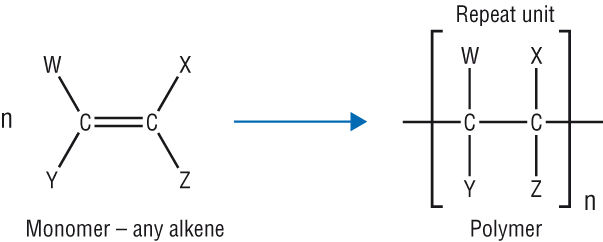
- Large molecules formed from many thousands of smaller, individual repeat units known as monomers
Unsaturated Alkenes go through ADDITION POLYMERISATION
- produces long, saturated chains
- Addition polymers have high molecular masses
- synthetic polymers are usually named after the monomer, prefixed by 'poly'
- Repeat unit is the specific arrangement of atoms in the polymer molecule
Enviromental Concerns
- Most alkene-based polymers are non-biodegradeable!
- Waste plastics can be BURIED
- However the sheer amount of waste we produce is becoming a problem so land fill needs to be reduced
- When they are difficult to separate from other plastics
- When they are not in sufficient quantities to make separation worth while
- When it is too technically difficult to recycle
- Waste plastics can be REUSED
- Many plastics are made from non-renewable oil-fractions = reuse as much as possible
- After SORTING:
- Some plastics (e.g polypropene) can be recycled by melting and remoulding them
- Some plastics can be cracked back into their monomers and used as ORGANIC FEEDSTOCK to make more plastics and chemicals
- Feedstock recycling is good as it is able to handle unsorted and unwashed polymers
- Waste plastics can be BURNED
- Heat can be used to generate electricity
- Process needs to be carefully controlled to reduce TOXIC GASES.
- For example, when a polymer that contains Cl is burned, it releases HCl, which has to be removed
- Waste gases pass through scrubbers which can neutralise gases such as HCl by allowing them to react with a base
- For example, when a polymer that contains Cl is burned, it releases HCl, which has to be removed
Biodegradable and photodegradable polymers
- Biodegradable polymers decompose quickly in certain conditions as organisms can digest them
- Can be made from renewable sources such as starch, cellulose, plant oils, proteins or oil fractions, such as from the hydrocarbon isoprene
- However these are more expensive then their non-biodegradable equivalents
- Require right conditions - compost heap
- Need collecting and seperating from non-biodegradable polymers
- Potential uses - e.g/ plastic sheeting used to protect plants from frost - contains starch grains embedded into it so that the starch is broken down by microorganisms and remaining polyethene crumbles to dust over time
- Photodegradable polymers degrade when exposed to sunlight
Imágenes y archivos del mapa
Información
- Descripción
- AS - Level (13 - Alkenes) Chemistry Mapa Mental sobre 13.5 Polymerisation in Alkenes, creado por Bee Brittain el 13/03/2016.
- Creado por
- Bee Brittain
- Visitas
- 47
- Valoración