
Mapa mental
Unit Two: Tissues
Contenido del mapa
Unit Two: Tissues
Cells are organized into tissues
- Intercellular Junctions connect cells
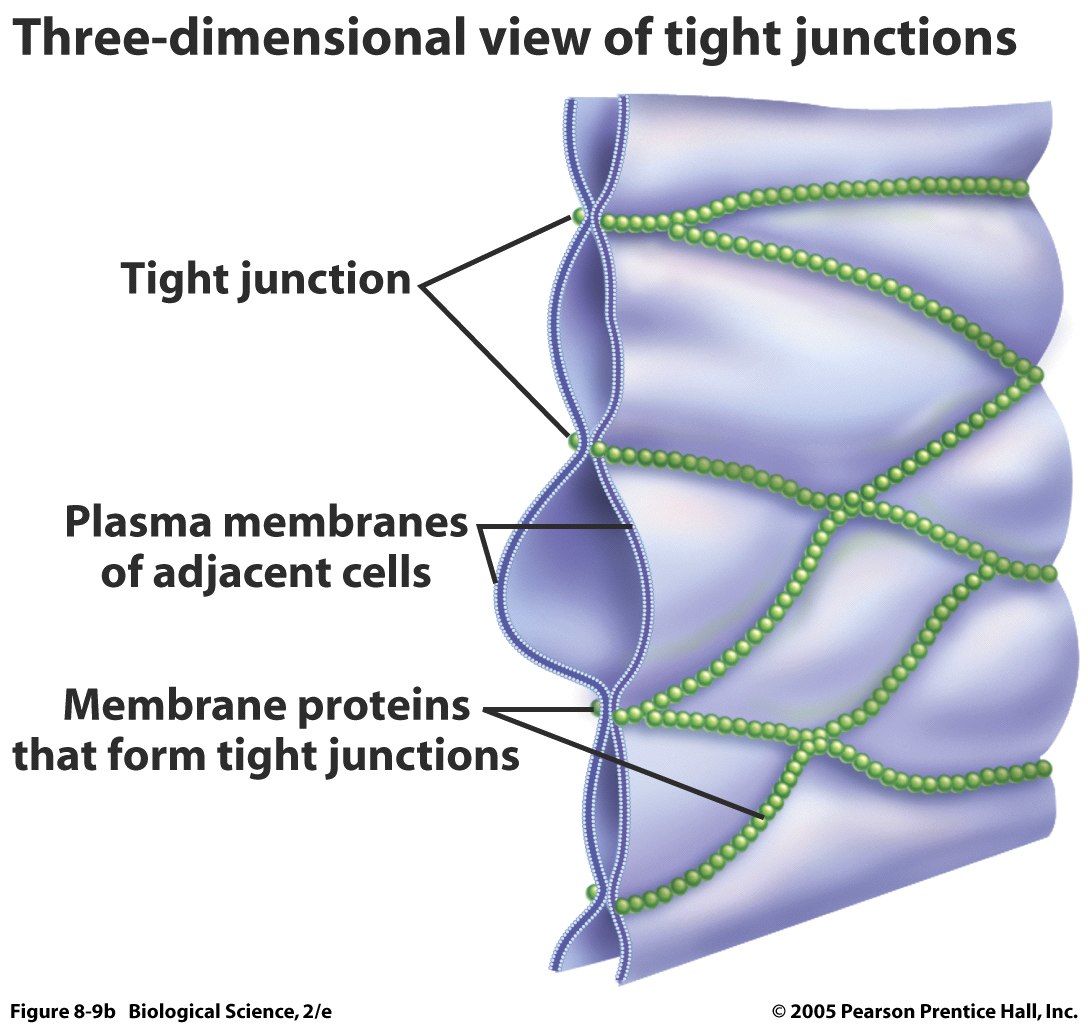
- Tight Junctions
- Close space between cells by fusing cell membranes
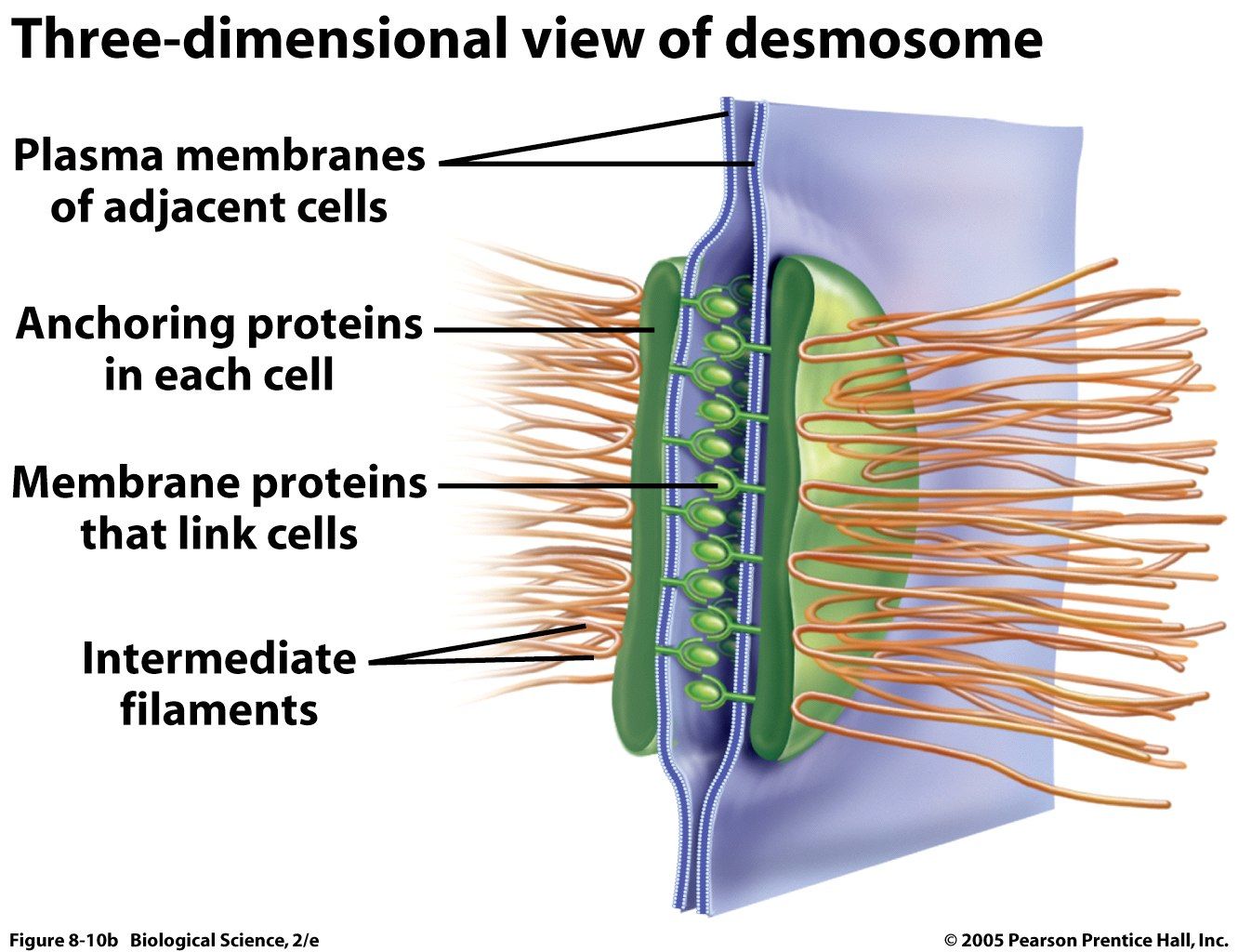
- Desmosomes
- Bind cells by forming "spot welds" between membranes
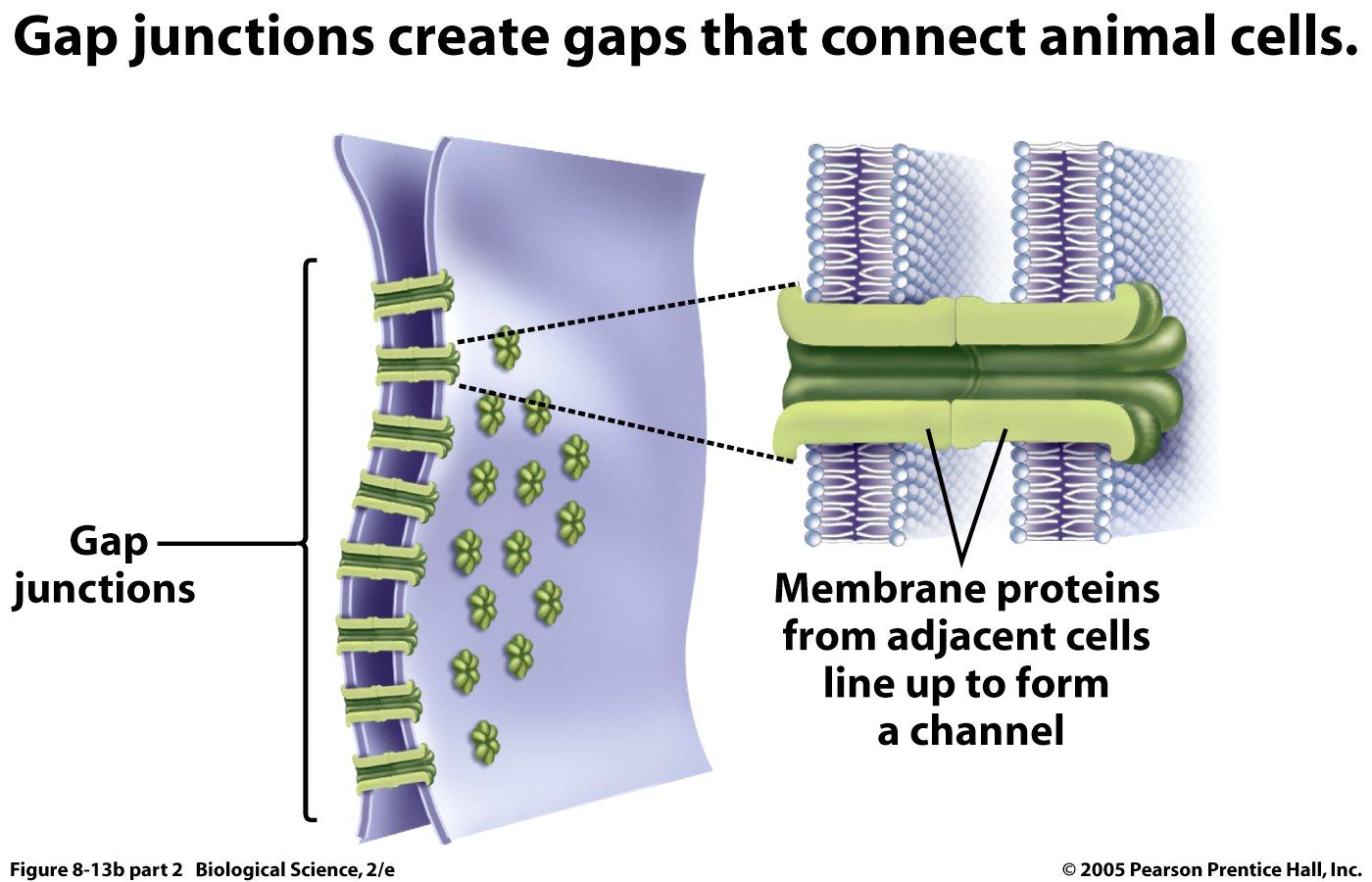
- Gap Junctions
- Form tubular channels between cells to allow for the exhchange of substances
- Tight Junctions
- Intercellular Junctions connect cells
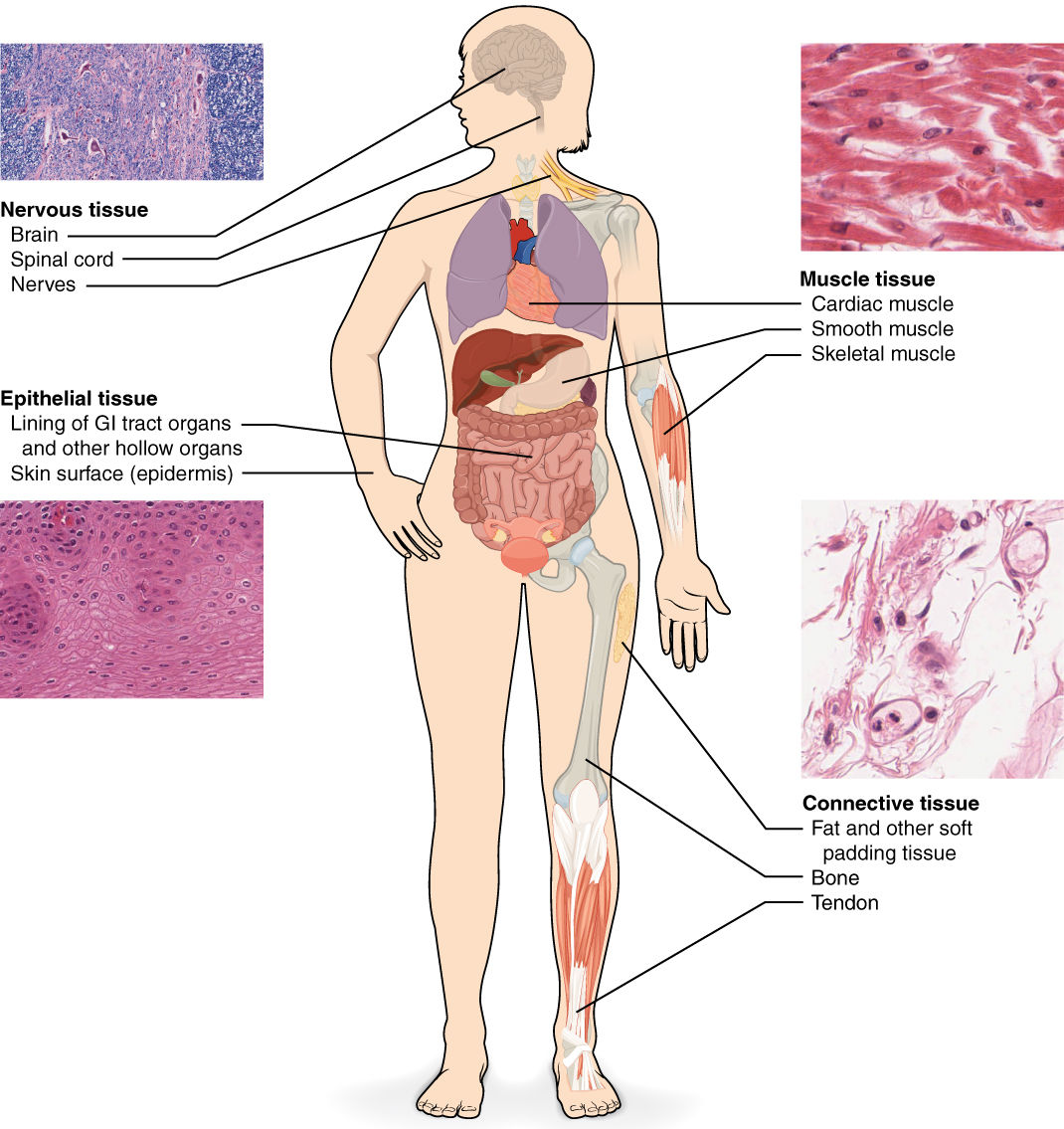
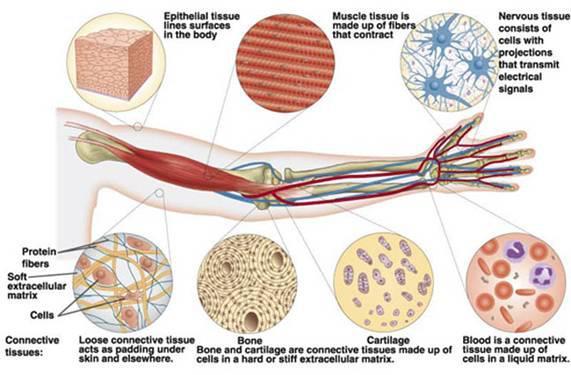
Four major kinds
- Nervous
- Conduct impulses for coordination, regulation (homeostasis), integration, and sensory reception
- Found in the brain, spinal cord, and peripheral nerves
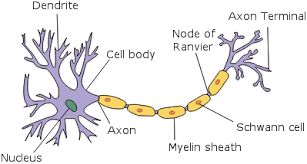
- Neurons are highly specialized
- -sense changes in surroundings -have dendrites, which receive sensory info and transmit the message as an electrical signal to the axon..sends message to the next neuron or to muscles or glands -function: coordinate, regulate, and integrate
- Neurons are highly specialized
- Found in the brain, spinal cord, and peripheral nerves
- Brain, spinal cord, nerves
- Cells communicate with each other and other body parts
- Neuroglia
- Supporting cells of the nervous tissue
- Some bind and support nervous tissue, some carry phagocytosis
- Phagocytes protect nervous tissue by engulfing cellular debris, waste, and foreign material
- Some connect neurons to blood vessels, and some are involved w/ cell-to-cell communication
- Some bind and support nervous tissue, some carry phagocytosis
- Supporting cells of the nervous tissue
- Neuroglia
- Conduct impulses for coordination, regulation (homeostasis), integration, and sensory reception
- Muscular
- Movement
- Attached to bones, in hollow internal organs, heart
- Able to contract in response to stimuli
- Muscle cells are also called...
- Cell fibers
- Skeletal muscle makes up....% of body weight and smooth and cardiac about...
- 40%, 10%
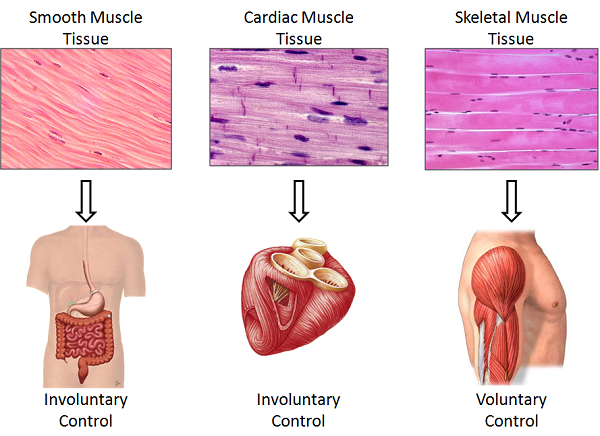
- Three types of muscle tissue
- Skeletal
- Function: move body parts, facial expressions, writing, talking, singing, chewing, swallowing, and breathing
- Muscles that contain skeletal muscle tissue are usually attached to bones
- Each cell has many nuclei -> multinucleate
- voluntary muscle tissue
- Contract when stimulated by a nerve cell, then relaxed when it is no long stimulated
- The cells are long, threadlike
- About 40 mm in length and less than .1 mm in width
- Contain striations
- Alternating light and dark cross-markings
- Smooth
- No striations
- Cells are short and spindle shaped
- Found in the walls of hollow internal organs
- Stomach, intestines, bladder, uterus, blood vessels
- Found in the walls of hollow internal organs
- One central nucleus per cell
- Involuntary control
- Moves food through digestive tract, constricts blood vessels, and empties the bladder
- Involuntary control
- Cardiac
- One nucleus per cell
- Involuntary control
- Pumps blood through the heart and into the blood vessels
- Cells are striated, branched, joined end-to-end and interconnected
- Specialized intercellular junction -> intercalated disc
- Connection b/w cardiac muscle cells
- Specialized intercellular junction -> intercalated disc
- Function w/o nervous stim.
- Skeletal
- Muscle cells are also called...
- Epithelial
- Covers body surface, internal organs, and glands
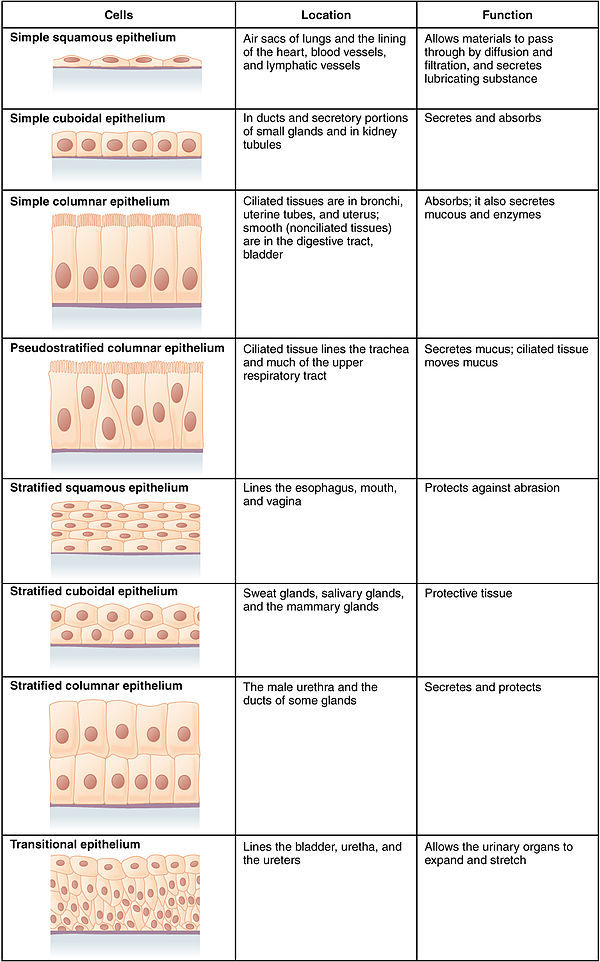
- Classified according to cell shape and the number of cell layers
- Simple Squamous
- -One layer of flat cells -Diffusion, filtration, secretion -alveoli of lungs, ithe kidney, the lining of the heart, blood vessels, and ventral cavities
- Simple Cuboidal
- -One layer of cuboidal cells -Secretion and absorption -Small glands, kidney tubules, and ovary surface
- Simple Columnar
- -one layer of columnar cells -Non ciliated: absorption of digested food, secretion of mucus -digestive track -Ciliated: secretion, moving mucus -small bronchi, uterus
- Pseudostraified Columnar
- -One layer of cells, all on basal membrane -Secretion and propulsion of mucus -Nonciliated: male urethra and ducts of large glands -Ciliated: found on trachea, primary bronchi, and upper respiratory
- Stratified Squamous
- E-has several layers, with a surface of flat cells -protection..may contain keratin that repels bacteria Keratinized: epidermis of skin Non-keratinized: lines wet surfaces, such as mouth, esophagus, tongue
- Stratified Cuboidal
- -Several layers, but the surface is cuboidal -Protection -largest ducts of sweat glands, mammary glands, salivary glands
- Stratified Columnar
- -Several layers, with columnar surface -Protection and secretion -Very rare: lines parts of the urethra, large ducts of glands, conjunctiva of eye
- Transitional
- -shape at surface us transitory..will look like stratified squamous when stretched, stratified cuboidal when not. -distension of urinary organ -on surface of stretchy organs, like the bladder and uterus.
- Glandular
- Simple Squamous
- Classified according to cell shape and the number of cell layers
- Protection, secretion, absorption, excretion
- Lacks blood vessels, cells readily divide, though are tightly packed
- Basement membrane
- Anchors epithelium to connective tissue
- Cancer cells dissolve the membrane or produce fewer adhesion proteins
- Basement membrane
- Covers body surface, internal organs, and glands
- Connective
- Widely distributed throughout the body
- Cell types
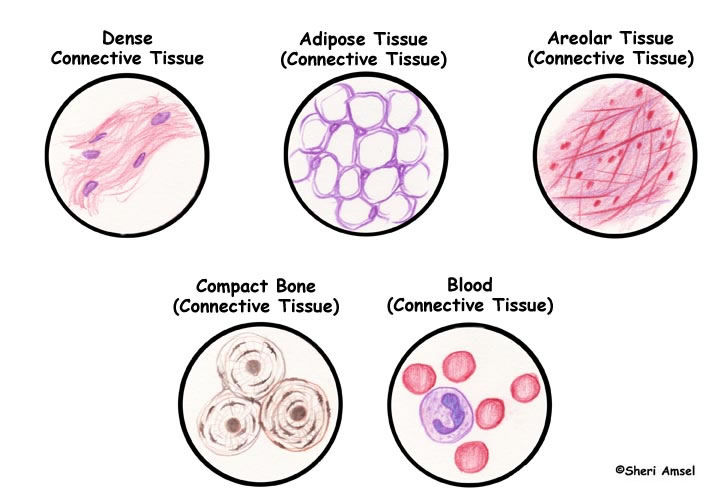
- Fibroblasts
- Produce collagens and elastic fibers
- Macrophages
- Are phagocytes (eat cells)
- Mast cells
- Release heparin and histamine
- Fibroblasts
- Tissue fibers
- Collagen
- Great tensile strength
- Elastic
- Composed of elastin, are stretchy
- Reticular
- Fine collagen fibers
- Collagen
- Cell types
- Bind, support, protect, store fat, produce blood cells, protect against infection, and repair damaged tissue
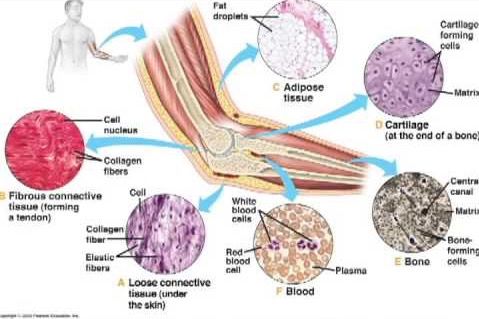
- Categories of Tissue
- Loose
- Areolar
- Description: membranes between organs that bind them together Location: Beneath skin and surrounds organs
- Adipose
- Function: stores fat, cushions, insulates Location: beneath skin, in certain abdominal membranes, and around kidneys, heart, and various joints
- Reticular
- Description: thin branched reticular fibers Function: supports the walls of the liver and spleen
- Areolar
- Dense
- Regular
- Description: strong collagen fibers that bind structures as parts of tendons and ligaments
- Irregular
- Description: thicker, randomly distributed collagen fibers Location: found on dermis
- Elastic
- Description: make up hollow internal organs Location: line the lungs and blood vessels
- Regular
- Specialized
- Cartilage
- Description: provides support -fibers and a gel-like substance -lacks direct blood supply, slow to heal Location: ends of various bones, in ear, in the larynx, in b/w spinal column, pelvic girdle, knees
- Bone
- -Matrix consists of mineral salts and collagen -Compact and spongy bones -Heals rapidly
- Blood
- Description: composed of cells suspended in fluid Location: produced in tissue of hollow parts of certain bones
- Cartilage
- Loose
- Categories of Tissue
- Have a good blood supply, cells are farther apart, extra cellular mix in b/w
- Consists of fibers and a ground substance (gel-like)
- Widely distributed throughout the body
- Nervous
Imágenes y archivos del mapa
Información
- Descripción
- Mind map for Anatomy class, Unit 2
- Creado por
- Ashley Gilly
- Visitas
- 32
- Etiquetas
- Valoración