
Tissues and Histology
1,021 resources created by 860 users
This Tissues and Histology page on GoConqr gathers community-made quizzes, mind maps, flashcards and notes, from epithelial and connective tissue to muscle, nervous tissue, bone and cartilage. It's built for university students identifying tissues and testing their recall, and for teachers after ready-made material. There are over 900 resources here, including more than 100 quizzes, more than 300 mind maps and over 400 flashcards. Pick a topic, try a quiz to find your gaps, then build your own maps and flashcards.
Top Tissues and Histology resources
-
37 questionsThe Extracellular Matrix What are the two main components of extracellular matrix?
-
Mind map Tissues Task 1: P2. Unit 5 - Anatomy and Physiology
-
40 questionsA&P CH. 4 What tissue reacts to stimuli and conducts impulses?
-
13 questionsConnective tissue Connective tissue is made up of:
-
26 cardsClassification Of Tissues Groups of cells that similar in structure and function are called ?
-
Mind map Tissues: Epithelium
-
16 questionsChapter 5 Anatomy and Physiology (Saladin) All of the following are true of Epithelial tissue EXCEPT
-
14 cardsEpithelial tissue What are the 4 different types of tissue?
Quizzes
See all 120 quizzes-
37 questionsThe Extracellular Matrix What are the two main components of extracellular matrix?
-
40 questionsA&P CH. 4 What tissue reacts to stimuli and conducts impulses?
-
13 questionsConnective tissue Connective tissue is made up of:
-
16 questionsChapter 5 Anatomy and Physiology (Saladin) All of the following are true of Epithelial tissue EXCEPT
-
12 questionsAnatomy- Histology Slides PMU Label this image First Dot- Name Second Dot- Staining
-
44 questionsTissues, cell parts, biochemistry For test on 8/31/21
-
189 questionsunits 4-6 Of the three embryonic germ tissues, which of the following gives rise to nervous tissue?
-
87 questionsMuscle, Nerve, Blood and Lymph Tissue
Mind maps
See all 403 mind maps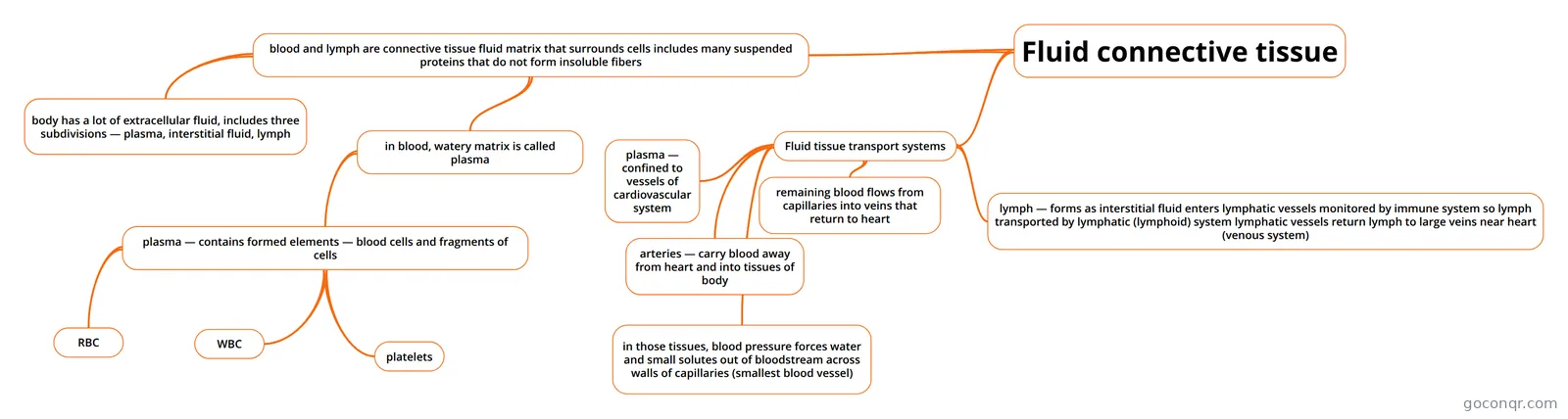
Flashcards
See all 460 flashcards-
26 cardsClassification Of Tissues Groups of cells that similar in structure and function are called ?
-
14 cardsEpithelial tissue What are the 4 different types of tissue?
-
13 cardsEpithelial Tissue Identify: Simple Cuboidal
-
22 cardsTissue Identification Identify the tissue photos
-
18 cardsConnective and Epithelial Tissue Images Anatomy
-
72 cardsAnatomy Chapter 4: Tissues What is a tissue?
-
48 cardsChapter 4 - Tissues What are tissues?
-
30 cardsAnatomy and Physiology Exam 2
Flowcharts
See all 14 flowchartsNotes
See all 22 notes-
Connective Tissue New Page New Page
-
ch4 Tissues & membranes + Ch5 Integumentary System · Tissue- Group of similar cells collected together by an intercellular matrix · Intercellular Matrix- non-living material that fills the space between the cells o May contain salts and fibers unique to that kind of t...
-
Type of Tissue Groups of similar cells combine to create tissues.Four types of tissue:1. Epithelial TissueEpithelial Tissue (covering)- consist of a sheet of cells that cover the body surface, forms the skin- lines body cavities- Ep...
-
Connective, Nervous, Muscle Tissues
-
Anatomy and Physiology Vocabulary Anatomy: Study of structure and relationship between body parts Anatomy: Study of structure and relationship between body parts Physiology: Study of how those s...
-
Muscle Tissue Muscle is specialised for contraction and transmission of impulses that aid contraction Characterised by ability to contract 3 types based on: Organisation/appearance of cells Nervous control Location in the body Musc...
-
Chapter 37 Vertebrate bones develop: 1. precursor cells differentiate into osteoblasts that begin producing bone - membranous bone2. formed as cartilage first- preursor cells being chondroblasts and grow into cartilage in the em...
-
EPITHELIAL TISSUE - created from Mind Map Tissues are groups of cells that are similar in structure and perform a commoner related function(the "fabrics" of our body) Functions: Cover surfaces or line body cavities or form glands Glands
Slides
Topics in Tissues and Histology
More Anatomy topics
About Tissues and Histology
GoConqr OriginalWhat the page covers
This unit sits in the Foundations of Anatomy strand of Anatomy. It brings together material on the main tissue types: epithelial, connective, muscle and nervous. Many resources also reach into bone, cartilage, cell junctions and glands.
Where to start
Begin with the quiz The Extracellular Matrix. It asks about the two main components of the matrix and the fibrous proteins found in it. Then try the quiz on connective tissue, which checks collagen and elastin fibres through fill-in-the-blank questions.
For a broad overview, the flashcards on Classification Of Tissues ask how many primary tissue types the body has and which glands count as epithelial.
Epithelium and identification
- The Epithelial Tissue flashcards ask you to identify simple cuboidal, simple squamous, simple columnar, pseudostratified and stratified squamous tissue.
- The Tissue Identification deck covers transitional, smooth muscle, loose reticular, loose adipose and dense regular tissue.
- The mind map Tissues: Epithelium sets out simple epithelium, squamous, cuboidal and columnar types with their functions and locations.
Using quizzes and maps together
- Read a mind map, such as the one on fluid connective tissue, which covers blood and lymph.
- Take a quiz on the same topic and note what you missed.
- Return to the map for those gaps.
- Run through a flashcard deck to fix the names and structures.
Teachers can use the Chapter 5 quiz based on Saladin's Anatomy and Physiology as ready-made classroom practice, since it separates epithelial tissue from muscle tissue.
Make it your own
Once you have worked through a few resources, try sketching your own mind map of the four tissue types and see what you can fill in from memory.
Frequently asked questions
Which resource should I open first?
Start with the quiz The Extracellular Matrix. It is short, and it covers the components and fibrous proteins that underlie connective tissue. After that, move to the connective tissue quiz, then use the Epithelial Tissue flashcards to practise naming each type from its appearance.
What do the mind maps cover?
There are more than 300 mind maps. They include epithelium, fluid connective tissue, cartilage, muscle tissue, neuroglial cell types, exocrine glands, cell junctions and the periosteum and endosteum. Several give an overview of all the tissue types in one map.
Are the resources free to use?
Yes. Every resource listed here is free to open, study and take, with no account needed. They were made by GoConqr users, not by GoConqr itself, so styles and depth vary from one to the next.
Who are these resources for?
The material is mostly at university level, so it suits university students revising histology and tissue identification. Teachers can also use it as ready-made material for classes, lab practice or revision tasks.
Is there help with identifying tissues on slides?
Yes. The Tissue Identification and Epithelial Tissue flashcard decks focus on naming tissues from images. There are also quizzes on histology slides and lab practice, which suit anyone preparing for practical identification work.
What if I can't find the topic I need?
Try a nearby topic first, since bone, cartilage, muscle and nervous tissue each have their own resources. If a gap remains, make your own quiz, mind map, flashcards or notes with a free account, which also saves your quiz scores.