
Mapa mental
the Psychodynamic approach to abnormality
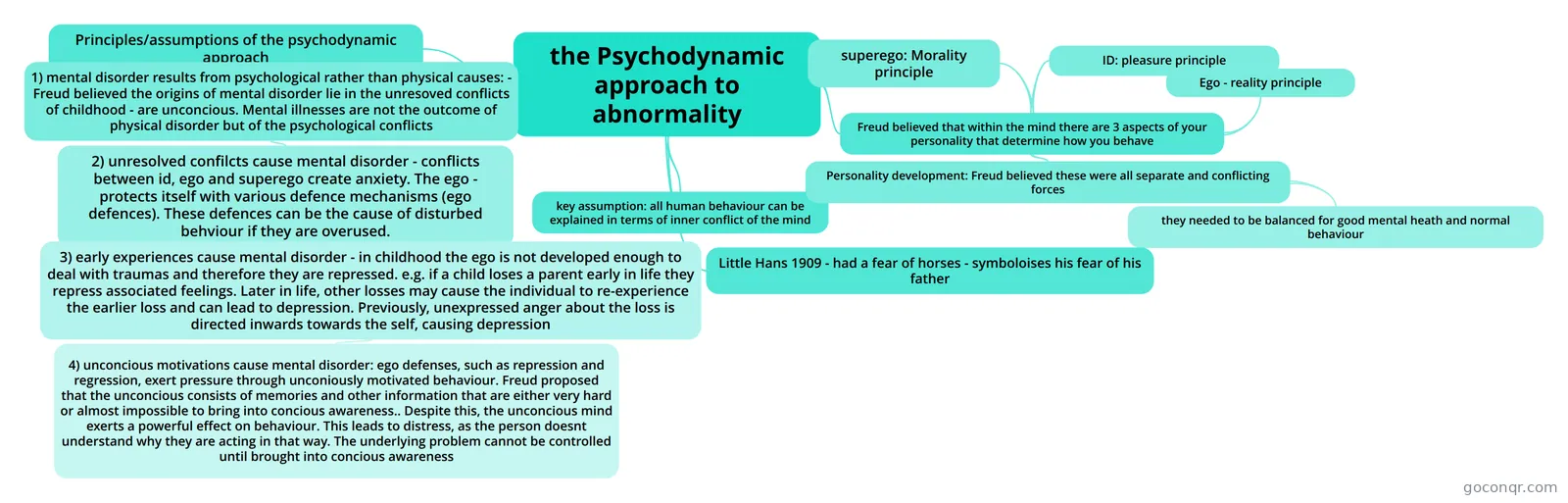
Mind map: psychodynamic approach to abnormality
Contenido del mapa
the Psychodynamic approach to abnormality
key assumption: all human behaviour can be explained in terms of inner conflict of the mind
Freud believed that within the mind there are 3 aspects of your personality that determine how you behave
- ID: pleasure principle
- Ego - reality principle
- superego: Morality principle
- Personality development: Freud believed these were all separate and conflicting forces
- they needed to be balanced for good mental heath and normal behaviour
Principles/assumptions of the psychodynamic approach
- 1) mental disorder results from psychological rather than physical causes: - Freud believed the origins of mental disorder lie in the unresoved conflicts of childhood - are unconcious. Mental illnesses are not the outcome of physical disorder but of the psychological conflicts
- 2) unresolved confilcts cause mental disorder - conflicts between id, ego and superego create anxiety. The ego - protects itself with various defence mechanisms (ego defences). These defences can be the cause of disturbed behviour if they are overused.
- 3) early experiences cause mental disorder - in childhood the ego is not developed enough to deal with traumas and therefore they are repressed. e.g. if a child loses a parent early in life they repress associated feelings. Later in life, other losses may cause the individual to re-experience the earlier loss and can lead to depression. Previously, unexpressed anger about the loss is directed inwards towards the self, causing depression
- 4) unconcious motivations cause mental disorder: ego defenses, such as repression and regression, exert pressure through unconiously motivated behaviour. Freud proposed that the unconcious consists of memories and other information that are either very hard or almost impossible to bring into concious awareness.. Despite this, the unconcious mind exerts a powerful effect on behaviour. This leads to distress, as the person doesnt understand why they are acting in that way. The underlying problem cannot be controlled until brought into concious awareness
- 3) early experiences cause mental disorder - in childhood the ego is not developed enough to deal with traumas and therefore they are repressed. e.g. if a child loses a parent early in life they repress associated feelings. Later in life, other losses may cause the individual to re-experience the earlier loss and can lead to depression. Previously, unexpressed anger about the loss is directed inwards towards the self, causing depression
- 2) unresolved confilcts cause mental disorder - conflicts between id, ego and superego create anxiety. The ego - protects itself with various defence mechanisms (ego defences). These defences can be the cause of disturbed behviour if they are overused.
- 1) mental disorder results from psychological rather than physical causes: - Freud believed the origins of mental disorder lie in the unresoved conflicts of childhood - are unconcious. Mental illnesses are not the outcome of physical disorder but of the psychological conflicts
Little Hans 1909 - had a fear of horses - symboloises his fear of his father
Información
- Descripción
- (Abnormality) Psychology Mapa Mental sobre the Psychodynamic approach to abnormality, creado por samantha_x el 27/03/2014.
- Creado por
- samantha_x
- Visitas
- 71
- Etiquetas
- Valoración