
Mapa mental
Index Minerals
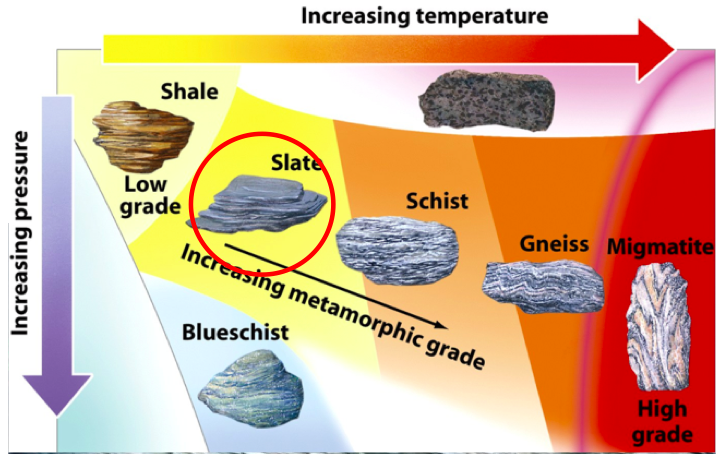
Contenido del mapa
Index Minerals
an index mineral is a mineral that is stable over a range of certain PT conditions
- if we are able to identify these minerals we know what PT conditions the rock has undergone
- this is dependant on protolith also
- most common index minerals are garnet and Al2 SiO5 polymorphs
- presence of these minerals depend on protoliths, as their chemical composition cannot be changed with just P and T
- Al2 SiO5 polymorphs can only be formed from a protolith such as shale, that has a high abundance of Al and Si
- majority of basic igneous rocks composition is dominated by Al and Si
- if we are able to identify these minerals we know what PT conditions the rock has undergone
Pelites
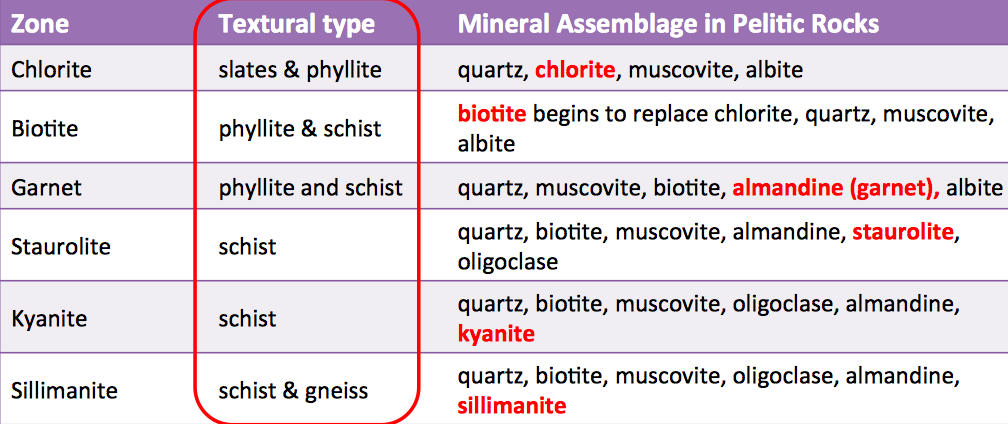
- George Barrow 1993 undertook a study understanding index minerals in the dal radian supergroup in SE scotland
- identifying metamorphic zones and mineral isograds
- mainly the Barrovian Index Minerals
- if a shale were to undergo it would follow this sequence
- mainly the Barrovian Index Minerals
- sucessive metamorphism zones shown above, are recognised by appearance of new minerals, not present at a lower grade.
- identifying metamorphic zones and mineral isograds
- the mineralogy of pelitic sediments is dominated by Al K rich phyliosilicates composition 50% and quartz composition 10-30%
- distinguishing features- high Al2+K20 but low CaCO3
- high clay and mica content that has a tendency to foliate
- distinguishing features- high Al2+K20 but low CaCO3
- George Barrow 1993 undertook a study understanding index minerals in the dal radian supergroup in SE scotland
basic igneous rocks
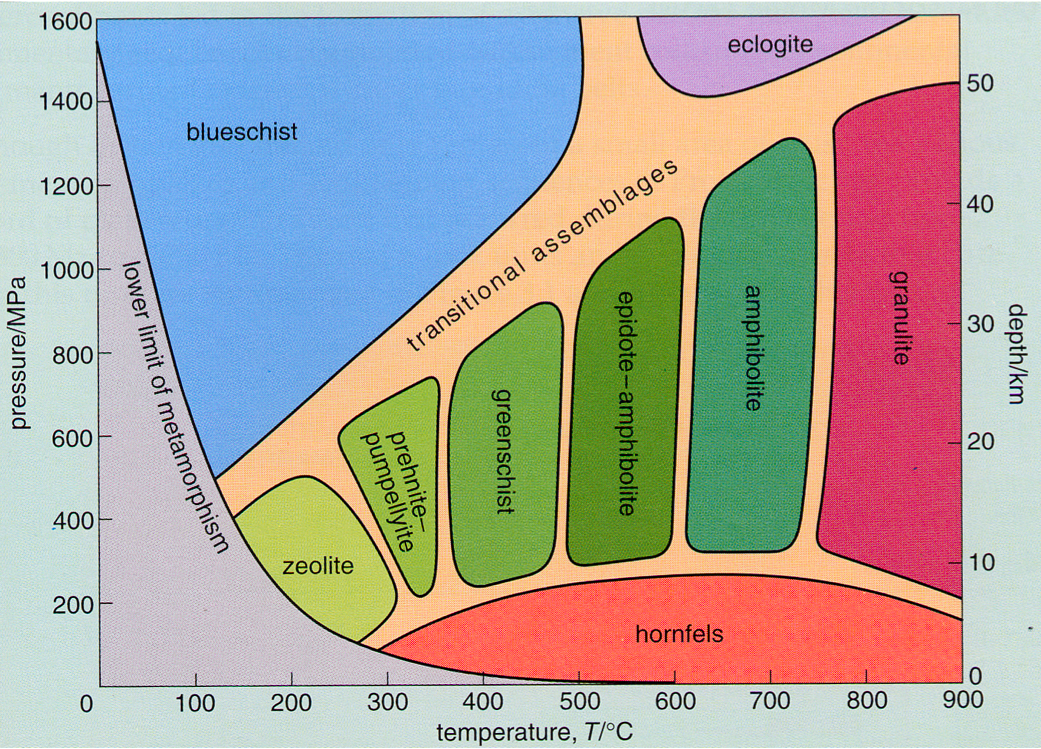
- basic igneous rocks that undergo metamorphism enter a multitude of metamorphic facies, each with definitive mineral assemblages
- contain a high number of different minerals, namely plagioclase feldspar +clinopyroxene +- olivine, quartz and clinopyroxene
Calcareous Rocks
- predominatley carbonates, usually limestones or dolostones, they typically form in a stable shelf environment
- dolostone is included as it shows variability, however small it is. Dolostone becomes unstable over increasing depth
- carbonates become metamorphosed when the passive margin becomes part of an orogenic belt
- CaCO3 or CaMg(CO3)2
- may be pure carbonate (very rare) or contain variable amounts of other precipitates, from possible a river flowing through a passive margin, that contains mud and Al2 SiO5
- predominatley carbonates, usually limestones or dolostones, they typically form in a stable shelf environment
compare and contrast
- very clear to see that influence that the protolith has in the presence of index minerals, Basic and Pelitic rocks contain a very large range of phases the rock could enter under different P and T
- due to different chemical compositions
- pelitic rocks contain lots of mucas which are very sensitive to changing PT conditions
- calcareous rocks have very limited metamorphic facies due to lack of elements present in protolith
- very clear to see that influence that the protolith has in the presence of index minerals, Basic and Pelitic rocks contain a very large range of phases the rock could enter under different P and T
Imágenes y archivos del mapa
Información
- Descripción
- Geology Mapa Mental sobre Index Minerals, creado por j c el 04/05/2017.
- Creado por
- j c
- Visitas
- 0
- Historial
-
- Creado por j c · 3 may 2017
- Copiado por j c · 4 may 2017
- Valoración