
Mapa mental
Unit 3: The Judiciary
Contenido del mapa
Unit 3: The Judiciary
structure of federal court system...
- dont need to know state apparently... not in notes...
- US Supreme Court
- established by Article III of Costitution
- "inferior courts"
- district courts
- 94 federal district courts (at least 1 per state)
- Number per state depends on population
- appellate courts
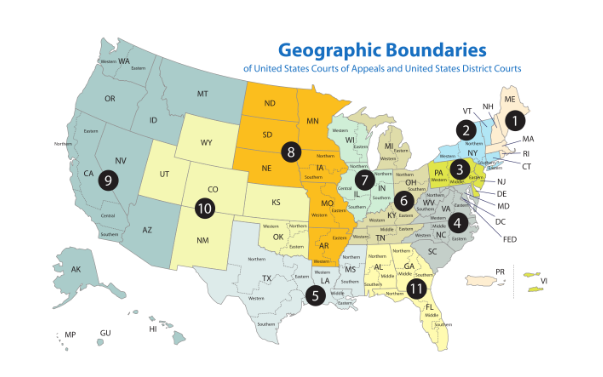
- 13 circuit courts of appeal (12 regional districts and 1 for federal circuit in D.C.)
- Specialty courts
- US Court of Appeals for the Armed Forces
- US Court of International Trade US Tax Court US Court of Appeals for Veteran Claims
- US Court of Federal Claims (private claims against the US government)
- created by congress to address specific needs
- district courts
- 2 Categories of Law
- civil
- criminal
supreme court
- doesn't have to hear any case it doesn't want to hear
- jurisdiction...
- (a) The Supreme Court shall have original and exclusive jurisdiction of all controversies between 2 or more states
- (b) the Supreme court shall have original but not exclusive jurisdiction of
- 1. All (legal) actions (including) ambassadors, other public ministers, consuls or vice consuls of foreign states
- 8 justices, 1 chief justice
how cases get to (supreme) court
- 1. Apply for a writ of certiorari
- means “to be certified”
- written order to certify the records of a lower court and send them up to a higher court
- these petitions read by law clerks first
- Generally young, like late 20s
- Graduates who have typically been at the top of their class in the most prestigious law schools in the US
- Justices conference on summaries and recommendations provided by clerks to decide which petitions to hear
- 2. Rule of 4
- typically 2% or fewer cases requesting consideration are heard
- 4/9 Judges must accept
- Cases accepted based on significance and potential for establishing precedence, and to resolve conflicting case law
- “Stare decisis” - let the decision stand - the principle that it is best to uphold other court decisions except in certain cases
- once accepted...
- Oral arguments presented - limited to 30 minutes per side
- Q&A w/ Qs from judges
- often sarcastic
- Justices conference
- each judge Issues formal opinions
- often avoid answering big questions (ie: abortion...)
- cases about same sex marriage have been specific things, never really saying if marriage is constitutional or not
- often avoid answering big questions (ie: abortion...)
- 1. Apply for a writ of certiorari
Judicial Review
- The power of the courts (not just supreme court) to declare acts of congress or the president unconstitutional
- Any appellate court can do judicial review
- Judicial review is not automatic-a case must be brought before the court and accepted for consideration
- Not just a power, but a principle of American government
- established by Marbury v Madison
- The power of the courts (not just supreme court) to declare acts of congress or the president unconstitutional
role of judiciary: to interpret laws
- The meaning of laws depends on exact understanding of definition and intent; Precision of language, definitions
- Legal documents are very careful to define all questionable terms...however
- Disagreements about meaning/intent of laws are the reason lawyers exist
- Lawyers seek to clarify definitions as well as “loopholes”
- No matter how clear it is, people will try to use the law to their advantage based on what is there or not there
- THE LAW DOES NOT CARE ABOUT JUSTICE. THE LAW CARES ABOUT WHAT THE LAW SAYS
- The meaning of laws depends on exact understanding of definition and intent; Precision of language, definitions
forms of law
- Statute Law- formal laws created by state/federal legislatures
- Case Law (common law)- legal interpretations are shaped by all previous case rulings-- legal precedent
- Administrative law (regulations) - established by bureaucratic agencies to carry out their statutory mandates
- mandate, in this case, means orders: not specifically orders of an elected official from its constituency
jurisdiction
- Exclusive Jurisdiction- authority to hear a type of case is limited to one specific level of court (ie: federal or state)
- Concurrent jurisdiction - authority to hear a type of case can be heard by federal or state courts
- Original jurisdiction - refers to a court’s ability to hear a case first
- Appellate Jurisdiction: refers to a courts' ability to hear cases on appeal
- an area of authority (area can mean geographic or type of law)
Imágenes y archivos del mapa
Información
- Descripción
- 10th grade US Government Mapa Mental sobre Unit 3: The Judiciary, creado por Meredith W el 14/07/2017.
- Creado por
- Meredith W
- Visitas
- 123
- Etiquetas
- Valoración