
Apuntes
Ecosystems
Contenido del apunte (9)
Página 1
Components of Ecosystems:
Producers - plants which photosynthesise to produce food
Consumers - animals which eat plants or other animals
Decomposers - decay dead material and help in recycling nutrients
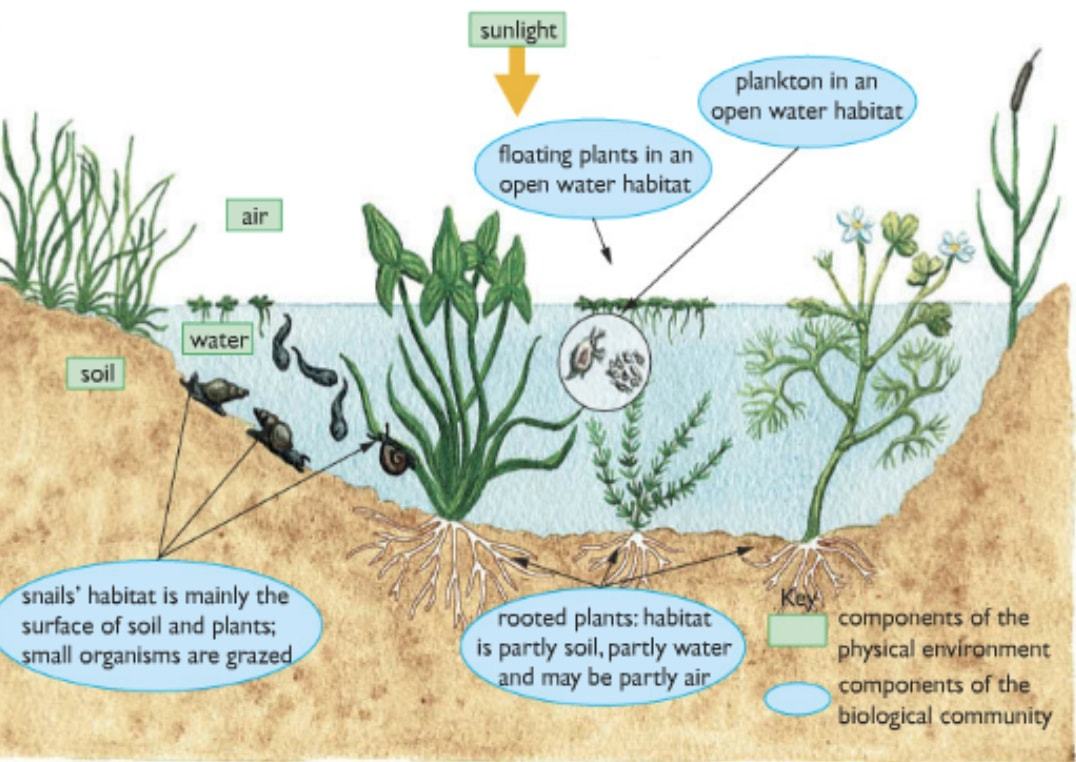
Physical environment - sum total of non-biological components of ecosystem - E.G. water and soil in pond, soil and air in forest
Each ecosystem has many habitats - places where specific organisms live - some given by physical environment or organisms themselves (dead vegetation gives habitat for decomposers)
All organisms of particular species in an ecosystem at any time are population of that species in that ecosystem
Population of all species (animals, plants, decomposers, etc.) found in particular ecosystem are the community of the ecosystem
Página 2
Quadrats to Sample from a Habitat:
Sample - smaller representative part of the population
Quadrats - used to sample plants or animals which don’t move much, E.G. snails
Sampling should be random to avoid bias
Experiment: The plant community in Area A is different from the Plant community in Area B
Area A - Lay out two measure tapes to form the sides of a square
Randomly generate a pair of numbers from the random number function on a calculator - the numbers are coordinates to position the quadrats in the large square
Numbers of each plant species in quadrat counted
Repeat process for nine more quadrats
Move tape measure to Area B and repeat process to sample 10 quadrats
Página 3
Interactions in Ecosystems:
Organisms in ecosystem interact with each other and physical environment in such ways:
Feeding among organisms - plants, animals, decomposers recycle same nutrients through ecosystem
Competition among organisms - animals: food, shelter, nesting sits, mates; plants: carbon dioxide, mineral ions, light, water
Interaction between organisms and environment - plants absorb mineral ions, CO2, H2O from environment, give off water vapour, O2 into environment; animals use materials from environment to build shelter, environment temperature affects organism processes and processes in organism affect temperature of environment
Página 4
Feeding Relationships:
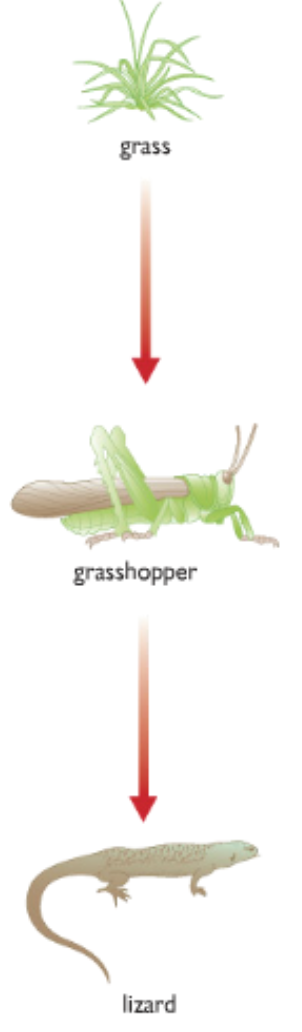
Food chain for diagram below:
Grass - producer
Grasshopper - primary consumer - animal which eats producer and is a herbivore
Lizard - secondary consumer - eats primary consumer so carnivore
(Tertiary consumer - fourth stage)
Microorganisms play key role in recycling - break down complex organic molecules in bodies of dead animals and plants into simpler substances which they release into environment.
Trophic levels - different stages in food chain
Plankton --> Crustacean --> Fish --> Ringed seal --> Polar bear
Polar bear - quaternary consumer - nothing eats it, so also the top carnivore
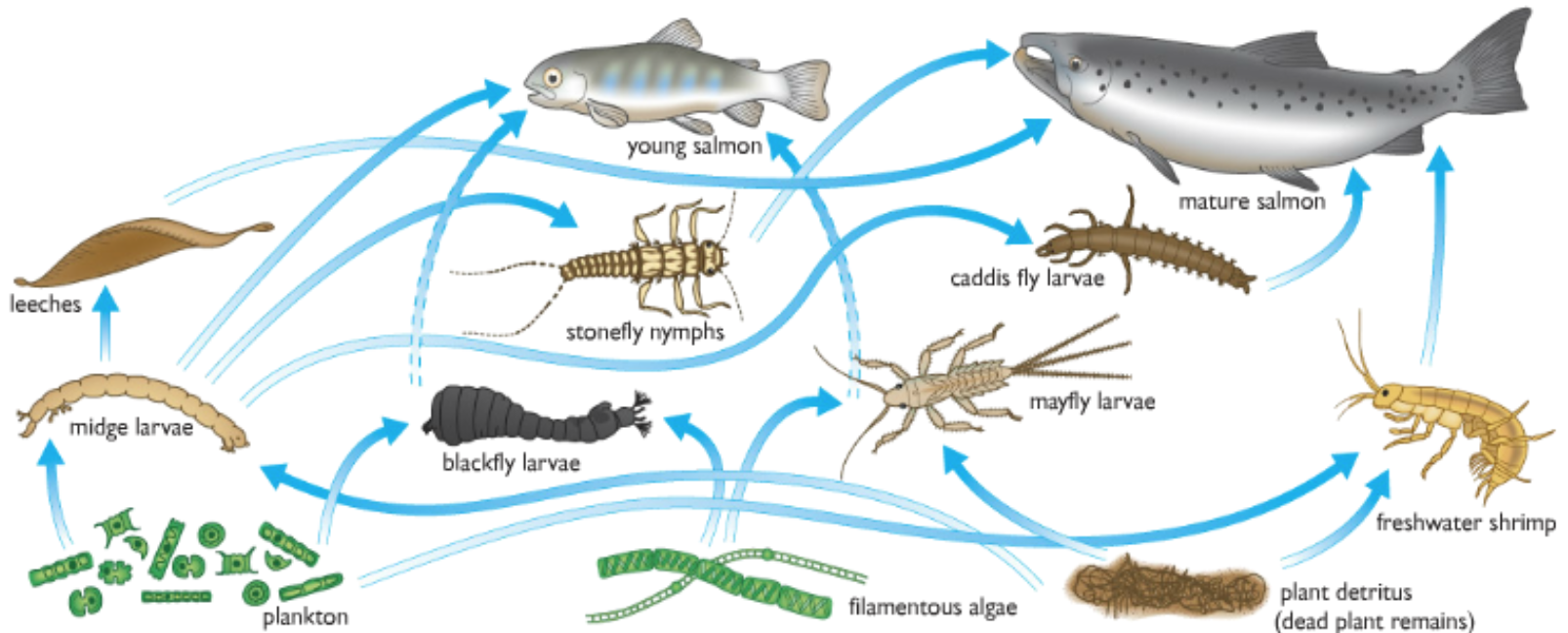
Food web - different food chains and how they link
Food web of salmon below:
If leech population decreased,
Less leeches to eat midge larvae -- more midge larvae -- more for stonefly nymph population to feed on -- population increases
Fewer leeches for mature salmon to eat -- mature salmon feed more on stonefly nymph population -- stonefly nymph population decreases
Numerous could stay static due to combination of above
Página 5
Ecological Pyramids:
Diagrams representing relative amounts of organisms at each trophic level.
Pyramids of numbers - numbers of organisms in each trophic level in food chain, irrespective of their mass
Pyramids of biomass - total mass of organisms in each trophic level, irrespective of numbers
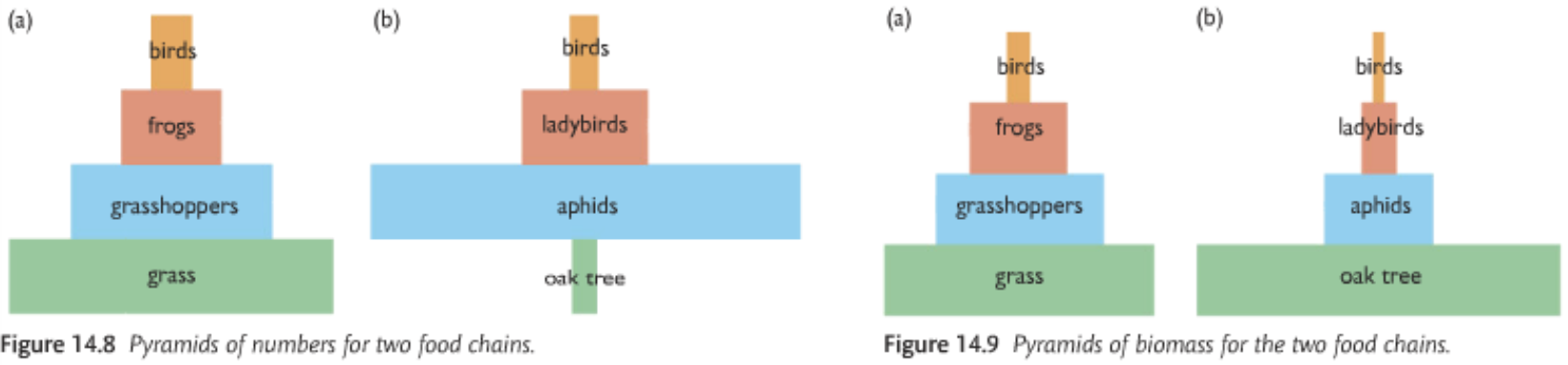
Why feeding relationship diagrams give a pyramid shape:
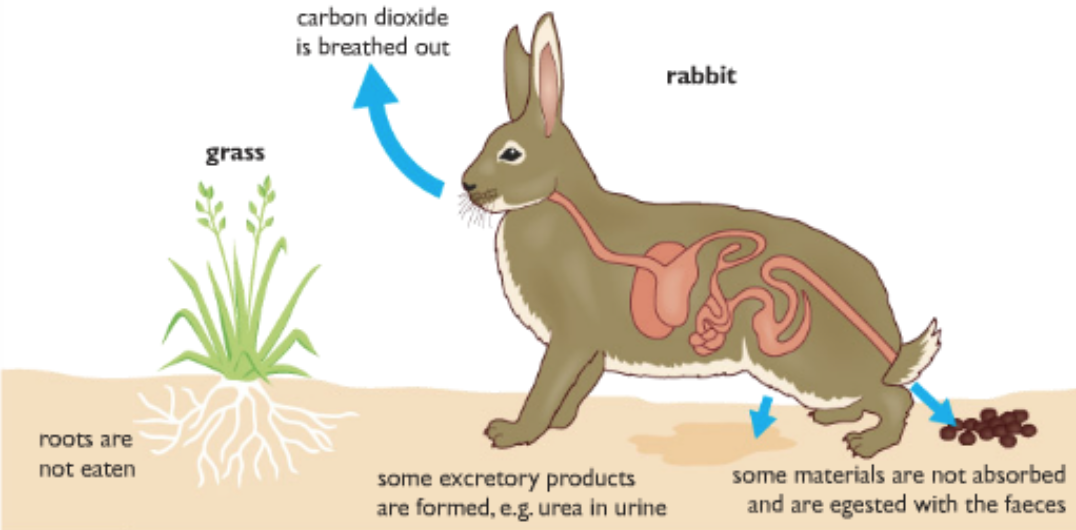
There are losses at each trophic level:
Some parts of the grass aren’t eaten E.G. roots
Some parts aren’t digested so not absorbed and therefore egested
Some materials which are absorbed form excretory products
Many metals are respired to release energy, with the loss of CO2 and H2O
Página 6
Flow of Energy Through Ecosystems:
Feeding is a way of transferring energy between organisms on various trophic levels.
Energy flow diagram
Photosynthesis ‘fixes’ sunlight energy into glucose and starch
Respiration releases energy from organic compounds E.G. glucose
Most biological processes E.G. muscle contraction, growth, reproduction, etc.) use energy released in respiration
If energy released in respiration used to produce new cells, then energy remains ‘fixed’ in molecules in that organism - can be passed on to next trophic level through feeding
If energy released in respiration used for other processes then it will, once used, escape as heat from organism -- therefore, energy is lost from food chains and webs at each trophic level
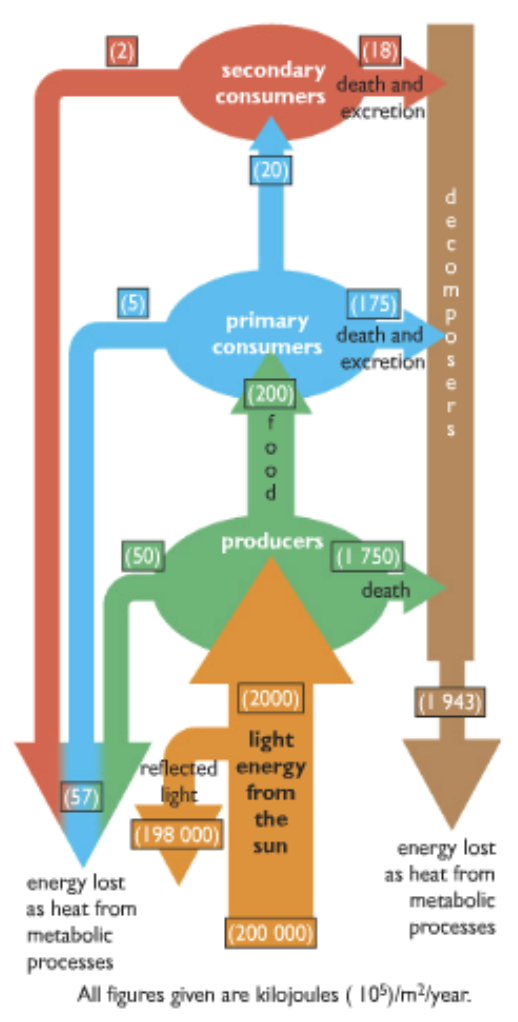
Only around 10% of energy entering trophic level passed on to the next level, which is why not many food chains have more than 5 trophic levels.
Página 7
The Carbon Cycle:
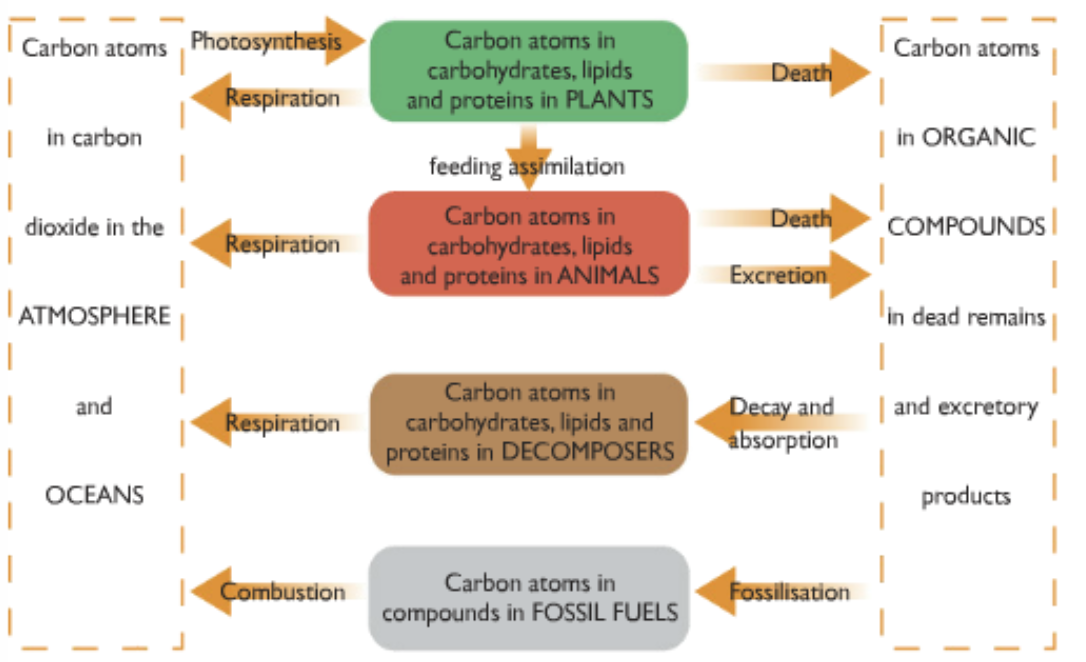
Carbon - major biological component - carbohydrates, lipids, vitamins, proteins, etc. all have carbon.
These processes important in cycling carbon through ecosystem:
Photosynthesis - ‘fixes’ carbon atoms from CO2 into organic compounds E.G. C6H12O6
Feeding and Assimilation - pass carbon atoms already present in organic compounds, along the food chain
Respiration - produces inorganic carbon dioxide from organic compounds (mostly carbohydrates) as they are broken down to release energy
Fossilisation - sometimes living things don’t fully decay at death due to soil conditions (E.G. if too acidic) and fossil fuels (coal, oil, gas) formed
Combustion - releases carbon dioxide into atmosphere when fossil fuels burned
Página 8
The nitrogen cycle:
Processes of cycling nitrogen through ecosystem:
Feeding and assimilation - pass nitrogen atoms already in organic compounds along the food chainD
Decomposition - produces ammonia from nitrogen in compounds E.G. proteins, DNA, vitamins
Nitrification - Ammonia oxidised to nitrite and then nitrate by nitrifying bacteria
Plant roots absorb nitrates and combine with carbohydrates from photosynthesis to form amino acids, then proteins and other nitrogen-containing compounds
Nitrogen cycle:
Denitrification - reduces amount of nitrate in soil as denitrifying bacteria use nitrates as energy source and convert into nitrogen gas
Free-Living nitrogen-fixing bacteria in soil - convert nitrogen gas to ammonia - used by bacteria to make a.a and proteins - when bacteria die, proteins decompose and ammonia back in soil
Nitrogen-fixing bacteria in root nodules - make ammonia but converted by plant into a.a - death and decomposition of plants returns nitrogen to soil as ammonia
Página 9
The water cycle:
Water cycled between atmosphere, rivers and lakes, organisms, back to sea
Heat from Sun evaporates water from surface of oceans, lakes, rivers
Plant transpiration and organism respiration releases water vapour in the air
Clouds rise over mountains and high ground - cool and water condenses into rain or snow
Precipitation falls on Earth, taken up by animals or plants or enters rivers and flows to sea to start cycle again
Información
- Descripción
- IGCSE Biology Apunte sobre Ecosystems, creado por Aarushi Jain el 05/04/2017.
- Creado por
- Aarushi Jain
- Visitas
- 0
- Valoración