
Apuntes
Bowlby (1944) Forty-four juvenile thieves: their characters and home-life.
Contenido del apunte (5)
Página 1
Bowlby (1944) Forty-four juvenile thieves: their characters and home-life.
Example exam questions:
Describe the methodology and procedures [of the study] (10 marks)
Describe the findings + conclusions [of the study] (10 marks)
Evaluate the methodology [of the study] (10 marks)
Página 2
Methodology
Case Study with control group
Looking at child thieves and separation
Clinic in London - everyone there had been referred for emotional problems
44 Children thieves, 31 Boys, 13 Girls
5 - 17 years old
Graded in terms of seriousness; Grade IV (22) Long time stealing, Grade I (4) only one theft
Mostly average intelligence
44 Controls, similar in age, sex and IQ
Emotionally disturbed but didn't steal
Mothers of all children interviewed also to assess the case histories
Página 3
Procedures
Opportunity sample
IQ & Emotional attitude noted
Mothers interviewed by social worker
Psychologist & Social worker reported to Bowlby
Bowlby interviews child and mother
Weekly meetings over 6 months, problems diagnosed
Página 4
Findings
Came up with six main personality types:
Normal
Depressed
Circular (alternating depression & overactivity)
Hyperthymic (over-activity)
Affectionless
Schizoid (children who showed schizophrenic symptoms)
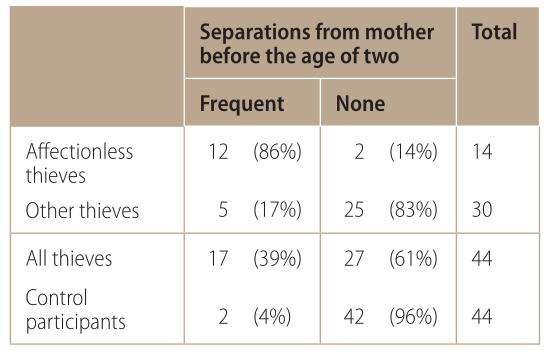
Of the 44 thieves, 14 were classified as affectionless
Of the 14 classified, 12 had experienced frequent separations from their mothers
Example = Derek B. At age 18 months was hospitalised. He stayed there for nine months and, during that time, was not visited by his parents.
Separations were very rare among the other classifications (There were 30 non-affectionless thieves, only three of whom had experienced separations.)
Of 44 controls only 2 had prolonged separations
Also worth noting of the remaining 27 thieves
17 had mothers who were anxious, irritable, rigid (etc.)
5 had fathers who hated them openly
- May explain the emotional problems but NOT delinquency as controls reported the above too.
Página 5
Conclusions
Early childhood experiences are of vital importance in later development
Children would not have become offenders f they had not had these bad experiences
Damage to the mother-child relationship affects the development of the superego - leading to a reduced sense of right and wrong
Treatment should be offered to delinquents, however the process is slow
Prevention rather than treatment
"However if all of those people who advise on the upbringing of small children, not least among them doctors, were aware of the appalling damage which separations of this kind have on the development of a child’s character, many could be avoided and many of the most distressing cases of chronic delinquency prevented."
Información
- Descripción
- Bowlby (1944) Forty-four juvenile thieves: their characters and home-life.
- Creado por
- Marcus H · abr 2016
- Actualizado
- 19 oct 2016
- Visitas
- 992
- Etiquetas
- Valoración