
Test
Parascaris equorum
Este test tiene tipos de pregunta que se abren en el reproductor de siempre.
Preguntas del test (9)
1Where are Parascaris equorum adults found in the body of the animal?
- ASmall intestine
- BLarge intestine
- CStomach
- DLungs
2At what age are foals most susceptible?
- A3-9 months
- B1-3 months
- C1-6 months
- D9-12 months
3Larvae migrate to the lungs and can cause;
- ACoughing
- BNasal discharge
- CVomiting
- DPneumonia
- EAsthma
4Adult worms migrate to the intestine causing;
- ADiarrhoea
- BIll-thrift
- CVomiting
- DPoor hair coat
- EPot-bellied
5What is the best method of diagnosis for P. equorum?
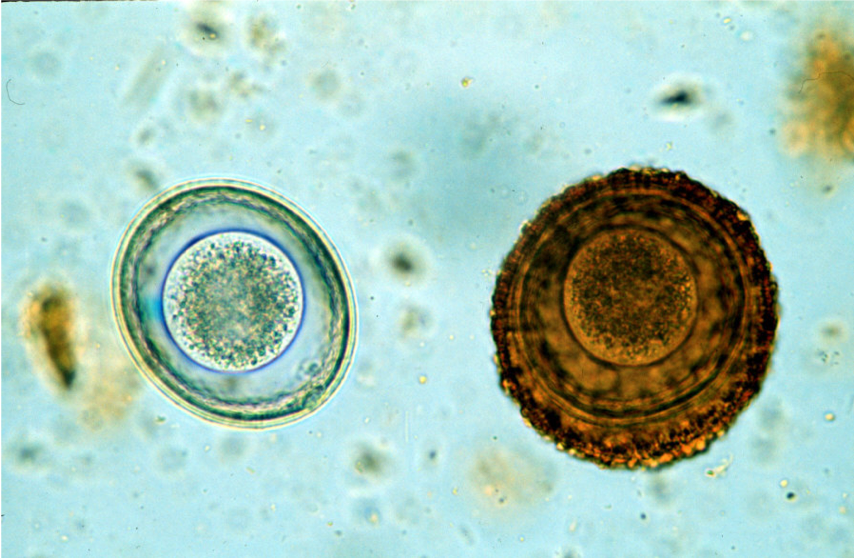
- AFecal float
- BSerology
- CFecal smear
- DELISA
6What anthelmintics can be used to control worm infestations?
- AIvermectin
- BMoxidectin
- CPyrantel
- DPiperazine
- EFenbendazole
- FPraziquantel
7[blank_start]Sanitation[blank_end] is an important method of worm control. [blank_start]Mares with foals[blank_end] should graze in [blank_start]clean pastures[blank_end]. [blank_start]Foaling stalls[blank_end] should be kept clean.
- ASanitation
- BDe-worming
- Cclean pastures
- Dlarge pastures
- EFoaling stalls
- FPastures
- GMares with foals
- HMares
8P. equorum eggs cannot exist for a long time in the environment. They have very little environmental resistance.
- AVerdadero
- BFalso
9When treating with anthelmintics it is important to [blank_start]monitor[blank_end] mares and [blank_start]treat as needed[blank_end]. Foals should be treated at [blank_start]6 week intervals[blank_end] from [blank_start]6 weeks of age[blank_end] to [blank_start]6 months[blank_end].
- Amonitor
- Btreat
- Ctreat as needed
- Dtreat periodically
- E6 week intervals
- F4 week intervals
- G6 weeks of age
- H8 weeks of age
- I6 months
- J12 months
Información
- Descripción
- Equine Nematodes - Ascarid
- Autor
- Caitlin Wringe
- Idioma
- English
- Visitas
- 14
- Historial
- Creado el 26 sep 2019 · actualizado el 26 sep 2019
- Etiquetas
- Valoración
- Aún sin valoraciones Valora este test