
Test
Ostertagia and Teladorsagia
Este test tiene tipos de pregunta que se abren en el reproductor de siempre.
Preguntas del test (14)
1Direct life cycle:
Adult -- Egg --[blank_start]L1 (hatches from egg)[blank_end] -- [blank_start]L2[blank_end] -- [blank_start]L3 (infective)[blank_end] -- [blank_start]L4[blank_end] -- [blank_start]L5[blank_end]- AL1 (hatches from egg)
- BL1 (maturation of egg)
- CL2
- DL2B
- EL3 (infective)
- FL1
- GL4
- HL5
- IL5
- JL4
2What is the prepatent period?
- A21 days
- B14 days
- C18 days
- D30 days
3What is unique about the L4 larval stage that aids in survival?
- AAbility to enter hypobiosis for several months
- BNutrient storage
- CRetained cuticle from L3
- DTemperature tolerant
4Once ingested infective L3 [blank_start]exsheaths[blank_end] in the [blank_start]rumen[blank_end] and migrates to the [blank_start]abomasum[blank_end] where it [blank_start]penetrates and encysts[blank_end] in the [blank_start]gastric glands[blank_end].
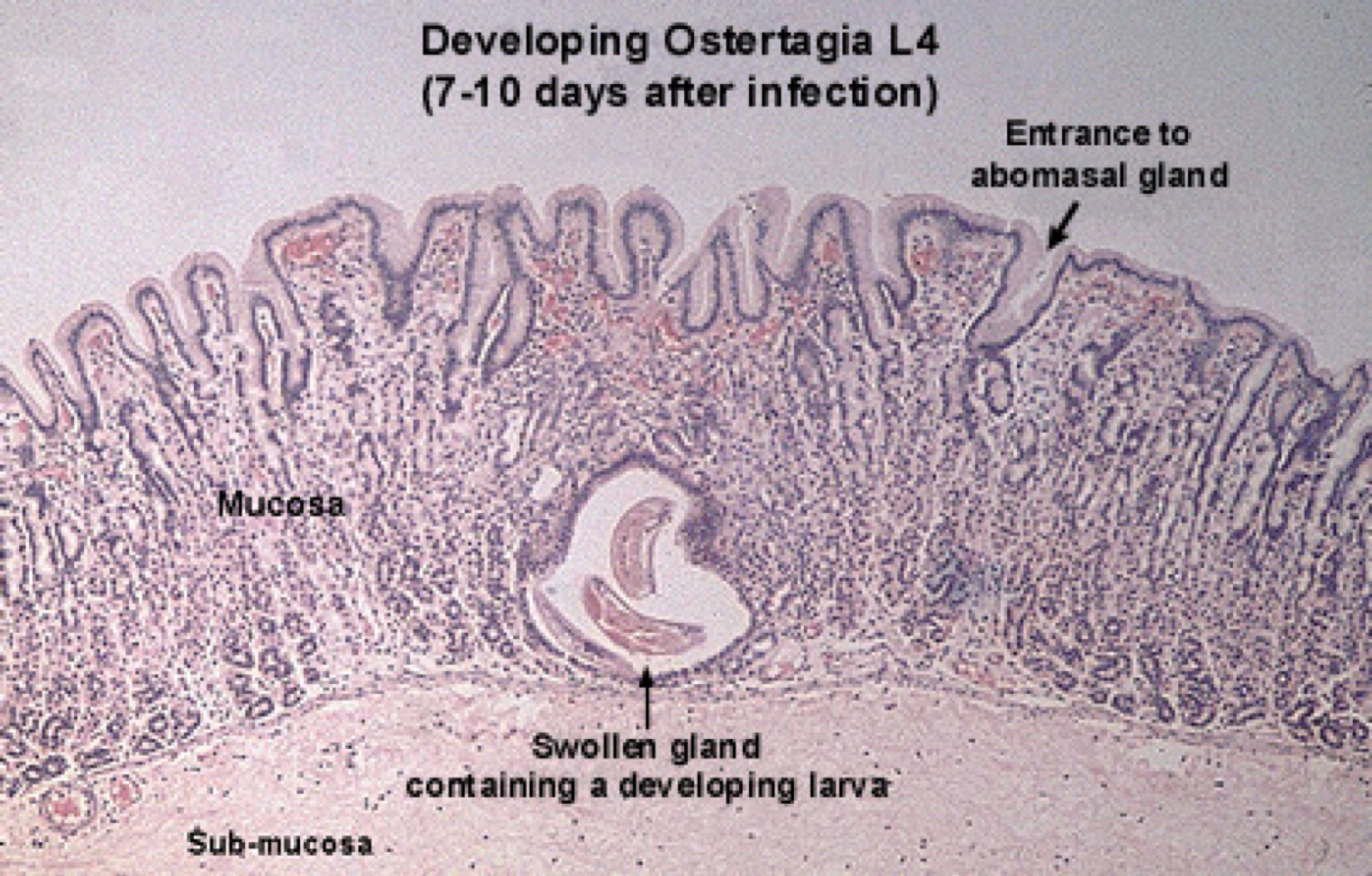
- Aexsheaths
- Bpenetrates
- Crumen
- Dabomasum
- Eabomasum
- Frumen
- Gpenetrates and encysts
- Hexsheaths and penetrates
- Igastric glands
- Jgastric epithelial cells
5What larval stage emerges from the gastric glands and matures in the lumen of the abomasum?
- AL5
- BL4
- CL3
- DL2
6What are the direct impacts the parasite has on the abomasum?
- ADilation and erosion of gastric gland
- BImpingement on neighbouring cells
- CLoss of secretory cells
- DIncreases HCl production
- EKills/outcompetes other bacteria
7What are the consequences of the loss of parietal secretory cells (HCl secreting)
- AAbomasal pH increases
- BAbomasal pH decreases
- CBacterial populations decrease
- DDecreased protein utilisation
- EDecreased appetite
- FIncreased appetite
- GVomiting
8What is the consequence of an increased permeability?
- AMacromolecules diffuse into abomasum
- BPlasma pepsinogen increased
- CMacromolecules diffuse out of abomasum
- DDecreased plasma albumin concentrations
- EHyperproteinemia
- FHypoproteinemia
9An [blank_start]increased[blank_end] abomasa pH leads to;
Pepsinogen not converted to [blank_start]pepsin[blank_end] - [blank_start]decreased[blank_end] protein utilisation
[blank_start]Gastrin[blank_end] secretions [blank_start]increase[blank_end] - decreased gut motility and appetite
Bacterial populations [blank_start]increase[blank_end]- Aincreased
- Bdecreased
- Cpepsin
- DHCl
- Edecreased
- Fincreased
- GGastrin
- HHCl
- Iincrease
- Jdecrease
- Kincrease
- Ldecrease
10What are the main clinical signs of Ostertagiasis?
- ASevere watery green diarrhoea
- BInappetence
- CVomiting
- DOdema
- ECough
- FAnorexia
11At what age is Type 1 Ostertagiasis most prevalent?
- A6-12 months (weanlings)
- B1-2 month
- C4-6 months
- D2-6 months
12Type 1 Ostertagiasis is due to a heavy infection of what larval stage in and when?
- AL3 late winter to early spring
- BL3 early winter to late spring
- CL4 late winter to early spring
- DL4 early autumn to late winter
13Type 2 Ostertagiasis is due to a heavy infection of what larval stage in and when?
- AHypobiotic larvae resume development.
Late summer/autumn - BL3
Late summer/autumn - CL4
Late summer/autumn - DL4
Early summer/early winter
- AHypobiotic larvae resume development.
14What are the best diagnostic test?
- AFecal float - egg detection
- BClinical signs/history
- CELISA
- DDirect smear
Información
- Descripción
- Ruminant Nematodes - Abomasal worms
- Autor
- Caitlin Wringe
- Idioma
- English
- Visitas
- 0
- Etiquetas
- Valoración
- Aún sin valoraciones Valora este test