
Nutrient Cycles
Diapositivas del conjunto (6)
-
- Nutrients cycle and energy flows
- Energy flows in one direction
- Energy flow is the movement of energy through an ecosystem.
- A food chain shows how energy ad nutrient are passed from one living organism to another as they are eaten.
- The sun is always the initial sources of energy in every food chain. (Whether it is shown or not)
- Producers or autotrophs make their own food; Using energy from the sun through photosynthesis.
- Consumers or heterotrophs get food and energy by eating other organisms
- Trophic level = feeding level
- Primary consumers = herbivores (plant eaters)
- Secondary consumers = carnivores or omnivores (plant & meat eaters)
- Tertiary consumers = Carnivores that eat other carnivores
- An organism at the very top of the food cain is called the Apex predator.
-
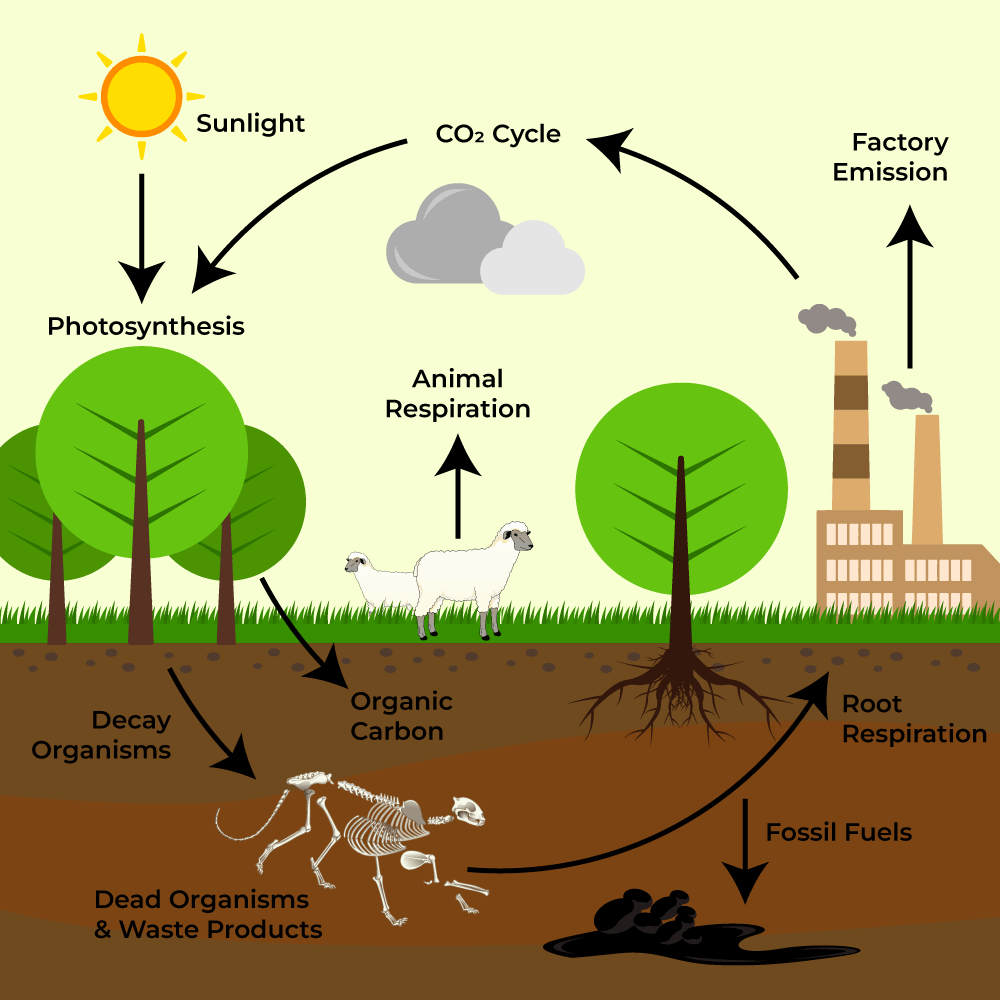
- Pie de imagen: Carbon cycle diagram.
- Carbon cycle process - the movement of carbon from the environment into living things and back.
- Carbon into living things
- Photosynthesis - plats use carbon dioxide and give off oxygen.
- Consumption - Animals eat plants, which contain carbon.
- Carbon into the environment
- Respiration - plants and animals release CO2 through respiration.
- Decomposition - breakdown of dead organism by bacteria and fungi, releases carbon into environment.
- Combustion - burning fuels to release c02 into the environment.
-
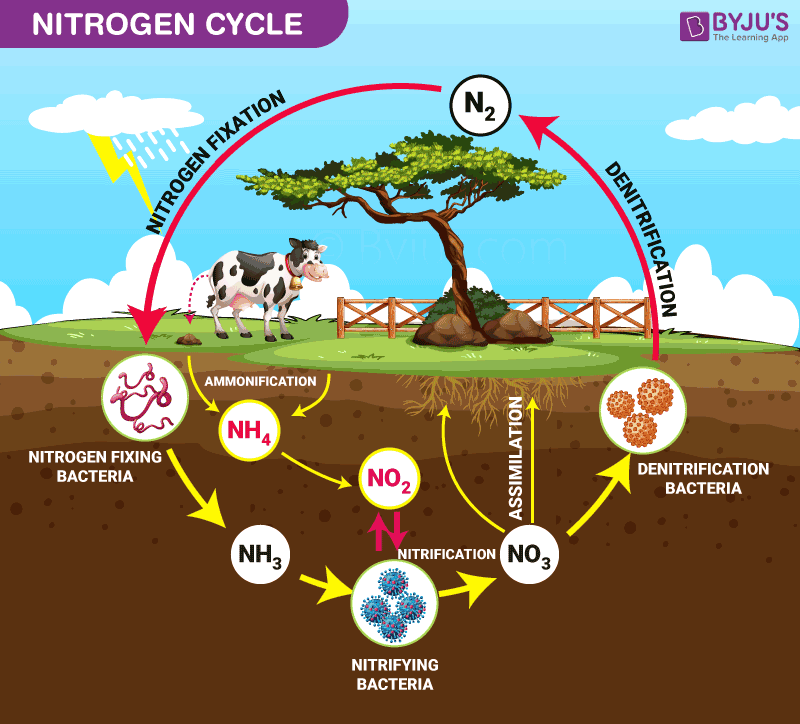
- Pie de imagen: Nitrogen cycle diagram
- Nitrogen cycle process - the movement of nitrogen from the environment into living things and back.
- Nitrogen into living things
- Nitrogen fixation - bacteria and lighting fix nitrogen from the atmosphere into soil forms for plants.
- Nitrification - when fixed nitrogen in the soil is converted to usable forms by plants.
- Nitrogen into the atmosphere
- Without nitrogen-fixing bacteria, plants would not be able to absorb nitrogen released back into the soil through excretion and decomposition.
- Decomposition - breakdown of dead organisms
- Excretion - when animals excrete waste (urinate)
- Denitrification - bacteria breakdown nitrogen in the soil and release it to atmospere.
-
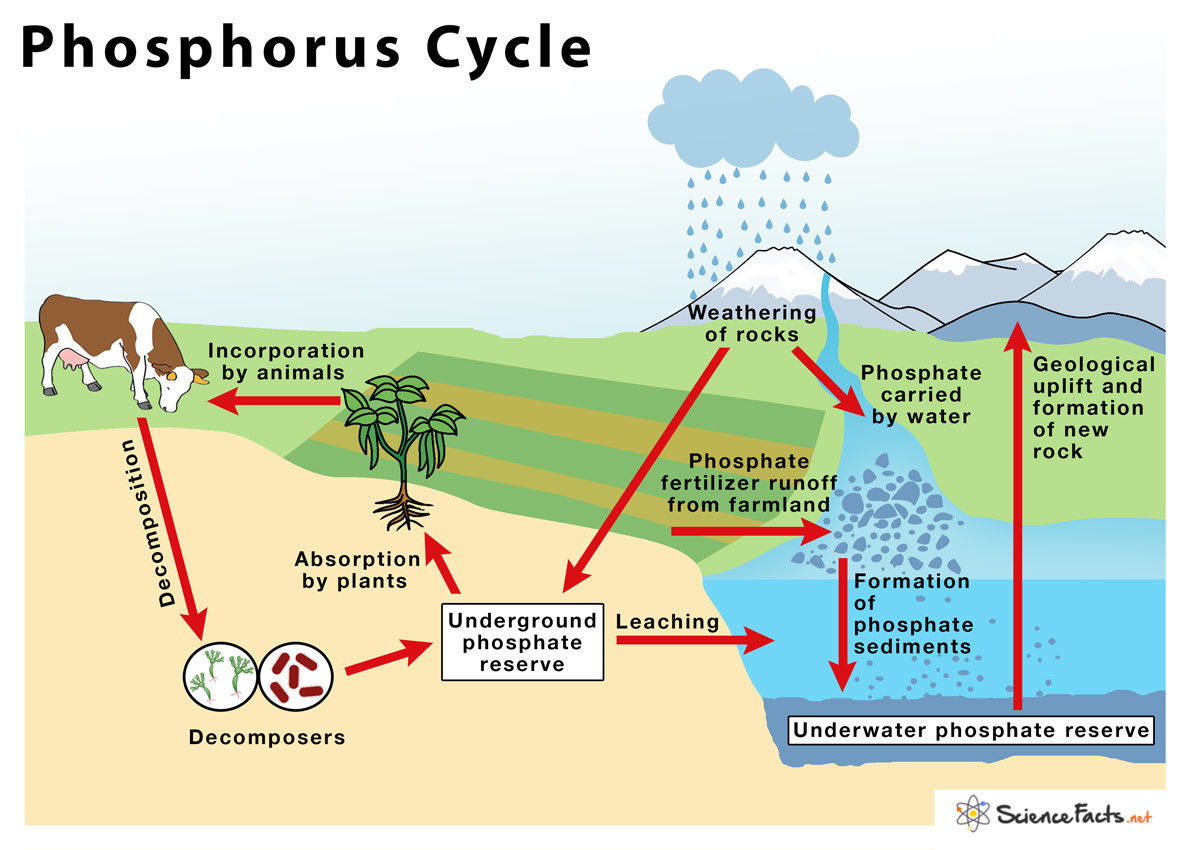
- Pie de imagen: Phosphorus cycle diagram
- Nitrogen cycle process - the movement of nitrogen from the environment into living things and back.
- Phosphorus into living things
- Absorption - plants absorb phosphorus from the soil.
- Consumption - animals obtain phosphorus by eating plants or other animals that eat plants.
- Phosphorus into the environment
- Decomposition - decomposers breakdown plant and animal matter into the soil.
- Weathering (erosion) - wind and rain erode. (breakdown) phosphate rich rocks.
- Runoff - rivers carry gravel (broken down rock) and silt to water bodies
- Agricultural Runoff - fertilizers used in the growth of crops filters into nearby bodies of water
- Fertilizers contain phosphorus and nitrogen
-
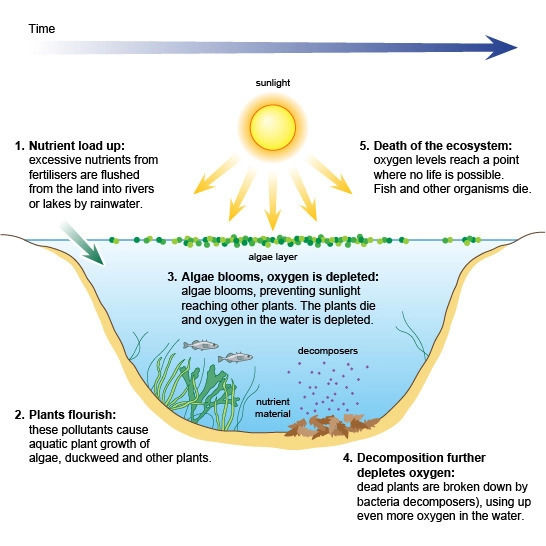
- Pie de imagen: Eutrphication cycle diagram
- Eutrophication - the process by which excessive nutrients within a body of water causes dense growth of plant life (algae) and results in the death of animal life due to lack of oxygen.
- Eutrophication process
- Nutrient load up: excessive nutrients from fertilizers are flushed from the land into rivers or lakes by rainwater.
- Plants flourish: these pollutants cause aquatic plant growth of algae, duckweed and other plants.
- Algae blooms, oxygen is depleted: algae blooms, preventing sunlight reaching other plants. The plants die and oxygen in the water is depleted.
- Decomposes further deplete O2: dead plants are broken down by bacteria decomposers, using up even more oxygen in the water.
- Death of ecosystem: oxygen levels reach a point where no life is possible. Fish and other organisms die.
- Eutrophication: Dead ones; Eutrophication where rivers enter the ocean create "dead zones" where all the oxygen is used by bacteria, so nothing else can survive there.
- Excessive amounts of nitrates enter the rivers from human's sewers (poop) or form too much fertilizer being used on farms and rain washes it into rivers, or cow/pig/chicken poop on farms washes into rivers.
-
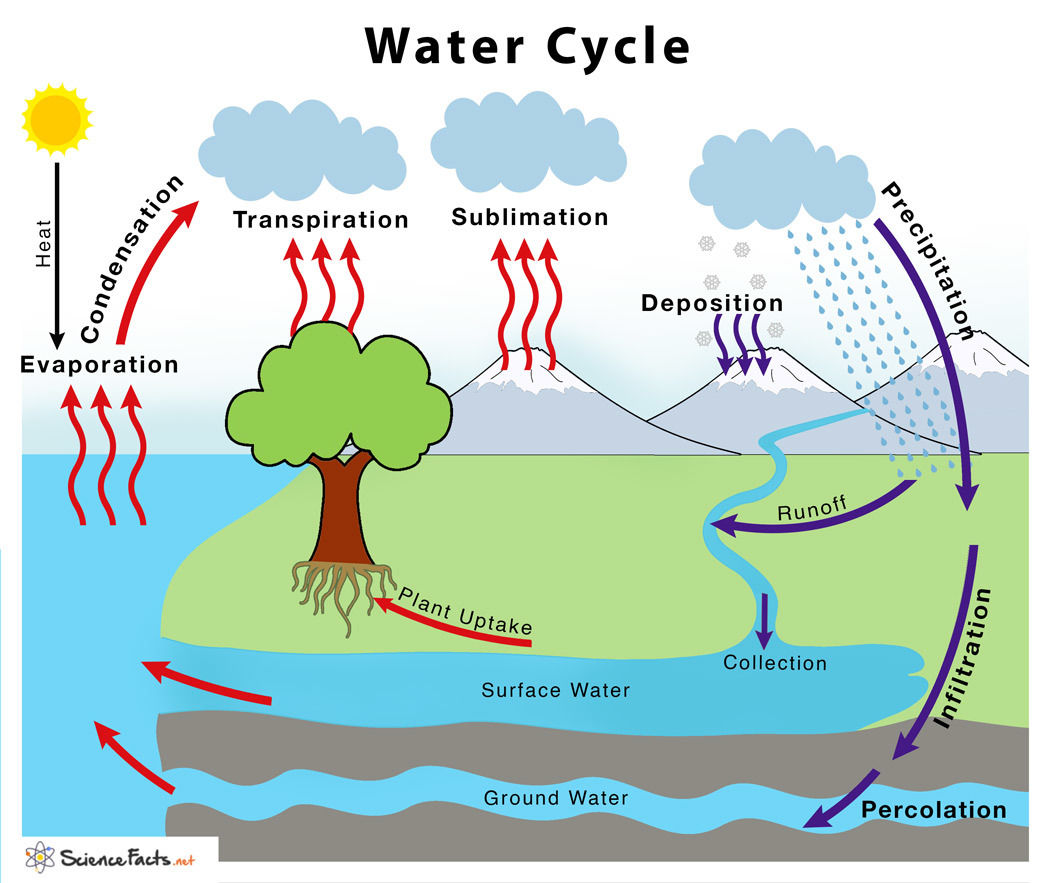
- Pie de imagen: Water Cycle diagram
- Water Cycle process - movement of water among oceans, land, atmosphere, and living things.
- Precipitation - water falling from the atmosphere (i.e, rain, snow, hail, sleet)
- Collection (Accumulation) - water collects in oceans, lakes, and groundwater
- Evaporation & Transpiration - water changes from liquid to gas, returns to the atmosphere
- Condensation - water vapor cools and returns to liquid state, forms clouds
- Runoff - water that drains to lakes, rivers, & oceans from land
- Infiltration - water from precipitation seeps into the soil plants or becomes groundwater
Información
- Descripción
- 10th grade (Unit 1: Ecology) Biology Diapositivas sobre Nutrient Cycles, creado por Fatmata Musa (Student) el 14/09/2022.
- Creado por
- Fatmata Musa (Student)
- Visitas
- 0
- Valoración