
Types of Stretches
Diapositivas del conjunto (8)
-
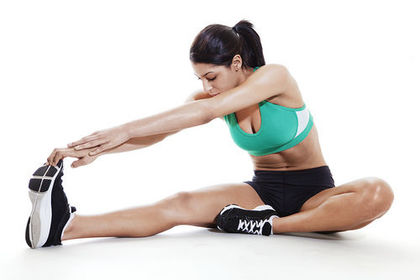
- No repeated movement
- Elongates the muscles
- Tightness when not executed properly (no pain)
- Time based on objectives
- Positives
- Good for cool downs
- Aids with DOMS (Delayed Onset Muscle Soreness)
- Simple and safe
- Drawbacks
- Not sport specific due to lack of movement
- Limited positions
-
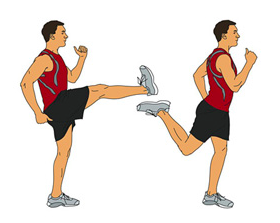
- With repeated movement (higher chance of injury)
- More sport specific
- Positives
- Related to the sport
- Replicating the movement of the sport
- Controlled movement, less chance of injury (medium intensity)
- Drawbacks
- One movement of a dynamic stretch is so short it doesn't facilitate oxygen to that muscle group
-
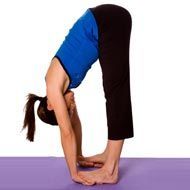
- Uses repeated momentum of a moving body part or limb in an attempt to force it beyond its normal range of motion
- Positives
- Increases range of movement
- Good for explosive sports (e.g. sprinters, throwers, gymnasts)
- Drawbacks
- Increased chance of injury; because it is pushing past its normal range of movement
- Explosive movement = more DOMS because of lactic acid
- Not specific to many sports
-
Proprioceptive Neuromuscular Facilitation (PNF)
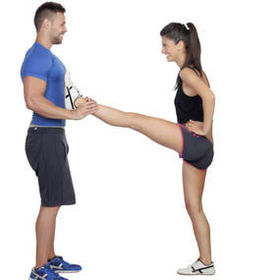
- A combination of passive and isometric stretching, the muscle is progressively stretched.
- Step 1: athlete's partner assumes the position for the stretch, the partner then extends the athlete's limb until the muscle is stretched.
- Step 2: the athlete contracts the stretched muscle for 5-6 seconds. The force of the athlete's contraction should be relevant to the condition of the muscle.
- Step 3: the muscle group is relaxed, then immediately and countlessly pushed past its normal range of movement for 30 seconds. Allow 30 seconds recovery before repeating the procedure 2-4 times.
-
- Positives
- Increases flexibility because it is pushing past that normal range of movement
- Good as a part of flexibility training
- Increased muscle strength
- Drawbacks
- Force of contraction needs to be matched to the athlete's level/ability (or else injury may occur)
- Athlete needs to have done some training before hand
-
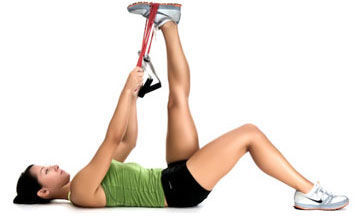
- An individual assumes a position and hold it with some other part of their body, or with the assistance of a partner or object.
- Positives
- Safe way to stretch
- Exceed the normal range of movement
- Very good for cool down
- Drawbacks
- Does not target flexibility
- With partner injury is more likely
-
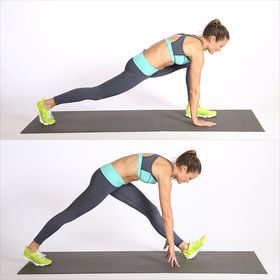
- Assuming a position and then holding it with no assistance other than the strength of their own muscles
- Positives
- Athlete is in total control of the range of movement
- Strength and stability at a joint
- Good for warm up and cool down
- Drawback
- Hard to push past range of movement
Información
- Descripción
- The different types of stretching along with positives and negatives
- Creado por
- Chloe Woodhead · dic 2016
- Actualizado
- 6 dic 2016
- Visitas
- 47
- Etiquetas
- Valoración