
Fichas
L10- Drugs affecting the parasympathetic nervous system
Fichas del conjunto (19)
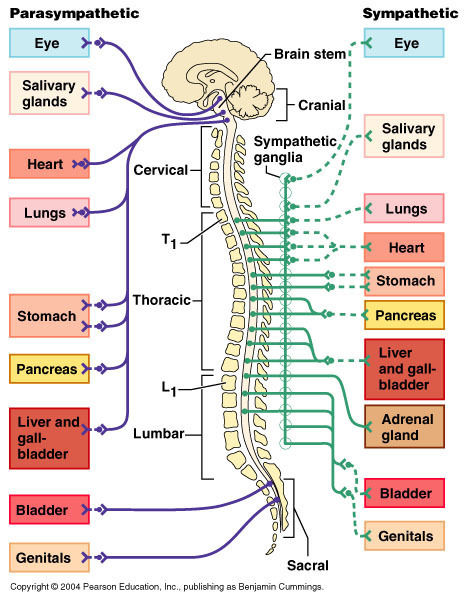
- 1Subdivisions of the nervous system
- 2Pre- and post- junctional events at a cholinergic synapse summary1. Synthesis
2. Storage
3. Release
4. Receptor stimulation
5. Inactivation - 31. Synthesis and 2. storage of Ach1. Synthesis: Acetate + choline= acetylcholine (therough the enzyme CAT; cholineacetyltransferase).
2. Storage: acetylcholine taken up into the vesicles via a carrier mediated process, ready for exocytosis. - 4Drugs that effect synthesis and storage of Ach1. Synthesis: hemicholinium- toxin with no clinical use (but experimentally useful) that inhibits choline uptake mechanism. Very selective for this mechanism.
2. Storage: vesamicol- inhibits carrier processes that involve Ach being packaged into vesicles (again, more experimental uses)
Botulinium toxin- selectively inhibits release of Ach from cholinergic nerves. Can be used to treat blepherospasm- spasms of the face. - 53. Release of Ach and 4. Ach/receptor interaction3. Release from vesicles by exocytosis
4. Synapses of the ANS have no post-junctional specialisation. Ach-sensitive receptors are:
- Muscarinic; if it prefers and activates m receptors
- Nicotinic; if it has higher affinity to and is an agonist at the NAchR
- Presynaptic receptors can modulate neurotransmitter release. - 6Structure-activity relationshipsthe structure of neurotransmitters affect their specificity and activity
- 7Muscarinic receptors- muscarinic receptors are g-protein coupled receptors; Gq linked
- Effects of muscarinic agonists inc:
Cardiovascular effects, effects on smooth muscle, sweating etc, effects on the eye. - 8Clinical uses of muscarinic agonists- Pilocarpine- eyedrops to treat glaucoma, half life longer than that of Ach
- Bethanechol- stimulates gut motility and bladder emptying - 9Antagonists that block Ach receptors: clinical usesAtropine- taken from deadly nightshade, non-selective muscarinic antagonist that blocks secretions and causes mild tachycardia, dilates pupils. Treats urinary problems.
Hyoscrine- passes blood brain barrier, blocks mucous secretions. effective antimotion sickness drug.
Tolterdine- antimuscarinic used to treat urinary incontinence - 10Side effects of muscarinic antagonists-Blurred vision
-Dry mouth
-Reduced bronchodilation
-Constipation
-Palpitations/arrythmias - 11Nicotine receptors- Pentameric ligand-gated ion channels; 5 subunits making up a non-selective ion channel
- 2 Ach molecules bind to 2 alpha-subunits, depolarising the postsynaptic cell bodies, resulting in excitory neurotransmission.
- (different NachRs) At the neuromuscular junction they depolarise the motor end plate, triggering muscle contraction if threshold is reached.
- The 2 different types of NAchrs are structurally and pharmacologically different, revealled by antagonists. - 12Nicotinic agonists and antagonistsAgonists:
Nicotine
Labeline.
Neither have therapeutic use but have important CNS effects.
Antagonists:
On receptors in ganglia:
Hexamethonium and tripnephan
In the neuromuscular junction:
Tubocurarine, pancuronium, atracurium - 135. Inactivation (of released Ach)- Cholinestherases: anticholinesterase is tethered to basement membrane at the NMJ/neuronal membranes at synapse.
- BchE and AchE exist in soluble forms
- Bothe AchE and BchE are serine hydrolases that catalyse Ach to form choline and acetate
- The active site of AchE has 2 regions:
-esteratic site
-Anionic site
- AchE activity is very high - 14Anticholinestherases; block AchE activity by different mechanismsDifferent mechanisms:
Short acting- lasts minutes. Eg edrophonium, binds reversibly & breifly to anionic site
Medium acting- lasts hours EG neostigmine/pyridostigmine, binds to the carbymylate esteric site of Ach, slowing activity and leading to longer lasting chE inhibition.
Irreversible; organophosphates eg dyflos, parathion. Phosphorylates esteratic site, new enzyme has to be synthesised to overcome. - 15Therapeutic uses of anticholinestherasesEdrophonium- can be used as a test for myasthenia gravis (autoimmune condition that leads to muscle weakness).
Neostigmine/pyridostigmine- medium duration treatments for myasthenia gravis
Ecothiopate- glaucoma; contracts atiary muscles to increase outflow of aqueous fluid, reducing intra-ocular pressure. - 16Side effects of anticholinestherases that act at the ganglia in the ANS- Increased parasympathetic activity eg bradycardia, hypertension.
- - 17Side effects of anticholinestherases at the neuromuscular junction- Prolongue end plate potentials and restore Ach transmission in the presence of competitive NachR antagonist
- 18Side effects of anticholinestherases at the CNS- Can pass the blood brain barrier which causes initial excitation, then depression, which leads to respiratory failure.
- 19Side effects of the anticholinestherases organophosphates- posioning: bradycardia or hypotension
ORGANOPHOSPHATE ANTAGONIST- Pralidoxime: - can reactivate phosphorylated BchE (butyrylcholinestherase)
Información
- Descripción
- Drugs affecting the parasympathetic nervous system
- Creado por
- Rose P
- Visitas
- 72
- Etiquetas
- Valoración