
Fichas
CH.2 Research Method Vocab
Fichas del conjunto (51)
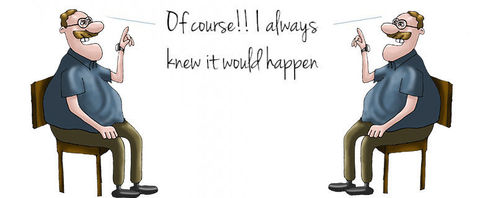
- 1Hindsight Basetendency to believe, once the outcome is already known of course, that you would have forseen it...that even though it's over and you know the outcome, you knew it all along.
- 2Overconfidenceto the tendency to be very sure of a fact and later finding that the objective reality was different.
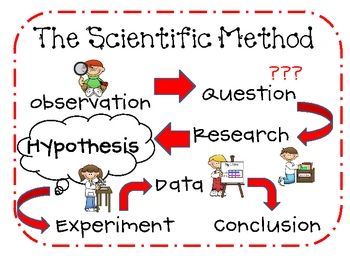
- 3scientific methodstep-by-step procedure psychologists use when conducting research
- 4Generalizationrefers to a process within operant and classical conditioning, where a conditioned response (CR) starts occurring in response to the presentation of other, similar stimuli, not just the conditioned stimulus
- 5hypothesisHypotheses usually come from theories; when planning an experiment, a researcher finds as much previous research on the topic of study as possible.
- 6operational definitions aka operation definitionA statement of the procedures ; identifies the IV & DV, sampling & assignment
- 7case studyis one type of observational data collection technique in which one individual is studied in-depth in order to identify behavioral, emotional, and/or cognitive qualities that are universally true, on average, of others.
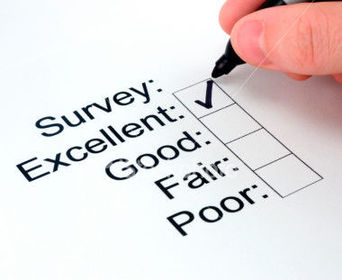
- 8surveya method for collecting information or data as reported by individuals.
- 9naturalistic observationResearchers use all sorts of techniques to collect data, ranging from very controlled lab experiments to natural observation.
- 10correlationis a statistical index used to represent the strength of a relationship between two factors, how much and in what way those factors vary, and how well one factor can predict the other.
- 11correlation coefficientThis is a measure of the direction (positive or negative) and extent (range of a correlation coefficient is from -1 to +1) of the relationship between two sets of scores. Scores with a positive correlation coefficient go up and down together (as with smoking and cancer). A negative correlation coefficient indicates that as one score increases, the other score decreases (as in the relationship between self-esteem and depression; as self-esteem increases, the rate of depression decreases).
- 12scatterplotis a visual representation of the relationships or associations between two numerical variables, which are represented as points (or dots), each plotted at a horizontal axis and vertical axis
- 13illusory correlationSometimes people believe there is some relationship between events, variables, etc., even though none really exists. This is known as the illusory correlation and it occurs in everyday life as well as science. For example, you may have had some experiences with lawyers, some good, some not so good.
- 14Ethical Principles for Animal Research1.) Research must have a clear , scientific purpose
2.) Provide humane living conditions for animals
3.) Legally obtain animals
4.) Least amount of suffering - 15Standard Deviationshows how far scores vary from the mean ( average ) score
- 1668-95-99.7 RUlemeans 68% of all scores falls within one standard deviation of the mean ( average)
- 17Normal DIstributionforms a bell-shaped or symmetrical curve (upside down U)
- 18Modethe most frequently occurring score
- 19Medianthe middle score
- 20Meanthe average; sum of a set of scores
- 21Dependent Variablewhat is being measured in an experiment; the research variable that "depends" on the independent variable
- 22Random AssignmentAssigning participants to experimental and control groups by chance
- 23Cross- sectional studycompares individuals at various ages at ONE POINT in time ( one and done)
- 24Longitudinal StudyStudies a single individual or a group over an extended period of time. Provide in depth information but can be expensive & time-consuming
- 25Zero correlationindicates there is NO relationship between 2 variables Ex. hat size & shoe size
- 26Negative COrrelation-1.00 (closest to it); means 2 variables move in opposite directions
- 27Positive COrrelation+1.00 (closest to fit); means 2 variables move in the same directions EX. Positive relationship between smoking & lung cancer
- 28COrrelation coefficienta number value that indicates the strength and direction of the relationship between two variables
- 29Correlation StudiesResearchers observe or measure a relationship between variables
- 30Participant Biastendency for researchers participants to respond in a certain way because they know they are being observed
- 31Researcher Biastendency for researchers to look for evidence that supports their hypothesis & ignore contradictory evidence
- 32Surveysdescriptive method; uses questionnaires or interviews
- 33Skewed DistributionDistribution with most scores squeezed to one end, few scores stretch out like tail. Skew named for direction of tail.
Negatively skewed- skewed to left
Positively skewed - skewed to right. Mean
pulled in a direction of tail away from median measures cent - 34ReliabilityConsistency or repeatability of results. Split halves reliability compares scores on one half to the other half. Test retest reliability compare scores on the same test taken at different times . Interrater reliability of the same test
- 35Random SelectionChoosing of members of a population so that every individual has an equal chance of being chosen for a sample.
- 36Random AssignmentDivision of the sample in an experiment into groups so that every individual has an equal chance of being put in any group or condition. Is not possible for studies dealing with differences between sexes or age groups
- 37Quasi- ExperimentMeasurement of Dependent variable (DV) when random assignment to groups of a randomly selected sample is not possible. Often applies to studies involving sex or age of participants. Can suggest cause and effect.
- 38Quantitative DataInformation can be reported as numbers for ease of handling. Nominal scale uses numbers to name something, can be used to count case. Ordinal scale can be ranked, ordered. Numbers cannot be averaged
- 39PopulationAll of the individuals in the group to which the study applies. A sample is subgroup of the population that participates in the group
- 40PlaceboPhysical or psychological treatment given to the control group that resembles the treatment given to the experimental group, but contains no active ingredients. Placebo effect- response to belief that the IV will have an effect, rather than the actual of the IV.
- 41Normal DistributionRepresented by a normal curve (upside down U shape)- symmetric with mean, mode,and median the same score; 2 sides are mirror image - Represents data about how most human traits are distributed through population EX: SAT; IQ
- 42Naturalistic ObservationsObserving & recording behavior in naturally occurring situations w/o trying to manipulate and control the situation
- 43Inferential StatiscticsStatistics used to interpret data and draw conclusions - Use rules to evaluate probability that a correlation or difference between groups reflects a real relationship, not just chance (p) is the measure of real difference, p <.05 or p<.01 needed
- 44HypothesisPrediction of how 2 or more factors are likely to be related. Often called a educated guess. An experiment tests a hypothesis
- 45ExperimentResearch method that involves manipulation of an independent variable (IV) under controlled conditions and measurement of its effects on a dependent variable(DV) . Only method that can establish cause and effect between IV and DV
- 46Experimental GroupGroup that you experimenting on; receives the independent variable (IV)
- 47Ethical Guidelines for human research1.) Informed consent
2.) Voluntary participation
3.) Debriefing
4.) Confidentiality - 48Descriptive StatisticsNumbers that summarize a set of research data from a sample. Can be pictured as histogram or frequency polygon
- 49Confounding VariableFactors that causes differences between the experimental group and the control group other than the independent variable. Ex: Experimenter Bias
- 50Central TendencyDescribes average of a distribution. Median is middle score when data is ordered by size. Mean is arithmetic average of scores. Mode is most frequent score, bimodal distribution has 2 most frequent scores, multimodal distribution has 3 or more.
- 51Case StudiesResearch technique in which one person is studied in depth in hope of revealing universal principles EX: Phineas Gage