
1158088
Description

Flashcards by Chima Power, updated more than 1 year ago

|
Created by Chima Power
about 12 years ago
|
|
| Question | Answer |
| Great American Desert | Area known as great plains (Prairies) bounded west of Rocky Mountains and east by the River Mississippi. Stretches from the Canadian border to the Mexican border where Plains Indians lived. Confined of tall and short grass, slow flowing rivers, wooded hills, soft rock eroded into fantastic shapes. Vegetation of berries, root plants and wild fruit grew. Extreme climate strong winds constantly, in winter blizzards and freezing cold, in summer very hot drying up the land and rivers. Wildlife of animals and birds antelope, coyote, deer, gophers, rabbits and buffalo(bison), eagles, grouse hawks. Indians were hunters followed buffalo in summer moved northwest away from heat and in winter camped in foothills of the Rocky mountains. Problems described in 1930's harsh weather, lack of trees, wind, absence of water. |
| Plains Indians | Originally came from plains of north Asia and spread across North America. Different plains Indians adapted their lifestyle Cherokee lived in fertile land farmers growing maize, squash and beans. Utes lived in desert mainly gatherers of berries, roots, seeds, insect and nuts. At first lived in the river valleys in east. In eighteenth century moved to Plains |
| What nations like the Sioux and Cheyenne move to plains | Horses: Spanish invaders brought the horses, not given to Indians revolted and captured horses. Once had horses were able to move out on the Great Plains to live and hunt the buffalo far more easily, able to rely on hunting so important counted wealth as horses. Diseases: Europeans brought new diseases like cholera and smallpox had disastrous impact on the Indians. For example wiped out 3500 of Arikara villages 4000 soldiers. Moved west on to the Great Plains to escape the disease. Trade goods: Guns changed the balance of power in Indian warfare, guns in the hands of their enemies, the Ojibwa, a factor helped drive Sioux out to Great Plains. |
| Life of Sioux Houses | Plains Indians life differed from nation to nation use name Sioux, name given to them by enemies covered several groups Lakota, Yankton and Santee. Homes: Tipi was home made of tent o twenty buffalo skins sewn together and supported by wooden frame of poles arranged in circle. Responsibility of women, could be taken down for transport in ten minutes. At top were flaps moved to direct the wind so that the smoke from the fire inside could escape. In summer could be rolled up to let in air, in winter could be banked with earth to keep warm, conical shape allowed to withstand wind. Covered in geometric patterns and recorded scenes of bravery in hunt and battle, fire for cooking and warmth, ground made of fur. Everyone had place because small example rude to pass between person and fire. |
| Family life of Sioux: Men and Women | Men and Women: Consist between ten and fifty families, each living in their own tipi. Different roles for men and women: men responsible for hunting, looking after the horses and protecting band. Women responsible for tipi, preparing food, fetching water, making clothes, highly valued as child bearers. Arranged marriages took place but in most cases love matches. Impress a women by bravery gift of horses of buffalo skin convinced parents able to support wife.. When married men went to live with women family. Indian descent matrilineal (descent traced through their mother). Most men had one wife but polygamy practiced, several wives. Was done as men met many dangers, made sure all women cared for and band had as many children as possible. Divorce could happen but women kept tipi. |
| Family life of Sioux: Children | Highly valued as future, did not go to school, learned skills they would need from their parents and relatives. Taught to ride at early age. Boys taught how to hunt using bows and arrows, girls taught how to maintain a home, all learned how to survive on the plains. never punished except in extreme cases |
| Family life of Sioux: Old people | Able to give advice in council and pass on history of people, involved in helping to bring up children. When became to old and weak left behind, survival of band more important than anyone. |
| Indian life structure | Organised in a way that needed cooperation, from time to time bands would meet up to camp and hunt together. In the Sioux nation it was never led by any single person, and consisted of many tribes for example Hunkpapa led by chief and bands, Crazy Horse. These tribes consist of bands each band is led by a chief, advised by a council of all men and is influenced by a warrior society |
| Custom and tradition | Strong sense of custom and tradition, if individual did wrong or broke the rules they would be ashamed or humiliated by the rest of the band. Effective as people in band were of close relation in extreme cases like murder individual banished as this greatly affected the band. |
| Chiefs | Became chief because of a combination of factors - wisdom, spiritual power (medicine) and skill as hunter or warrior. Might not be chief for life only great chiefs were able to persuade the public. |
| Councils | Important decisions were taken to the council where the men of the band would discuss what to do. Take in consideration opinion of Medicine Man, chiefs and elders with respect but no one was in control. Would talk until agreement reached while smoking ceremonial pipe which they believed inform the spirit world and help them make good decisions. When bands met council of nation would meet with reps from each band council would make important decisions like going to war but band not obliged to agree so created confusion for white men. |
| Role of warrior societies | All men of a band belonged to a warrior society, they were responsible for supervising hunting and travelling and for protecting the village from attack, opinions always important when band decisions were made. |
| Hunting the buffalo | Before setting off on a hunt they would hold a ceremonial Buffalo Dance which could last days, would dress as buffalo and copy their movements. Purpose was to call upon spirit world for hunting help and draw the herd closer, believed would give them good luck and ensure a victory. Before horses would either creep up on buffalo and shoot them with bow and arrow in wolves skin because they allow wolves close or cause a stampede and for them off cliffs to die. Once horses were obtained able to kill greater number of buffalo, hunt carefully organised and policed by members of the warrior society to ensure they weren't scared and not too many animals were killed. This was done two to three times a year, some suggest careless in killing. In fight would surrond or stampede the buffalo and kill them by firing arrows at the running animals, each warrior marked his arrows so that the buffalo he killed could be identified. Would gain honour and prestige from their skill in hunting was dangerous. |
| Uses of buffalo | Horns- Arrow straighteners, cups, fire carriers, head dress ornaments, ladles spoons toys and quill flatteners. Skull- Used in religious ceremonies Brain- Used for tanning the hides Rawhide- Used for bags, belts, containers, horse harnesses, lashings, masks, parfleche (raw hide bag), Tanned hide- bags, bedding, blankets, clothes, dolls, drums, tipi covers Flesh- cooked or dried and mixed with fat and wild cherries to preserve it as pemmican Sinews- Used for bowstrings and thread Fur- Used for decoration on clothes, as stuffing for saddles and pillows and to make mittens and rope Tail- Used for fly swats, ornaments and whips Dung- For fuel and smoked by men in special ceremonies Hooves- used to make glue and also to make rattles and tools Bladder- used for food bags Intestines- Used for buckets and cooking vessels Bones- Arrowheads, dice, game counter, jewellery, knives, needles Fat- Cooking make soap and as hair grease Gall- yellow paint, liver was eaten as raw delicacy Heart- Cut out and left on ground to give new life to the herd, eaten raw give warrior strength |
| Sioux warrior features | Feathers- Show previous act of bravery, number of feathers amount of enemies killed. Lance- 4 to 5 metres in length with a blade of polished steel, decorated with bead work, buffalo fur and feathers. Coup stick- Carried to touch enemies in battle braver to touch enemy in the fighting with a coup stick or touch hand than to kill him. Rifle- Taken from settling soldiers, got them trading and fights with non Indians. Bow and arrow quiver- Wooden bow is reinforced with sinew glued to the back, quiver holds about 20 arrows tipped with stone or metal. Amulet- Wear around neck strong medicine that protects you. Body painting- painted in magical colors to protect in fight Horse- Lines encourage speed hand print is mark of warrior society, helps warrior recognize you in battle Shield- Made from buffalo neck skin, hardened by steam, smoke and buffalo hoof glue, arrow proof. symbols of animals protect in fight. War shirt- Shows previous brave deeds, decorated with feathers and hair from enemy scalp. |
| Indian warfare | Series of short raids that did not stop until one side had won or peace treaty signed was no deceleration of war with relatively small groups of warriors. Went on raids to steal horses, seek revenge or destroy their enemy not to conquer land as did not believe anyone could own land. usually happened in summer about three or four times a year when had built up food supplies. Historians argue warfare helped keep bands together as had common enemies. |
| Reasons for individual warriors fight | Prove their bravery, gain personal glory, may enable them to enter warrior society or gain a wife, would also become wealthy by capturing weapons and horses. For leaders would increase status in tribe by bringing back horses and captives without losing many warriors, if unsuccessful warriors would not follow them. Plains Indians did not find it important to die in battle better to stay alive as a provider for family and their tribe and avoid losing their scalp. |
| Counting coup | Considered braver to touch enemy, count coup, than to kill them. Casualties were relatively low between 1835 to 1845 Sioux were in battle and lost 88 people More men were probably killed as a result of hunting accidents than through fighting. |
| Plains Indians scalp reasons | took scalps as evidence of their successes in battle, scalps were dried and hung as trophies outside their tipis. Used to decorate war gear believed if you scalped your enemy they would not be there to fight you in the afterlife. |
| Spirit world | Sioux believed in Wakan Tanka the great spirit that he had created the world and all that lived in it. All living things had spirits of their own included animals, birds, fish, plants, rocks, trees and streams and spirits. Believed spirits could influence their lives explained some of the things the sioux did. |
| Circles | Sioux believed in circle of natur physically suronded by circle of horizon, village, councils, tipi, circle of their shield. Looked up at circle of the sky, sun ant the moon. Lived through circle of birth, childhood, adulthood, old age, second childhood and death. Plus seasons. |
| Sacred land | Believed they came from the earth like plants and animals when they died believed they returned to the land. Believed they were part of the earth and in accordance could not be owned by anyone . Their land was part of life itself called land it's mother said ploughing the land was like ripping the mothers breast. Some land particularly sacred especially high places close to the spirit world, for the Sioux was the black hills where first Sioux were saved from the great flood, where dead where buried, where holy man went to seek guidance when the nation had a important decision. |
| Visions | A way to contact the spirits was through visions all wanted to have visions. Boys expected to search for theirs by going to sweat lodge to clean their body, then pray and go without food. Would be interpreted by the shaman and adult name would be given based on vision. Women could easily make contact with spirit world developed ability when they reached puberty. Received training from medicine woman on how control contact with spirit world and received adult name. Visions help Sioux throughout their lives, before Battle of little Bighorn Sitting Bull received a vision he interpreted US army soldiers would die. |
| Dances and ceremonies | Used when whole tribe needed to contact the spirits before hunting would dance the buffalo dance to get the spirit world to call the buffalo to them. After a war victory would dance the Scalp Dance to celebrate and thank the spirits for their help. Most famous ceremony sun dance used to get help or guidance from spirit world. sitting bull took part in one for four days before vision came. Might dance the Sun Dance to get help from the spirit world, perhaps for someone who was ill in their family. |
| Medicine man | Name given by non-Indians to an Indian Shaman because he carried herbs. To the plains Indians there was a connection between religion and every aspect of their lives, including their health. For them all spirit power was medicine. Believed that the medicine man could cure sickness because he could use the power of the spirits. If a man was ill he was possessed by an evil spirit, the shaman would drive out the spirit. Psychological cure, used practical remedies like ointments and potions made from herbs, to treat sickness. Knew medicinal properties of over 2000 plants consulted no only about medical matter but also every aspect of tribal war, charged high fees, normally paid in ponies, known to return fees if treatments were unsuccessful. |
| Way of life | Active way of life ensured that Indians were very fit causes of death were warfare, hunting accidents, food shortages and old age. Did not suffer from public health problems like pollution and sewage because live in small groups and constantly moved |
| Way of Life | Active way of life ensured that Indians were very fit causes of death were warfare, hunting accidents, food shortages and old age. Did not suffer from public health problems like pollution and sewage because live in small groups and constantly moved. |
| Way of Life | Active way of life ensured that Indians were very fit causes of death were warfare, hunting accidents, food shortages and old age. Did not suffer from public health problems like pollution and sewage because live in small groups and constantly moved. |
| The Mandans | Lived on the edge of the Great Plains by the River Missouri. Occupied two great walled towns, in 1804 theirs was the largest community west of the Mississippi. Different from Sioux as lived at river valley good place for farming grew corn enough to food for themselves and to trade with. Mandans could build permenant housing for towns and villages, never followed buffalo. Able to trade with settlers once riverboats came up the Missouri river. Made them rich so they built fences to keep themselves safe. |
| George Catlin | Born on 26 July 1796, Pennsylvania. Was an artist and entrepreneur of great vision and energy. Traveled a lot in the west in 1830 with purpose to make a collection of drawings and paintings to form an Indian gallery, of Plain Indian society he knew would soon disappear. Based upon wide experience of Indian life, gained in eight years of travel, and was obviously sympathetic towards the Indians. Also published writings, drawings gave him a great influence on how Americans viewed Indians. Can be used to portray Indians in a negative way as savages as well as positive. |
| Francis Parkman | Came from a rich Boston family, was expensively educated at a private school and went to Harvard university. Parkman wanted to find out about the Indians, to help his health and to gather information to write his book. On the trip Parkman fell ill and his health broke down on return to Boston. Dictated book the Oregon trail while bed ridden first published as series of articles. Gave a biased view as had limited time with Sioux and saw through eyes of a wealthy , educated Easterner. Interested in writing a romantic history the book informed the American public and influenced their view of Indians. Also used as source for later writer. |
| Colonel Richard I Dodge | Was a colonel of a cavalry regiment of the US army who served in the West. Led a campaign in 1834 to establish friendly contact with the Comanche and Pawnee of the southern Plains. Accompanied by George Catlin later wrote a book called Hunting Grounds of the Great West. In his time with the Indians learned a lot about them but did not wholly understand them influenced by military background and his role as a soldier trying to keep the peace between Indians and settler. Important as influenced attitudes of other Americans on the Plains Indians |
| Plains Indians life in the scope of outsiders | Thought women did all the work and did not properly respect women and that polygamy was sinful. Thought children were wild as they were not sent to school and not punished. Felt Indian men were lazy and only lounged around and that the feathers showed their war exploits revealing them as savages. |
| Joseph Smith | According to Smith a pillar of light appeared ahead of him, not told to join any religious group but prepare himself for a great work. Said to experience future visits from angels there was book written on golden plates, plates told different story than bible. Saying that Christ came to America as the Isralies migrated there church was destroyed by fighting and guy called Mormon survived and wrote down experience. One who found them would restore the church. Said no-one should see plates but some testimoned they had seen them. Translated plates in the book of Mormon started with only five followers but charismatic and energy filled public opinion turned peoples opinion. So by end of 1830 had several hundred speakers. In NY had haters claimed was a fraud house attacked by mobs followers shot down in streets. So left for Kirtland where he planned to set up a City of God. |
| Mormons in Kirtland | By 1831 had 1000 members and new colonies were founded in Missouri. In Kirtland owned a mill, store, bank and printing press even started on a temple. Mormons soon outnumbered non-Mormons, envy from gentiles grew. In economic crisis when banks collapsed Mormons were blamed for lost money so driven out |
| Mormons in Missouri | Smith and followers fled to colonies set up by Mormons in Missouri but still had haters. Grew to 1200 people were hated because tryed to convert slaves to Mormons worried would take over governement and control them. Riots made to stop Mormons voting destroying housing Mormons held responsible leaders imprisoned. Rumors began of stirring up Indians and freeing slaves governement declared them as public enemies that had to be exterminated. |
| Mormons in Nauvoo | 1838 Mormons left Missouri Smith released from prison. Didn't go into the Great American Desert went to the tiny town of Commerce in Illinois, Smith renamed it Nauvoo and Mormons allowed to develop it as an independant city state, could even make own laws. Grew into largest city in Illinois, described as best built city in West. Tried to create an ideal society no poor or homeless no smoking little drinking. In 1844 were 35,000 Mormons more from Europe due to missionaires most convertants were poor promised new life. Governed themselves had army of 4000 men but people were again envious and troubled by growth with Smith trying to run from present. Although problem arose when Smith said that God had said some Mormons were able to practise polygamy due to surplus of women, most European converts were some Mormons thought Smith was a fraud put in prison when destroyed press but presented this image. Gentiles annoyed by practising of polygamy thought immoral and worried would lead to rapid increase in the Mormon population. |
| Conflict in Nauvoo | On June 27th 1844 a mob of 200 gentiles attacked the jail and shot Smith dead. Mobs now roamed countryside hunting down Mormons even talk of attacking Nauvoo. |
| Brigham Young | New leader of Mormons, convinced that Mormons would never be left in peace in the East needed somewhere unwanted and isolated, knew most isolated place was Great Salt Lake. Also from guidebooks knew that there was good soil and streams fed by mountains snow. Also this part of Rockies belonged to Mexico so out of the US control. In Sep of 1845 Brigham Young made decision to go and agreed with Illinois authorities that the Mormons would leave Nauvoo in the spring of 1846 in return for freedom from persecution until they left. |
| Preperation for Jorney West for Mormons | Preperations took place all winter wagons had to be built, oxen bought, equipment and food collected. In February a pioneer band crossed frozen river of Mississippi to set up first way point called the Camp of Israel, in Iowa. Rest of Mormons had to follow before properly prepared because mobs began looting their homes. Orginisation of Young again showed as split them into wagon trains each made up of a hundred wagons. A captin would be in charge of each wagon train and each ten wagons supervised by lieutenant. Effective as able to build a rest camp for the following at each camp some Mormons stayed behind to plant crops and build workshops. By 1846 Young and his first wagon train had reached Missouri River, here they had built winter quarters, where Mormons would spend the winter one thousand cabins built. But could nothing against the weather in winter fuel and food were short, by spring plague and cold had killed 700 people. |
| Journey to Great Salt Lake | In April 1847 Young led forth a Pioneer Band of 148 all chosen for endurance and to ensure balance of craftsmen and farmers, job was to lead the wa to the Great Sal Lake, selct the site for the new Mormon settlement and to begin work there. Jim Bridger warned them that the Great Salt Lake was too cold at night for growing corn. Later met Sam Brannan a Mormon, who urged to go to Cali but young ignored both. |
| Causes of Great Sioux War | In 1874 George Armstrong Custer led expedition of the Seventh Cavalry to the Black Hills, were to protect railwaysurveyors and found gold in area broke Fort Laramie Treaty. Following invaded by miners over 1000 US unable to stop them. Offered six million dollars to buy or 400,000 a year for mineral rights. But too sacred government offer rejected relations between Sioux and government grew poor. |
| Events of Great Sioux War | In december 1875 all Sioux wee ordered to return to their reservation in winter impossible to obey approx 7000 Indians with sitting Bull and Crazy Horse showed anger of invasion and reputation of leaders. Since Sitting Bulls visit to Santee Sioux had been hostile to outside authorities, refused to live on reservation. |
| Results of Great Sioux War | News of defeat reached America on 4th July hundredth anniversary of the USA's indipendance. Public shocked, support for following army campaign was great. Two new forts built on the Yellowstone River and 2500 reinforcements were sent west. After battle Indians had split into bands picked off by soldiers too many had to protect women and children. Also short of ammunition and food supplies. Gave up and returned to reservation, by autumn were back. On 5 May 1877 Crazy Horse and followers surrendered while Sitting Bull and his followers escaped to Canada. Armed resistance of Sioux was over. On reservation were forced to sell the Black Hills, Powder River country and the Bighorn mountains, were put under military rule, then reservations split into smaller reservations more land taken. Eventually horses and weapons taken the Sioux would never again be able to in great number fight the army. |
| Indian Scouts | Recruited from other Indian nations like Crow and the Shoshone enemies of the Sioux. Helped by the nations enemies provided knowledge of the country and Sioux battle tactics. at Battle of Rosebud saved Genral Crook's force from suffering greater casualties. Inability of different nations to fight together led to their demise leaders like Red Cloud attempted to get traditional enemies to fight together but pattern of old warfare too strong to break. |
| US army on Plains |
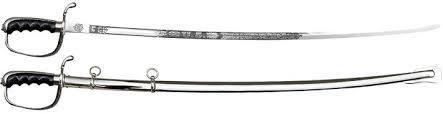
Up to 1850's Army of West relatively weak by 1856 and expanded army of 15,715 men in a network of 52 fort, responsible for between Plains Indians and settles over our million km squared. Trained to fight enemy in fixed position, spent most of their time garrisoning forts, patrolling routes or searching in vain for Indians. Il equipped to fight well mounted Plains Indians too much infantry not enough cavalry too expensive to maintain. Indians fought in small raids not major battles unless odds favored them.
Image:
sabre (image/jpg)
|
| Impact of Civil War | In 1861 regular troops withdrawn to fight in the East, replaced by volunteers, lacking discipline of normal army. Sometimes led by men with political ambitions, volunteers often made relations with the Indians worse. For example Sand Creek Massacre wher Colonel Chivington and his Colorado volunteers attacked a Cheyenne village, killing 28 men and 105 women and children. Caused outrage in the East and led to the Cheyenne and their allies fighting a full scale war against settlers and travellers for next four years. At end of civil war regular army replaced volunteers, well experienced policed West more effectively. were better armed with modern rifles, revolvers and artillery, superior firepower enabled them to win over Indians. |
| Total war | Meant waging war agains a whole enemy population not just fighting troops but not killing women and children. Involved destroying food, shelter, clothing, possessions and animls of the Plains Indians. Resulted in Indians starving, going to relatives for help, going to reservation and surrendering. Strategy demoralised Plains Indians and strengthened arguments of those in band in favour of peace. Strategy successfully used by General serman and Sheridan during the Civil War. |
| Winter campaigns | Plains Indians vunerable to attack in winter, time of year needed to stay in one place for long periods of time. Also time when they needed to conserve fod supplies and the strenth of their ponies, defeat at this time could be devestating. Led to the army to defeat the Plains Indians in battle. |
| Battle of Little Bighorn | Known as Battle of the Gresy Grass by the Sioux, battle on 25 June 1876 US regiment of 600 defeated by combined force of Sioux, Cheyenne and Arapaho numbering approx 2000 warriors. 263 of US killed, 58 killed and 60 wounded for Indians. Well studied greates defeat of the US army by Indians artists and writers turn it into heroic last stand as over 950 paintings of the battle. |
| George Armstrong Custer | Viewed as war hero after civil war youngest General ever in the US army at 23. born n New Rumley, Ohio also discover gold in the Black Hills seemingly had heroic death at the Battle of Little Bighorn. Recognised value of good publicity had reporter at Little Bighorn. Had a desertion rate of 52% and 512 men of seventh cavalry deserted. |
| Planning Campaign of Little Bighorn | In 1876 the US army ordered to attack all Sioux who had not returned to their reservation. Plan prepared by General Philip Sheridan, involved three columns co'ordinating their movements. General George crook would lead a column of 1049 cavalry and infantry northwards from Fort Fetterman. Colonel Gibbon would lead a column of 450 infantry eastwards from Fort Shaw. General Terry, accompanied by Custer, would lead a column of 1000 cavalry, infantry and Gatling guns westward from Fort Abraham Lincoln, three would encircle the Indians trapping them. Weaknesses were no effective connection between Terry and Cook when started the columns were 300 to 500 km away from the Indians plus wrongly assumed Indians numbered approx 800 estimate based upon info from Bureau of Indian Affairs, job to supervise the Sioux reservations. |
| Battle of the Little Bighorn | On 25 June reached the camp of sitting bull and crazy horse on the Little Bighorn despite warnings from scouts decided to attack wanted a glorious victory. Custer then split his forces tactic used successfully in Battle of Washita. Sent Major Reno with 125 men to attack southern end. Captiain Benteen with 125 men sent to south. Captain McDougall took charge of B company and the pack train. Custer took 260 men further north to cross the river to attack the Indian camp. |
| Reno and Benteen | Major Reno's attack stopped by the Sioux and retreated across the river where he took a defensive position. Then joined Benteen for the rest of the day surronded and suffered high casualties. Later recieved order from Custer to support him unable to said surronded by too many Sioux. |
| Custer last stand | Not clear what happended as no survivors from the force evidence indicates unable to cross the river turned back and made for higher ground but overwhelmed by Crazy's Horse's attack. Without support forces outnumbered, some of Custers men panicked tried to run away or surrender others fought to their death. Only survivor was Curley, a Crow Indian scout, disguised himself as a Sioux warrior. |
| Indian tactics | Had an advantage as vastly outnumbered the US 2000 against 600, some better armed than cavalrymen. Warriors had Winchester repeating rifles, supplied to them by traders, whilst cavlarymen were armed with Springfield single-shot rifles. While half the Indians protected the camp the other half surronded Custer and his men. Was a new tactic as usually fought in delayed action while women and children escaped and then withdrew, change reflected leadership of Crazy Horse. |
| Crazy Horse | Died by opposing the recrutment of Sioux warriors to those running to the reservation seen as danger so General Crook ordered his arrest. Taken to Fort Robinson escorted by Captin Kennington an Indian Agency policeman and Private Gentles. Seeing he was going to be in a barred room in chains he tried to pull away. In the struggle soldier bayoneted Crazy Horse in the back, died later that night. Regarded as American hero. |
| Destruction of the buffalo herds | Between 1840 and 55 buffalo hunted almost to extinction: numbers fell from estimated thirteen million in 1840 to around 200 in 1885. Reasons for this were as more and more people settled on the eddge of the Great Plains and travelled across them, killing of buffalo increased. Parts of the buffalo's habitat were destroyed, and new diseases introduced led to fall in numbers. |
| Hunting buffalo for sport | Buffalo hunted for food and sport, increased with railroad, special excursion trains were run so that people could not go and shoot buffalo for sport and railroad builders required food. Buffalo hunters employed to keep the workers on the line supplied with fresh meat. One hunter William Cody later called Buffalo Bill. For $500 a month he was employed by the Kansas Pacific Railroad Company to clear buffalo froom the line and supply the workers with fresh meat daily, including delicacies like buffalo tongue. Over seventeen months said he had killed 4280 buffalo. Went on tour for wild west show, toured America and Euroope helped to create the romantic image of the Wild West, was also subject of many dime novels. |
| Hunting for hides | In 1871 discovery that buffalo hides could be used to make high quality hides. meant price of buffalo greatly increased. Also the railroad could transport the hides to east to the tanning industry. Industry centered around Dodge City and Fort Worth. Hunting metods of using powerful rifles with a very long range. Would take up a position at a distance from the buffalo and first shoot the leading animal. Then would shoot individual buffalo, if each shot instantly killed the buffalo the rest of the herd would not be alarmed. Known as a stand, very effective method of hunting. By end of 1875 southern herd were all slaughtered. On the Northern Plains slaughter did not begin until 1880 when sioux defeated and Railroad had reached Bismarck in 1876. By 1882 an estimated 5000 hunters and skinners were at worka dn by 1883 the northern herd was destroyed. |
| Bone Pickers | Hunters only intrested in hides so rest of buffalo left to rot, later remains collected and sent east. Homesteaders and crews of proffesional bonepickers collected skeletons and took them by wagon to railroad sidings. In the span of 3 yrs about 32 million pounds had been sent East, bones grouded into fertilser, made into buttons, combs, knife handles. Hooves made into glue. |
| response of Plains Indians to buffalo killing | Killing of the buffalo one of the causes of the warfare on the Plains, in the summer of 1874, in an attempt to foce the hunters from the southern plains before the last of the herds were slaughtered, 700 Arapahos, Cheyennes, comanches and Kiowas attacked the buffalo hunters based near Adobe Walls. Indians launched repeated attacks no match for the defending hunters with their powerful buffalo guns. One the third day a hunter using a Sharps rifle with a telescope knocked a warrior off his horse at a distance of nearly a mile afterwards Indians gave up fight. |
| government policy of reservations | From 1825 system of Indian reservations developed on the Great Plains. On reservation supervisd by government appointed Indian agents, reservation intended to keep Indians apart from the homesteaders and ranchers expected to live as farmers. to start with allowed to leave reservation to hunt buffalo after conflict rights taken. |
| Reservation conditions | Like prisoners by 1870s usually on land that settlers didn't want so conditions bad. For example poor quality farmland, in unhealthy places, made it difficult for Indians to feed themselves, dependant on government hand outs of food. Demoralising no way for a warrior to gain or maintain status. In some cases badly treated by dishonest Indian agents. Housing monies stolen, food rations inadequate, and medical treatment unavailable. Disarmed, without horses, suffering from diseases like; measles, influenza and whooping cough. People punished for offence without trial, Indians unable to resist. |
| Reservation opportunites | Lesser chiefs could gain importance by co-operating with the Indian agent when traditional leaders refused to. For others power and prestige of being an armed member of the Indian Police was present. Sergeant Red Tomahawk, who shot dead Sittng Bull was a Capin of Indian Police by 1892. Some nations like Pawnee who were already farmers adaptation was not great. In the 1890s managment of reservations reformed with various Church groups like Catholics, methodists and Quakers being put in charge. Even then Indian agents were not always honest. |
| Political destruction of Indian culture | First reservations were given to the chiefs to distribute later policy changed heads of families encouragd to collect their own rations. Weakened power and authority of chiefs, in 1885 the government took control of all legal matters. Indians had lost power to judge and punish members of their bands. In 1887 the Dawes General Allotment Act was passed, allowed the communal reservation lands were broken up into individual plots, was intnded to destroy power of chiefs and the tribal structue. Act also allowed any left over land to be sold to non Indian farmers, make money. |
Want to create your own Flashcards for free with GoConqr? Learn more.