
Flashcards
notes
Cards in this deck (93)
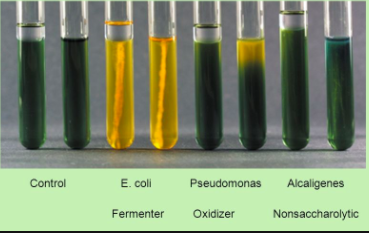
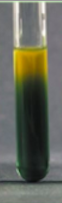
- 1What type of test is this?oxidation-fermentation test
- 2what color are gram positive stains?purple
- 3what color are gram negative stains?red
- 4What is the oxidation fermentation t test used for?differentiate bacteria on the basis of fermentative or oxidative metabolism of carbohydrates
- 5what is the mineral oil in O-F test used for?creates an environment unsuitable for oxidation
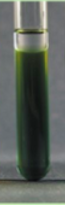
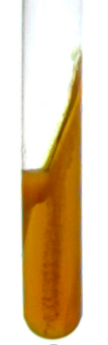
- 6O-F test results: sealed (anaerobic) green or blueoxidation
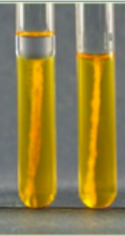
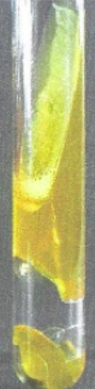
- 7O-F test results: sealed and unsealed yellow throughoutoxidation and fermentation, or fermentation only
- 8O-F test results: sealed or unsealed slightly yellow at the topslow oxidation and slow fermentation, or slow fermentation only
- 9O-F test results: sealed or unsealed no color change or blueno sugar metabolism
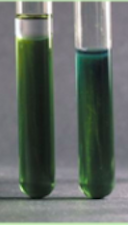
- 10O-F test results: unsealed yellowoxidize only
- 11What type of test is this?Phenol red test
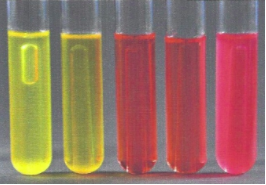
- 12what is a phenol red test used for?determine organism's ability to ferment that particular carbohydrate
*single carbohydrate used
glucose, lactose, and sucrose - 13Phenol Red test result: yellow with bubblefermentation with acid and gas
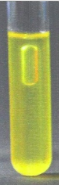
- 14Phenol Red test result: yellow no bubblefermentation with acid no gas
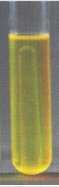
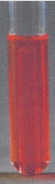
- 15Phenol Red test result: red no bubbleno fermentation
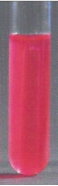
- 16Phenol Red test result: pink no bubbledegradation of peptone
- 17what type of test is this?catalase test
- 18what is a Catalase test used for?determine organisms that contain catalase to use or live in the presence of 02
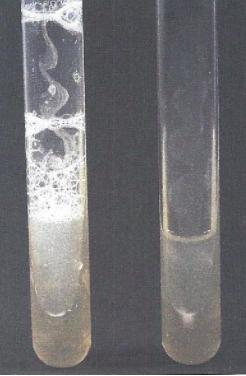
- 19Catalase test result: bubblecatalase is present +
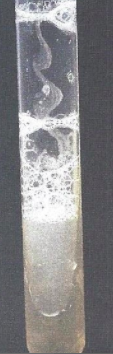
- 20Catalase test result: no bubblescatalase absent -
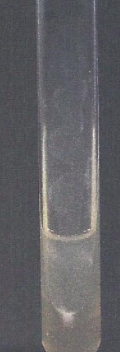
- 21what type of test is this?oxidase test
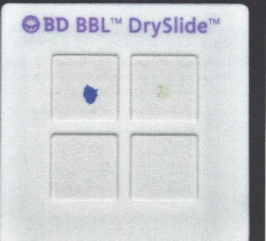
- 22what is an oxidase test used for?identify organisms that produce the enzyme cytochrome oxidase
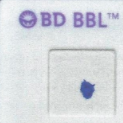
- 23Oxidase test result: dark blue/purplecytochrome C oxidase is present +
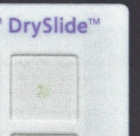
- 24Oxidase test result: no color changecytochrome C oxidase is absent -
- 25what type of test is this?MacConkey Test
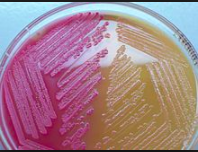
- 26what is a MacConkey test used for?determine ability to ferment lactose in gram-negative bacteria
- 27why are gram + unable to grow in MacConkey test agar?inhibited by bile salts and crystal violet
- 28MacConkey test result: pink/redproduces acid from fermentation +
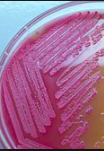
- 29MacConkey test result: colorlessdoes not ferment -
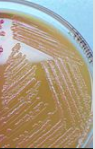
- 30what type of test is this?gelatinase test
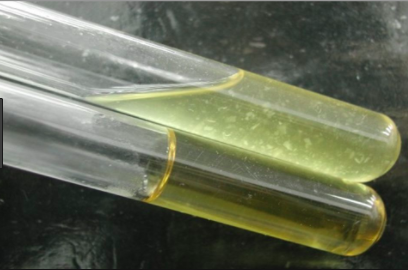
- 31what is a gelatinase test used for?identify enzymes that can hydrolyze gelatin with gelatinases
- 32Gelatinase test result: gelatin is liquidgelatinase is present +
- 33Gelatinase test result: gelatin is solidgelatinase is absent -
- 34what type of test is this?starch hydrolysis test
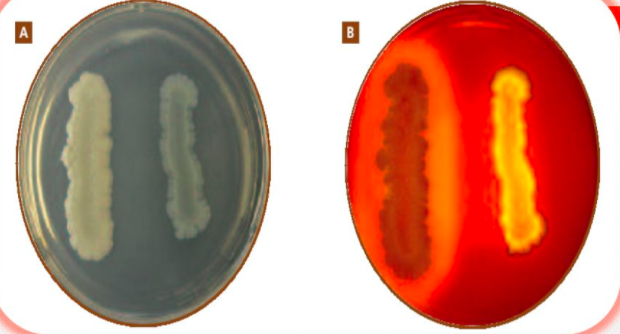
- 35what is a starch hydrolysis test used for?determine if an organism can hydrolyse starch
*iodine will color area surrounding the growth if growth is present - 36Starch hydrolysis test: clearing around growthamylase is present +
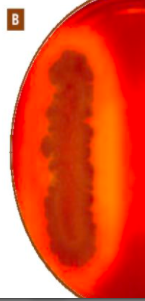
- 37Starch hydolysis test: no clearingamylase is absent -
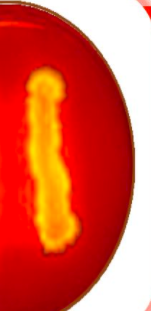
- 38what type of test is this?citrate utilization test
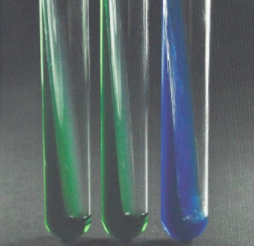
- 39what is the citrate utilization test used for?differentiate faculatative anaerobes, determine those with the ability to ferment carbohydrates, use citrate as sole source
ferment carb=functional citric acid cycle=can aerobically respire - 40citrate utilization test result: blue or no color change w/ growthcitrate is utilized +
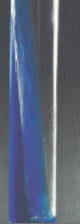
- 41citrate utilization test: no color change, no growthcitrate is not utilized -
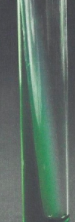
- 42what type of test is this?nitrate reduction test
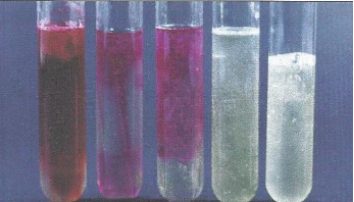
- 43what is a nitrate reduction test used for?determine whether an organism can reduce nitrate to nitrite or free nitrogen gas
- 44nitrate reduction test: what step is needed next?none
positive, nonfermenter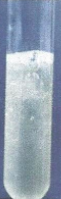
- 45nitrate reduction test: what is done next to a fermenter?add reagent A & B, if it turns red + stop there
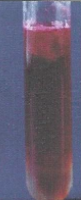
- 46nitrate reduction test: what do you do if there is no color change after the reagents are added?add zinc
- 47nitrate reduction test: what does the result indicate if zinc has been added?nitrate reduction, +
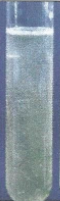
- 48nitrate reduction test: what does the result indicate if zinc has been added?no nitrate reduction -
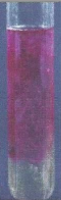
- 49what type of test is this?decarboxylase test
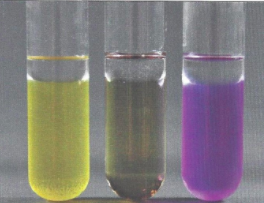
- 50what is a decarboxylase test used for?determine if organism can decarboxylate an amino acid
*add mineral oil - 51decarboxylase test result: no color changeno decarboxylation -
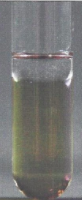
- 52decarboxylase test: yellowfermentation, no decarboxylation -
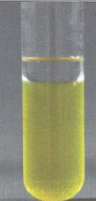
- 53decarboxylation test: purpledecarboxylation +
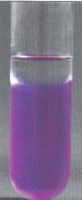
- 54what type of test is this?blood agar test
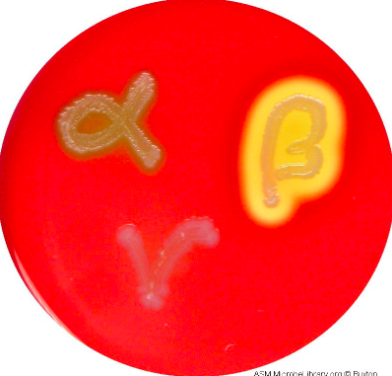
- 55what is a blood agar test used for?differentiate bacteria based on their ability to hemolyze RBCs
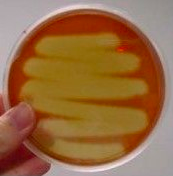
- 56blood agar test result: clearing around growthhemolyzes RBC completely β
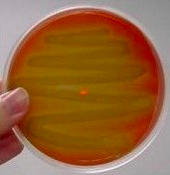
- 57blood agar test result: greening around growthpartially hemolyzes α
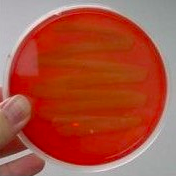
- 58blood agar test result: no changedoes not hemolyze γ
- 59what type of test is this?MR test
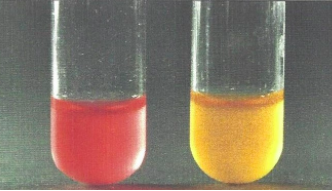
- 60what is the purpose of the MR test?detect organisms capable of performing a mixed acid fermentation to overcome the phosphate buffer
*add methyl red indicator (3 drops) immediate results - 61MR test result: redmixed acid fermentation +
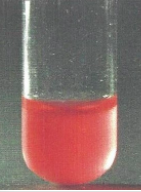
- 62MR test result: no color changeno mixed acid fermentation -
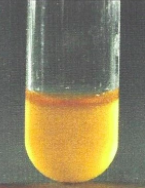
- 63what type of test is this?VP test
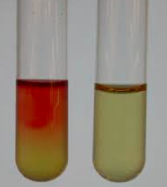
- 64what is a VP test used for?identify organisms that can ferment glucose
*add 15 drops of reagent A and 5 drops of reagent B - 65VP test result: redfermentation, acetoin produced +
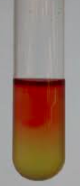
- 66VP test result: no color changeno fermentation -
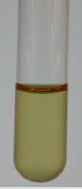
- 67what type of test is this?deamination test
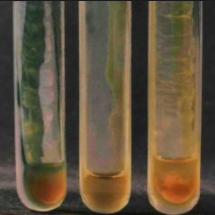
- 68what is the purpose of a phenylalanine deaminase test?identify organism that can produce phenylalanine deaminase to deaminate amino acid phenylalanine
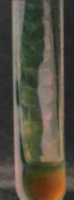
*add ferric chloride - 69phenylalanine deaminase test result: greendeaminase present +
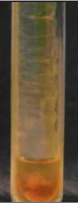
- 70phenylalanine deaminase test result: no color changeno deaminase -
- 71what type of test is this?SIM test
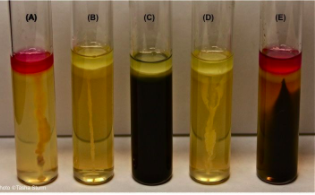
- 72what is the purpose of the SIM test?determine sulfur reduction, indole production from tryptophan, and motility
- 73Sulfur reduction test result: blacksulfur reduction +
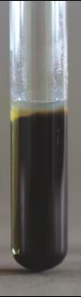
- 74Sulfur reduction test result: no blackno sulfur reduction -
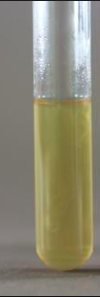
- 75what needs to be added for indole production?Kovac's reagent, reacts with indole
- 76Indole production result: redpresence of tryptophanase +
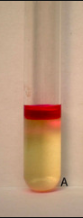
- 77Indole production result: no redno tryptophanase -
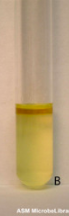
- 78Motility result: growth radiating/fuzzymotility +
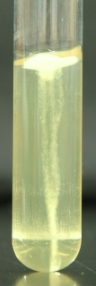
- 79Motility result: no radiating growthno motility -
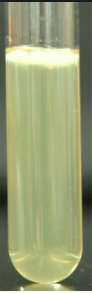
- 80what type of test is this?Mannitol salt agar
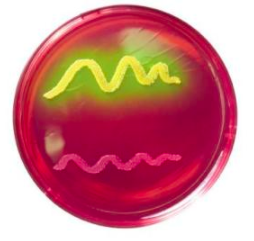
- 81what is the purpose of the mannitol salt agar test?differentiates Staphylococcus aureus from other Staphylococcus species
- 82Mannitol salt agar results: poor growth/ no growthinhibited by NaCl, not Staphylococcus
- 83Mannitol salt agar results: good growthnot inhibited, Staphylococcus
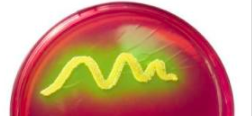
- 84Mannitol salt agar results: yellow growth or halomannitol fermentation, Staphylococcus aureus
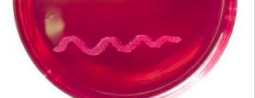
- 85Mannitol salt agar results: red growthnot fermentation, other type of Staphylococcus
- 86what type of test is this?Kligler Iron Agar
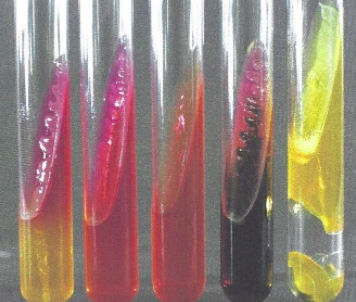
- 87what is the purpose of the Kliger Iron Agar?differentiate bacteria on the basis of sulfur reduction and glucose, lactose, and sucrose fermentation
- 88KIA test result: yellow slant/ yellow buttglucose and lactose fermentation with acid accumulation
- 89KIA test result: red slant, yellow buttglucose and lactose and/or sucrose fermentation with acid accumulation
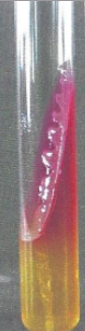
- 90KIA test result: red slant, red buttno fermentation, peptone catabolized aerobic and anaerobic
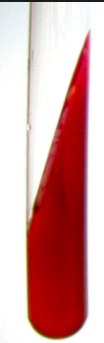
- 91KIA test result: red slant, no change in buttno fermentation, peptone aerobic
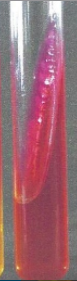
- 92KIA test result: black precipitatesulfur reduction
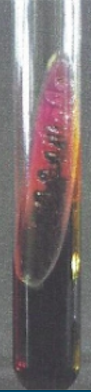
- 93KIA test result: crackgas production
Information
- Description
- Flashcards on notes, created by Jenny Lai on 11/05/2018.
- Created by
- Jenny Lai
- Views
- 0
- Rating