
Flashcards
Revision Flashcards Learning Aim C
Cards in this deck (27)
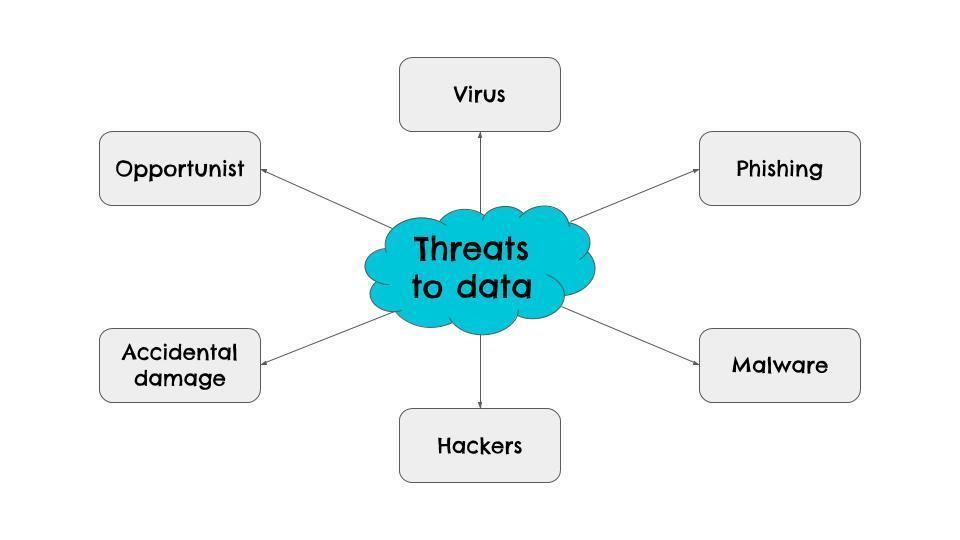
- 1Threats to data
- 2Opportunity threatsA company's network security can be breached by people who take a random opportunity such as an unattended computer or an unlocked door.
- 3Computer virusesViruses are malicious programs
designed to replicate and spread
across a computer or a network to
damage or corrupt files and data. - 4MalwareMalware is the name for several other types of malicious software, such as Trojans, worms, adware, spyware and other nasty software that aims to cause damage to files or to steal data.
- 5PhishingThis means when hackers use fake emails or fake websites to trick people into clicking links and then entering their personal data, such as bank passwords.
- 6Accidental damageThis could include floods, fire
or hurricanes or damage from
untrained users. - 7HackersMeans people who purposefully try to gain unauthorised access to a computer or a network. A high proportion of hackers are people who actually work for an organisation.
- 8Protection of data
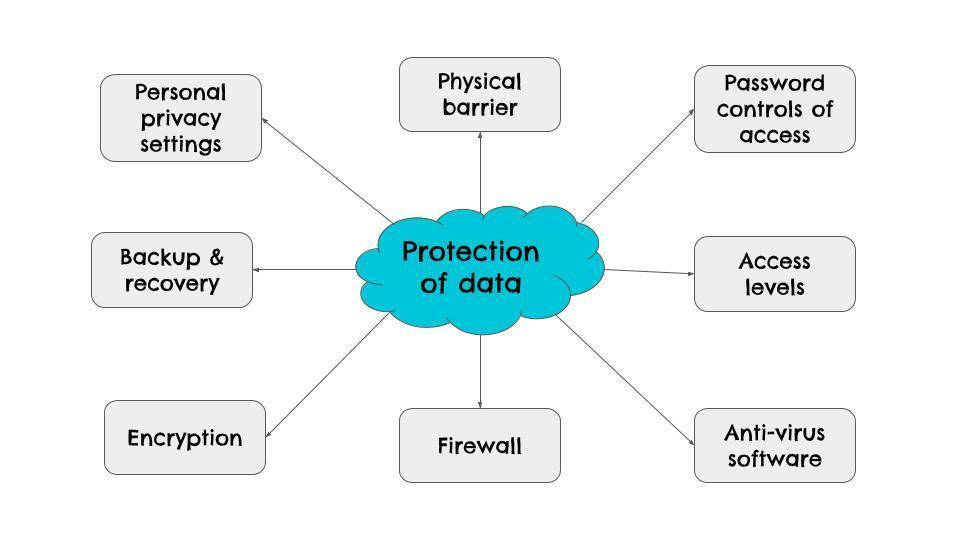
- 9Physical barriersMeans protection such as locks
on doors, or CCTV and turning
computers off at night. - 10Password control of accessA strong password is at least 8
characters and includes uppercase
and lowercase letters plus
numbers and symbols. - 11Access levelsEnsures people only have
access to the parts of the
system they need. - 12Anti-virus softwareSoftware that works by scanning your
files and then deleting a virus or put
safely in quarantine. - 13FirewallSoftware that monitors data coming in
and out of a network to protect it from viruses, malware and hackers. It puts
a 'wall' around the network. - 14EncryptionMeans scrambling data to turn it into a secret code before sending it over a network, or the Internet so hackers can't decode and understand it.
- 15Backup and recoveryA backup is a copy of data kept in a different location. Recovery is replacing the data, such as copying the backup files to the original location.
- 16Personal privacy settingsSecurity settings can be used
on social networking sites to
protect users' privacy. - 17Freedom of Information Act 2000- Gives people the right to see data
stored about them by a public sector
(e.g. schools, NHS, local councils)
- Anyone can make a 'FOI' request
as they are entitled to it
from public authorities. - 18Copyright, Designs and Patents Act 1988- Aimed at preventing piracy.
- Protects rights of the makers of
software, photos, music, films, etc.
- Use without permission is illegal.
- Software can't be copied and sold,
copied and given to a friend and
can't be used on a network. - 19Data Protection Act 19981. Personal information must be
fairly and lawfully processed.
2. Personal information must be
processed for limited purposes.
3. Personal information must be
adequate, relevant and not excessive. - 20Data Protection Act 19984. Personal information must be
accurate and up-to-date.
5. Personal information must not be
kept for longer than necessary.
6. Personal information must be
processed in line with the
data subject's rights. - 21Data Protection Act 19987. Personal information must be secure.
8. Personal information must
not be transferred to other countries without adequate protection. - 22Computer Misuse Act 19901. Accessing computer material without permission (access without damage)
2. Accessing computer material without permission with intent to commit further criminal offences (access with damage)
3. Altering computer data without permission. - 23Methods of access to data- PhishingWhen you are asked for personal information such as bank details
so money is taken from the bank
but no damage is done
to the computer. - 24Methods of access to data- PiggybackingWhere someone gains illegal entry
to a restricted site on the back
of a legal entrant but no damage
is done to the computer. - 25Methods of access to data- PharmingWhen visiting a website,
you are directed to a fake website
and when you enter personal details,
they are stolen. - 26Technology used to monitor movement- CCTV- record movement
-GPS devices- track location
- Travel data- airport passenger lists - 27Technology used to monitor communication- Monitoring email and web
- Monitoring websites visited
using cookies
- Logging keywords through
search engines
Information
- Description
- GCSE IT Flashcards on Revision Flashcards Learning Aim C, created by Saimah Meah on 09/12/2019.
- Created by
- Saimah Meah
- Views
- 0
- Rating