
Flashcards
Final exam - DNA replication
Cards in this deck (23)
- 1Central dogma of molecular biology Watson vs. CrickCrick, broad and true: "Sequential (1D) transfer of genetic info to protein, and cannot be transferred back"
Watson, narrow and less true: "DNA makes RNA, RNA makes protein" - 28 challenges of DNA replication1. High affinity of DNA strands
2. Unwinding DNA
3. Re-arranging chromosomal packaging
4. Accurate
5. Fast
6. Strands run in opposite directions
7. Errors MUST be repaired
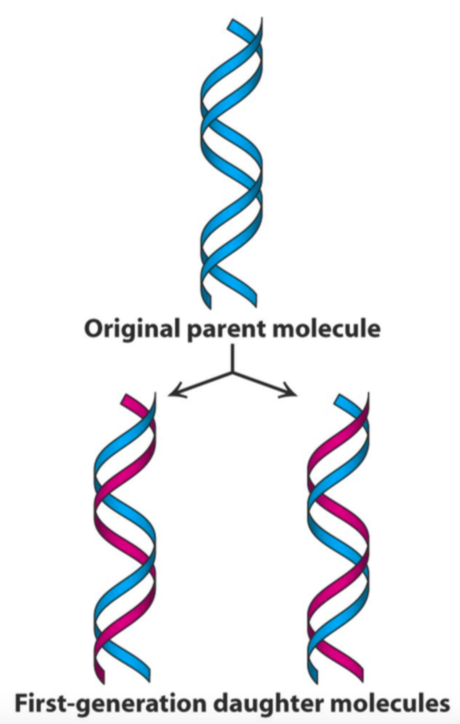
8. DNA replication enzymes cannot replicate the ends of chromosomes - 3Semi-conservedEach parental DNA strand serves as a template to make 2 new daughter strands, during DNA replication
- 4Molecular mechanism of DNA polymerase0. Must have a primer
1. dNTP pairs with complementary base on the parental DNA strand
2. 3'-end of growing primer strand nucleophilic attacks α-phosphate of incoming dNTP
3. Phosphodiester bond forms
4. PPi is released --> hydrolyzed to 2Pi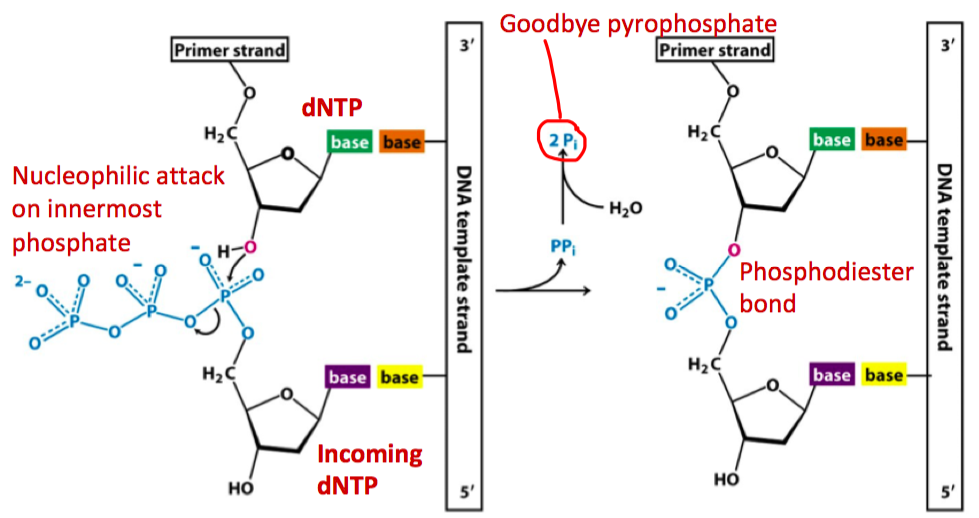
- 5~Chemistry~ that maintains DNA polymerase fidelity (accuracy)• Asp, Arg, Gln: in DNA pol active site
• Mg2+: bonds electrostatically to the minor groove of growing chain --> only correct base pairs have geometry of H-bonds
• "Lid": closes over the correct bp once it has formed
RESULT: 1 error per 10^4 -10^5 nt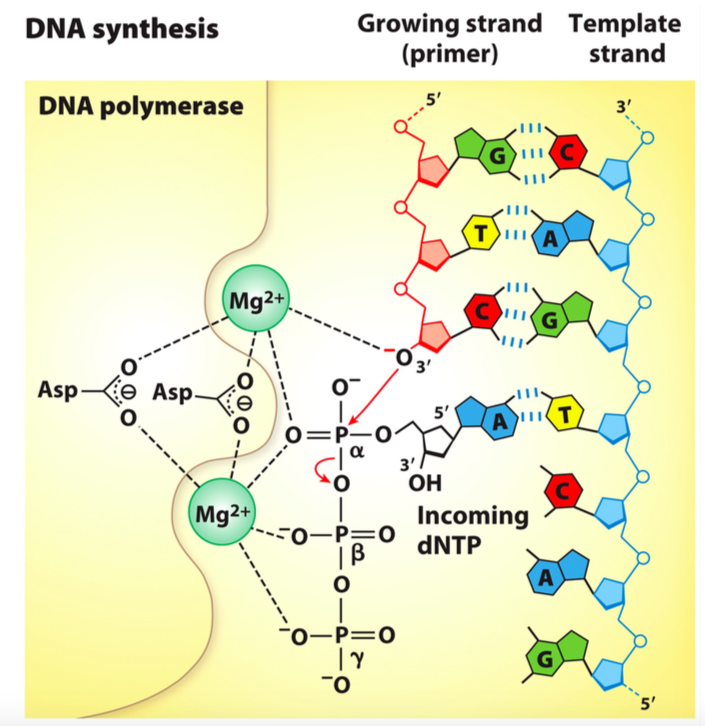
- 6~Proofreading mechanism~ that fixes DNA pol's mistakes= 3'-->5' exonuclease activity!
1. Wrong base incorporated
2. DNA pol detects mismatch
3. "Slides" backward to position the mismatched base into the 3'-->5' exonuclease site
4. Hydrolyze it off
RESULT: further reduce error rate to 1 error per 10^6 -10^8 nt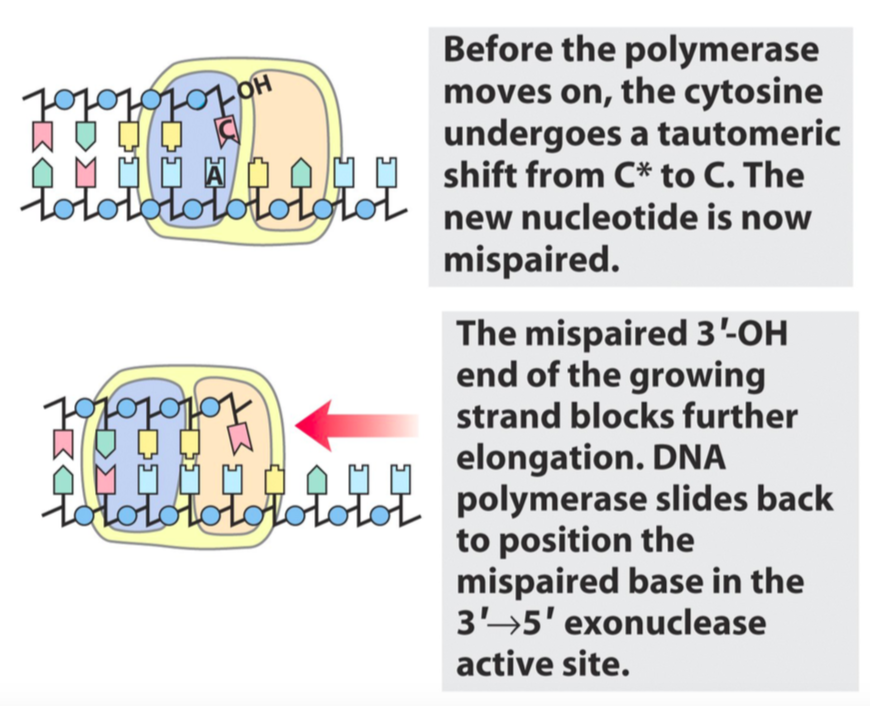
- 7~Repair mechanism~ outside of DNA pol= DNA repair enzymes! If proofreading fails.
1. Replication finished
2. Scan DNA for errors/damage
3. Repair mismatched bases
RESULT: further reduce error rate to 1 error per 10^10 nt - 8Additive effects of DNA replication fidelity mechanismsChemistry: 1 error per 10^4 -10^5 nt
3'-->5' exonuclease: 1 error per 10^6 - 10^8 nt
DNA repair enzymes: 1 error per 10^10 nt - 9oriC= specific site in E. coli DNA where replication is initiated
• 4-5 repeats, recognized by DnaA
• 3 tandem 13-mer AT-rich sites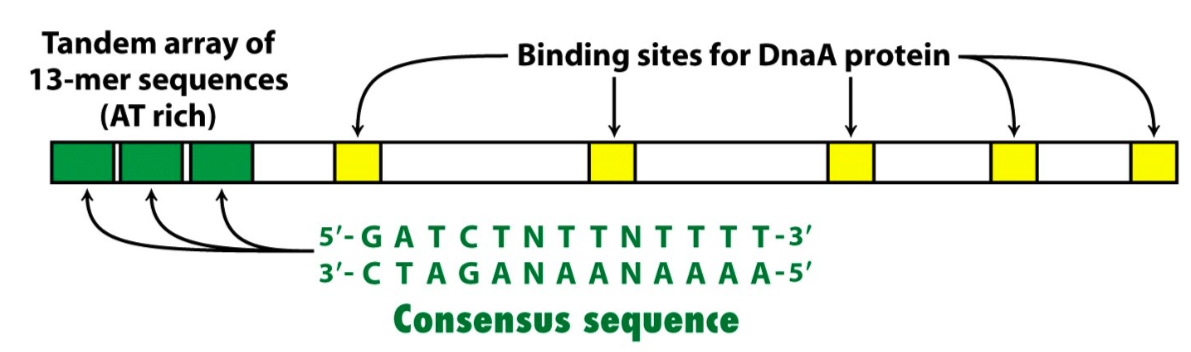
- 10Initiation of DNA replication in prokaryotes (E. coli)1. DnaA hexamer binds oriC binding site repeats
2. DNA unwinding element (DUE): Helix unwinds at AT-rich sites (weak bonds)
3. DnaC helps DnaB to bind DNA, using ATP hydrolysis!!
4. DnaB (helicase) unwinds DNA in 2 opposite directions, using ATP hydrolysis!!
5. DNA gyrase (like Top II) binds ahead of replication fork to remove supercoils, using ATP hydrolysis!!
6. ssDNA binding proteins (SBP, positively charged) prevent re-annealing of negatively-charged DNA strands
RESULT: Pre-primed complex, ready for replication.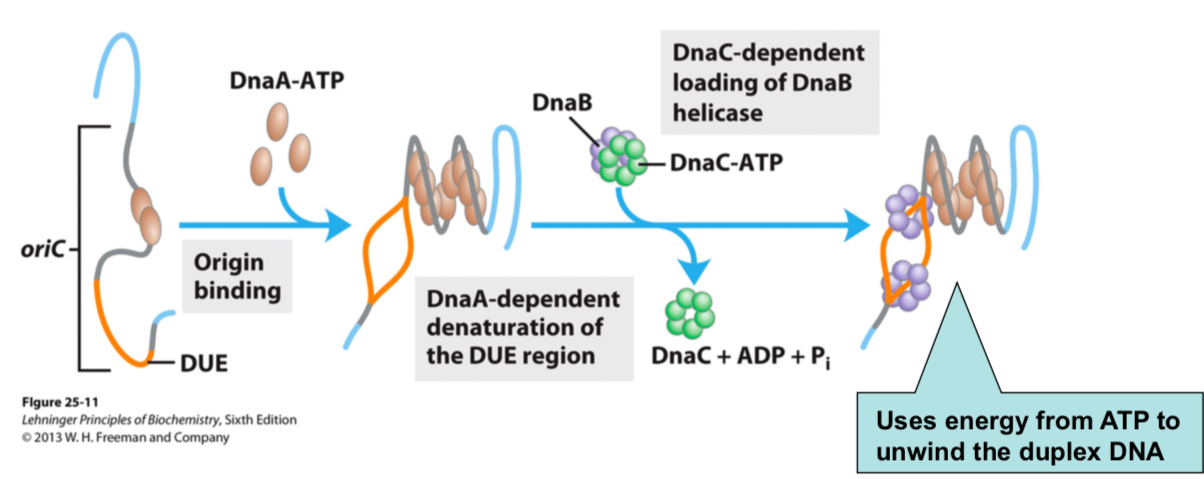
- 11DNA replication paradoxProblem: strands are antiparallel, but DNA pol only synthesizes in 5'-->3' direction
Solution: synthesize everything in direction of replication fork.
Leading strand = 3'--> 5'; continuous synthesis
Lagging strand = 5'-->3'; Okazaki fragments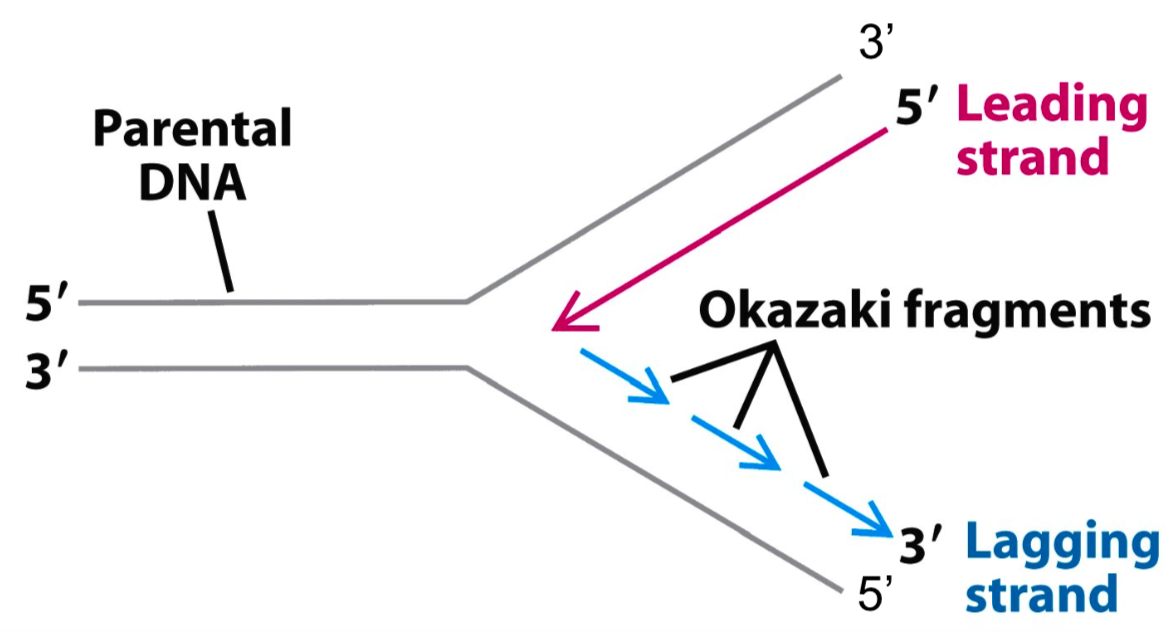
- 12Types of DNA polymerase in prokaryotes (E. coli)DNA pol I
DNA pol III - 13DNA pol I mechanism smol boiLOW PROCESSIVITY! 10nt/sec
3'-->5' exonuclease: proofreading
5'-->3' exonuclease: removes RNA/DNA fragments "in front" of it, and replace it with new nt. FUNCTION:
• Nick translation: Remove RNA primers
• Fill in gaps between Okazaki fragments
• Repair DNA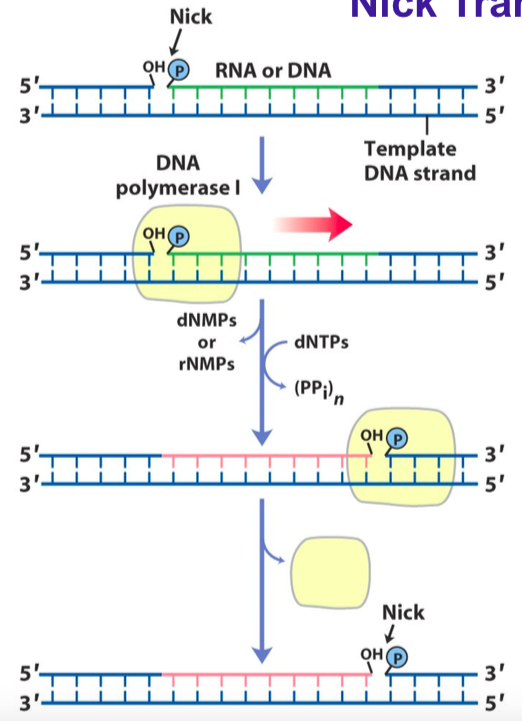
- 14DNA pol III mechanism chonk boiHIGH FIDELITY + PROCESSIVITY! (β-clamp) 1000 nt/sec
1. Clamp loading complex: "pops open" the β-clamp
2. Thread DNA through the clamp (i.e. never releases the DNA)
3. Synthesize leading strand and lagging strand simultaneously in 5'-->3' direction (by "looping" the lagging strand)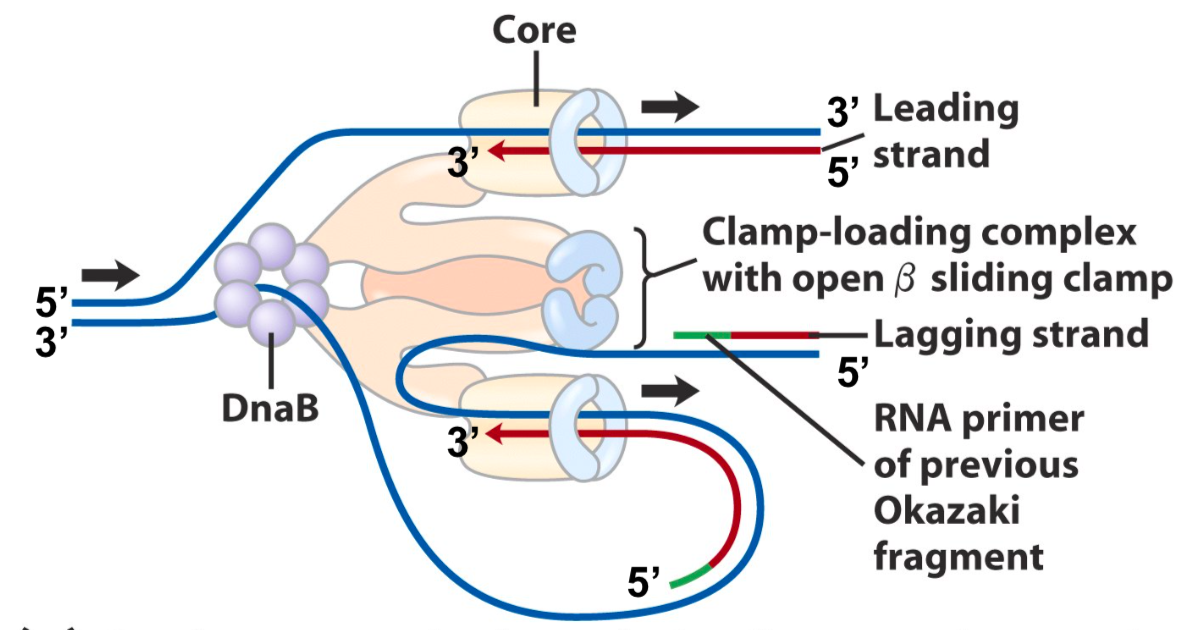
- 15Elongation in prokaryotes (E. coli)1. DnaG (primase) makes 4-5nt RNA primers for BOTH leading and lagging
2. DNA pol III replicates leading and lagging, simultaneously (by "looping" the lagging strand)
3. Every 1000 bp, DNA pol III releases lagging strand, and forms a new loop to start a new Okazaki fragment
4. DnaG always makes new RNA primer for every Okazaki fragment
5. DNA pol I fill gaps between Okazaki fragments, removes RNA primers, and replaces it with DNA
6. DNA ligase joins the ends of Okazaki fragments together, using ATP!!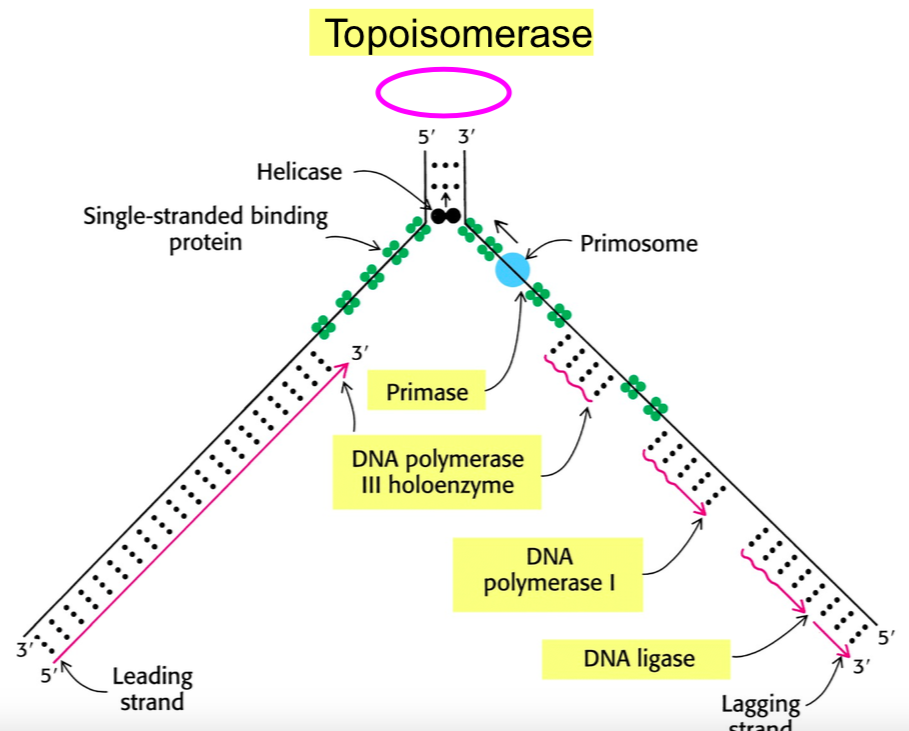
- 16Termination of DNA replication in prokaryotes (E. coli)• "ter site": contains 20bp sequences across from oriC, bound by Tus proteins
• ter-Tus complex (x2): STOPS the both replication forks, i.e. in both directions!
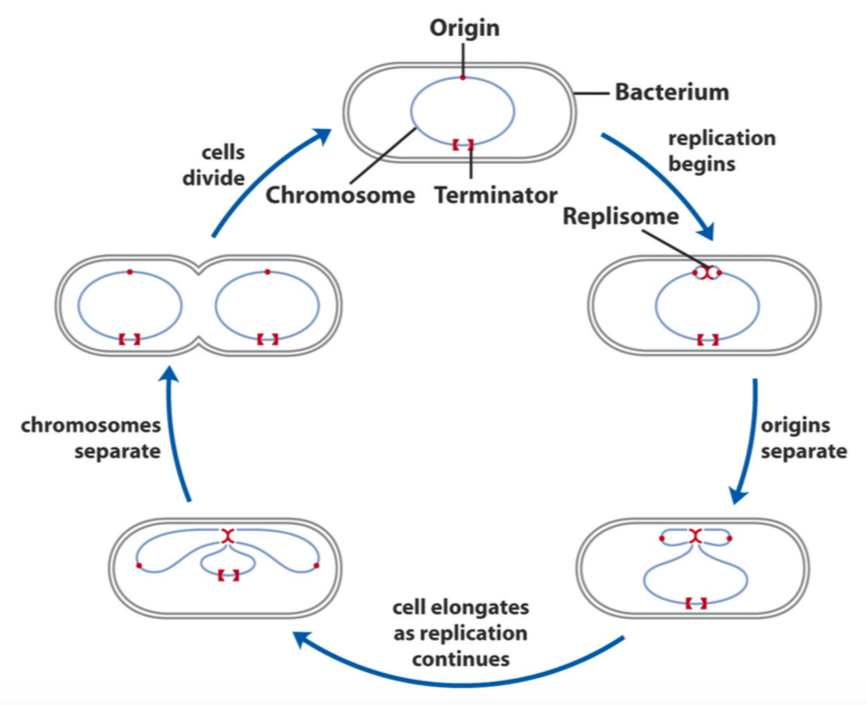
• Topoisomerase IV: both chromosomes (original and new) are catenated, so it separates them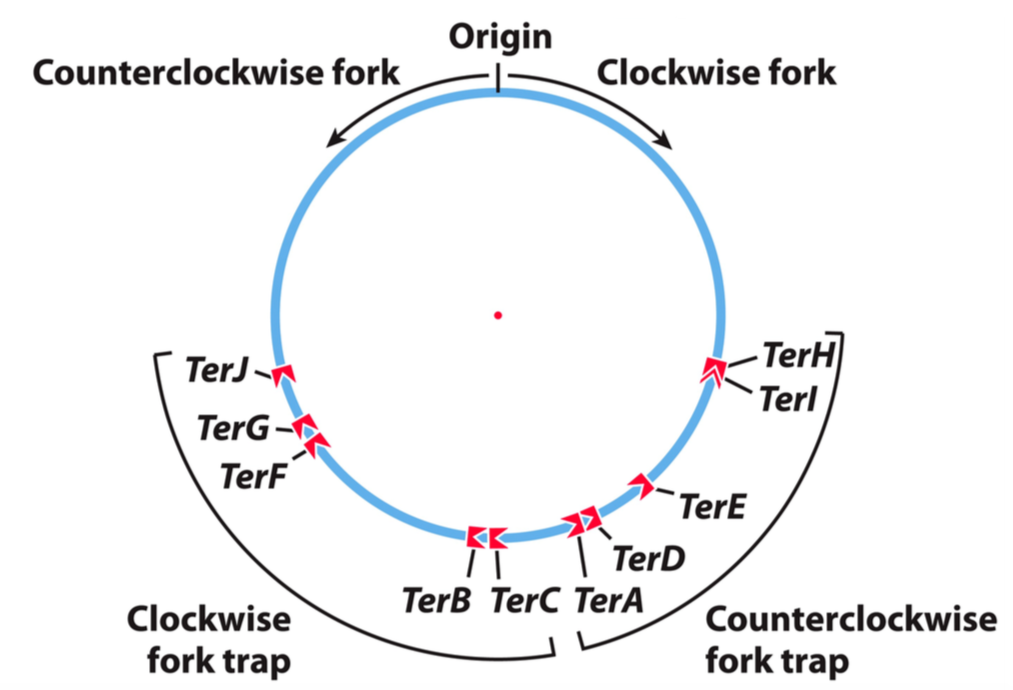
- 17When does prokaryotic DNA replication occur?At the same time as cell division
- 18Differences between prokaryotic and eukaryotic DNA replicationIn eukaryotes...
A) Complexity; more proteins/factors
B) Less studied
C) Larger genomes
D) Linear chromosomes --> telomeres!
E) Several Ori's
F) Replication movement is slower (50nt/sec rather than 1000nt/sec) due to histones and high cost of error
G) Substrate = chromatin; histone removal is rate-limiting (slow)
H) Shorter Okazaki fragments (100-200nt)
I) Primase-pol-α: makes RNA primers, low processivity like DNA Pol I
J) DNA pol δ: main polymerase, high processivity like DNA Pol III
K) RNase H and MF1: Remove RNA primers - 19RNA primer removal in eukaryotic replicationRNase: degrades DNA-RNA duplex
MF1 ("maturation factor"): 5'-->3' exonuclease - 20Structure of telomeres• "Loop" with proteins, at the ends of eukaryotic chromosomes
• Sequence with a bunch of repeats: in humans it's a bunch of AGGGTT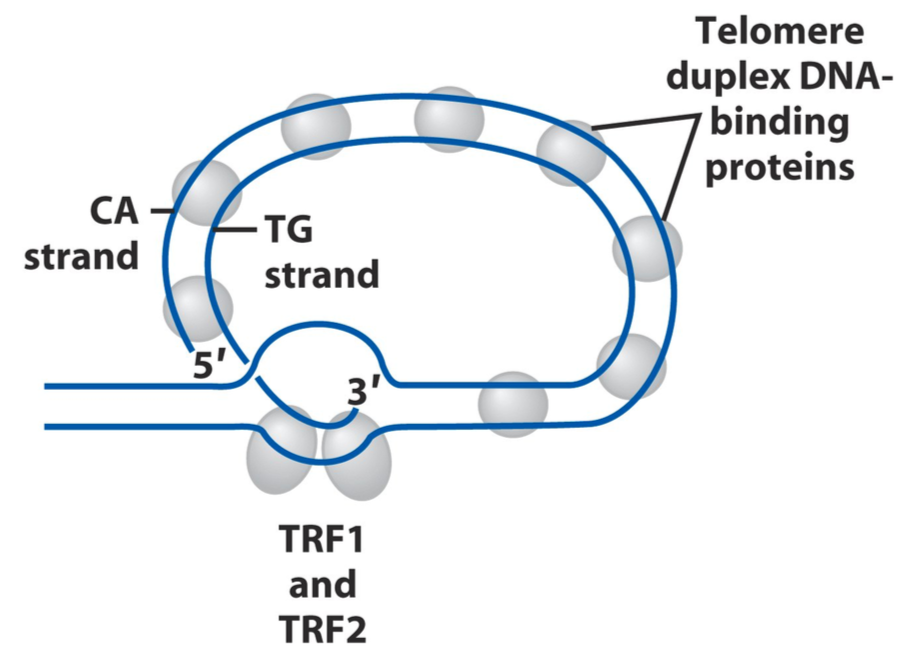
- 21Function of telomeres• Protects genome
• Lengthens the chromosome to ensure that essential parts don't get lost during replication! (if no telomeres, cannot synthesize Okazaki fragments to the very end of the chromosome)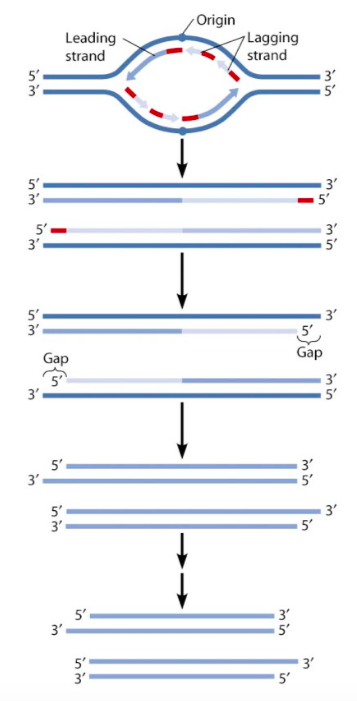
- 22Telomerase mechanism1. "RNA part" complementarily binds to telomeric repeat on chromosome (in humans: AGGGTT)
2. "Protein part" extends the telomere on 3' end
3. Telomerase translocates and repeats steps 1-2 to ensure correct length of chromosome
4. Primase-pol-α adds primer to 5' end
5. DNA pol δ synthesizes complementary strand
6. Ligase links the fragment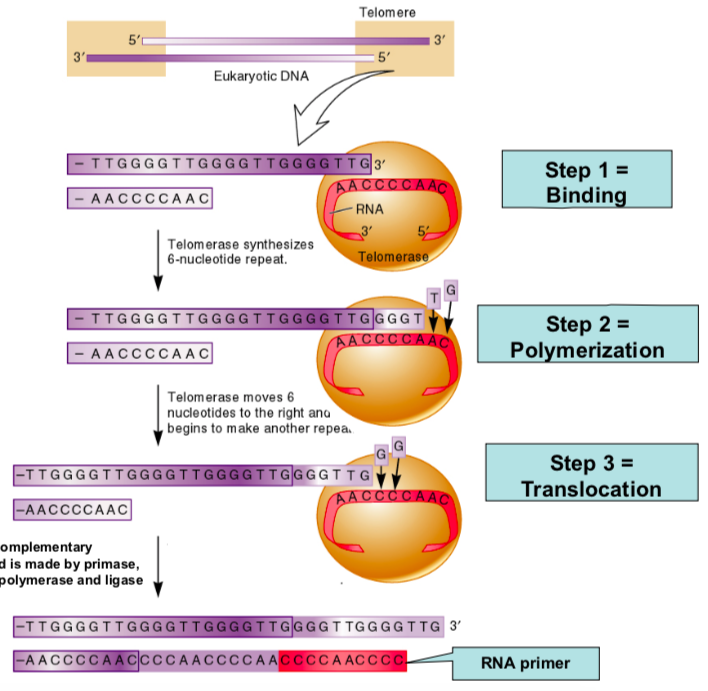
- 23What types of cells really need telomerase?• Stem cells
• Any cells that constantly need to replicate and divide
Information
- Description
- Science Flashcards on Final exam - DNA replication, created by Kristi L on 30/03/2021.
- Created by
- Kristi L
- Views
- 10
- Rating