
Mind map
The Single Transferable Vote
Map content
The Single Transferable Vote
What is it?
- Used: local, devolved, and European elections in Northern Ireland, in the Republic of Ireland and in the Senate in Australia. It is favoured by the Lib Dems and supported by the pressure group, Electoral Reform Society
- The STV is a form of proportional representation which uses preferential voting in multi-member constituencies. The country is divided into multi-member constituencies and parties may put up as many candidates in each constituency as there are seats. Voters have the opportunity of ranking all the candidates whose names appear on the ballot paper in order of preference
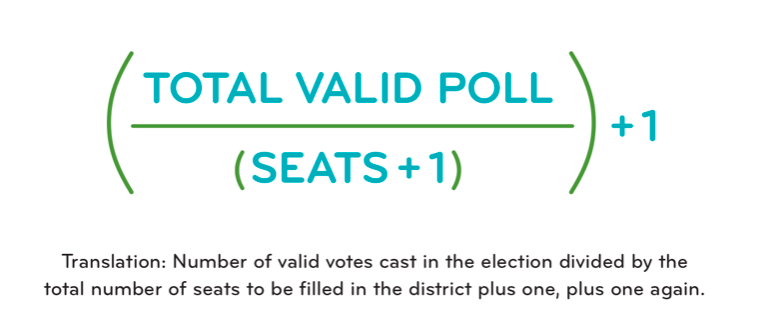
- Candidates don't need a majority of votes to be elected, just a known 'quota', or share of the votes, determined by the size of the electorate and the number of positions to be filled
- If a candidates reaches the quota on the first preferences, then the candidate is elected. If the candidate receives more first preferences than required by the quota, then the surplus votes are redistributed to that candidate's second preferences on a proportional bases. This redistribution may allow other candidates to reach the quota. If that happens and a candidate gains more votes than are needed for the quota, the second preferences are redistributed in the same way. If, however, seats still remain unfilled, the candidate with the least number of votes is eliminated and that candidate's second preferences are redistributed. This process continues until all seats are filled
- Candidates don't need a majority of votes to be elected, just a known 'quota', or share of the votes, determined by the size of the electorate and the number of positions to be filled
Advantages
- STV gives voters more choice than any other system. This in turn puts most power in the hands of the voters, rather than they party leaders, who under other systems can more easily determine who is elected. Under STV MPs' responsibilities lie more with the electorate than those above them in their party
- Fewer votes are 'wasted' (i.e. cast for losing candidates or unnecessarily cast for the winner) under STV. This means that voters can identify a representative that they personally help to elect. Such a link in turn increases a representative's accountability
- With STV and multi-member constituencies, parties have a powerful electoral incentive to present a balanced team of candidates in order to maximise the number of higher preferences that would go to their candidates. This helps the advancement of women and ethnic-minority candidates, who are often overlooked in favour of a 'safer' looking candidate
- STV offers voters a choice of representatives to approach with their concerns post-election, rather than just one, who may not be at all sympathetic to a voter's views, or may even be the cause of the concern
- Under STV, as opposed to hybrid systems such as AMS, all MPs are elected on the same basis, thus lessening the chances of there being animosity between them
- In Ireland, where STV is used, turnout in the 2011 general election was 70%
- There is no need for tactical voting
- By encouraging candidates to seek first-, as well as lower-preference votes, the efficacy of negative campaigning is greatly diminished
- When voters have the ability to rank candidates, the most disliked candidate cannot win, as they are unlikely to pick up second-, third- and lower- preference votes
- There are no safe seats under STV, meaning candidates cannot be complacent and parties must campaign everywhere, and not just in marginal seats
- Parliament is more likely to be both reflective of a nation's views and more representative to them. Parties are broad coalitions, and can be markedly split on certain key issues, such as war. With only one party person per constituency, the representatives elected may well not reflect the views of their electorate. Many voters in the UK general election of 2005 were faced with a dilemma, as they wanted to support a certain party, but did not want to support the war in Iraq. STV would have helped them express these views more clearly
Disadvantages
- In sparsely populated areas, such as the Scottish Highlands, STV could lead to massive constituencies. This was one of the reasons cited by the Arbuthnott Commission for not recommending STV for non-local elections
- The process of counting the results takes longer under STV, meaning that results cannot usually be declared on the same night as the vote took place
- A voting system that allows voters to rank candidates is prone to so-called 'Donkey voting', where voters vote for candidates in the order they appear on the ballot
- In large multi-member constituencies, ballot papers can get rather big and confusing
- STV breaks the link between an MP and his/her constituency because constituencies are multi-member
- STV produces coalitions that lack a clear mandate to govern
Images and files in the map
Information
- Description
- AS level Politics Mind Map on The Single Transferable Vote, created by Lily Duffy on 29/01/2018.
- Created by
- Lily Duffy
- Views
- 0
- Rating