
Mind map
atomic structure
Map content
atomic structure
the nuclear atom
- 92 naturally occurring elements
- atoms
- electrons
- negatively charged
- orbit around the nucleus
- nucleus
- protons
- positively charged
- atomic number
- the number of protons in the nucleus
- = the number of electrons
- Z
- the number of protons in the nucleus
- neutrons
- neutrally charged
- = mass number - atomic number
- mass number
- the number of protons plus neutrons in the nucleus of an atom
- A
- protons
- electrons
- ions
- charged particles that are formed then an atom loses or gains electrons
- anion
- negatively charged ion
- gains electrons
- cation
- positively charged ion
- loses electrons
- isotopes
- different atoms of the same element with different mass numbers
- different number of neutrons
- the same chemical properties
- but different physical properties
- like melting points
- but different physical properties
- different atoms of the same element with different mass numbers
- relative atomic mass
- the average of the masses of the isotopes in a naturally occurring sample relative to the mass of 1/12 of an atom of carbon-12
- mass specrtometer
- vaporisation
- ionization
- acceleration
- deflection
- detection
- deflection
- acceleration
- ionization
- vaporisation
electron configuration
- energy level
- shell
- increase energy as they get closer to the nucleus
- principal quantum number
- 2n^2
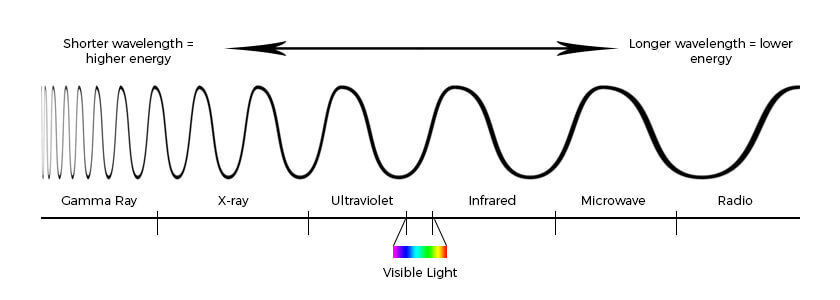
- electromagnetic spectrum
- frequency is proportional to the energy
- frequency is opposite to the wavelength
- emission spectrum
- each element has its own unique emission spectrum
- light
- line spectrum
- only certain frequencies/wavelengths of light present
- continuous spectrum
- all frequencies/wavelengths of light present
- passing an electric discharge through a gas causes an electron to be promoted to a higher energy shell
- the electron is unstable in this higher energy shell
- the electron will fall to a lower energy level
- as it returns the extra energy is given out
- energy of higher shell - energy of lower shell
- in the form of a photon of light
- this contributes to a line in the spectrum
- the different series of lines occur when electrons fall back down to different energy level
- Paschen series
- infrared
- Balmer series
- visible
- Lyman series
- ultraviolet
- Paschen series
- the different series of lines occur when electrons fall back down to different energy level
- as it returns the extra energy is given out
- the electron will fall to a lower energy level
- the electron is unstable in this higher energy shell
- convergence
- the lines in emission spectrum get closer together at higher frequency
- convergence limit
- the lines merge to forma continuum
- sub-energy levels
- each main energy level in an atom is made up of them
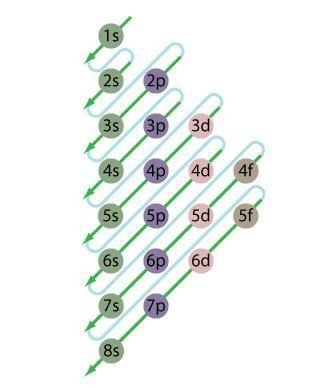
- the Aufbau principle
- electrons fill sub-levels from the lowest energy level upwards
- orbital
- s
- p
- d
- f
- d
- p
- a region of space in which there is a high probability of finding an electron
- represents a discrete energy level
- Pauli exclusion principle
- the maximum number of electrons in an orbital is two
- electrons in one orbital must have opposite spin
- Hund's rule
- electrons fill orbitals of the same energy
- so as to give the maximum number of electrons with the same spin
- electrons fill orbitals of the same energy
- EXCEPTIONS
- have only one electron in the 4s sub-level
- chromium
- copper
- s
- energy level
Images and files in the map
Information
- Description
- Chemistry Mind Map on atomic structure, created by Wik Rad on 02/05/2018.
- Created by
- Wik Rad
- Views
- 1
- Rating