
Mind map
AQA 9-1 B5 Communicable Diseases
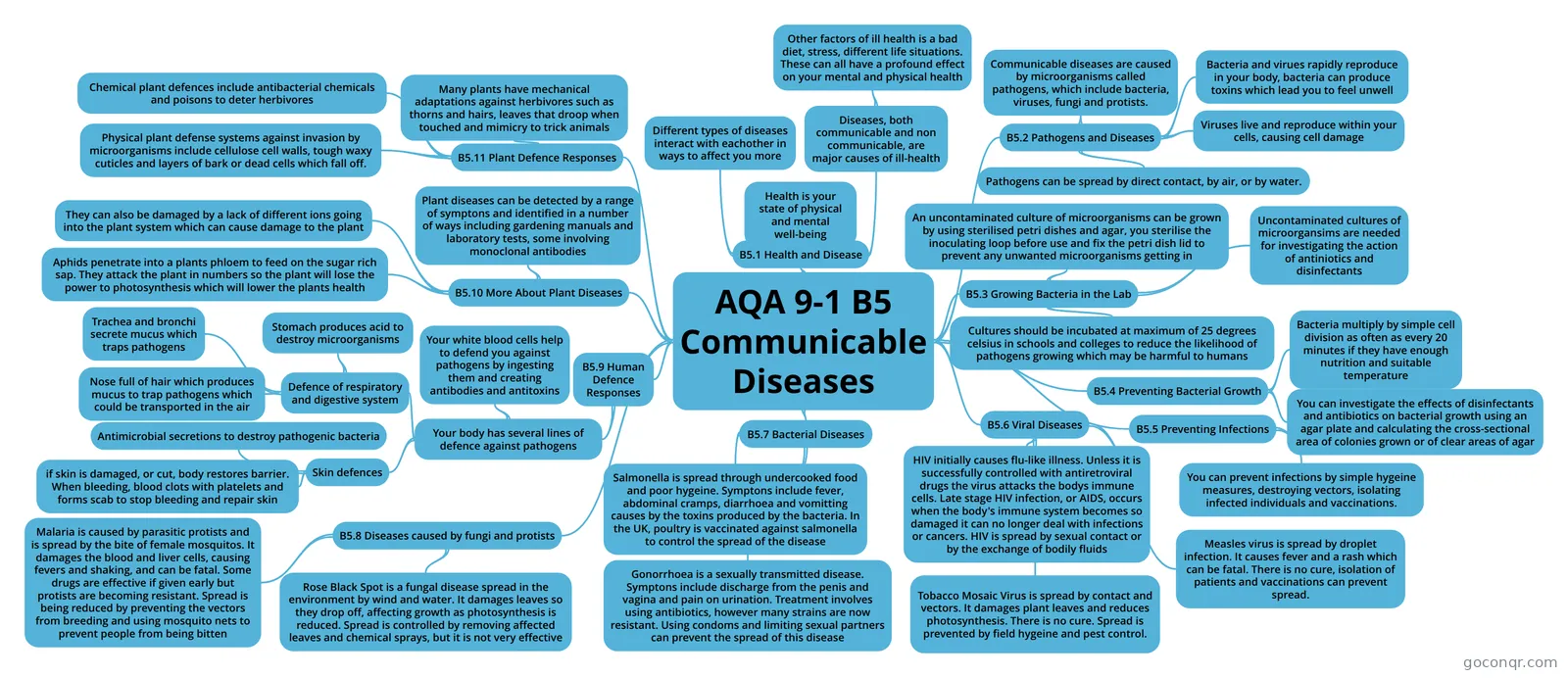
Mind map: AQA B5 communicable diseases
Map content
AQA 9-1 B5 Communicable Diseases
B5.1 Health and Disease
- Health is your state of physical and mental well-being
- Diseases, both communicable and non communicable, are major causes of ill-health
- Other factors of ill health is a bad diet, stress, different life situations. These can all have a profound effect on your mental and physical health
- Different types of diseases interact with eachother in ways to affect you more
B5.2 Pathogens and Diseases
- Communicable diseases are caused by microorganisms called pathogens, which include bacteria, viruses, fungi and protists.
- Bacteria and virues rapidly reproduce in your body, bacteria can produce toxins which lead you to feel unwell
- Viruses live and reproduce within your cells, causing cell damage
- Pathogens can be spread by direct contact, by air, or by water.
B5.3 Growing Bacteria in the Lab
- An uncontaminated culture of microorganisms can be grown by using sterilised petri dishes and agar, you sterilise the inoculating loop before use and fix the petri dish lid to prevent any unwanted microorganisms getting in
- Uncontaminated cultures of microorgansims are needed for investigating the action of antiniotics and disinfectants
- Cultures should be incubated at maximum of 25 degrees celsius in schools and colleges to reduce the likelihood of pathogens growing which may be harmful to humans
B5.4 Preventing Bacterial Growth
- Bacteria multiply by simple cell division as often as every 20 minutes if they have enough nutrition and suitable temperature
- You can investigate the effects of disinfectants and antibiotics on bacterial growth using an agar plate and calculating the cross-sectional area of colonies grown or of clear areas of agar
B5.5 Preventing Infections
- You can prevent infections by simple hygeine measures, destroying vectors, isolating infected individuals and vaccinations.
B5.6 Viral Diseases
- Measles virus is spread by droplet infection. It causes fever and a rash which can be fatal. There is no cure, isolation of patients and vaccinations can prevent spread.
- HIV initially causes flu-like illness. Unless it is successfully controlled with antiretroviral drugs the virus attacks the bodys immune cells. Late stage HIV infection, or AIDS, occurs when the body's immune system becomes so damaged it can no longer deal with infections or cancers. HIV is spread by sexual contact or by the exchange of bodily fluids
- Tobacco Mosaic Virus is spread by contact and vectors. It damages plant leaves and reduces photosynthesis. There is no cure. Spread is prevented by field hygeine and pest control.
B5.7 Bacterial Diseases
- Salmonella is spread through undercooked food and poor hygeine. Symptons include fever, abdominal cramps, diarrhoea and vomitting causes by the toxins produced by the bacteria. In the UK, poultry is vaccinated against salmonella to control the spread of the disease
- Gonorrhoea is a sexually transmitted disease. Symptons include discharge from the penis and vagina and pain on urination. Treatment involves using antibiotics, however many strains are now resistant. Using condoms and limiting sexual partners can prevent the spread of this disease
B5.8 Diseases caused by fungi and protists
- Rose Black Spot is a fungal disease spread in the environment by wind and water. It damages leaves so they drop off, affecting growth as photosynthesis is reduced. Spread is controlled by removing affected leaves and chemical sprays, but it is not very effective
- Malaria is caused by parasitic protists and is spread by the bite of female mosquitos. It damages the blood and liver cells, causing fevers and shaking, and can be fatal. Some drugs are effective if given early but protists are becoming resistant. Spread is being reduced by preventing the vectors from breeding and using mosquito nets to prevent people from being bitten
B5.9 Human Defence Responses
- Your body has several lines of defence against pathogens
- Skin defences
- if skin is damaged, or cut, body restores barrier. When bleeding, blood clots with platelets and forms scab to stop bleeding and repair skin
- Antimicrobial secretions to destroy pathogenic bacteria
- Defence of respiratory and digestive system
- Nose full of hair which produces mucus to trap pathogens which could be transported in the air
- Trachea and bronchi secrete mucus which traps pathogens
- Stomach produces acid to destroy microorganisms
- Your white blood cells help to defend you against pathogens by ingesting them and creating antibodies and antitoxins
- Skin defences
- Your body has several lines of defence against pathogens
B5.10 More About Plant Diseases
- Aphids penetrate into a plants phloem to feed on the sugar rich sap. They attack the plant in numbers so the plant will lose the power to photosynthesis which will lower the plants health
- They can also be damaged by a lack of different ions going into the plant system which can cause damage to the plant
- Plant diseases can be detected by a range of symptons and identified in a number of ways including gardening manuals and laboratory tests, some involving monoclonal antibodies
B5.11 Plant Defence Responses
- Physical plant defense systems against invasion by microorganisms include cellulose cell walls, tough waxy cuticles and layers of bark or dead cells which fall off.
- Chemical plant defences include antibacterial chemicals and poisons to deter herbivores
- Many plants have mechanical adaptations against herbivores such as thorns and hairs, leaves that droop when touched and mimicry to trick animals
Information
- Description
- Mind Map on AQA 9-1 B5 Communicable Diseases, created by joshua hopkins on 14/06/2018.
- Created by
- joshua hopkins
- Views
- 20
- Rating