
Mind map
Stroke
Map content
Stroke
Pre-Stroke
- Cardiovascular risk factors
- Medical risk factors
- Transient Ischaemic Attack
- Atrial fibrillation
- Fibromuscular dysplasia
- Prevention; prophylactic medication such as anti thrombotics and cholesterol lowering
Management DURING
- Diagnosis
- Chest X-Ray
- Neurological exam
- CT/MRI
- Cerebral angiogram
- ECG
- TTE
- History
- Onset; timing important for acute treatment
- Severity of stroke
- Comorbidities and medications
- Exclude stroke mimics
- F.A.S.T. Facial droop Arm weakness Speech problems Time
- Stroke team
- Physiotherapist
- Dietician
- Occupational therapist
- Speech thearpist
- Social worker
- Pharmacist
- Pastoral care
- Doctors and nurses
- Presentation
- Mental
- Vertigo
- Dysphasia
- Dysphagia
- Anaesthesia
- Physical
- Tinitus
- Seizures
- Headache
- Ataxia
- Mental
- Thrombolysis
- Tissue plasminogen activator
- Must be given less than 4.5hrs after onset of symptoms
- Increases odds of good outcome
- Diagnosis
Pathogenesis
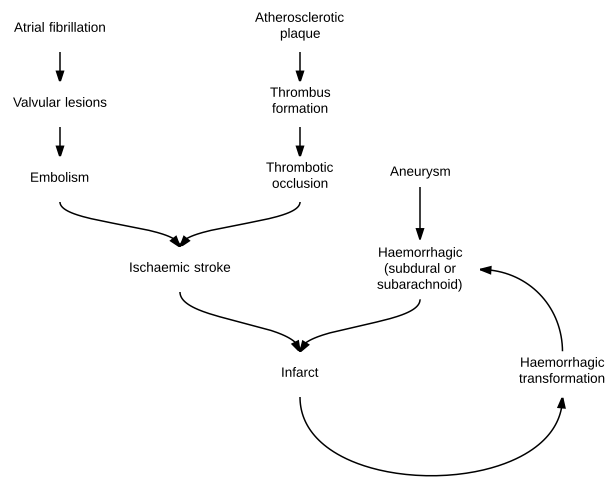
- Infarction
- Appears darker on imaging - hypodense
- Ischaemic injury
- Focal cerebral infarction
- Global injury; ischaemic encephalopathy
- Causes
- Thrombus
- Embolus
- Vasospasm
- Herniation
- Local vasculitis
- Poor perfusion without acute obstruction
- Thrombotic infarcts
- Most commonly occur in middle cerebral artery territory
- Thrombosis superimposed on atheromatous plaques in extracranial or large intracranial arteries
- Molecular events of cerebral ischaemia 1. Decreased neuronal ATP production 2. Altered ion transport (increases in intracellular Na and Ca and in extracellular K) 3. Increase in Na and water causes swelling and depolarisation of the neuron 4. Release of exocitatory neurotransmitters 5. Activation of NMDA receptors 6. Phospholipase activators cause free radicals 7. Damage to cell membrane, proteins and DNA 8. Liquefactive necrosis
- Haemorrhage
- Appears brighter on imaging - hyperdense
- Extradural
- Subdural
- Subarachnoid
- Intracerebral
- Causes raised intracranial pressure
- Infarction
Management POST
- Cholesterol lowering
- Statins
- Antithrombotics
- Antiplatelets; long term, e.g. aspirin
- Anticoagulants; e.g. warfarin
- Stroke unit care (see medical management during for list of who is involved in the stroke team)
- Cardiac investigations
- Lifestyle
- Stop smoking
- Increase regular physical activity
- Reduce excessive drinking
- Eat a healthy diet
- Blood pressure control; extremely important long term
- Stroke rehabilitation
- Cholesterol lowering
Psychosocial impact
- Individual
- Emotional
- Relationships
- Treatment
- Management
- Financial
- Reduced social participation
- Disability
- Memory
- Speech impairment
- Mobility, or lack thereof
- Vision loss
- Recovery
- Occupational therapy
- Speech therapy
- Physiotherapy
- Community support
- Stroke doesn't just affect the individual, it affects a wide circle of family, friends and health professionals.
- Carer training important
- C.A.R.E. Care. Arrange transport. Repair. Eat.
- Individual
Images and files in the map
Information
- Description
- Stroke Scenario Mind Map on Stroke, created by Hannah Wade on 12/10/2014.
- Created by
- Hannah Wade
- Views
- 121
- Rating