
Mind map
Internal Factors

Map content
Internal Factors
Organisational Structure of a McDonald's outlet.
- The organisational structure of McDonald's is centralised. It follows a top down management style. From bottom to top, the organisational structure of a franchisee is as follows: Owner, General Manager, Assistant Manager, Shift Manager, Crew Trainers, Crew Members.
- STRENGTH + WEAKNESS
- This organisational structure is a strength for McDonald's because workers are more specialised. This boosts productivity and efficiency as workers only have to focus on completing a very limited number of tasks.
- This organisational structure is a weakness for McDonald's as it may actually result in a decrease in productivity. This is because workers have less responsibility the further down on the hierarchy you go. This is because they may find their job repetitive and there is a lack of creativity and choice with this kond of organisational structure.
- STRENGTH + WEAKNESS
- The organisational structure of McDonald's is centralised. It follows a top down management style. From bottom to top, the organisational structure of a franchisee is as follows: Owner, General Manager, Assistant Manager, Shift Manager, Crew Trainers, Crew Members.
The Marketing Mix.
- Price.
- Psychological pricing, e.g. saver menu. Bundle pricing, e.g. meals.
- STRENGTH
- Overall, the pricing at McDonald's is very affordable and so it appeals to people of all income levels. As a result, ceteris paribus, the low price results in relatively high demand for products produced by McDonald's.
- STRENGTH
- Psychological pricing, e.g. saver menu. Bundle pricing, e.g. meals.
- Product.
- Burgers + sandwiches, chicken + fish, salads, snacks + sides, beverages, desserts + shakes, breakfast/all day breakfast, McCafe.
- STRENGTH + WEAKNESS
- A weakness of having a large product range is that by doing so, McDonald's run the risk of one or more products failing. This may lead to bad publicity for the rest of their product range and can potentially cause damage to the reputation of the brand.
- A wide range of products means that McDonald's have a product portfolio that appeals to a wide range of people. This means that they have covered a large area of the fast food market. As a result, they are meeting the demand of consumers in different market segments and therefore increasing their market share.
- STRENGTH + WEAKNESS
- Burgers + sandwiches, chicken + fish, salads, snacks + sides, beverages, desserts + shakes, breakfast/all day breakfast, McCafe.
- Promotion.
- Advertising, sales promotions e.g. wrap of the day + vouchers, PR, direct marketing.
- STRENGTH
- McDonald's are very strong when it comes to promotion. Not only is the their logo very recognisable on a global level, but the large number of sales promotions they have to offer is also very appealing to consumers. This is because it adds variety and incentivises consumers to try different products that they maybe wouldn't typically purchase.
- STRENGTH
- Advertising, sales promotions e.g. wrap of the day + vouchers, PR, direct marketing.
- Place.
- Restaurants, kiosks, mobile app, food delivery apps.
- STRENGTH
- McDonald's is widely available on a global level. According to the corporate page of the McDonald's website (as of January 2018), McDonald's has locations in 101 countries. More than 36,000 restaurants around the world serve 69 million people every day. With the rise of food delivery apps, such as Uber Eats, McDonald's is becoming even more widely available and therefore more convenient.
- STRENGTH
- Restaurants, kiosks, mobile app, food delivery apps.
- Physical Evidence.
- How customers are reassured e.g. buildings, staff, website, quality assurance.
- STRENGTH
- McDonald’s interiors are aesthetically pleasing and the restaurant maintains clean and hygienic interiors of its outlets. Staff wear uniform which is smart, consistent and colour coded to match the rest of the restaurant's aesthetics.
- STRENGTH
- How customers are reassured e.g. buildings, staff, website, quality assurance.
- People.
- Who are our people and what are their skill gaps?
- STRENGTH
- Approximately 97,000 people work in McDonald’s in UK and Northern Ireland. 70% of McDonald’s restaurants in the UK are owned and operated by franchisees. McDonald's invests £40million on employee training and development every year in the UK.
- STRENGTH
- Who are our people and what are their skill gaps?
- Process.
- McDonald’s undertakes a number of activities to deliver its products to customers. For example, food preparation is an important activity in the overall process.
- STRENGTH
- The food preparation at McDonald’s is completely transparent i.e. the whole process is visible to the customers. Other aspects of the process include but not limited to how customers place their orders, how long they wait for their food, and how they are treated by the customer care assistants. McDonald's also seems to perform well when addressing these aspects.
- STRENGTH
- McDonald’s undertakes a number of activities to deliver its products to customers. For example, food preparation is an important activity in the overall process.
- Productivity.
- Automation software etc.
- STRENGTH + WEAKNESS
- McDonald's restaurants are becoming increasingly automated, e.g. with the introduction of self service checkouts. This increases productivity and efficiency.
- Increased automation within the business may demotivate workers as they become uncertain of their job security. As a result, they become less productive and less efficient.
- STRENGTH + WEAKNESS
- Automation software etc.
- Price.
Business Model.
- Franchise.
- STRENGTH
- According to the corporate page of the McDonald’s website, more than 90% of their restaurants worldwide are owned and operated by independent Franchisees. Operating as a franchise is hugely advantageous to McDonald’s in a variety of ways. One way that it’s an advantage is that franchisees pay royalties and franchise fees to the franchisor, i.e. McDonald’s. This is in the form of initial franchise fees, continuing franchise fees and advertising and marketing fees. The initial franchise fee is $45,000 and this applies to all McDonald’s franchises. Continual franchise fees include a monthly rent fee based on the sales and profitability (usually between 10-18%), plus a 5% service fee for the use of the McDonald’s system. Advertising and marketing fees include a 4.5% contribution of net sales. This is all passive income for McDonald’s as the franchisors aren’t required to put in much effort; the franchisees do the majority of the work for the most part. This is a strength of McDonald’s.
- STRENGTH
- Franchise.
Motivational Techniques.
- Maslow's Hierarchy of Needs.
- STRENGTH
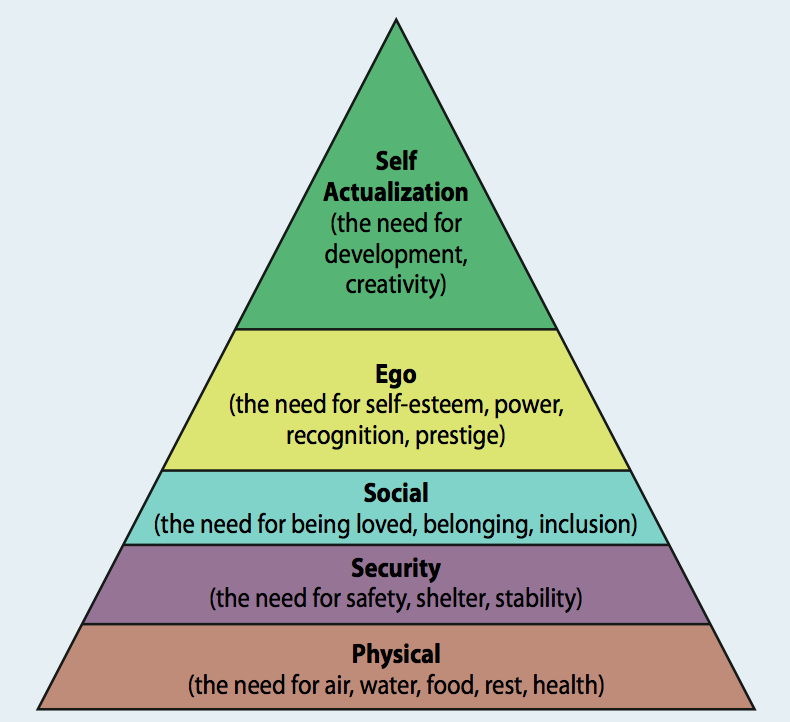
- McDonald's seem to predominantly follow Maslow's Hierarchy of Needs. Maslow believed that people had a whole set of of needs that needs that need to be fulfilled in order for them to be motivated. The needs he identified also had to be met in order of priority. Maslow's Hierarchy of Needs can be illustrated using a pyramid. The more basic needs are towards the base of the pyramid. Once people achieve these, they gradually move up, fulfilling the needs at each level. According to Maslow, as each level is satisfied, the importance of that level decreases. Motivation comes from a person's desire to satisfy each of these needs and move up to the next level. The higher up a person is on the pyramid, the more complex their needs become. By following this theory of motivation, McDonald's workers are more motivated and as a result, they are more productive and efficient.
- STRENGTH
- Maslow's Hierarchy of Needs.
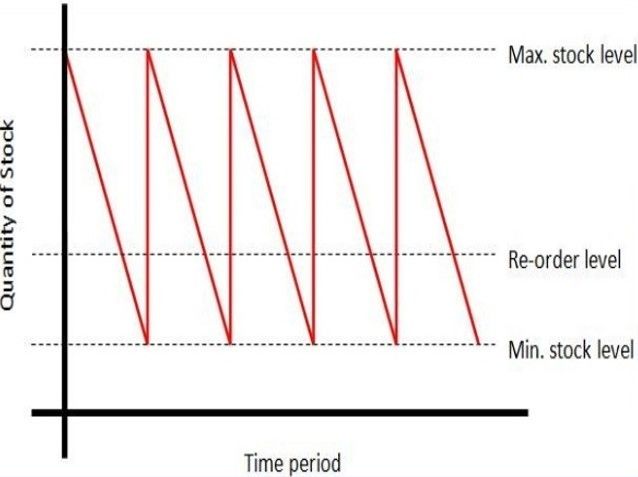
Stock Control.
- Just in Time (JIT) is an inventory management system used to manage the stock of goods within a business. It involves receiving goods from suppliers as and when they are needed, rather than having a large inventory. This is a beneficial method of production as the costs associated with storage are greatly reduced, meaning funds can be allocated to other areas of the business. Waste reduction is another benefit of JIT as it prevents goods from spoiling or being damaged whilst in storage, saving money for McDonald’s. A disadvantage of JIT is that there is a risk of running out of stock. JIT puts a huge amount of responsibility on the supplier and can be a risk to McDonald’s. If there is an issue with the supply chain, productivity can be hindered and there may be a decrease in sales. To conclude, JIT is both a strength and weakness for McDonald’s as it saves a huge amount of money for them but also carries a high level of risk.
- STRENGTH + WEAKNESS
- Holding less stock reduces costs and improves liquidity. Space that may have been occupied by stock can be utilised for production. JIT makes it easier for McDonald's to be more flexible and respond to special orders or changes in demand, for example.
- With JIT, the business depends on the supplier. If deliveries are late or the quality of the batch of supplies are poor, production will become disrupted and this can incur costs for McDonald's.
- STRENGTH + WEAKNESS
- Just in Time (JIT) is an inventory management system used to manage the stock of goods within a business. It involves receiving goods from suppliers as and when they are needed, rather than having a large inventory. This is a beneficial method of production as the costs associated with storage are greatly reduced, meaning funds can be allocated to other areas of the business. Waste reduction is another benefit of JIT as it prevents goods from spoiling or being damaged whilst in storage, saving money for McDonald’s. A disadvantage of JIT is that there is a risk of running out of stock. JIT puts a huge amount of responsibility on the supplier and can be a risk to McDonald’s. If there is an issue with the supply chain, productivity can be hindered and there may be a decrease in sales. To conclude, JIT is both a strength and weakness for McDonald’s as it saves a huge amount of money for them but also carries a high level of risk.
Images and files in the map
Information
- Description
- A2 Business Studies Mind Map on Internal Factors, created by Dylan Delaney on 22/10/2018.
- Created by
- Dylan Delaney
- Views
- 2
- Rating