
Mind map
ANIMAL DIGESTIVE SYSTEMS
Map content
ANIMAL DIGESTIVE SYSTEMS
NON - RUMINANTS
- MONOGASTRICS
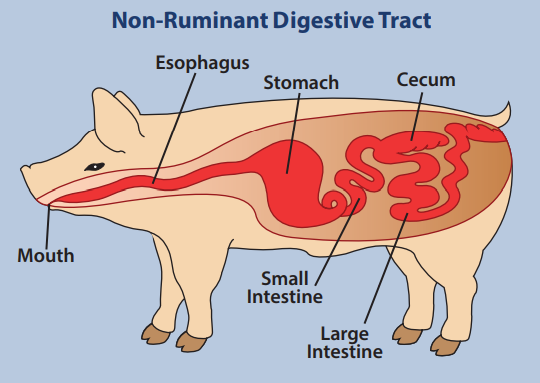
- A monogastric, or non-ruminant, digestive system is characterized by a simple, glandular stomach. Humans, pigs, and carnivores have monogastric digestive systems.
- AVIAN
- Birds are classified as having a monogastric digestive system, though there are some substantial differences when compared to other monogastric animals. Rather than lips, cheeks and teeth, birds just have a beak which they use to peck or grab and take in feed material.
- NON - RUMINANT HERVIBORES
- In contrast to monogastrics, hindgut fermenters have an enlarged hindgut (past the stomach), especially the cecum. The cecum, in all animals, is a pouch off of the large intestine where the small and large intestines meet. It contains a microbial population in most animals, and one that is significantly larger in hindgut fermenters to aid in the digestion of feed stuffs.
- MONOGASTRICS
RUMINANTS
- Ruminants have no upper incisor teeth. Instead they rely on lower incisors and an upper dental pad in conjunction with their lips and tongue to grasp food. The ruminant digestive system is characterized by a four-compartmented stomach. Cattle, sheep, and goats have ruminant digestive systems.


