
Mind map
Audience
Map content
Audience
Web 2.0
Bandura - Social Cognitive Theory
- People learn by observing and copying
Young and Rubicam
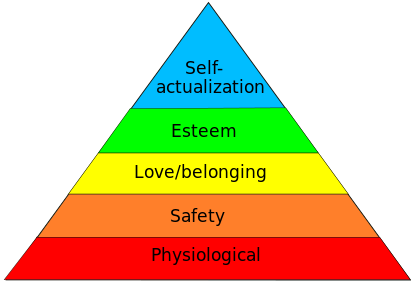
Maslow's Hierarchy of Needs
Uses and Gratifications
- Information: we want to find out about society and the world – we want to satisfy our curiosity
- Personal Identity: we may watch the television in order to look for models for our behaviour
- Integration and Social Interaction: we use the media in order to find out more about the circumstances of other people
- Entertainment: sometimes we simply use the media for enjoyment, relaxation or just to fill time
Hypodermic Needle Theory
- The media is like a needle which injects ideas, attitudes and beliefs into the audience who as a powerless mass have little choice but to be influenced
Reception Theory
- Preferred/dominant reading - The preferred reading is the reading media producers hope will take from the text
- Oppositional reading - Audience members from outside the target audience may reject the preferred reading, receiving their own alternative message
- Negotiated reading - Audiences acknowledge the preferred reading, but modify it to suit their own values and opinions
Cultivation Theory
- Long exposure over years of actions on TV makes you less sensitive to them (eg. violence)
Lull's Social Uses of TV
Anderson's Long Tail Theory
- The theory of the Long Tail is that our culture and economy is increasingly shifting away from a focus on a relatively small number of "hits" (mainstream products and markets) at the head of the demand curve and toward a huge number of niches in the tail
Moral Panics
- A moral panic occurs when a “ condition, episode, person or group of persons emerges to become defined as a threat to societal values and interests.“
- The media plays a big role in enforcing moral panic
Perkins
- There is a grain of truth in every stereotype
Life Matrix
- Tribe wired -Digital, free-spirited, creative young singles
- Fun/Atics - Aspirational, fun-seeking, active young people
- Dynamic Duos - Hard-driving, high-involvement couples
- Priority Parents - Family values, activities, media strongly dominate
- Home Soldiers - Home-centric, family-oriented, materially ambitious
- Renaissance Women - Active, caring, affluent, influential mums
- Rugged Traditionalists - Traditional male values, love of outdoors
- Struggling Singles - High aspirations, low economic status
- Settled elders - Devout, older, sedentary lifestyles
- Free Birds - Vital, active, altruistic seniors
Socio-demographics
- A = Upper middle class
- B = Middle class
- C1 = Lower middle class
- C2 = Skilled working class
- D = Working class
- E = Lowest levels of subsistenence
Images and files in the map
Information
- Description
- A2 A2 (Media) Mind Map on Audience, created by Lauren O'Kill on 24/03/2015.
- Created by
- Lauren O'Kill · Mar 2015
- Updated
- Feb 19, 2016
- Views
- 7
- Rating