
Mind map
P6- Radioactive Materials

Map content
P6- Radioactive Materials
Radioactivity
- Isotopes
- Isotopes are atoms with the same number of protons but different number of neutrons
- Usually elements only have one or two stable isotopes
- Some isotopes are radioactive the nucleus is unstable so it decays and emits radiation like carbon 14
- Radioactive elements emit ionising radiation all the time
- they are unstable and decay to become more stable
- unstable atoms decay at random
- Isotopes
Radiation
- Alpha
- high ioninsation
- low penetration
- Made up of two protons and two neutrons mass of 4 and charge 2+
- Nuclear equation
- blcked by skin paper
- Beta
- meduim ionisation
- medium penetration
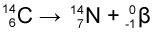
- Beta particals are identical to electrons no mass and charage -1
- During Beta decay a neutron in the nucleus turns into a proton
- Nucleaer equation
- Blcked by thin sheet of metal
- Gamma
- hight penetration
- Low ionisation
- Gamma ray is just energy it has 0 charge and 0 mass
- Blcked by thick lead or concerete
- Alpha
Nuclear Fission
- Chain Reaction
- when neutrons split the nucleus and releases more neutrons these neutrons go on to split more nuclei causing a chain reaction
- Controlling reaction
- The fuel used in the reaction is placed in fuel rods fuel rods capture and emit neutrons
- Control rods absorb some of the neutrons to slow down the reaction
- Coolant (water or oil) is used to take away the heat produced by the process
- Nuclear waste
- Low level waste
- disposed by burying it in secure landfill sites
- Intermediate level waste
- sealed in concrete blacks and then put in steel canisters for storage
- High level waste
- sealed in glass and steel and cooled for about 50 years before it is moved
- canisters for intermediate and high level wast buried underground it can be difficult to find places as they need to be geologically stabel
- Low level waste
- Nuclear fission is the process of splitting a large atom (uranium or plutonium) by fireing a slow moving neutron whith produces lots of energy and more nuetrons and nuclear waste
- Chain Reaction
Nuclear Fusion
- Electrostatic repulsion
- Nucleus in an atom is positive this makes it hard to fuse atoms together as their is a strong electrostatic repulsion between the two atoms seaperating them
- Strong Nuclear Force
- the protons in an atom is held together by the strong force which is stronger than electrostatc repulsion
- it has a short range hold atoms together at a small distance (1 x 10-15)
- High temperatures are required for fusion to take place
- Nuclear Fusion is when two nuclei can combine (fuse) together to create a larger nucleus and release a lot of energy
- Electrostatic repulsion
Rutherford
- he fired positive charged alpha particles at thin gold foil
- most of the alpha particles when straight through but some of them came back
- He discovered that the nucleus was positive otherwise the positive alpha particles wouldn't repell by the nucleus
Half Life
- Half life is the time taken for half of the radioactive nuclei now present to deacy
- When an unstable nucleus decays and emits radiation means one more radioactive nucleus isn't their to decay later
- Short half life means activity falls quickly because lots of the nuclei decay
- Long half life means the activity falls slowly because most of the nuclei don't decay for a long time
Dangers form Radiation
- Ionising radiation can break molecules into smaller bits called ions wich can cause damage to cells
- Irradiation
- Being exposed to radiation without coming into contact with the source
- Contamination
- Picking up some radioactive material eg breathing it in
Using ionising radiation
- Background radiation
- Natural radioactive elements in the air soil rocks
- Space cosmic rays form the sun
- Human activity nuclear explosions waste from nuclear power plants
- Treat cancer
- Gamma rays can kill cancer cells
- Some normal cells may be damaged causing radiation sickness
- Sterilising medical equipment
- Gamma rays kill the microbes on medical equipment
- Better than boiling plastic equipment which could damage
- Strong radioactive source that has a long half life so that it doesn't need replacing often
- Sterilising food
- Gamma rays kill microcbes keeping food fresher for longer
- the food is not radioactive so its safe to eat
- Tracers
- Radioactive molecule that is injected into people
- they can detect cancer or weather an organ is working properly
- Tracers must be gamma or Beta so radiation passes out of the body and short half life so the radioactivity inside patient disapers qucikly
- Background radiation
Images and files in the map
Information
- Description
- Science Mind Map on P6- Radioactive Materials, created by najiyahminhas on 10/06/2015.
- Created by
- najiyahminhas · Jun 2015
- Updated
- Feb 19, 2016
- Views
- 0
- Rating