
Mind map
vitamins
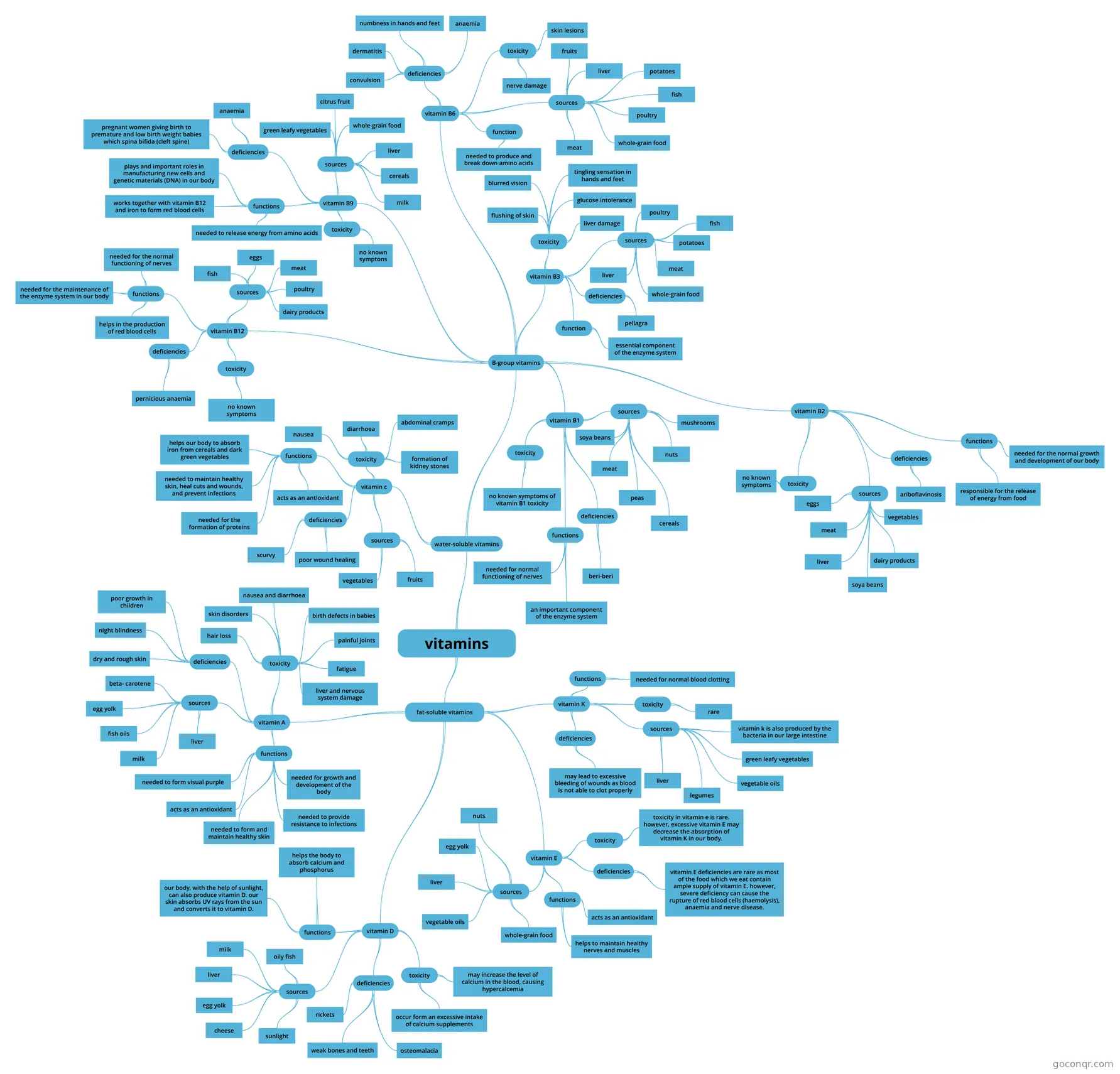
Mind map: vitamins
Map content
vitamins
fat-soluble vitamins
- dissolve in the fat tissues in our body including our liver, spleens and kidneys. can be stored in fats, does not need regular replacement. storing high levels of there vitamins in the body can lead to toxicity
- vitamin A
- Retinol
- functions
- needed to form visual purple
- a purple pigment in the retina of the eye which allows us to see in dim light
- needed to form and maintain healthy skin
- needed to provide resistance to infections
- needed for growth and development of the body
- acts as an antioxidant
- needed to form visual purple
- toxicity
- skin disorders
- liver and nervous system damage
- fatigue
- birth defects in babies
- painful joints
- nausea and diarrhoea
- hair loss
- sources
- liver
- milk
- fish oils
- egg yolk
- beta- carotene
- found in red, yellow and orange-coloured fruits and vegetables
- deficiencies
- severe deficiencies may lead to a loss of sight
- poor growth in children
- dry and rough skin
- night blindness
- vitamin D
- Cholecalciferol
- functions
- helps the body to absorb calcium and phosphorus
- needed to form strong bones and teeth
- our body, with the help of sunlight, can also produce vitamin D. our skin absorbs UV rays from the sun and converts it to vitamin D.
- helps the body to absorb calcium and phosphorus
- sources
- oily fish
- milk
- liver
- egg yolk
- cheese
- sunlight
- non-food source
- deficiencies
- rickets
- softening and weakening of the bones, leading to the bowing of legs and stunted growth in children
- weak bones and teeth
- osteomalacia
- the softening and weakening of bones in adults
- rickets
- toxicity
- occur form an excessive intake of calcium supplements
- may increase the level of calcium in the blood, causing hypercalcemia
- vitamin E
- Tocopherol
- sources
- liver
- vegetable oils
- nuts
- whole-grain food
- egg yolk
- functions
- helps to maintain healthy nerves and muscles
- acts as an antioxidant
- its protects our body from free radicals, substances which are produced by the undesirable chemical reactions in the body, which can cause cancer.
- toxicity
- toxicity in vitamin e is rare. however, excessive vitamin E may decrease the absorption of vitamin K in our body.
- deficiencies
- vitamin E deficiencies are rare as most of the food which we eat contain ample supply of vitamin E. however, severe deficiency can cause the rupture of red blood cells (haemolysis), anaemia and nerve disease.
- vitamin K
- deficiencies
- may lead to excessive bleeding of wounds as blood is not able to clot properly
- functions
- needed for normal blood clotting
- toxicity
- rare
- sources
- liver
- legumes
- vegetable oils
- green leafy vegetables
- such as spinach and broccoli
- vitamin k is also produced by the bacteria in our large intestine
- deficiencies
water-soluble vitamins
- dissolve in water. water-soluble vitamins which are not used immediately are excreted from our body through urine. need to replenished frequently as they cannot be stored in the body. thus, toxicity of water-soluble vitamins is rare.
- vitamin c
- Ascorbic acid
- sources
- vegetables
- such as cauliflower, cabbage and spinach
- fruits
- such as citrus fruit, guava, honeydew and watermelon
- vegetables
- deficiencies
- poor wound healing
- scurvy
- a condition characterised by dry and scaly skin, swollen and bleeding gums, mild bruises and painful joints
- functions
- acts as an antioxidant
- needed for the formation of proteins
- such as collagen which gives structure to bones, muscles and blood vessels.
- needed to maintain healthy skin, heal cuts and wounds, and prevent infections
- helps our body to absorb iron from cereals and dark green vegetables
- toxicity
- the consumption of more then 2 grams of vitamin C
- diarrhoea
- nausea
- formation of kidney stones
- abdominal cramps
- B-group vitamins
- vitamin B1
- Thiamin
- toxicity
- no known symptoms of vitamin B1 toxicity
- functions
- needed for normal functioning of nerves
- an important component of the enzyme system
- helps our body to break down food into energy
- sources
- meat
- cereals
- peas
- soya beans
- mushrooms
- nuts
- deficiencies
- beri-beri
- a condition which the limbs become weak, the heart enlarges and the swelling of the legs occur
- beri-beri
- vitamin B3
- deficiencies
- pellagra
- a disease which is characterised by scaly sores, diarrhoea and most often, loss of memory
- pellagra
- toxicity
- occurs in people who takes high doses of supplements
- glucose intolerance
- blurred vision
- liver damage
- flushing of skin
- tingling sensation in hands and feet
- function
- essential component of the enzyme system
- which is involved in the release of energy from carbohydrates and fats
- essential component of the enzyme system
- sources
- potatoes
- poultry
- fish
- meat
- liver
- whole-grain food
- deficiencies
- vitamin B2
- Riboflavin
- toxicity
- no known symptoms
- deficiencies
- ariboflavinosis
- a condition which is characterised by the inflammation of the tongue, dry scaly lips, red patches on the skin and eyes, nerve disorder
- ariboflavinosis
- functions
- responsible for the release of energy from food
- needed for the normal growth and development of our body
- sources
- eggs
- meat
- liver
- soya beans
- vegetables
- such as spinach and lettuce
- dairy products
- vitamin B12
- Cobalamin
- toxicity
- no known symptoms
- sources
- dairy products
- poultry
- meat
- eggs
- fish
- functions
- helps in the production of red blood cells
- needed for the maintenance of the enzyme system in our body
- needed for the normal functioning of nerves
- deficiencies
- vitamin B12 cannot be found in plants. therefore, vegetarians and vegans need to tae B12 supplements.
- pernicious anaemia
- which can lead to degeneration of the nerves, paralysis and even death
- vitamin B6
- Pyridoxine
- function
- needed to produce and break down amino acids
- which helps to support growth and maintenance of body cells and tissues
- needed to produce and break down amino acids
- sources
- fish
- whole-grain food
- meat
- potatoes
- liver
- fruits
- such as banana and watermelon
- poultry
- deficiencies
- dermatitis
- numbness in hands and feet
- anaemia
- convulsion
- toxicity
- occurs in people who take high doses in supplements
- nerve damage
- skin lesions
- vitamin B9
- Folate/ folic acid
- toxicity
- no known symptons
- sources
- milk
- cereals
- liver
- whole-grain food
- citrus fruit
- such as oranges
- green leafy vegetables
- such as spinach and broccoli
- deficiencies
- anaemia
- pregnant women giving birth to premature and low birth weight babies which spina bifida (cleft spine)
- spina bifida: a birth defect where there is an incomplete closure in the spine column
- functions
- plays and important roles in manufacturing new cells and genetic materials (DNA) in our body
- works together with vitamin B12 and iron to form red blood cells
- needed to release energy from amino acids
- vitamin B1
Information
- Description
- Year 4 food and nutrition Mind Map on vitamins, created by Ellen KA on 21/05/2021.
- Created by
- Ellen KA
- Views
- 3
- Rating