
Mind map
Calicivirus
Map content
Calicivirus
Replication
- 1. Virus attachment to plasma membrane
- FCV dual receptors
- Sialic acid
- Junctional Adhesion Molecule-1
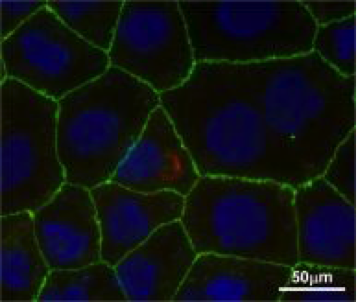
- Epithelial cell structure stained for junction proteins
- FCV dual receptors
- 2. Entry to cytoplasm/nucleus
- Receptor binding causes virus to change shape
- Becomes more hydrophobic
- Clathirin assembled
- Endosomal acidification important
- Normally meets URT first
- Receptor binding causes virus to change shape
- 3. Un-coating of virus particle
- 4. Synthesis of mRNA and protein
- Genome is +ve sense RNA, v similar to FMD
- Has 3 open reading frames
- ORF1 codes for a polyprotein
- Cleaved to form helicase, protease and RNA polymerase
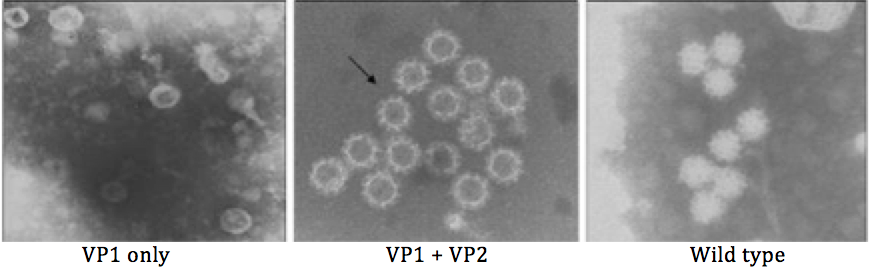
- Capsid proteins VP1 and VP2 from ORF 2 and 3 made from short +mRNA
- ORF1 codes for a polyprotein
- Makes more copies of RNA before copying structural genes
- 5. Replication of nucleic acid
- Genome replication via RNA intermediate
- 6. Virus assembly
- Calicivirus self assembles in cytoplasm
- 7. Exit of virus from cell
- Cell lysis and virus release
- FCV rapidly cytotoxic in cell culture
- 24hrs extensive lysis of epithelial cells
- 1. Virus attachment to plasma membrane
Feline calicivirus
- Polymorphisms
- Evolves by mutation and recombination
- Calicivirus polymerases do not proof read
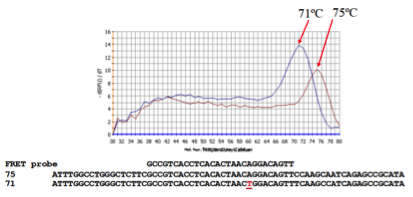
- Different isolates have many sequence variations
- High rate of mistakes
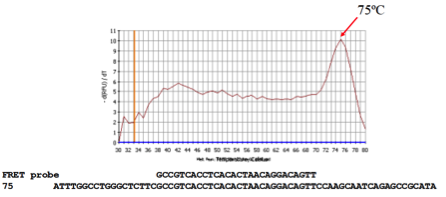
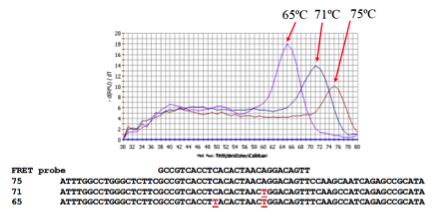
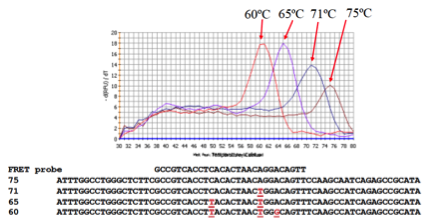
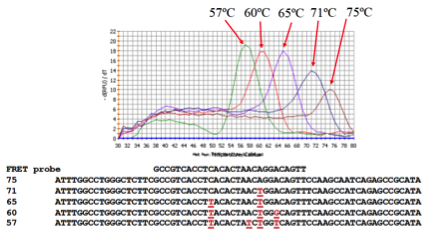
- FRET = fluorescence resonance energy transfer
- Peak is due to H bond melting
- Flash of light produced
- Not all mutations matter
- Neutral
- Truncated protein
- Warping effect
- Mutation hot spots
- Build up of aa substitutions on non-critical surface loops
- No structure importance, so can build up
- Can affect antibody binding
- This is how persistent and chronic infections occur
- Dodges immune response
- Antigenic drift seen in cats with persistent infection
- Evision of antibodies drives virus variation
- Pseudospecies
- Evision of antibodies drives virus variation
- Build up of aa substitutions on non-critical surface loops
- Vaccination
- Several monotypic vaccines available
- Broadly cross protective IgG antibody
- Live attenuated IM not suitable for pregnant cats
- May be pathogenic by mucosal route
- Inactivated vaccine is safe for gravid cats
- Grow in cell culture
- Not well adapted to living in cat
- Is thus a 'weaker' strain
- Useful for stimulating am immune response
- Not well adapted to living in cat
- Live temperature attenuated intranasal vaccine
- Demonstrates virus interference rapidly protective
- Grow strain at low temp
- Does well to stimulate immunity at tip of nose
- Point of entry of disease
- Without entry to lungs and more serious clinical disease
- Demonstrates virus interference rapidly protective
- 40% of feline upper respiratory infections
- Aerosol
- JAM-1 - infection of respiratory epithelial cells
- Released virus spreads locally
- Also viraemic spread
- Released virus spreads locally
- 'Holes' seen on top of tongue
- Rapidly cytotoxic loss of epithelial function
- Pathology
- Local inflammation
- Cytokine and interferon release
- Causes fever, sickness behaviours, depression, loss of appetite
- Cytokine and interferon release
- Increased secretions
- Start as serous, become mucous
- Sensitisation of local nerves
- Local inflammation
- Clinical signs
- Salivation
- Lacrimation
- Sneezing
- Clinical disease rare in adults
- More severe disease in v young kittens
- Pulmonary lesions, oedema, pneumonia (due to deeper pulmonary lesions), joint infection (this can be quite common – presents as a reluctance to move)
- Diagnosis
- Virus isolation
- PCR
- Viaemic Systemic Disease
- Outbreaks in adult vaccinated cats
- Clinical signs
- Severe respiratory symptoms
- Persistent fever
- Severe systemic inflammatory response
- Cutaneous oedema
- Ulceration
- Pancreatitis
- Hepatic necrosis
- Multi-organ failure
- DIC and haemorrhage
- Often a terminal event
- No more clotting
- Often a terminal event
- 70% mortality
- Polymorphisms
Rabbit haemorrhage disease virus
- High morbidity and mortality in rabbits > 2 months old
- Does not affect neonates
- Affects monocyte macrophages
- Clinical signs
- Severe lesions in lungs, spleen, lymphoid tissue, kidney and liver
- Within 36 hrs of infection
- Hepatocytes and macrophages lining ducts
- Fever, lethargy, pulmonary oedema, hepatic and vascular necrosis
- Haemorrhgaes and DIC
- 'Nutmeg' liver on EM
- Severe lesions in lungs, spleen, lymphoid tissue, kidney and liver
- Highly contagious
- Spread in faeces and resp secretions
- Passive transmission by insects
- Mechanical
- Not been grown in cell culture
- RHDV receptor
- Complex carbohydrates on histological/blood group antigens
- Hence different rabbit susceptibility
- Different blood group, different susceptibility
- Depends on antigen type and strain
- Hence different rabbit susceptibility
- Complex carbohydrates on histological/blood group antigens
- Used for bio-control of rabbits in Australia and New Zealand
- Only known to affect European rabbits and European hare
- Not American rabbits
- Less virulent strains in Europe may be providing some immunity in wild rabbits
- Passive protection transferred by neutralizing serum antibody
- Vaccine
- Inactivated virus from rabbit tissue
- Dual myxomatosis/RHVP60 recombinant pox virus protects against both diseases
- RHDV (b)
- New variant originating in France
- No cross protection with vaccines based on (a)
- Has been reported in UK wild and domestic rabbits
- High morbidity and mortality in rabbits > 2 months old
Characteristics
- Genome
- +ve sense RNA
- Structure
- Non enveloped icosahedron
- Capsomers arranged in rings on the faces
- 32 characteristic cup depressions
- Genome
Images and files in the map
Information
- Description
- BVSc3 AD2 (Viruses) Mind Map on Calicivirus, created by Jess Pope on 21/12/2016.
- Created by
- Jess Pope
- Views
- 0
- Rating