Notes
ELASTICITY
Content of the notes (4)
Page 1
PRICE ELASTICITY OF DEMAND- PeD
Formula: % Change in Qty demanded / % Change in price
Measures the responsiveness of demand for a product following a change in its own price
ALWAYS NEGATIVE
PeD= 0= Perfectly inelastic, meaning demand will not change at all when the price changes
PeD= between 0 and 1= Inelastic, meaning the change in demand is less than proportionate to the change in price
PeD= 1= Unit elastic, meaning the change in demand is the same as the change in price
PeD= >1= Elastic, meaning demand responds more than proportionately to a change in price
Where the change in demand > change in price, demand = elastic
Where the change in demand < change in price, demand = inelastic
Determinants of PeD-
The number of close substitutes for a good/ uniqueness - the more substitutes, the more elastic because consumers can easily switch their demand
Cost of switching - the more costs there is the more relatively inelastic demand is
The degree of necessity or whether it is a luxury - necessities are more inelastic whereas luxuries are elastic
The % of income allocated on spending on the good
The time period allowed following a price change - the longer consumers are given the more demand is price elastic
Whether the good is subject to habitual consumption - consumers become much less price sensitive e.g. addictive cigarettes
Peak and off-peak demand- demand is price inelastic at peak times
Page 2
PRICE ELASTICITY OF SUPPLY- PeS
Formula: % Change in Qty supplied / % Change in price
Measures the relationship between change in quantity supplied and a change in price
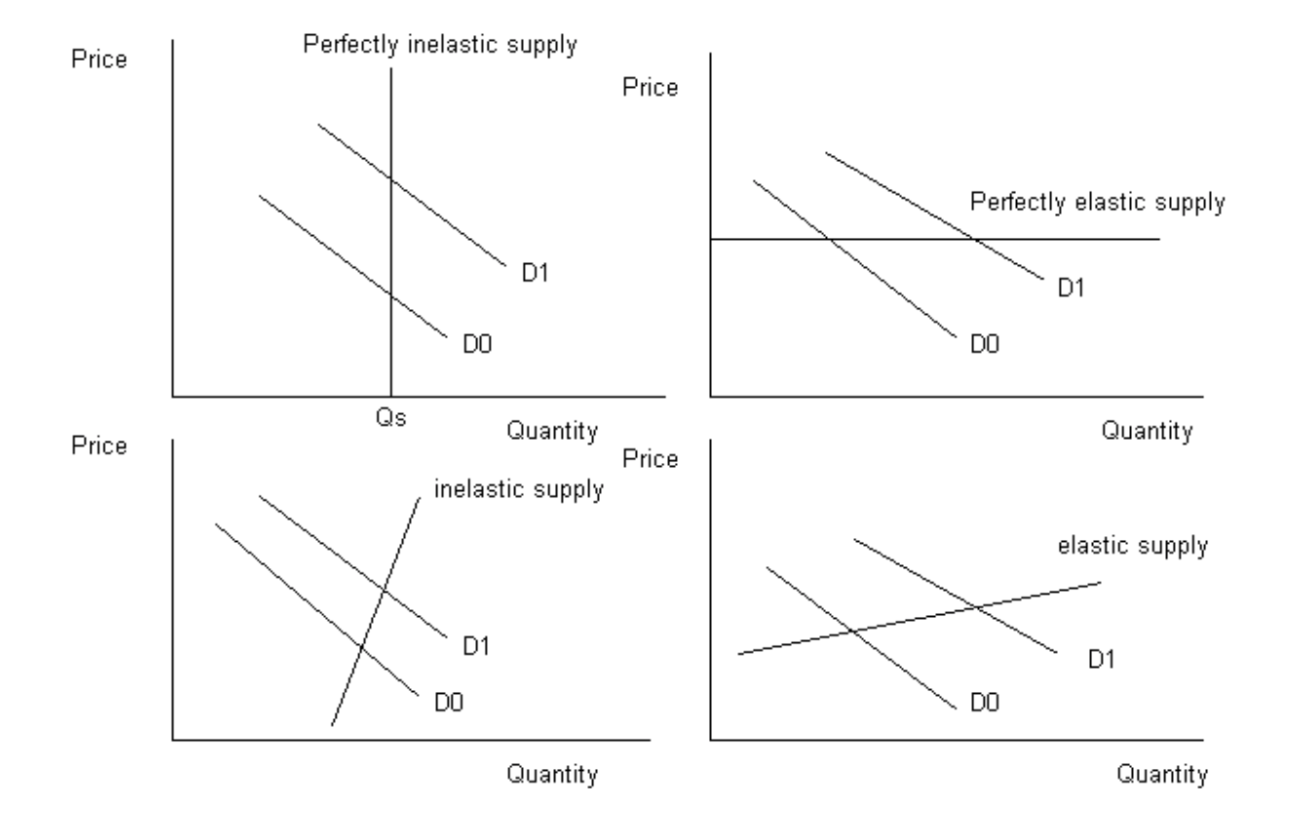
The value of elasticity of supply is positive, because an increase in price is likely to increase the quantity supplied to the market
Determinants-
Spare capacity - if there is plenty, output should be able to quickly increase and therefore is elastic
Stocks - If stocks are high firms will be able to respond to changes in demand quickly and therefore is elastic
Ease of factor substitution - How easily you can respond to sudden changes in demand (E.G. sudden increase in demand for petrol canisters during the recent fuel shortage), if capital and labour is occupationally mobile then YeS is likely to be higher
Time period - Supply is likely to be more elastic, the longer the time period a firm has to adjust its production
Page 3
CROSS PRICE ELASTICITY OF DEMAND (XPed)
Formula: % Change in Qty demanded (Good A) / % Change in Price (Good B)
Measures the responsiveness of good A following a change in price B
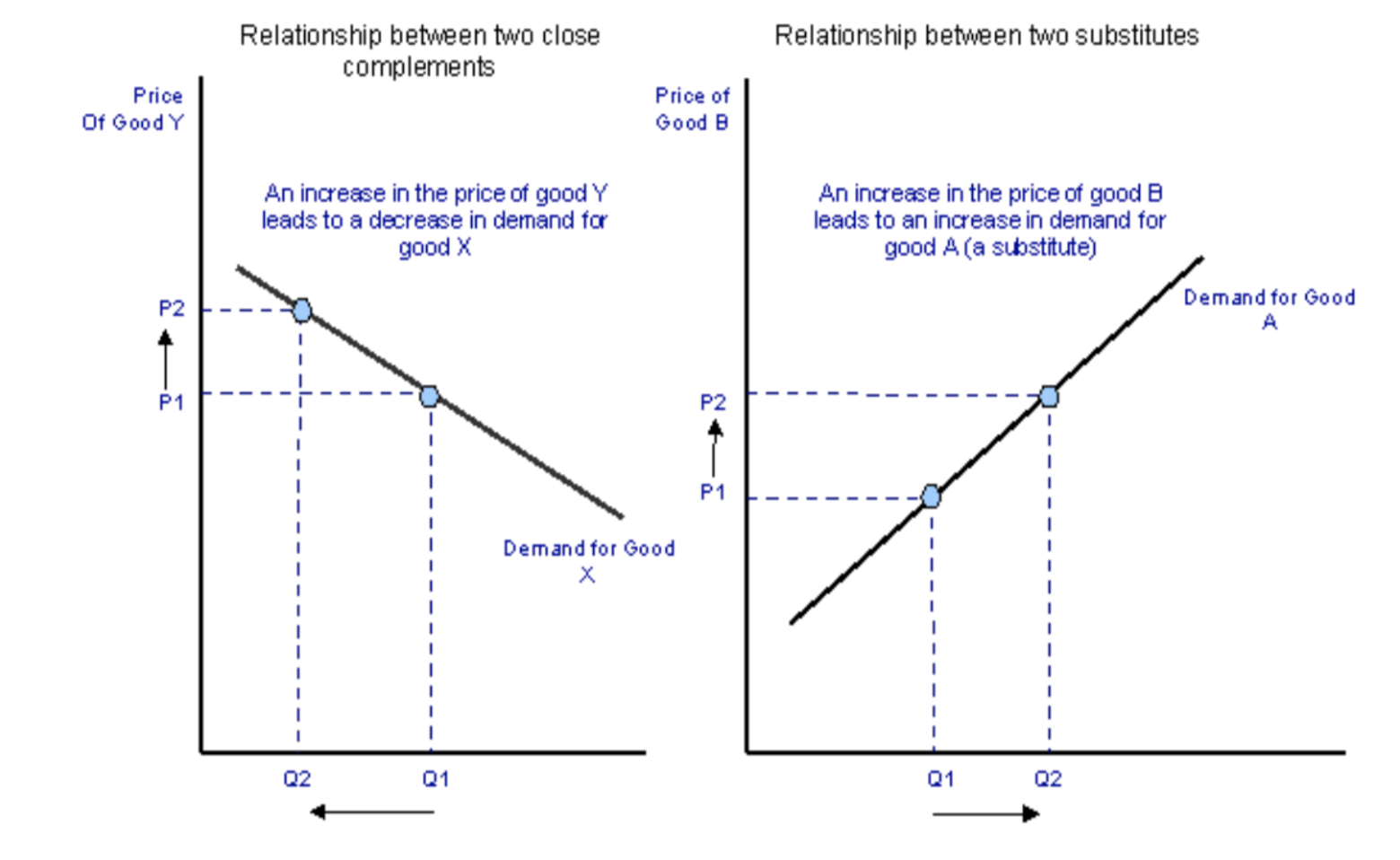
The stronger the relationship between two products, the higher the co-efficient of cross-price elasticity of demand- close substitutes or compliments will have a high cross-price elasticity. Products with no relations have a zero cross elasticity
Goods which are complements will have a negative XPed sign
Goods which are substitutes will have a positive XPed sign
Businesses use of XPed-
Pricing strategies for substitutes- If a competitor changes its price firms need to consider how many consumers will switch? will they have the capacity to meet a rise in demand? Will the other firm match a price rise? EXAMPLE- Historically this occurred with the rapid expansion of low-cost airlines
Pricing strategies for complementary goods- A discount on one good will see a rise in demand for its complement which is likely to compensate to the lower cost of good A, therefore not lowering profit.
Advertising and Marketing- customer loyalty and habitual purchases will decrease the XPed of rival goods and therefore reduces the size of the substitution effect.
Page 4
INCOME ELASTICITY OF DEMAND - YeD
Formula: % Change in Qty demanded (good X) / % Change in real income
Measures the responsiveness of quantity demanded to a change in income
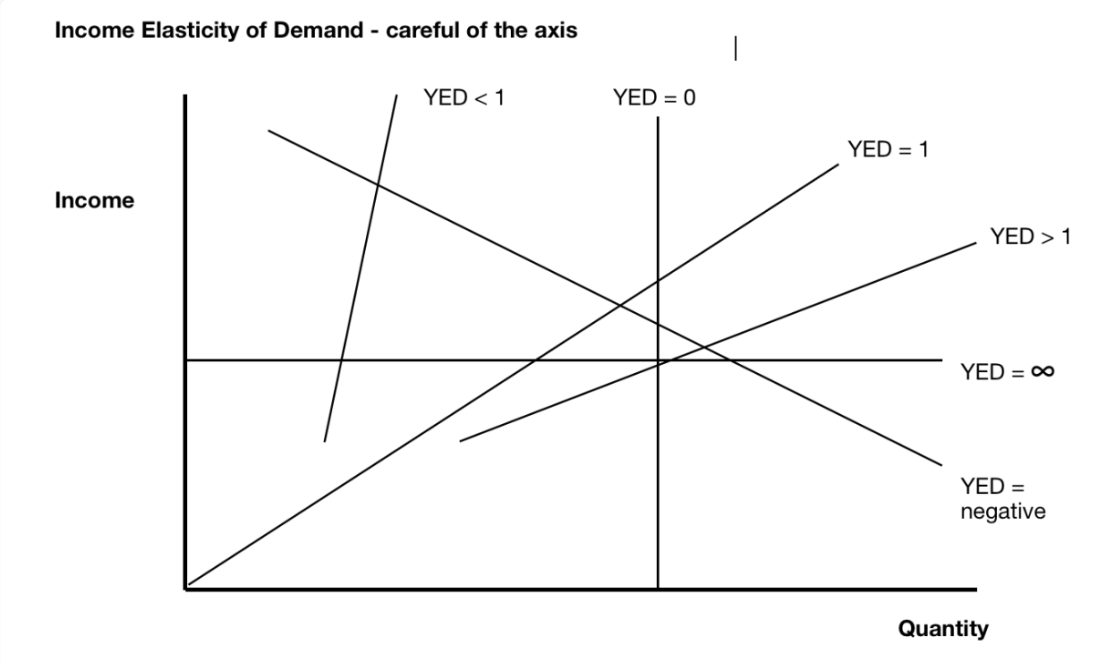
Normal goods - positive YeD meaning as income rises more is demanded
Necessities - YeD= between 0 and +1 meaning demand rises with income, but less than proportionately because we have a limited need to consume additionally quantities of necessary goods; we would buy it even if our income didn't rise. E.G. Vegetables, utilities, sanitation products (income inelastic)
Luxuries - YeD= > +1 meaning demand rises more than proportionate to a change in income. Also known as "positional goods"- products which are consumed to derive satisfaction from being seen as a customer. E.G.- Designer clothes, private education, private healthcare (income elasticity)
Inferior goods - Negative YeD meaning demand falls as income rises. This is often because consumers switch to preferred more expensive alternatives, during a recession inferior products may grow. e.g. own brand soap, tinned meat, bus travel (Negative elasticity)