
Notes
Blood
Content of the notes (1)
Page 1
Functions of the Blood
The blood transports dissolved gases, nutrients, hormones and metabolic waste.
It regulates the pH and electrolyte composition of interstitial fluids throughout the body.
It restricts fluid loss
It defends against toxins and pathogens
It stabilizes the body temperature
Compostion
The blood volume is ~5L
3L Plasma:
water
Ions
Trace elements and vitamins
Gases: O2 + CO2
Organic molecules:
Amino acids
Proteins: albumins synthesized by the liver (osmotic pressure and transport hormones) Globulins (ion transport and immune system) and Fibrinogen (coagulation)
Glucose
Lipids
Nitrogenous waste
2L Blood Cells
Red Blood Cells
White Blood Cells: lymphocytes, monocytes, neutrophils, Eosinophils, basophils.
Platelets
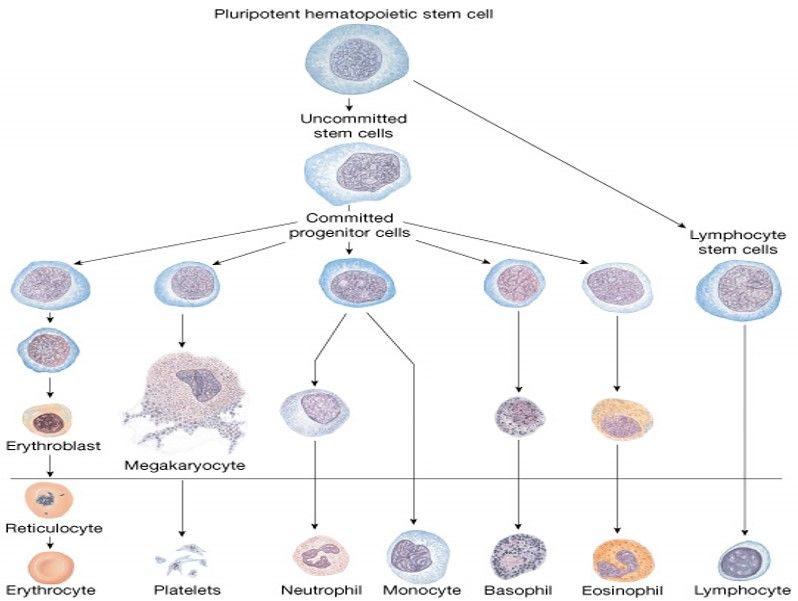
Haematopoiesis: Blood cell formation from a stem cell. Undifferentiated cells capable of becoming any blood cell.
Bone marrow contails the cells in different stages of development and supporting tissue
Red Blood Cells (erthrocytes): gas transport
Red blood cells are the most abundant blood cell, they contains haemoglobin which binds and transports O2 and CO2. Each RBC is a biconcave disc ~8micrometres x 2.5micrometres with a high SA to volume ratio. Short life span of 120 days as they have no nuclei or organelles. Bilirubin is the major breakdown product.
Haemoglobin is a large protein consisting of 4 polypeptide chains each containing a single molecule of haem which contains an iron pigment. The iron ion in haem is able to reversibly bind to an oxygen molecule so Hb can bind O2 in the lungs and release it in the tissues. Iron is stored in the liver bound to a protein called ferritin.
Leukocytes
Neutrophils: They are the first line of defense for the immune system as they are phagocytic and engulf bacteria. Enter tissues during infections.
Lymphocytes: B cells and T cells they secrete antibodies as part of the immune system.
Eosinophils: found in blood and mucosal surfaces to fight invasions by eukaryotic parasites.
Monocytes: circulate in the blood and mature into macrophages in the tissue.
Macrophages: engulf viruses and bacteria in the tissue.
Basophils: secrete heparin which is an anti clotting factor.
Placelets
Produced when large portions of the bone marrow cells break off.
Regulation of blood cell maturation:
Different stimuli (haematopoietic growth factors) will increase certain cell types:
Erthyropoiesis: one example
Low oxygen levels release erythropoietin from the kidney, this acts on bone marrow to stimulate red blood cell production. It is usually secreted in samll amounts in order to produce erythrocytes at a rate to replace the usual loss.
Polycythemia (high RBC count) occurs at high altitudes and with bronchitis and emphysema. It is caused by an increase in erythropoietin production at low oxygen levels to the kidney. It increases oxygen delivery.
Anaemia
This is when blood can't transport enough oxygen to tissues. This can be because of a decrease in number of erythrocytes or a low concentration of haemoglobin per erythrocyte or a combination of the two.
Sickle Cell Disease is due to a genetic mutation that cause the BRC to become sickle shaped at low oxygen levels
Haemostasis
This keeps blood from being lost from the vascular system by clots forming at tissue repair.
Placelet plug and Clot Formation
Exposed collagen binds to and activates placelets causing the release of platelet factors attracting more, causing a plug. Activated blood factors activate a cascade of enzymes this results in the generation of fibrin from fibrinogen by action of thrombin. Thrombin catalyses a reaction which splits several polypeptides from fibrinogen. Fibrin then forms bridges between aggregated placelets. factor XIII stabilizes fibrin
Haemophilia: insufficient clotting
Thrombosis: inappropriate clotting
Information
- Description
- University Physiology Note on Blood, created by Beckie Thorne on 12/05/2015.
- Created by
- Beckie Thorne
- Views
- 11
- Rating