
Blood, Haematopoiesis and Haemostasis
64 resources created by 50 users
This Blood, Haematopoiesis and Haemostasis page on GoConqr gathers community-made quizzes, mind maps, flashcards, flowcharts and notes, from blood composition and red cell maturation to platelet plugs, the clotting cascade and fibrinolysis. It's built for university students practising recall and teachers after ready-made material. There are over 400 resources here, including more than 80 quizzes, more than 150 mind maps and more than 150 flashcard decks, made by over 300 contributors. Try a quiz first to find your gaps, then explore the maps.
Top Blood, Haematopoiesis and Haemostasis resources
-
160 cardsPNB 2265 Practical 1 this is the most abundant type of blood cell
-
150 questionsTest Six Practice Quiz Which of these represents the majority of whole blood by volume?
-
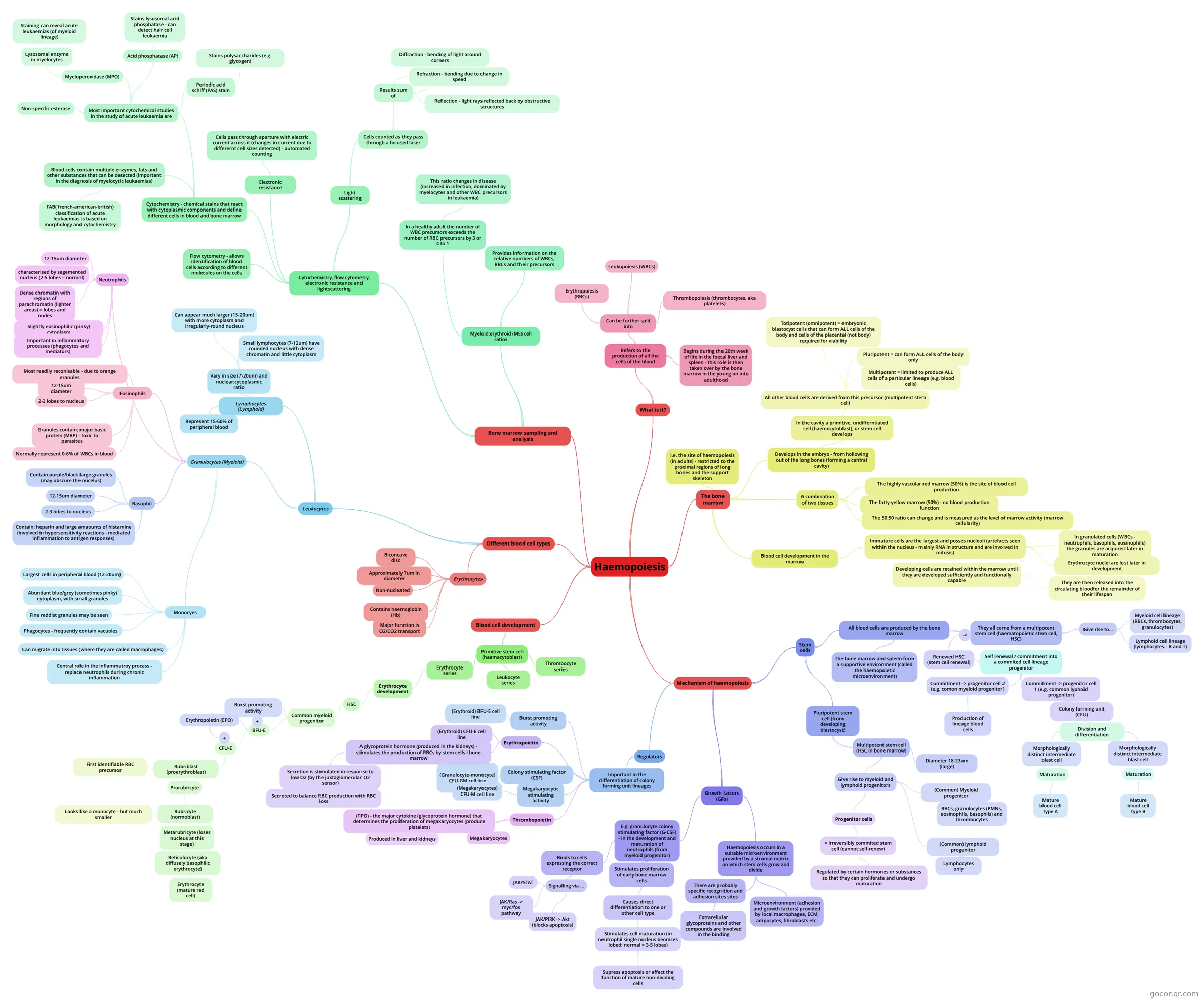 Mind map Haemopoiesis
-
Mind map The Blood
-
84 questionsWeeks 1 - 4 HUBS1406 Blood is a fluid connective tissue that circulates continually around the body
-
4 questionsAntithrombotic Quiz In what order does the coagulation cascade occur?
-
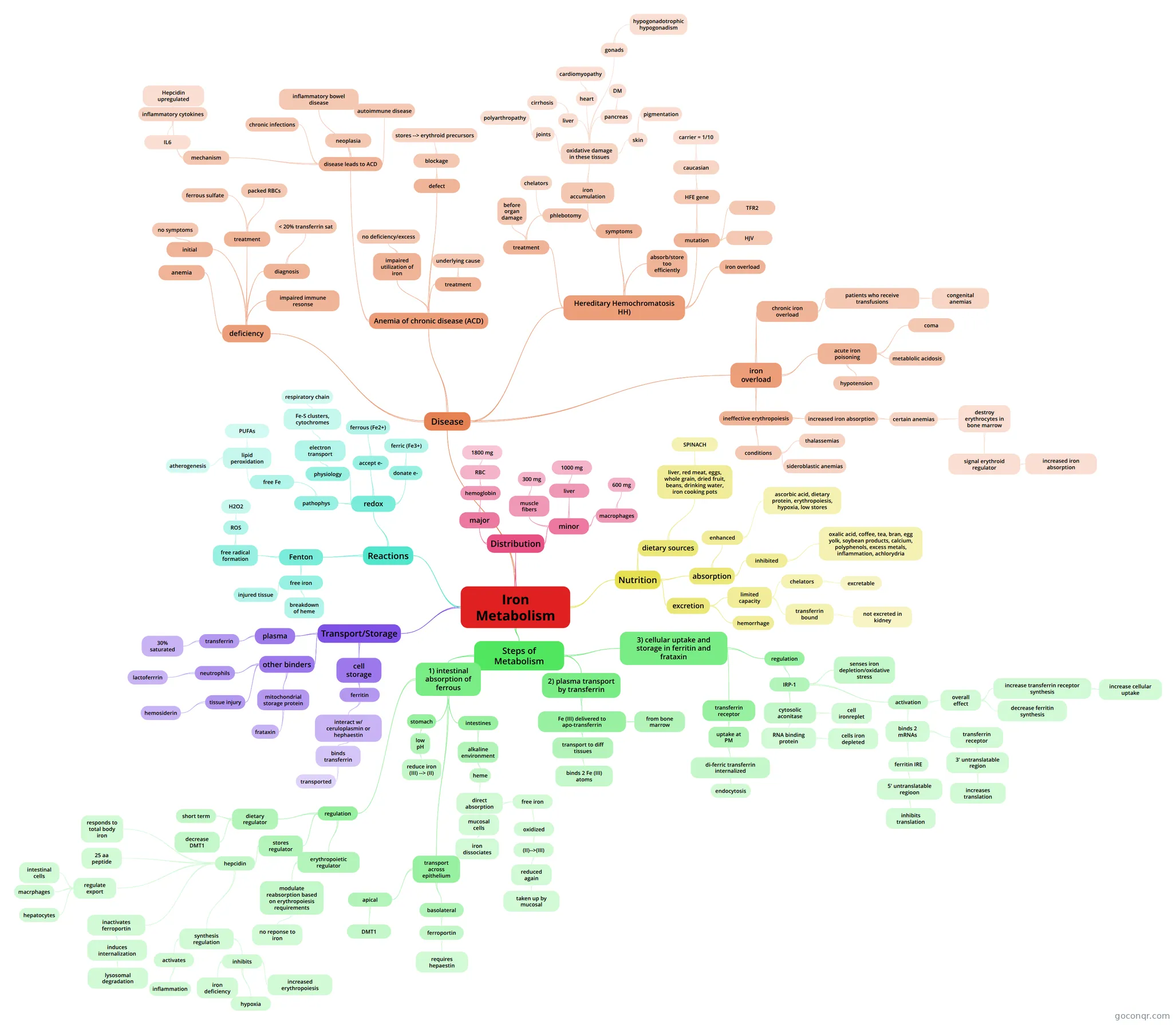 Mind map Iron Metabolism
-
37 questionsFibrinolysis The vascular endothelium protects platelets from subendothelial aggregating substances i.e. collagen
Quizzes
See all 26 quizzes-
150 questionsTest Six Practice Quiz Which of these represents the majority of whole blood by volume?
-
84 questionsWeeks 1 - 4 HUBS1406 Blood is a fluid connective tissue that circulates continually around the body
-
4 questionsAntithrombotic Quiz In what order does the coagulation cascade occur?
-
37 questionsFibrinolysis The vascular endothelium protects platelets from subendothelial aggregating substances i.e. collagen
-
20 questionsHaemostasis
-
9 questionsSteps of the Erythrocyte Maturation Series What is the the most immature cell in the erthyrocyte maturation series? (Comes before Common myeloid proge...
-
4 questionsCoagulation and Fibrinolytic Cascade Label the EXTRINSIC PATHWAY
-
6 questionsErythrocytes Erythrocytes are the most numerous blood cells.
Mind maps
See all 20 mind maps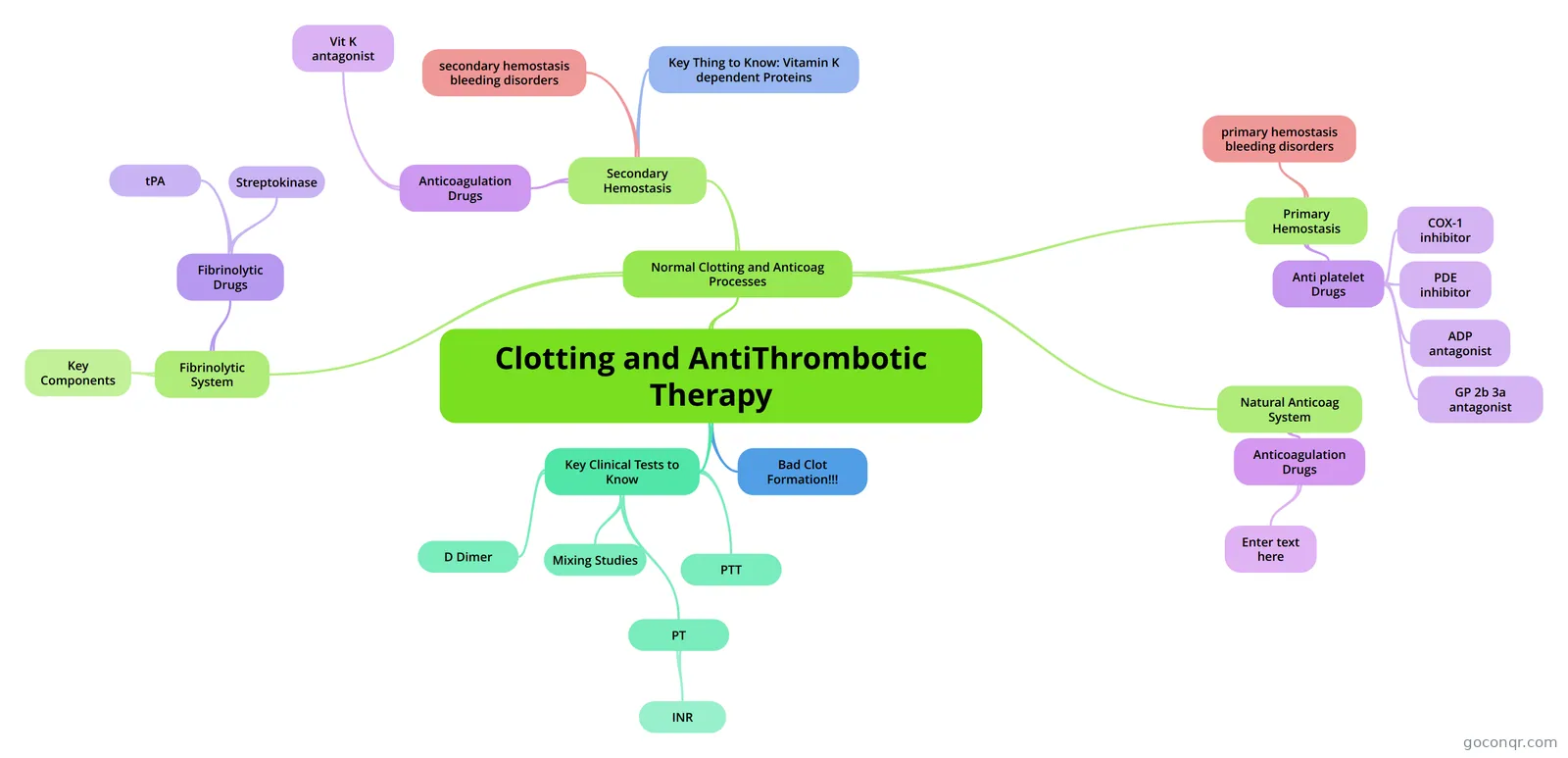
Flashcards
See all 17 flashcards-
160 cardsPNB 2265 Practical 1 this is the most abundant type of blood cell
-
20 cardsBMS10-1017 - Blood Cells: RBC WBC and platelets What is the size and shape of a red blood cell?
-
32 cardsCarriage of oxygen in the blood 1. Describe the structure of haemoglobin and explain why it is uniquely suitable for carriage of oxygen in ...
-
33 cardsCoagulation and Homeostasis What are the 3 conditions required for normal homeostasis?
-
51 cardsRed Blood Cells When does Hb bind O2 in the lungs?
-
22 cardsBMS10-1023 - Haemostasis, thrombosis and associated therapies What is the purpose of haemostasis?
-
110 cardsPlatelets and coagulation, bleeding and thrombotic disorders What is haemostasis?
-
123 cardsHematology - Absite What are the 3 initial responses to vascular injury?
Notes
More Physiology topics
About Blood, Haematopoiesis and Haemostasis
GoConqr OriginalWhat this unit covers
This unit sits in the Blood and Immunity strand of Physiology. It has three threads: what blood is made of, how blood cells are produced, and how bleeding is stopped and then cleared.
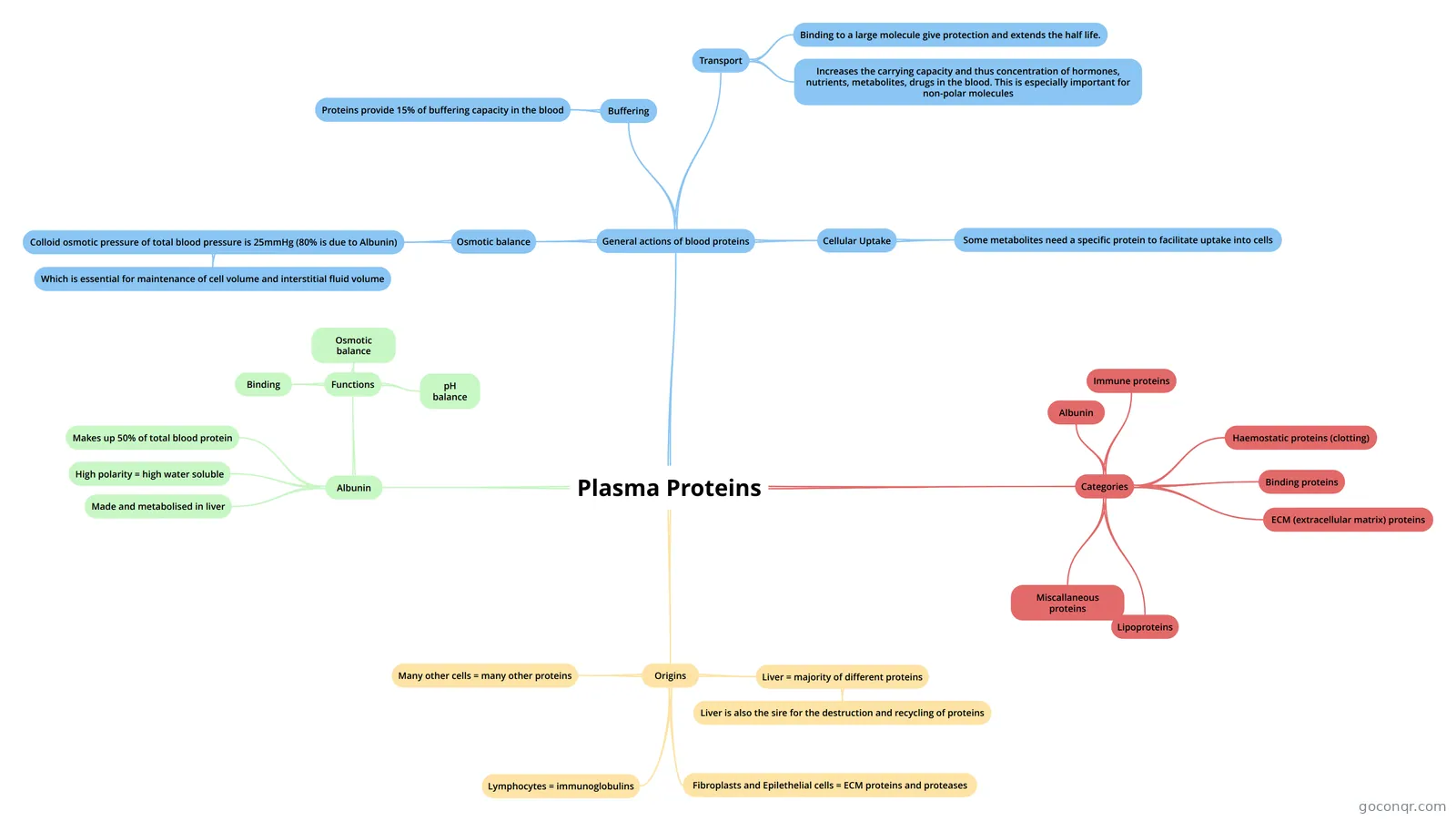
For the first thread, the mind map The Blood outlines function, composition, physical properties, plasma and blood types. Plasma Proteins sorts proteins into categories such as albumin, immune proteins, haemostatic proteins and binding proteins.
Blood cell production
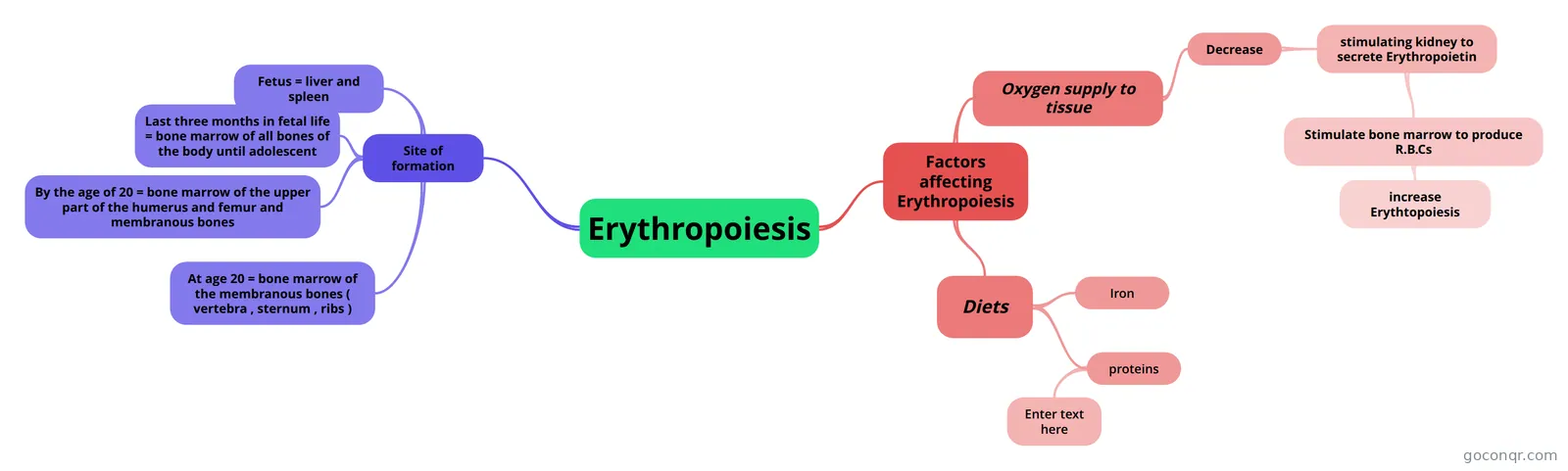
The mind map Haemopoiesis defines the term as the production of all blood cells and splits it into erythropoiesis, leukopoiesis and thrombopoiesis. Then try the quiz Steps of the Erythrocyte Maturation Series, which asks you to fill in each stage, beginning with the multipotent haematopoietic stem cell. There are also resources on iron metabolism, haemoglobin and red blood cells.
Haemostasis and clotting
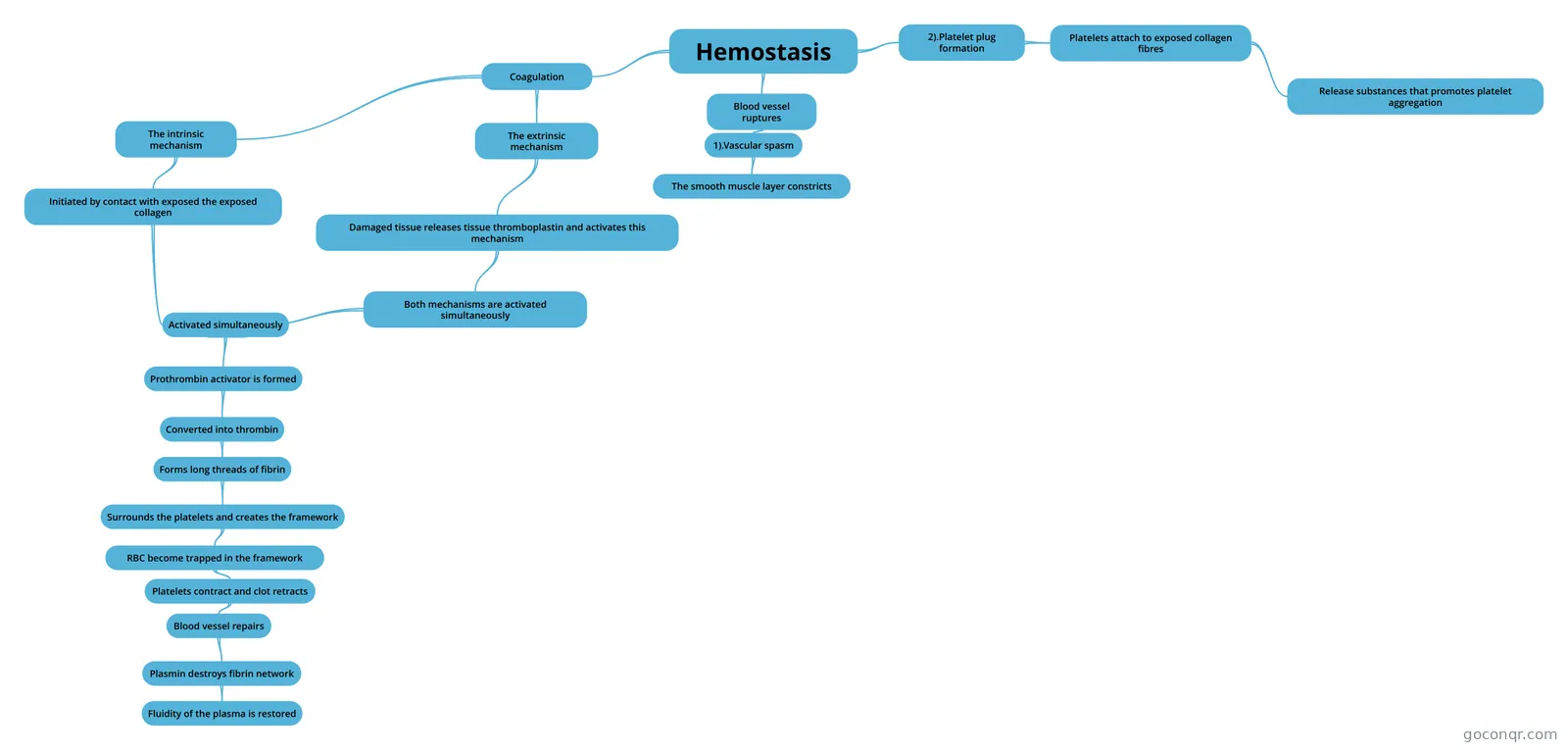
This is the largest group on the page. The mind map Hemostasis walks through vascular spasm and platelet plug formation. The quiz Haemostasis asks you to define the term and name the traits of platelets. Coagulation and Fibrinolytic Cascade asks you to label the extrinsic, intrinsic, common and fibrinolytic pathways. The quiz Fibrinolysis asks why clots need to be broken down. For treatment, look at Antithrombotic Quiz and the mind map Clotting and AntiThrombotic Therapy.
A sensible order
- Start with The Blood for the big picture.
- Move to Haemopoiesis and the erythrocyte quiz.
- Read a haemostasis map, then take the matching quiz.
- Finish with the cascade and fibrinolysis quizzes.
Use maps to see how the parts connect, then use quizzes to check what you can recall without looking. Teachers can pick a map or quiz to set as ready-made material.
Choose one map today, take its matching quiz, and note where you hesitated.
Frequently asked questions
Which resource should I open first?
Start with the mind map The Blood. It gives an overview of function, composition, plasma, formed elements, blood types and disorders. After that, move to Haemopoiesis for cell production, then to the Hemostasis mind map before trying any of the clotting quizzes.
What do the mind maps cover?
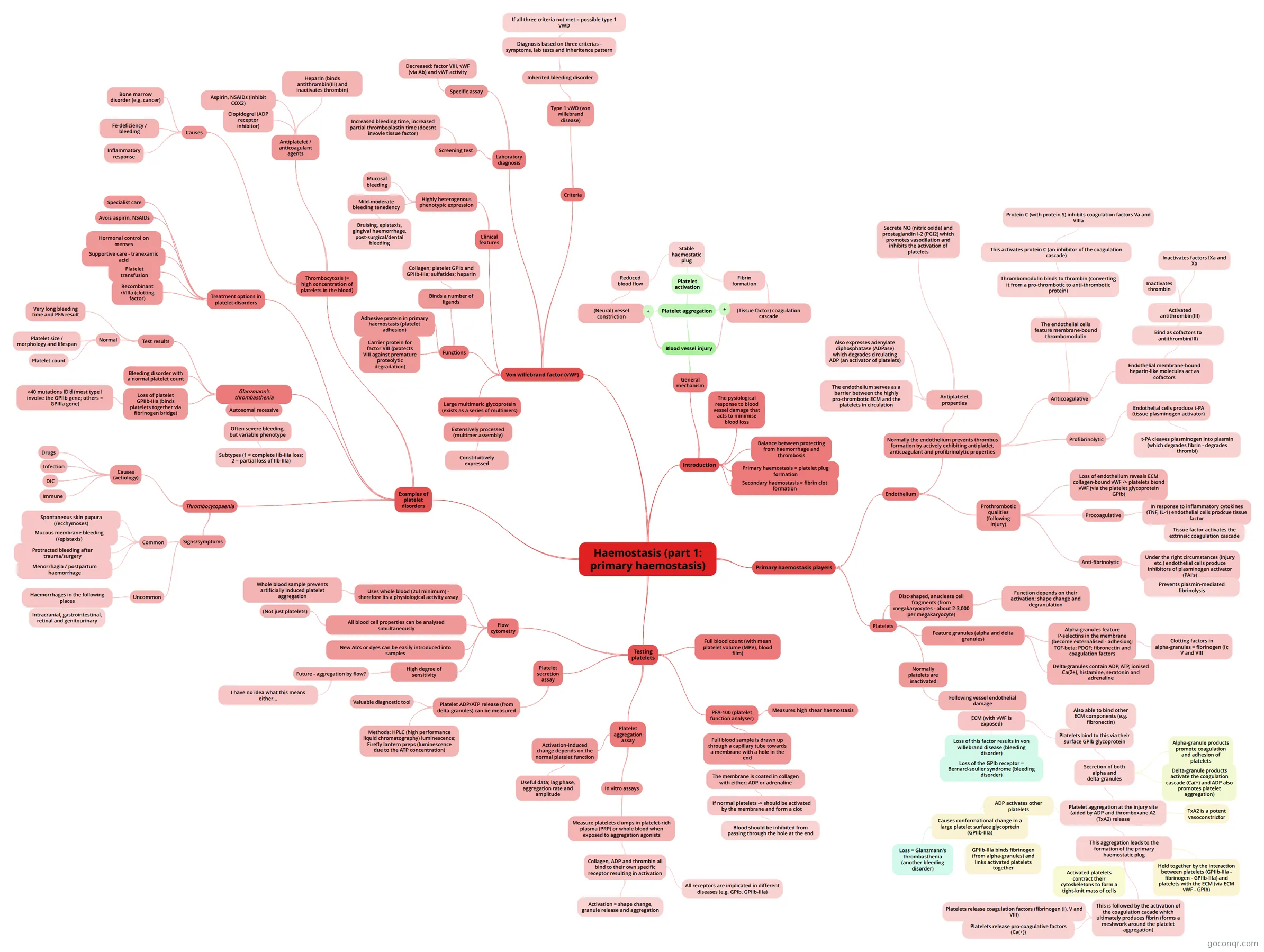
They cover blood composition, plasma proteins, haemopoiesis, erythropoiesis, iron metabolism, haemoglobin, platelets, primary and secondary haemostasis, blood clotting and antithrombotic therapy. There are more than 150 mind maps, so you can usually find one for the topic you are studying.
Are the resources free to use?
Yes. Every resource listed here is free to open, study and take, with no account needed. They were made by GoConqr users, not by GoConqr itself, so wording and depth vary. Check anything against your own course material.
Which quizzes test the clotting cascade?
Coagulation and Fibrinolytic Cascade asks you to label the extrinsic, intrinsic, common and fibrinolytic pathways. Fibrinolysis asks why clot breakdown is necessary, and Clotting Cascade offers another run at the same ground. Together they make a good set for the final stage of revision.
Who is this page for?
It is for university students who want to practise recall on blood, cell production and haemostasis, and for teachers looking for ready-made quizzes, maps and flashcards. Nearly all the resources are at university level.
What if I cannot find what I need?
Try a related title, since many topics appear under different spellings such as haemostasis, hemostasis and homeostasis. A free account also lets you save quiz scores and make your own quizzes, mind maps, flashcards and notes for any gap.