
Flashcards
C1 Crude oil and fuels
Flashcards do conjunto (38)
- 1Define: Crude oilDark, smelly liquid.
Mixture of hydrocarbons - 2Define: FractionsSubstances with similar boiling points.
- 3What does Distillation do?Separate liquids with different boiling points.
- 4Define: HydrocarbonsCompounds containing only hydrogen and carbon atoms.
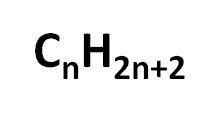
- 5What is the general formula for alkane molecules?
- 6Define: Saturated HydrocarbonsAlkanes
hydrocarbons that contain as many hydrogen atoms as possible in each molecule.
No more hydrogen atoms can be added. - 7Which type of hydrocarbons tend to be more useful?Short chain hydrocarbons
- 8Why are short-chain hydrocarbons more useful?They are flammable and burn well.
- 9Define: Boiling pointThe temperature at which a liquid boils or gas condenses.
- 10Define: VolatilityThe tendency for a substance to turn into gas.
- 11Define: ViscosityHow easily a substance flows.
- 12Define: FlammabilityHow easily a substance burns
- 13Finish the sentence: The longer the chain of the molecule...the higher the boiling point.
the less volatile it is.
the more viscos it is.
the less flammable it is. - 14Finish the sentence: The shorter the chain of the molecule...the lower the boiling point.
the more volatile it is.
the less viscos it is.
the more flammable it is. - 15Define: Fractional DistillationThe process by which we separate out crude oil into hydrocarbons with similar boiling points (called fractions).
- 16What is the process of fractional distillation?1. Crude oil is vaporised.
2. It is fed at the bottom of the chamber.
3. It is hot at the bottom and cooler as you go up.
4. Gases condense when they reach their boiling points. - 17What happens when you burn a hydrocarbon/ alkane in air? Give an equation.The hydrocarbon is oxidised (adding oxygen) completely.
hydrocarbon + oxygen -> carbon dioxide + water - 18What are the pollutants from burning fuels?Carbon dioxide (product).
Sulphur dioxide (impurity in fuel).
Nitrogen oxides (nitrogen reacts with oxygen inside the engine due to high temperatures).
Carbon monoxide (incomplete combustion).
Particulates (diesel or large molecules do not burn completely). - 19Why is sulphur dioxide a problem?It is poisonous.
It is acidic.
It causes acid rain.
It causes engine corrosion. - 20Why is carbon monoxide a problem?It is poisonous.
Red blood cells carry it instead of oxygen. - 21Why are nitrogen oxides a problem?They are poisonous.
They trigger asthma attacks.
They cause acid rain. - 22Why are particulates a problem?They get carried into the air.
They damage lung cells.
They cause cancer.
They cause Global Dimming. - 23Why is carbon dioxide a problem?Greenhouse gas
Global Warming - 24Why is Global Warming a problem?Causing international temperatures to rise.
- 25Why is Global Dimming a problem?Reflecting sunlight back into space.
Less sunlight on Earth.
Plants: How will they photosynthesize? - 26Why is acid rain a problem?Damages plants
Damages buildings
Harms marine life/ fish
Can cause skin problems on humans - 27Define: Catalytic convertersFitted to exhaust systems.
Expensive because they contain precious metal catalysts.
They have a large surface area so carbon monoxides and nitrogen oxides can react together. - 28What can be used to remove particulates?Filters in modern diesel engines.
They need to burn off trapped solid particles otherwise they get blocked. - 29What is used to remove sulphur dioxide from waste in power stations?Flue gas desulphurisation.
It is reacted with calcium oxide or calcium hydroxide.
It is removed from oil and natural gas before it is burnt. - 30What is done to petrol and diesel to reduce sulphur dioxide emissions?The sulphur impurities are removed before the fuel is burnt.
- 31Define: BiofuelsFuels made from plant or animal products.
- 32Define: BiodieselA fuel made from vegetable oils for use in diesel engines.
- 33Define: BiogasGas that can be burnt and is from animal and plant waste.
- 34Define: EthanolCan be a biofuel if obtained through fermentation of sugar.
- 35What are the advantages of using biodiesel?1. Less harmful to animals and plants if spilt.
2. Burns more cleanly (less particulates and sulphur dioxide).
3. It will become cheaper to use as crude oil runs out.
4. Carbon neutral.
5. Process also makes other useful products (makes solid waste material to feed to cattle and glycerine which is used to make soap). - 36What are the disadvantages of biodiesel?1. Large areas of farmland used. food prices? famine? forests have to be cleared?
2. Not exactly carbon neutral (transporting oil)
3. Destruction of habitats
4. Low temperatures: Biodiesel freezes, turns to sludge.
5. High temperatures: Biodiesel becomes sticky and molecules join together. It clogs engines. - 37What are the advantages of using Hydrogen ( as a biofuel)It burns cleanly
water is the only product
water is widely accessible - 38What are the disadvantages of using Hydrogen ( as a biofuel)1. Hydrogen has to be obtained through electrolysis of water. (expensive and energy consuming).
2. Explosive so more dangerous.
3. Gas so it takes more space. (storage?).
4. high-pressure cylinders are expensive and dangerous in crashes.
Informações
- Descrição
- CHEMISTRY AQA HIGHER TIER C1 C1.4 CRUDE OIL AND FUELS Q&A A*
- Criado por
- mouldybiscuit · jun 2015
- Atualizado
- 6 abr 2018
- Visualizações
- 250
- Tags
- Avaliação