
Flashcards
Human Evolution Flashcards MOCKS
Flashcards do conjunto (53)
- 1Define BipedUsing 2 hind limbs for locomotion
- 2Define QuadrapedUsing 4 limbs for locomotion
- 3Define Biological EvolutionGenetic change
Reproduction
Transfer of genes
One generation to the next - 4Define Cultural EvolutionTransmission of knowledge
Not genetically derived
One generation to the next - 5What hominin is characterised with the Oldowan Tools?Homo Habilis
- had a small brain
- were scavengers
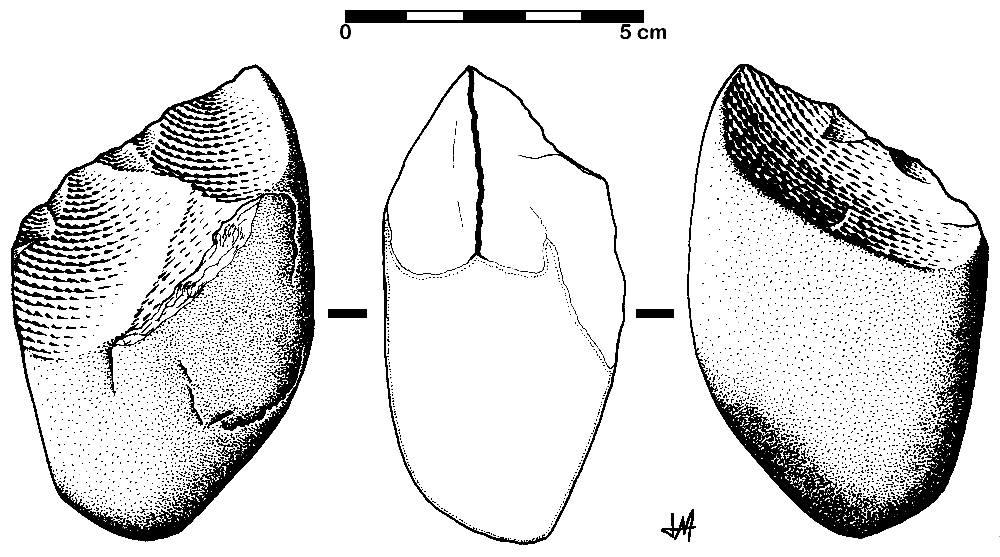
- travel to source materials - 6Describe Oldowan ToolsPebble/stone/rock
Flat face on one end
Flakes struck off one side - striking pebble with another rock to flake
5 or 6 blows - 7What are the uses of Oldowan Tools?Cut meat
Open bones and exploit bone marrow
Skinning carcasses - 8What are the implications of Oldowant tools for Homo Habilis?Source food rich in protein and fats
Positive feedback on brain development (more energy for expansion of cranium)
Less time processing food - 9What are Selective Advantages of Oldowan Tools?Successful manufacture - teach others
Division of labour - processing food, sourcing materials
Specialised use of environment
More nutrients and food
Processing food - planning/foresight
Increase survival
Reproductive success - 10What hominin is characterised with the Achuelian Tools?Homo Erectus
- 11Describe Acheulian ToolsStone tools
Bifacial
Flakes removed from both sides
Teardrop shaped
~50 blows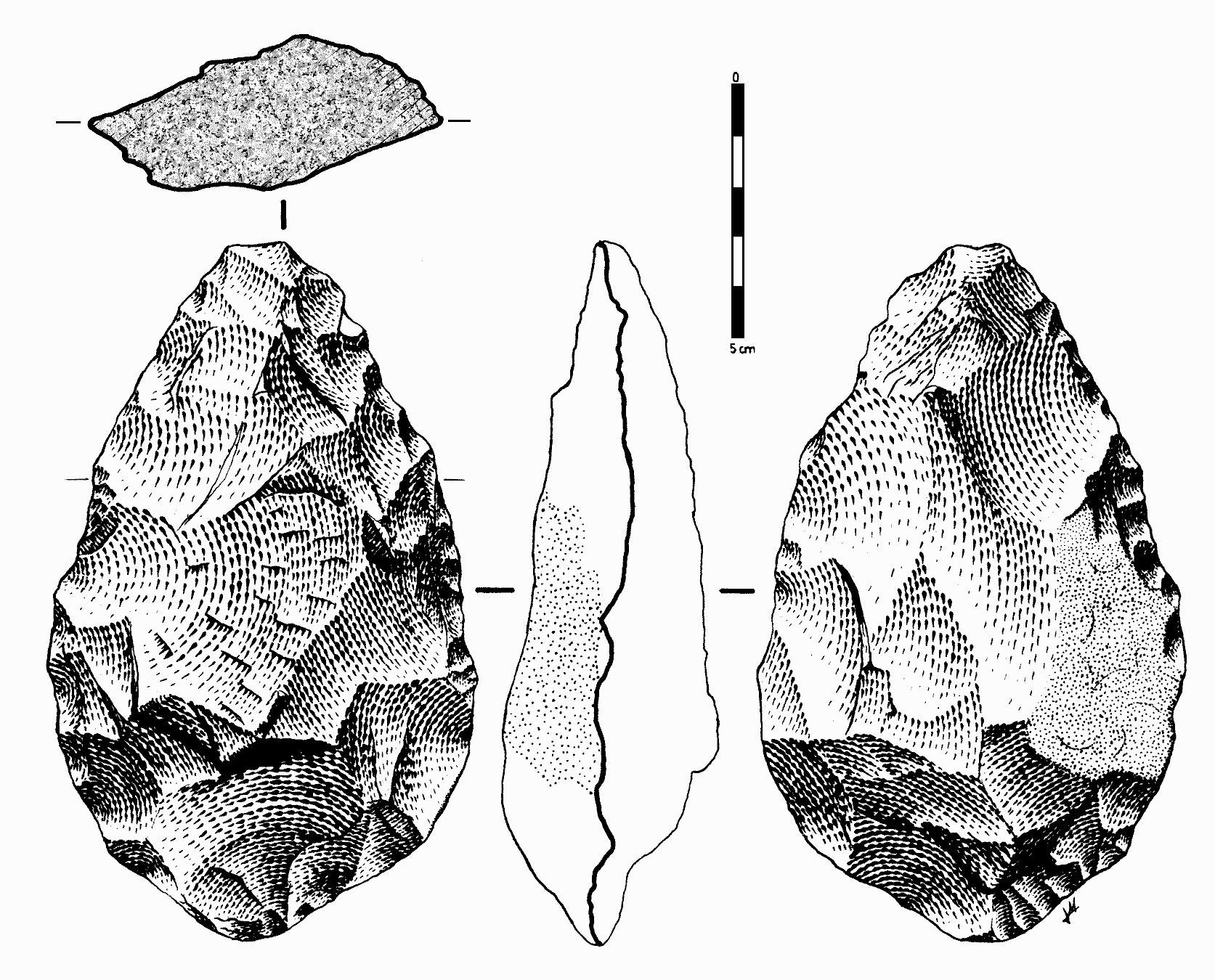
- 12What are the uses of Acheulian Tools?Butchering whole animals
Carrying food resources
Defence from predators - 13What are the advantages of Tool Use on Biological Evolution?Defence against predators
Successful access to food resources
Increase nutrient quality
Increased brain development
Reduced need for large teeth & chewing muscles
Energy intake increase
Greater chance of survival - 14What hominin is characterised with the Mousterian Tools?Homo Neanderthals
- 15Describe Mousterian ToolsStone
Flint
Large flakes
Resharpened edges
~150 blows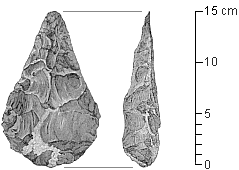
- 16What are the uses of Mousterian Tools?Skin animals for clothing
Hunt with spears
Build shelters
Access food resources - 17What hominin is characterised with the Upper Paleolithic Tools?Homo Sapiens
- 18Describe Upper Paleolithic ToolsStone, wood, ivory, antler
Sewing needles
Bone fish hooks
Stone arrowheads
Spearheads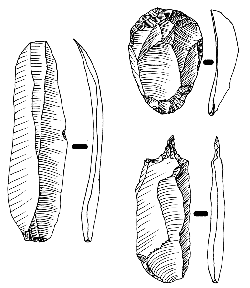
- 19List the Cultural Evolution Advantages of Fire Use in Homo Erectus1. Warmth - conserve energy for brain dveelopment than generating heat to warm body
2. Exploit new habitats - colder habits occupied, resources utilised, reduces competiton, diversification and speciation
3. Protection - communal fire protection against nocturnal predators
4. Social interaction - improved language, social intelligence, increase in brain size (speech areas + frontal lobe - abstract thought)
5. Cooking - decrease food poisoning, increase nutrient intake into brain, reduced chewing (reduce selection for zygomatic arch/large brow ridge), food shared (social rules), easy to physically digest food - 20Explain how Fire Use improves tool developementDifferent hunting strategies developed - traps
Fire hardened spear tips, pottery, bricks
Better abstract thought to make comprehensive tools - 21List the Cultural Evolution Advantages of Language for Homo NeanderthalsDevelopment of language - expanded brain from Wernicke's (recognition of speech) and Broca's (developement of speech) area,
Frontal lobe development - abstract thought, social intelligence
Transmission of ideas
Hunt together and plant hunts to find best prey
Tool making with other species (Effective co-ordination of activitie) - 22List the Cultural Evolution Advantages of Art for Homo NeanderthalsAbility to communicate
Transmit ideas from gen to gen
Benefit hunting grounds, types of beasts to hunt
Pass on traditions and cultural information - 23Explain Nomads/Hunter-Gatherers to FarmersNomadic to Farmers
Nomads - small groups, temporary shelters, hunted animals for scavenging, moved from places to get resources
Farmers - large settlements, division of labour, domestication of animals/plants for continuous food supply in one area - 24List Advantages of FarmingSkill specialisation of tools
Improved food supply - large settlements (better protection from weather/predator), division of labour, development of new jobs, access of new resources
Development of trade - domesticated plants/animals, trade for resources
Domestication - animals used for tasks, transport
Nutritional benefits - higher survival rates, regular supply of resources - 25List Disadvantages of FarmingIncreased failure of crops, domesticated animals - natural disasters, disease, greater dependence on them for food by settlement
Conflict over land use and ownership - hunters and landowners
Human diseases evolve from animal diseases - 26Describe the Multiregional HypothesisH. erectus
Migrated OOA
Evolved into modern humans
Different regions they migrated to
Interbreeding between populations
Gene flow to occur
H. sapiens developed independently - 27Describe the Out Of Africa ModelH. erectus left africa
OOA early hominins evolved into Neanderthals
Replaced by modern humans
Evolved in eastern Africa
migrated north into Europe - 28Explain the Fossil Evidence for OOA ModelTransitional fossils found in Africa
Older than H. sapiens fossils in Europe
Suggests gradual enlargement of brian
Amongst archaic Homo species
Implies H. sapiens evolved in Africa
Migrated to other parts of world - 29Explain the Y-Chromosome Evidence for OOA ModelOldest living modern human came from Africa
Use molecular clock based on mutations accumulated in Y-chromosome
Rate of mutation occurs at a constant rate
Mutation pass from father to son without recombination
Mutation occured in African Y-chromosome - 144,000 years ago, if originates from African pop then Y-chromosomes of non-African pop should possess same mutation
H. spaiens traced back to male 'Adam' 144,000 years ago in Africa
Does not recombine with X chromosome
- only change by mutation - 30Explain the mtDNA Evidence for OOA ModelmtDNA shows we descended from one female - Eve lived 150,000 - 200,000 years ago in Africa
Pass from mother to child without recombination - can only be changed by mutation
Takes time to accumulate mutations in mtDNA - greatest variation in mtDNA occur in region where H.sapiens first evolved - seen in African people
Less genetic variation between mtDNA of non-African - indicates recently shared origin of these pop from recent founder group - 31Explain the Genetic Diversity Evidence for OOA ModelGreatest GD in African H.sapeins pop - from mutations accumulated over time, suggests pop has existed for longer, any group left the pop in Africa is founder pop into areas OOA
Founder pops - reduced genetic diversity, gene pools contain small sample of original gene pool of large pop in Africa
OOA people descended from same group - H.sapines in Africa don't descend from one group
Individuals of one group migrated OOA, leaving others behind
Further away from Africa - more recent colonisation event, Africa was starting point for migration - 32Explain the Fossil Evidence for Multiregional TheoryDifferences in fossil morphologies,
Due to regional difference
Same species
Interbreeding occured - 33Explain the mtDNA Evidence for Multiregional Theorywhile H. neanderthalensis
mtDNA is substantially different from
modern humans, in some cases the differences
are less than those observed between
chimpanzee subspecies. This suggests that the
Neanderthals were different subspecies but
belonged to the same species as anatomically
modern humans. - 34Explain Y-Chromosome and Genetic Evidence for Multiregional TheoryY chromosome indicated later
expansion back into Africa from Asia
Was gene flow (interbreeding)
Genetic evidence supports interbreeding
between modern H. sapiens and H.
neanderthalensis
Was gene flow - 35List the reasons for DispersalPressure for resources
Moving/migration could exploit new resources
Change of environmental conditions
- better access to new regions, resources - 36Define BipedalismForm of terrestrial locomotion
Organism moves two rear limbs - 37List the Selection Pressures for BipedalismMove between forested areas seperated by grassland savannahs
Development of manipuative abaility of hand - less need for arboreal movement
Predation
Change in climate - open habitats, disperesed food resources, long distance travel, scattered wooded savannah - 38List Advantages of BipedalismHands-free - carry young, food, less vulnerable to predators
Less tree niche- less brachiating
Opposable thumb - access to variety of foods, energy-rich diet
Increase skull size - better use and develop tools
More effcient at walking - less energy used
Pelvis bigger, wider - produce offspring with bigger heads, better plan and communication
Beneficial form of locomotion - energy efficent
Less body SA exposed to sun - thermoregulate in changing niche, increased air flow
Eyes held above ground - spot predators, locate food at distance
Imposing form - intimidate predators, success gather food - 39List Disadvantages of BipedalismSpine - back pain and dysfunction because of S-shaped spine, bowl-shaped pelvis
Lower back and disc troubles - caused by body weight due to 2 limbs instead of 4
Feet - strain, body rests on 2 limbs, arches of feet collapse
Birth canal - reduced, small pelvis, childbirth problems
Increased strain on cardio-vascular system - increased difficulty in retruning blood from lower limbs
Hernia - less support for intestines, bulge out through weaker abdominal wall - 40Explain Brow Ridge differences between Biped and QuadrapedApes - large brow ridges
Humans - reduced brow ridge
- refined tools softened food
- softer protein based diet and cooked food
- easier to chew, provided more energy
- brow ridge not needed for chewing, heavy ridge not needed - 41Describe the Advantage of Brow Ridge difference for BipedsSkull changed shape
Cranial bones became lighter
Skull accommodate large brainer without too heavy to balance
Improved overall balance of skull over spine
Bipedalism more efficient
Energy not wasted on brow ridge
Saved energy for growth, resources, reproduction, brain development
Increased chances of survival - 42Explain Pelvis differences between Biped and QuadrapedApes - longer and a narrower pelvis
Humans - broader and shorter pelvis, shorter distance between hip and joint
- Supported internal organs when standing upright, improved balance
- Reduced stress of the upper body
- Helped birthing babies with increase in skull size
- Better attachment for buttock musclses to support upright and leg movemement - 43Explain Spine differences between Biped and QuadrapedApes - C shaped curve
Humans - S shaped curve
- improved shock absorption for walking
- kept mass of skull and upper body
- centre of gravity close to spine
- improved balance with support when upright - 44Explain Femur differences between Biped and QuadrapedApes - short, little/no valgus angle, knees bend outwards under hips, femur angled into knee
Humans - long, increased valgus angle, knee sits near centre of gravity, femur angles inward from hip
- supports upright upper body
- puts feet below COG for improved balance
- increases stride length
- improves balance (do not waste energy swinging side to side) - 45Explain Foot differences between Biped and QuadrapedApes - Feet on outer side of pelvis, flat, opposable big toe
Humans - below spine, arched, non-opposable toe (forward facing big toe)
- lost grasping albility
- provides a shock absorber effect
- enables spring onto their feet when walking to help long distance walking
- improve weight transfer when walking - 46Describe the Advantage of Spine, Pelvis, Foot, Femur differences for BipedsImproved efficiency of bipedalism
Saved energy
Energy used for resources, reproduction, growing brain
Increases survival chances - 47Explain Skull differences between Biped and QuadrapedApes - large nuchal muscles and crest, large sagittal crest for large jaw muscles to attach to, 400-500 cranial capacity
Humans - reduced NM+C, no SC, reduced zygomatic arch, 1350 cranial capacity
- skull supported and balanced on spire
- large neck muscles not required for support
- softer protein based diet easy to chew
- provided more nutrients/energy
- SC not needed for harsh chewing
- more energy enabled brain growth
- increase brain size
- increase abstract thought to gather resources and tools
- communication and planning (fire manipulation) - 48Explain Foramen Magnum differences between Biped and QuadrapedApes - foramen magnum + occipital condyles towards back fo skull, sloping forwards
Humans - fm+oc centre under the skull, round shape skull
- skull balance on top of spine
- less muscle required to keep head up
- eyes forward so mass kept
- centre of gravity close to spine and over pelvis
- increase led to expansion of cranium
- greater abstract thought (complex tools) - 49Explain Teeth and Jaw differences between Biped and QuadrapedApes - extensive jaw muscles, large canine and molars, diastema (gap for canines)
Humans - reduced jaw muscles, jaws don't protrude out, smaller teeth, no diastema
- softer protein based diet (from fire)
- easier to chew with small teeth
- jaw muscles for chewing not required
- threat displays became less important - 50Describe the Advantage of Teeth difference for BipedsLess use of minerals and energy to build big teeth
Allow more V shaped dental arcade
Less proganthisn
Helps better balance of head
Saved energy for getting resources, reproduction, growth
Increases chances of survival - 51Describe the Advantage of Jaw Muscle difference for BipedsSkull change shape
Larger brain not too heavy
Balance easily over the spine
Brain development
Energy not wasted saved
Increase chances of survival - 52Burying dead for Homo NeanderthalsSelective advantage
Decrease risk of disease, predation - 53What is the overall advantage of Cultural Evolution?All cultural forms of evolution
Provided adaptive advantages
For hominin species
Greater chance at surviving
Able to reproduce
Pass on favourable alleles / genes
To next generation
Informações
- Descrição
- NCEA Level 3 Biology (Human Evolution) FlashCards sobre Human Evolution Flashcards MOCKS, criado por Shivani Kershaw em 20-08-2018.
- Criado por
- Shivani Kershaw
- Visualizações
- 1
- Avaliação