
Flashcards
Consumer Behavior Midterm - Chapter 3
Flashcards do conjunto (49)
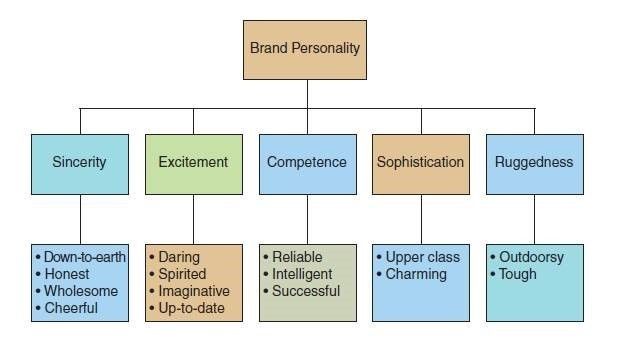
- 1Brand PersonificationOccurs when consumers attribute human traits or characteristics to a brand. A “brand personality” provides an emotional identity for a brand, which produces sentiments and feelings toward the brand among consumers
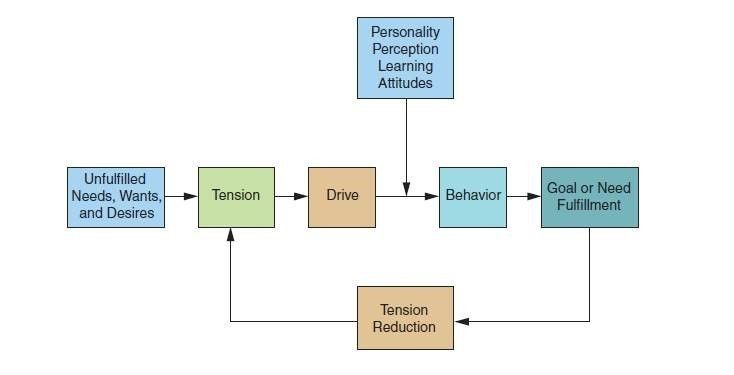
- 2The Motivation Process
- 3Physiological NeedsInnate (biogenic, primary) and fulfilling them sustains biological existence. They include the need for food, water, air, protection of the body from the outside environment (i.e., clothing and shelter), and sex.
- 4Psychological NeedsLearned from our parents, social environment, and interactions with others. Among many others, they include the needs for self-esteem, prestige, affection, power, learning, and achievement.
- 5GoalsSought-after results of motivated behavior, and all human behavior is goal oriented
- 6Generic GoalsOutcomes that consumers seek in order to satisfy physiological and psychological needs. (Not brand specific)
- 7Product-Specific GoalsOutcomes that consumers seek by using a given product or service.
- 8Need Arousal Methods• Internal stimuli
• Emotional or cognitive processes
• External stimuli - 9Approach ObjectsPositive outcomes that we seek
- 10Avoidance ObjectsNegative outcomes that we want to prevent
- 11Needs and Goals• Needs and goals are interdependent
• Human needs are never fully or permanently satisfied
• New needs emerge when others are satisfied
• Success and failure influence goals - 12FrustrationThe feeling that results from failure to achieve a goal
- 13Defense Mechanism (Definition)Cognitive and behavioral ways to handle frustration
- 14Defense Mechanisms (List)Aggression, Rationalization, Regression, Withdrawal, Projection, Daydreaming, Identification, Repression
- 15Henry MurrayPrepared an extensive list of psychogenic needs in 1938, which represented the first systematic approach to the understanding of nonbiological human needs
- 16Allen EdwardsContinued Murray's research on Psychogenic Needs
Developed a self-administered
personality inventory - 17Abraham MaslowMaslow’s Hierarchy of Needs – rank needs in order of importance and individuals seek to satisfy lower-level needs before higher-level needs.
- 18Maslow’s Hierarchy of Needso physiological needs
o safety and security needs
o social needs
o egoistic needs
o self-actualization need - 19Trio of NeedsPower
Affiliation
Achievement - 20Measurement of Motives• Self-reported measures of motives
• Qualitative research
• Motivation research - 21Ernest DichterDeveloped motivation research (qualitative research) that seeks to tap into the subconscious by adapting Freud’s psychoanalytical techniques
- 22Personality (Definition)The inner psychological characteristics (the specific qualities, attributes, traits, factors, and mannerisms that distinguish one individual from other individuals) that both determine and reflect how we think and act.
- 23Personality (List)1. Personality reflects individual differences
2. Personality is generally consistent and enduring
3. Although it is enduring, personality can sometimes change. - 24Theories of Personality• Freudian Theory
• Neo-Freudian personality theory
• Trait theory - 25Freudian TheorySuggests unconscious needs or drives are at the heart of human motivation. Believes personality is based on human development.
- 26Freud's human personality systemso The Id
o The superego
o The ego - 27Motivational factors concerning Innovationo Functional factors
o Hedonic factors
o Social factors
o Cognitive factors - 28Global innovativenessA trait that exists independent of any product-related context and represents the “very nature” of consumers’ innovativeness
- 29Domain-specific innovativenessA narrowly defined activity within a specific product category
- 30Innovative behaviorActions or responses that indicate early acceptance of change and adoption of innovations (e.g., being among the first to purchase new and different products or services).
- 31DogmatismOne’s degree of rigidity toward information and opinion contradictory to one’s beliefs and views (i.e., closed-mindedness). Dogmatic individuals are less likely to be innovators.
- 32Social CharacterDescribes an individual’s inner or other-directedness. Inner-directed consumers rely on their own inner values or standards in evaluating new products and are likely to be consumer innovators.
- 33Need for UniquenessDefined as an individual’s pursuit of differentness relative to others that is achieved through the acquisition of consumer goods to enhance one’s personal and social identity.
- 34Optimum stimulation level (OSL)Degree to which people like novel, complex, and unusual experiences
- 35Sensation SeekingOne’s need for varied, novel, and complex sensations and experiences, and the willingness to take risks for the sake of such experiences
- 36Variety and novelty seeking behavior consists of...1. Exploratory purchase behavior
2. Vicarious exploration
3. Use innovativeness - 37Need for cognition (NFC)Measures a person’s craving for or enjoyment of thinking.
- 38Visualizers vs. Verbalizerso Verbalizers prefer promotional messages containing a lot of written, textual, and verbal information.
o Visualizers are more receptive to pictorial images - 39Object visualizers vs Spatial visualizersObject visualizers, who encode and process images as a single perceptual unit.
Spatial visualizers, who process images piece by piece. - 40MaterialismThe extent to which an individual is preoccupied with purchasing and showing off physical possessions
- 41EthnocentrismThe consumer’s willingness to buy or not buy foreign-made products
- 42Fixated ConsumptionRefers to collectors’ and hobbyists’ tendency to accumulate items that are related to their interests and show them off to others
- 43Compulsive ConsumptionAddictive and out-of-control buying that often has damaging consequences for both the compulsive shopper and those around him or her
- 44Brand Personality Framework
- 45Four components of self-image1. Actual self-image
2. Ideal self-image
3. Social self-image
4. Ideal social self-image - 46Possessions represent an extension of the self1. Actually
2. Symbolically
3. Conferring status or rank
4. Feelings of immortality - 47Marketing to Vain Consumers1. Lucrative market for personal care and beauty products
2. Welcome promotional messages showing that they attract attention
3. Receptive to promotional messages featuring personal achievement - 48Physical VanityExcessive concern with or inflated view of one’s physical appearance
- 49Achievement VanityExcessive concern with or inflated view of one’s personal achievements.
Informações
- Descrição
- Marketing (Consumer Behavior) FlashCards sobre Consumer Behavior Midterm - Chapter 3, criado por Turinqui 85 em 02-11-2018.
- Criado por
- Turinqui 85
- Visualizações
- 0
- Avaliação